
Natural, Reviva Labs, Skin Care
Firming Up Loose Skin While on GLP-1 Medication: How DMAE Can Help

Nov
If you’re one of the many people successfully losing weight with a GLP-1 medication, you probably already know how transformative it can be. Pounds drop, energy rises, health markers improve – it feels like a win on all fronts. But for many, that victory can come with a frustrating side effect: looser skin.
It shows up subtly at first – maybe the jawline isn’t as crisp, or the skin under your chin feels softer. Some notice crepiness on the arms or a bit of sagging on the belly that wasn’t there before. It’s not your imagination, and it’s not failure. It’s simply what happens when the body changes shape faster than the skin can keep up.
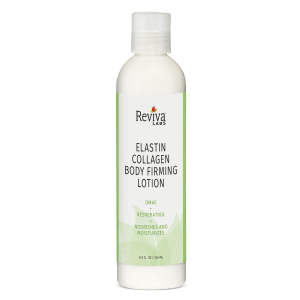
GLP-1 Skincare Support Recommended Products

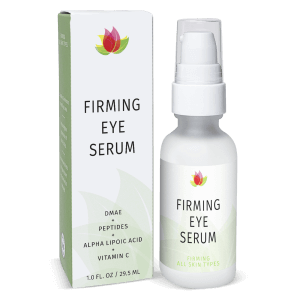
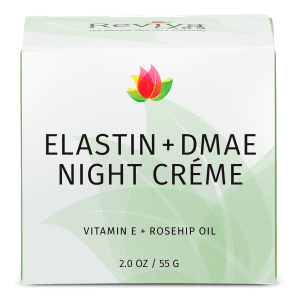
And that’s where certain firming ingredients, like DMAE (dimethylaminoethanol), can make a real difference. While nothing short of surgery can completely eliminate massive amounts of loose skin due to dramatic weight loss, smart topical care can absolutely help improve tone, elasticity, and firmness – especially if you start early and stay consistent.
Why Skin Gets Looser During GLP-1-Related Weight Loss
GLP-1 medications such as semaglutide (Ozempic®, Wegovy®) and tirzepatide (Mounjaro®) help regulate appetite and blood sugar, often leading to steady, and sometimes rapid, weight loss. But your skin – the body’s largest organ – has a built-in timeline of its own. It doesn’t shed pounds; it stretches and contracts in response to what’s happening underneath.
When you lose weight quickly, the fatty layer beneath the skin, called the subcutaneous layer, thins out. Those fat cells previously gave your face and body their smooth, filled-out contours. Once they’re gone, skin can appear deflated or loose. According to the National Center for Biotechnology Information (NCBI), people using GLP-1 agonists often experience “loss of volume and soft tissue support,” which contributes to sagging or lax skin as fat and muscle mass decrease.
Collagen and elastin – two structural proteins that act like scaffolding – also lose strength with age and can’t always bounce back as fast as the fat disappears. The result is a bit like removing the stuffing from a cushion – the fabric itself hasn’t changed, but it suddenly looks loose and wrinkled because it’s missing the internal support.
The good news is that the skin can recover to an impressive degree. It just needs time and targeted care. While genetics and age play their parts, the right skincare strategy helps the skin rebuild tone and resilience faster.

Introducing DMAE: A Smart Firming Ally
DMAE might not be as trendy a name as retinol or hyaluronic acid, but it’s been studied in dermatology for decades – and for good reason. It’s a naturally occurring compound found in the human brain and in certain fish, and in skincare, it’s celebrated for its firming, tightening, and toning benefits.
Research published in the American Journal of Clinical Dermatology found that topical DMAE improved skin firmness and fine lines and even seemed to enhance underlying muscle tone when applied consistently. In other words, it doesn’t just sit on the surface – it helps skin appear tighter from the layers beneath.
DMAE’s power comes from its relationship to acetylcholine, a neurotransmitter that triggers muscle contraction. By supporting this signaling, DMAE helps tone the delicate muscles just under the skin, creating a subtle “lifted” look. When muscles beneath the skin maintain their tone, the surface appears firmer and more defined – something that becomes especially important when volume is lost through GLP-1-induced weight loss.
It’s not magic, but it’s meaningful. People who use DMAE regularly often describe their skin as feeling “fresher,” “tighter,” or more resilient. Those small improvements, multiplied across weeks and months, can help skin look and feel more in sync with the body’s new shape.
How DMAE Actually Works
DMAE acts in several ways that make it particularly suited for supporting post-weight-loss skin:
It supports the underlying muscles.
When your skin loses its cushion of fat, the tone of the superficial muscles beneath becomes more visible. DMAE helps maintain that tone, giving the appearance of better definition along areas like the jawline, neck, and upper arms.
It improves the look of firmness over time.
A 16-week study using 3% DMAE gel showed measurable improvements in skin firmness and elasticity with daily use, suggesting that it can help remodel and strengthen the dermis – the layer responsible for skin’s bounce
It has antioxidant properties.
Skin that’s adapting to rapid change can produce more free radicals – unstable molecules that break down collagen and elastin. DMAE helps neutralize some of that stress, protecting the skin’s structure while encouraging a smoother, more toned surface.
These combined effects mean DMAE doesn’t just tighten momentarily – it supports the processes that help skin remain firmer over the long term.
The Visible Impact: Where People Notice the Difference
Loose skin from GLP-1 use isn’t limited to one area, but it tends to appear first in regions where fat loss is most visible: the face, neck, upper arms, abdomen, and thighs. Each of these areas can benefit from DMAE in slightly different ways.
Face and jawline
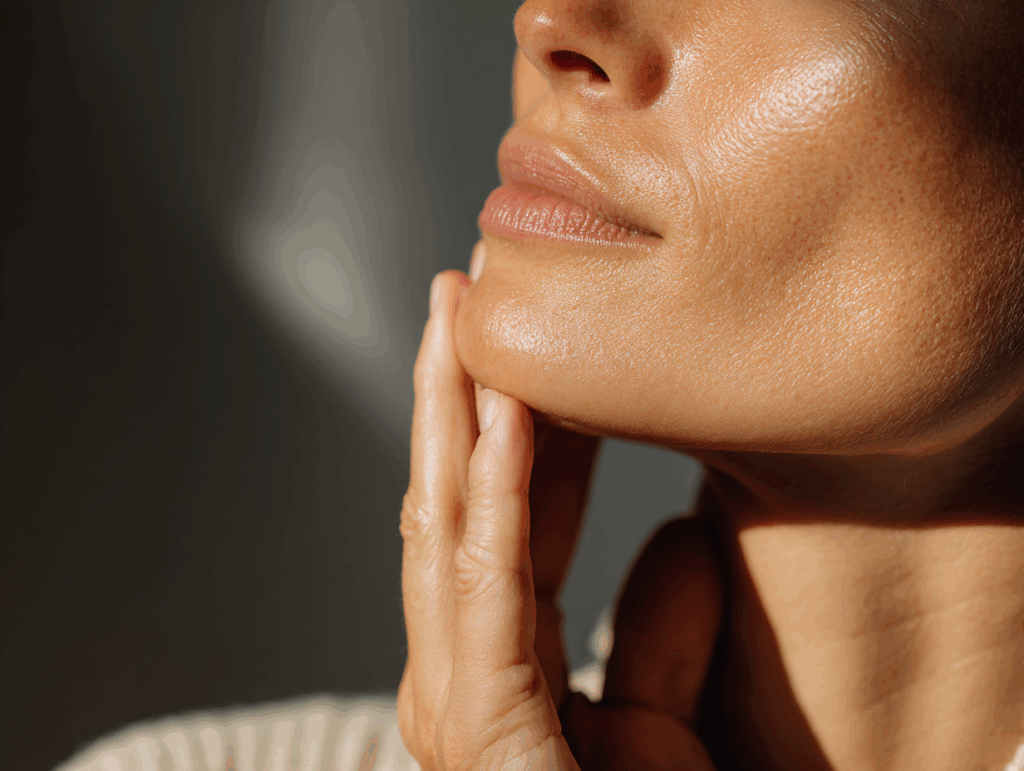
Facial fat pads are small but mighty – they give cheeks volume and support the contours that define youthfulness. When they shrink quickly, skin can appear saggy or hollow. Regular application of DMAE along the jawline and cheeks helps the skin regain tone and structure. Over time, that subtle firming makes a visible difference in definition and smoothness.
Neck and décolleté
The neck is thinner and has fewer oil glands, which means it’s more prone to laxity. Applying DMAE in upward strokes can help this delicate area stay firmer and more even in texture. Many people using GLP-1 medications report that the neck is one of the first places to show change, so early attention here pays off.
Arms and body
DMAE isn’t limited to the face – body formulations are becoming increasingly popular. The upper arms, abdomen, and thighs often show “softening” after major weight loss, and topical firming products can complement strength training and hydration efforts. While no cream replaces exercise, ingredients like DMAE support the skin’s outer resilience while the muscles below rebuild.
Why DMAE Makes Sense for GLP-1 Users
GLP-1 medications don’t just lead to fat loss; they also influence muscle mass and hydration. For some users, appetite suppression and lower caloric intake can mean a mild reduction in muscle tone. That’s part of what contributes to the “loose” appearance, especially in areas where the skin once had strong underlying support.
DMAE’s dual action – improving tone and protecting skin structure – addresses both sides of that equation. For people losing weight quickly, it offers a kind of external reinforcement:
- It supports the skin’s muscle network, keeping facial and body contours looking more defined.
- It protects against oxidative stress, which accelerates sagging and aging.
- It encourages dermal resilience, helping the skin remodel more efficiently as fat layers shrink.
This is why dermatologists often recommend starting firming products early in a GLP-1 weight-loss journey rather than waiting until laxity becomes significant. Skin that’s supported along the way is far more likely to retain elasticity.
And for many, the psychological benefit matters, too. Seeing looser skin after achieving a health goal can feel discouraging, but knowing there’s a proactive way to care for your skin helps shift the focus back to progress and confidence.
What Results to Expect
DMAE isn’t a one-day miracle, but it does offer both short- and long-term effects that add up beautifully. Most users notice an immediate tightening sensation – a gentle firmness that lasts for a few hours after application. That’s the surface response.
The deeper changes come gradually. Studies and consumer trials show visible improvement in firmness and elasticity within 8 to 16 weeks of daily use. With consistent application, fine lines may appear softened and skin texture smoother. On the body, results typically appear slower, as thicker skin takes longer to remodel.
A realistic mindset is key. DMAE won’t “shrink” skin that has stretched extensively, but it can significantly enhance tone, texture, and lift in mildly to moderately lax areas. Think of it as helping your skin re-learn how to hold itself up.

Supporting Skin Firmness Beyond Topicals
While DMAE is a powerful topical ally, its effects are best supported by overall skin wellness. Collagen synthesis, hydration, and nutrition all contribute to how well the skin adapts to change.
Here are a few complementary habits that can maximize your results:
- Stay hydrated. Dehydrated skin looks looser and thinner. Water keeps collagen fibers flexible and resilient.
- Eat enough protein. Amino acids are the building blocks of collagen. Aim for balanced protein intake to support skin structure from within.
- Add vitamin C. It’s essential for collagen production. Citrus fruits, peppers, and leafy greens are all great sources.
- Protect against UV damage. Sun exposure accelerates collagen breakdown, undermining firming efforts. Always wear SPF 30 or higher.
- Incorporate resistance training. Building muscle beneath the skin can make a dramatic difference in how tight and toned the skin appears.
These small, daily choices add up. Your skin is a living organ that responds to both what you put on it and what you put in your body.
What Dermatologists Say
Many dermatologists now view firming topicals like DMAE as part of a “skin fitness” plan for patients using GLP-1 therapies. Since surgical options like lifts or tucks are invasive and not always desired, noninvasive support becomes an important middle ground.
Dr. Humberto Choi, a dermatologist cited in NCBI discussions about GLP-1 aesthetic changes, notes that skin laxity can often be mitigated through early, supportive measures – both topical and procedural – that encourage collagen formation and muscle tone. Starting DMAE while still in the weight-loss phase may help the skin contract in tandem with the body’s changes, rather than lagging behind.
For anyone feeling frustrated with the reflection they see mid-journey, that’s empowering news: your skin is responsive. You just have to guide it.
Managing Expectations with Grace
Loose skin after GLP-1 therapy isn’t failure – it’s a sign of success. Your body has transformed, and your skin is catching up. The process takes patience, but DMAE and other supportive measures can help you feel more confident during that transition.
It’s also worth noting that every person’s skin responds differently. Factors like age, how fast you lost weight, how much you lost, your genetics, and your skincare habits all influence outcomes. What remains true is that topical firming products like DMAE provide safe, measurable improvements without downtime or harsh procedures.
When combined with healthy living and self-care, DMAE becomes more than a cosmetic fix – it’s part of your maintenance routine for the body you’ve worked hard to achieve.
FAQs
Q: Can DMAE really help tighten skin after GLP-1 weight loss?
Yes. Clinical studies show DMAE can visibly improve firmness and muscle tone, leading to tighter-looking skin over time. While it won’t replicate surgical results, it can noticeably reduce sagging and improve definition with regular use.
Q: How long before I see results?
You may notice a mild tightening feeling right away, but the best results typically appear after 8–16 weeks of daily use. Stick with it – consistency makes all the difference.
Q: Can I use DMAE on both my face and body?
Absolutely. While most DMAE products are designed for the face and neck, the same firming benefits apply to the arms, abdomen, and thighs. Just choose a product suited for larger surface areas if you’re treating the body.
Q: Is DMAE safe for sensitive skin?
Generally, yes. Studies show it’s well tolerated even with long-term use. If you have sensitive skin, patch test first and start with a small amount once a day before building up to twice daily.
Q: Are there other ways to support skin firmness while on GLP-1 medication?
Yes. Staying hydrated, maintaining protein intake, using sun protection, and adding light strength training all help preserve the skin’s firmness as you lose weight. DMAE simply gives those efforts a topical boost.