
Natural, Reviva Labs, Skin Care
How to get rid of dark spots on face

Jul
The mirror tells honest stories. One morning you might reach for a favorite moisturizer, notice tiny specks of brown lingering on your cheeks, and suddenly feel as if those spots have become the headline of your face. I have shared that moment with countless readers, and I understand how stubborn hyperpigmentation can feel. An eye-opening study from the Skin of Color Society reports that more than 65 percent of African American adults struggle with lingering discoloration that shadows confidence every day. Those numbers prove you are hardly alone, yet they also remind us that relief is worth pursuing with patience and science on our side.
Why Dark Spots Appear
Every dark spot begins with an overzealous melanocyte, the skin cell that supplies pigment to protect deeper layers from harm. When ultraviolet rays strike unguarded skin, when a breakout bruises the dermis, or when hormones surge during pregnancy or perimenopause, chemical messengers tell melanocytes to release more melanin. The microscopic pigment granules act like tiny umbrellas, scattering light and leaving visible blotches once the initial trigger fades. On lighter complexions those blotches look honey or beige; on deeper tones they trend toward espresso or even slate. Throughout skin tones, the biological story is identical – melanin is trying to help, but it overshoots the mark.
Sunlight is the most common provocateur because ultraviolet A and B rays penetrate clouds, glass, and sunscreen applied too sparingly. Heat also stirs melanocytes into action, which is why a leisurely sauna session or a sweaty workout without adequate SPF can undo weeks of brightening progress. Friction matters as well. Constant eyebrow plucking, picking at blemishes, or scrubbing hard with a washcloth creates micro-inflammation that leaves melanocytes on high alert. Internal influences cannot be ignored either. Estrogen spikes, thyroid fluctuations, or certain antiepileptic and antibiotic medicines heighten pigment production. In short, the root causes weave together sun, inflammation, and systemic chemistry.
Yet biology also gifts us an elegant advantage: skin constantly renews itself. Keratinocytes – the surface cells – rise from deeper layers every four weeks, carrying pigment upward before flaking away. If we guide that cycle with gentle exfoliation, nourishing antioxidants, and relentless sun protection, the deck slowly re-stacks in favor of evenly toned skin.
Daily Habits That Keep Pigment in Check
Sunscreen is the non-negotiable step. Dermatologists prefer broad-spectrum mineral formulas that scatter light rather than absorb it, helping shield even heat-sensitive melasma. Apply a nickel-sized dollop for your face and another for your neck, then reapply every two hours outdoors. Indoors you still need protection because window glass filters little UVA. This single habit prevents fresh pigment from forming while you lighten existing marks.
Cleansing counts as well, and not just for makeup removal. An evening cleanse lifts pollution particles and microscopic sunscreen residue that would otherwise trigger free radicals overnight. Choose a sulfate-free gel if your skin is oily, or a cream cleanser infused with aloe if it runs dry. Follow with alcohol-free toner to rebalance pH; skin that sits comfortably at its natural mild acidity tolerates brightening actives far better than skin pushed alkaline.
Hydration sounds cosmetic, yet a well-watered barrier repairs itself faster than a parched one. Look for serums rich in low-weight hyaluronic acid that sink beneath the stratum corneum and attract up to one thousand times their weight in water. When the barrier is strong, pigment-lifting ingredients penetrate evenly, minimizing irritation that could otherwise ignite more discoloration.
Nighttime matters just as much. Skin temperature rises slightly while we sleep, increasing absorption. A pea-sized application of a brightening serum or cream allowed to marinate overnight gives lighteners eight uninterrupted hours to nudge irregular pigment back toward baseline.
Ingredients Dermatologists Trust
The skincare shelves overflow with promises, yet only a handful of actives hold decades of clinical respect. Vitamin C tops the list because it interrupts the enzyme tyrosinase, slowing melanin creation while donating electrons that neutralize free radicals. In concentrations between eight and fifteen percent, it brightens without bleaching and assists new collagen formation, delivering smoother texture along with clarity.
Niacinamide, a form of vitamin B3, whispers to melanocytes rather than scolding them. By reducing the transfer of pigment-filled melanosomes into surface cells, five-percent formulas steadily fade blotches and calm redness. Niacinamide also reinforces the ceramide barrier, which lowers the risk of post-inflammatory spots after future breakouts.
Alpha hydroxy acids such as glycolic acid work differently: they dissolve the bonds that glue dull surface cells together. When those cells lift away, newer, more evenly pigmented layers emerge. Low percentages around four percent, as found in a mild toner, can be used daily, while ten percent creams provide a weekly boost. The key is patience – over exfoliation sparks inflammation, the very spark we are trying to extinguish.
Kojic acid deserves mention because it originates from Japanese sake fermentation and acts as a chelating agent, binding copper necessary for melanin synthesis. At one percent it brightens gently; at two percent it works robustly while remaining kinder than hydroquinone. Arbutin, derived from bearberry, shares kojic acid’s pathway but adds antioxidant benefits.
Finally, retinoids – whether prescription tretinoin or over-the-counter retinol – accelerate cell turnover and increase penetration of other brighteners. They also encourage collagen remodeling, diminishing the fine lines that often neighbor sunspots. Introduce retinoids gradually, two nights a week, to sidestep dryness.
Building a Targeted Routine
A balanced dark-spot routine feels simple in practice. Morning begins with a tepid water cleanse, a hyaluronic serum to keep the barrier content, a vitamin C antioxidant layer, and broad-spectrum SPF 30 or higher. Makeup or no makeup, that quartet shields skin from light and pollution all day long.
Evening care starts with a thorough cleanse to sweep away the day’s environmental aggressors. A few nights per week, sweeping a glycolic toner across the face allows acids to renew the surface. Alternate those nights with a retinol application, waiting ten minutes before layering a peptide-rich moisturizer to buffer potential irritation. On nights without acids or retinol, apply a dedicated brightening serum containing niacinamide, kojic acid, or arbutin. This rotation gives skin the benefits of multiple actives without overwhelming it.
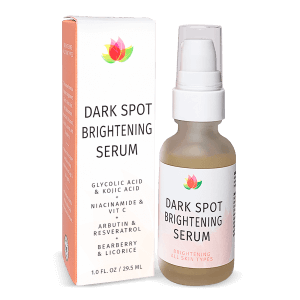
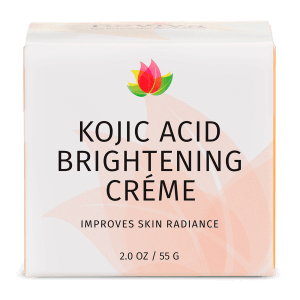
Product selection can remain brand-agnostic, yet many readers appreciate knowing where to start. Reviva Labs offers a Dark Spot Brightening Serum that delivers five percent niacinamide, one percent glycolic acid, one percent kojic acid, and one percent arbutin in a buffered, fragrance-free base. Used under a gentle moisturizer, it fits seamlessly into the framework above. Some prefer a cream texture at night; in that case Reviva’s Kojic Acid Brightening Créme provides a buttery vehicle for kojic acid alongside olive squalane to support dry complexions. One or two specialized formulas are enough – crowding a shelf with redundant lighteners wastes money and raises irritation risk.
Professional Options When Home Care Is Not Enough
Over-the-counter diligence fades most spots, yet certain conditions – deep dermal melasma, chronic post-inflammatory hyperpigmentation, or sunspots etched over decades – can demand physician support. Chemical peels performed with twenty to thirty percent salicylic or trichloroacetic acid penetrate deeper than home acids, lifting pigment in controlled bursts. A series of three to six peels spaced monthly often yields dramatic brightness.
Laser and light devices harness specific wavelengths that shatter pigment clusters without harming surrounding tissue. Q-switched nanosecond lasers, picosecond platforms, and intense pulsed light all have roles depending on skin tone and spot depth. Skilled dermatologists choose parameters that respect melanin levels; in darker skin, longer wavelengths such as 1064 nm Nd:YAG minimize collateral heat.
Microneedling, where arrays of tiny needles create micro-channels, enhances topical delivery of vitamin C or tranexamic acid cocktails. The gentle injury triggers collagen renewal, meaning texture improves alongside tone. Mid-depth trans-epidermal delivery of tranexamic acid – a molecule that calms pigment-stimulating pathways – has become a favorite for hormonal melasma.
Finally, prescription creams containing four percent hydroquinone remain the gold standard for stubborn discoloration. Used in cycles of several months under physician supervision, hydroquinone bleaches excess pigment while suppressing tyrosinase activity. Doctors often combine it with superficial retinoids and mild steroids in “triple therapy” to maximize lightening and minimize inflammation.

Bright Clear Skin: Proven Ways to Fade Facial Dark Spots
Dark spots test patience. Research cited by the American Academy of Dermatology shows that superficial marks can need six to twelve months to fully fade after triggers end, and deeper dermal patches can outlast calendar years. That timeline explains why many people quit regimens too early. Consistency is both the greatest challenge and the decisive factor in success.
Tracking progress with monthly photographs under identical lighting builds motivation. When improvements feel glacial in the mirror, side-by-side images reveal subtle victories: the freckle that once looked charcoal now reads milk chocolate, the melasma mask that spanned your cheekbones has broken into lighter islands. Celebrate these small shifts – they signal that melanocyte overdrive is yielding.
Lifestyle choices propel you forward as well. A wide-brim hat and polarized sunglasses turn afternoon errands into an act of skin solidarity. Antioxidant-rich meals, especially berries, leafy greens, and fatty fish, feed the skin’s internal defense system. Adequate sleep allows nighttime repair enzymes to run at full capacity, whereas chronic short nights elevate cortisol and sabotage brightening efforts.
Emotional health plays an underrated role, too. Stress hormones such as ACTH stimulate melanocytes, making relaxation techniques an indirect, but genuine, brightening strategy. Whether you journal, practice yoga, or simply breathe slowly for five minutes before bed, each ritual calms the endocrine chain reaction that darkens spots.
The journey demands realistic expectations. Treatments that promise to erase discoloration in days rely on harsh bleaching agents or deceptive color-correcting pigments. Genuine pigment remodeling is gradual because healthy skin turnover sets the pace. By aligning routines with that biology – protecting by day, regenerating by night, and occasionally enlisting professional help – you grant your complexion the steady guidance it needs.
Sooner than you might imagine, family photographs capture light bouncing evenly across your features, and the morning mirror reflects brightness instead of blemishes. In that moment your skin tells a new, empowering story, one paragraph at a time.