
Ingredients, Natural, Reviva Labs, Skin Care
Understanding Retinol Percentages Strengths and Types

Nov
Retinol inspires more anticipation than almost any other skincare ingredient because people hear it works but rarely feel confident about how to begin. Dermatologists talk about its ability to refine texture and soften fine lines, yet many people still pause before adding it to their nightly routine. They sense the potential but carry questions about which form to choose, how strong it should be, and what kind of experience to expect in the first few weeks. That hesitation is understandable because retinol sits in the middle of a larger family of vitamin A ingredients that look similar on a label but behave differently on the skin. The good news is that once you understand how these ingredients connect, the topic becomes less intimidating and far easier to navigate.
Much of the confusion grows from the way vitamin A forms convert into retinoic acid, the active molecule the skin uses to support renewal. A product containing retinyl palmitate sits at the mildest end of that conversion path. One containing retinaldehyde sits closer to the active form. Prescription treatments like tretinoin skip the conversion steps entirely. These ingredients share a biological story but differ in the pace and intensity of their activity. Some deliver gentle, steady benefits. Others act more quickly and require careful adjustment. Without that context, shoppers see a long line of similar looking products and wonder how anyone can tell them apart.
Once the role of conversion becomes clear, the ingredient family begins to make sense. Every form of vitamin A eventually turns into retinoic acid inside the skin. Retinyl esters convert slowly and feel very gentle. Retinol converts at a moderate pace and suits a wide range of skin types. Retinaldehyde converts rapidly and delivers a more noticeable effect while still remaining accessible without a prescription. Tretinoin sits at the far end of the spectrum and offers the strongest results for people who need medical level activity. These distinctions allow consumers to match a product with their goals, their tolerance, and their comfort level. Instead of feeling confused, they begin to see vitamin A as a clear set of options rather than an overwhelming category.
What is retinol and how does it actually work?
Retinol is a vitamin A alcohol that turns into retinaldehyde once inside the skin before ultimately becoming retinoic acid. Retinoic acid is the biologically active form that interacts with receptors in the skin to influence cell turnover and support collagen production. This conversion process happens gradually, which explains why retinol is generally easier to tolerate than prescription retinoids. The skin has time to adjust. It controls the pace. That natural pacing allows many people to use retinol without the intense dryness often associated with stronger treatments.
Scientific research confirms the effectiveness of retinol even though it requires conversion. A well-known study published in the Archives of Dermatology examined the effect of 0.4 percent topical retinol in older adults and found measurable improvements in fine wrinkles and collagen production after several months of use. This kind of data helps demystify retinol for consumers who want evidence that over-the-counter products can make a difference. It shows that retinol does more than smooth the surface. It influences deeper biological processes linked to visible signs of aging.
A comprehensive review published in Clinical Interventions in Aging further explained how retinoids function inside the skin. The authors highlighted that retinol, once converted, binds to the same receptors as retinoic acid and follows similar biochemical pathways. This means retinol can support the same kind of renewal as prescription retinoids while offering a gentler user experience. People often appreciate that balance because it allows them to maintain a long-term routine without frequent interruptions from irritation.
How does retinol differ from prescription retinoids?
The difference between retinol and prescription retinoids begins with the form each ingredient takes. Tretinoin, a widely prescribed retinoid, is already retinoic acid. When applied to the skin, it acts directly. There is no delay. This direct activity leads to faster and often more dramatic results. It also increases the likelihood of redness, peeling, or dryness when first used. A study published in the New England Journal of Medicine showed how tretinoin improves photoaged skin through consistent stimulation of collagen and smoother turnover. The evidence is strong, and the dermatology community relies on tretinoin for many concerns.
Retinol takes a different path. Because it must convert before becoming active, the skin receives a more measured dose of retinoic acid. This controlled delivery reduces the chances of sudden irritation. It also creates a smoother experience during the early weeks. People who choose retinol often value this gentler introduction. They want long term change without dramatic discomfort. That difference does not make retinol weaker in a negative sense. It simply reflects a slower pace. Many people achieve impressive results with retinol when they use it consistently.
Another distinction comes from accessibility. Retinol appears in a variety of formulations, textures, and strengths. Consumers can find products tailored to their preferences and skin type. Tretinoin requires a prescription and usually appears in more limited formats. Some people prefer the flexibility of choosing an over-the-counter product that fits their routine. Others appreciate the clinical precision of a prescription. Both choices are valid. The key is matching the ingredient to the individual’s goals and tolerance.
Why do gentler forms like retinyl esters exist, and who should use them?
Retinyl esters sit at the mildest end of the vitamin A spectrum. They include retinyl palmitate and retinyl acetate, and they require several conversion steps before becoming active. This slow conversion produces a very gentle experience. People who use retinyl esters often do so because they want subtle, steady improvements without noticeable irritation. These ingredients appear frequently in moisturizers or products designed for sensitive skin because they can soften texture and brighten tone with minimal disruption.
The improvements from retinyl esters tend to be modest, but they still contribute to overall skin renewal. The Mukherjee review noted that retinyl esters are less potent than retinol yet remain valuable for users who prefer a softer approach. They help beginners build familiarity with vitamin A without overwhelming their skin. Many people start with retinyl esters, observe how their skin responds, and move to retinol once they feel ready for something stronger.
Even though retinyl esters offer mild activity, their predictability makes them useful. They fit into routines with little adjustment. They pair well with hydrating ingredients. They suit people who dislike the feeling of active resurfacing. Their main role is to serve as a comfortable entry point into vitamin A, and for many consumers, that is exactly what they need.
What makes classic retinol so popular?
Retinol holds a central place in over-the-counter skincare because it strikes a rare balance between effectiveness and tolerability. It converts more quickly than retinyl esters and produces more noticeable results. It remains slower than prescription retinoids, allowing people to adapt without dramatic changes. This middle position makes retinol the most familiar and widely used form of vitamin A in consumer products.
Research helps explain its popularity. The Archives of Dermatology study showing improvements with 0.4 percent retinol offers clear evidence that retinol supports collagen production and smoother texture. These changes help reduce the appearance of fine lines and improve overall skin tone. The results appear gradually, which suits people who want transformation without discomfort. This steady progress encourages consistency, which becomes the true driver of long-term improvement.
Retinol products vary in concentration. Lower strengths around 0.1 percent create a comfortable starting point. Mid strength formulas between 0.2 and 0.5 percent offer deeper change. Higher concentrations near 1 percent require established tolerance. Users often step up over time as their skin becomes more resilient. The number alone does not determine how the product will feel. Encapsulation, hydration, and supporting ingredients all influence the experience. Two products with the same percentage can behave very differently on the skin.
Retinol’s versatility also contributes to its widespread use. It appears in serums, creams, and even eye treatments. It works for people who want subtle refreshment and for those who want firmer, smoother skin. It adapts to many routines and remains accessible to a broad audience.
Why do some people choose retinaldehyde instead of retinol?
Retinaldehyde offers a stronger option for people who want faster results while staying within the over-the-counter category. It converts into retinoic acid in one step, which means it begins influencing the skin more quickly than retinol. Research published in Dermato-Endocrinology by Sorg and Gossman highlighted retinaldehyde as a potent but still well tolerated ingredient that bridges the space between retinol and prescription treatments. It delivers more noticeable improvement in texture and tone without reaching the intensity of tretinoin.
People often move to retinaldehyde after using retinol for a period of time. Once the skin has adjusted to moderate vitamin A activity, it can handle the stronger push from retinaldehyde. This stepwise progression gives users flexibility. They can increase the potency of their routine at a pace that suits their comfort level.
Retinaldehyde does require thoughtful use. Because it converts quickly, it may cause mild dryness or flaking in the early weeks. Moisturizers help ease that transition. A gradual introduction makes the adjustment smoother. Once tolerance builds, retinaldehyde becomes a reliable part of a long-term routine.
When is a prescription retinoid the right choice?
Prescription retinoids further accelerate the activity of vitamin A and deliver the strongest results. Tretinoin is the most widely used prescription form, and its effectiveness is supported by extensive research. The New England Journal of Medicine study documenting its ability to improve photodamaged skin shows how directly it influences cellular renewal. By delivering retinoic acid without conversion, tretinoin creates measurable change in collagen production and surface texture.
People choose prescription retinoids when they want faster improvement or when they have concerns that require clinical strength. Acne, advanced sun damage, and deeper lines often respond well to tretinoin. The tradeoff is increased sensitivity. The early weeks can bring peeling, dryness, or redness as the skin adjusts. Dermatologists refer to this as the retinization phase. It passes with continued use, but it requires patience.
Because tretinoin increases photosensitivity, sun protection becomes essential. Without sunscreen, UV exposure can counteract the benefits of the treatment. Dermatologists consistently stress that sunscreen is a non-negotiable part of any retinoid routine. Once these habits are in place, prescription retinoids become effective tools for complex or advanced skincare concerns.
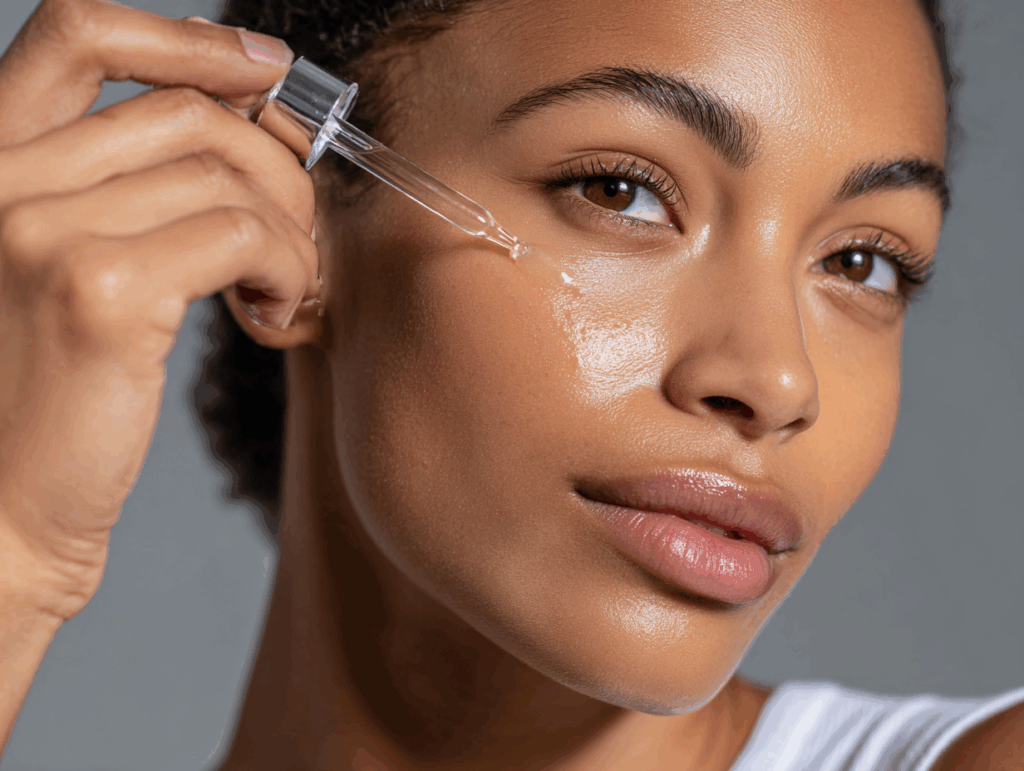
How do percentages influence the experience?
Retinol percentages attract attention because they seem to indicate clear differences in strength. A 1 percent formula appears dramatically stronger than a 0.3 percent formula. Yet percentages only tell part of the story. A stable, well formulated 0.3 percent product may outperform an unstable 1 percent product that has degraded in its packaging. Formulation quality matters as much as the concentration itself.
Most over the counter retinol products fall between 0.1 percent and 1 percent. The lower end suits beginners or sensitive skin. Mid-range strengths suit people who want more noticeable changes and have built some tolerance. Higher strengths require routine consistency and barrier resilience. People often increase strength slowly to maintain comfort and support long term progress.
Stability plays a central role in how percentages behave. Retinol degrades when exposed to light or oxygen. Research published in the Journal of Cosmetic Science described this sensitivity and emphasized the importance of opaque, air limiting packaging. Encapsulation can protect retinol by releasing it more slowly and shielding it from degradation. These formulation decisions influence how the ingredient performs once it reaches the skin.
What determines whether retinol works well for someone?
Several factors shape how retinol performs beyond the number printed on a label. Skin barrier health is essential. Hydrated, resilient skin converts retinol more effectively and experiences fewer side effects. Over exfoliated or inflamed skin may react strongly or convert retinol less efficiently. This is why dermatologists often advise people to use gentle cleansers and avoid aggressive exfoliation during the early stages of retinol use.
Consistency is another major factor. People who use retinol regularly see more meaningful long-term improvement than people who apply high-strength formulas sporadically. The skin appreciates steady input. Regular application helps build tolerance, supports collagen production, and encourages smoother turnover. Slow and steady wins in this category.
Supporting ingredients matter as well. Moisturizers can reduce dryness without dulling the effects of retinol. A study in Dermatologic Therapy showed that glycerin containing moisturizers helped minimize irritation from retinoids. This pairing helps people maintain a routine without discomfort. Hydration remains a vital part of any successful retinol plan.
How can people manage sensitivity and maintain comfort?
Many users experience mild dryness, flaking, or tightness in the early weeks of retinol use. These sensations indicate that the skin is adjusting to increased turnover. Dermatologists recommend starting with a lower frequency, such as applying retinol a few nights a week, and gradually increasing to nightly use as the skin becomes more comfortable. This gradual introduction reduces the likelihood of noticeable irritation.
Moisturizers play an important role in managing sensitivity. Hydrating formulas help support the skin barrier while retinol encourages renewal. Applying moisturizer before or after retinol creates additional comfort during the adjustment phase. Once the skin adapts, most people can maintain consistent use without significant dryness.
Sun protection remains essential. Retinol increases the skin’s sensitivity to UV exposure. Without sunscreen, the benefits of retinol can be diminished because UV damage works against the renewal process. Daily SPF protects both the surface and deeper layers of the skin, allowing retinol to deliver its full potential.
How long does retinol take to produce visible results?
Retinol works gradually. Studies consistently show improvements appearing after several months of regular use. The Archives of Dermatology study noted meaningful change in wrinkles over a period of several months, not days. A review in Dermato-Endocrinology explained that collagen production increases slowly over time as retinoic acid binds with receptors in the dermis. These biological processes unfold at a deliberate pace.
People who understand this timeline tend to feel more satisfied with the experience. They recognize that retinol is not a quick transformation but a long-term partner in skin health. Subtle improvements appear first. Texture feels smoother. Tone becomes more even. Fine lines look softer. These changes build over time and reward consistency.
Life factors can influence the journey. Cold weather, stress, or new products may temporarily increase dryness or sensitivity. These fluctuations do not reflect failure. They simply show how the skin reacts to its environment. Returning to a steady routine helps restore balance. Patience creates the best outcome.
References
- Kafi R, et al. “Improvement of Naturally Aged Skin With Vitamin A (Retinol).” Archives of Dermatology, 2007.
- Mukherjee S, et al. “Retinoids in the Treatment of Skin Aging.” Clinical Interventions in Aging, 2006.
- Kang S, et al. “Topical Tretinoin Therapy.” New England Journal of Medicine, 1995.
- Sorg O, Gossman L. “Retinaldehyde: A Potential Treatment for Photoaging and Acne.” Dermato-Endocrinology, 2010.
- Fluhr JW, et al. “Glycerol Based Moisturizers Reduce Irritation Potential of Retinoids.” Dermatologic Therapy, 2006.
- Bonda CA, et al. “Stability of Retinol in Cosmetic Formulations.” Journal of Cosmetic Science, 2011.