
Clean Beauty
What does your skin need right now, and how can we support it simply and effectively?
Jan
Your skin sends signals long before it shows damage. Tightness after cleansing. Makeup settling into lines by noon. A dull tone even after a full night’s sleep. These signals matter more than any label on a bottle. Skin never asks for more products. It asks for the right support, delivered at the right time, without stress or excess. When routines feel confusing or crowded, results slow down. Simpler care often works faster because it aligns with how skin actually functions.
Skin lives in the present. It responds to what happened yesterday and what hits it today. Weather shifts, indoor heat, stress, hormones, diet, sleep, cleansing habits, and sun exposure all leave fingerprints on the surface. No two mornings feel the same for a reason. Effective care starts with reading those signals and responding calmly, not reacting aggressively. When support matches need, skin steadies itself and appearance follows.
The goal never centers on perfection. The goal centers on function. When hydration flows properly, when the barrier stays intact, and when inflammation stays quiet, skin looks smoother, brighter, and more even without effort. Most visible concerns trace back to a short list of unmet needs. Address those needs first and everything else becomes easier.
Comfort as the best performance metric
Figuring out what your skin needs right now starts with one question. Does your skin feel comfortable throughout the day? Comfort predicts performance. When skin feels balanced, it handles actives better, holds moisture longer, and recovers faster from stress. Discomfort signals imbalance, not failure. That imbalance usually falls into one of four areas: hydration, barrier support, cellular turnover, or protection.
Hydration always comes first, even when skin looks oily. Water drives enzyme activity, cell communication, and elasticity. Without enough water, skin stiffens and surface texture turns uneven. Fine lines deepen because dehydrated cells shrink. Oil production increases as compensation, not correction. Many routines confuse oil with hydration and chase dryness with heavier creams instead of water-binding ingredients.
True hydration works on two levels. Water must enter the skin and stay there. Ingredients that bind water inside the skin help plump and soften immediately. Ingredients that slow water loss keep that comfort lasting beyond the first hour. When hydration works, tightness fades quickly and stays gone. Skin looks calmer and makeup applies more evenly because the surface stays flexible.
Why cleansing makes or breaks hydration
Over-cleansing disrupts this process faster than almost anything else. When cleansing strips too much oil, the barrier weakens and water escapes. Skin responds with sensitivity, shine, or both. Gentle cleansing preserves the lipid matrix that holds water in place. A cleanser should leave skin feeling clean and comfortable, not squeaky or dry. If skin feels tight after cleansing, hydration already starts from a deficit.
Barrier support comes next. The skin barrier functions like a flexible wall built from lipids, proteins, and cells arranged in precise order. When intact, it keeps irritants out and moisture in. When compromised, everything feels harder. Products sting. Redness lingers. Dry patches appear without warning. Barrier damage often hides behind visible concerns like breakouts or sensitivity.
Barrier repair focuses on replenishing what skin loses through cleansing, weather, age, and stress. Lightweight oils, fatty acids, cholesterol-like lipids, and soothing agents help rebuild structure. This process does not require heavy textures or complicated formulas. It requires consistency and restraint. When the barrier repairs itself, skin tolerance improves and reactivity declines.

How age changes what skin tolerates
Age influences barrier function more than most people realize. As skin matures, lipid production slows and cell turnover changes. Even skin that once handled strong products easily can become reactive. Adjusting texture and frequency matters more than chasing intensity. Support first, stimulate second. Skin performs best when stress stays low.
Cell turnover plays a role once hydration and barrier function stabilize. Exfoliation supports clarity and smoothness, yet excess exfoliation causes more harm than benefit. Skin renews itself naturally on a cycle. When exfoliation aligns with that rhythm, texture improves and tone evens out. When exfoliation overwhelms that rhythm, inflammation rises and recovery slows.
Signs of over-exfoliation include persistent redness, stinging, flaking paired with oiliness, and sensitivity to products that once felt gentle. Pulling back restores balance faster than pushing forward. Gentle exfoliation spaced appropriately supports skin without compromising comfort. The goal centers on refinement, not resurfacing.
Protection as the part that preserves results
Protection anchors everything. Sun exposure, pollution, and oxidative stress accelerate aging and disrupt repair. Daily protection preserves results gained from hydration, barrier care, and turnover support. Antioxidants help neutralize free radicals created by environmental exposure. Sunscreen shields skin from UV damage that breaks down collagen and triggers pigmentation. Protection does not reverse damage, but it slows accumulation significantly.
Stress affects skin more than most routines account for. Cortisol alters oil production, barrier repair, and inflammation. Sleep deprivation reduces cellular repair. Dehydration from caffeine or inadequate water intake shows up quickly on the surface. Skincare works best when lifestyle stressors stay manageable. Support does not replace rest, hydration, or nutrition. It works alongside them.
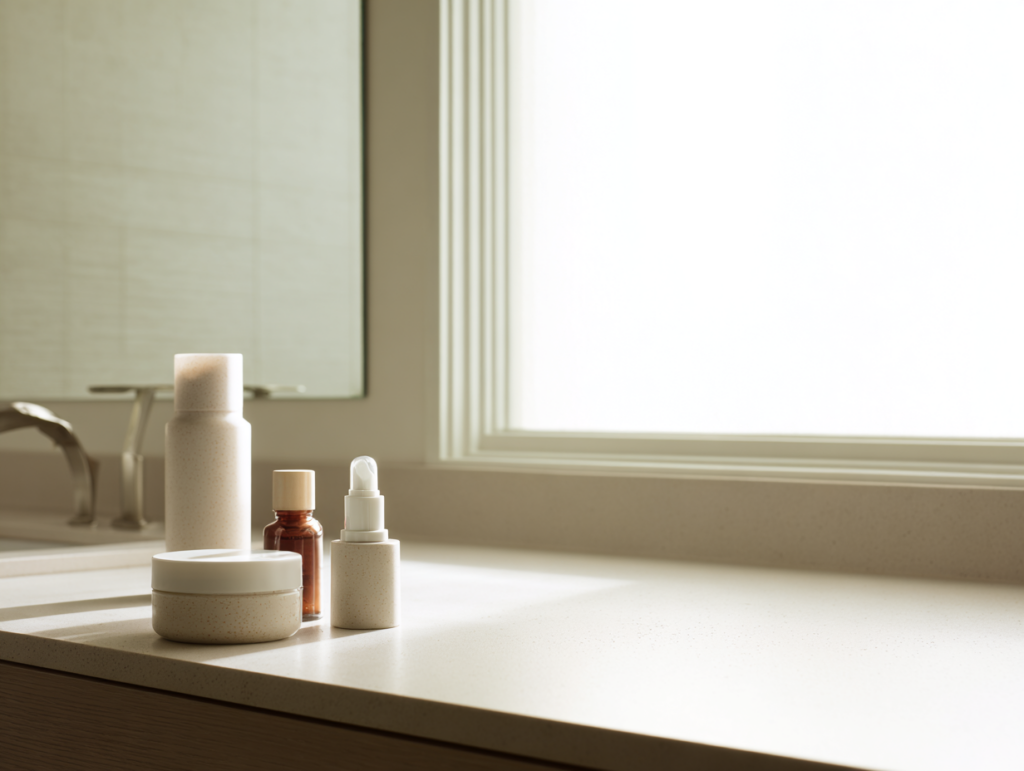
Supporting skin simply starts with removing friction. Fewer steps reduce confusion and improve consistency. A simple routine includes cleansing that preserves comfort, hydration that binds water, moisture that seals it in, and protection during the day. Additional treatments fit only when skin asks for them clearly.
Simple daily structure that matches skin biology
Morning care prepares skin for exposure. Cleanse gently or rinse if skin feels balanced. Apply hydration while skin remains slightly damp. Follow with a moisturizer suited to climate and skin type. Finish with sun protection. This sequence supports function without overload. Skin enters the day protected and comfortable.
Evening care focuses on recovery. Cleanse to remove buildup from the day. Reapply hydration and moisture to replenish losses. Night formulas often lean richer because skin repairs itself during sleep. This rhythm mirrors skin biology rather than fighting it. Consistency matters more than novelty.
Seasonal changes require adjustment. Cold air and indoor heat increase water loss. Hot weather increases sweat and oil production. Humidity alters how products absorb. Rotating textures rather than swapping entire routines keeps skin stable. Listening to skin daily prevents small imbalances from becoming chronic issues.
Why stability outperforms constant change
Marketing often frames skincare as transformation. In reality, effective skincare maintains equilibrium. Dramatic changes rarely last because they strain skin rather than support it. Sustainable improvement looks subtle day to day and significant over months. Skin that functions well ages better because damage accumulates more slowly.
Ingredient literacy helps, but obsession harms. Knowing which ingredients hydrate, protect, or exfoliate guides smarter choices. Chasing trends creates unnecessary complexity. Most skin benefits from time-tested ingredients used consistently rather than rotating actives weekly. Stability builds results.
Sensitive skin does not signal weakness. It signals a need for gentler support. Many people discover sensitivity after years of aggressive routines. Repair restores tolerance over time. Calm skin responds better to treatment and maintains results longer.
Questions people ask once they simplify
People often ask when to change routines. Change when skin sends repeated signals, not when boredom sets in. Tightness, stinging, flaking, or persistent redness point to imbalance. A plateau without discomfort often signals stability rather than failure. Skin does not require constant stimulation to improve.
Another common question centers on age. Skin needs shift gradually rather than suddenly. Hydration and barrier support grow more important over time. Stimulation takes a back seat to preservation. Gentle exfoliation still plays a role, but frequency drops. Protection stays non-negotiable at every age.
Many worry about doing too little. Overdoing causes more setbacks than restraint. Skin repairs itself daily when conditions support it. Skincare exists to remove obstacles, not force outcomes. When routines feel sustainable, results follow naturally.
The simplest measure of success remains comfort. Skin that feels calm, flexible, and resilient reflects proper support. Glow follows function. Smoothness follows hydration. Firmness follows protection. Chasing symptoms without addressing needs delays progress.
Your skin needs attention, not intensity. It needs water before actives. It needs repair before correction. It needs protection before stimulation. When support aligns with biology, skin responds with clarity, softness, and resilience. Simple care works because skin already knows how to do the hard work.