
Clean Beauty, Natural, Reviva Labs, Skin Care
Why Water Dominates Skincare Formulas in 2025 – and What the Alternatives Reveal

Oct
It’s easy to glance at a skincare label and overlook the first ingredient: water. Often listed as “aqua” or “purified water,” it appears at the top of countless products – from cleansers and toners to moisturizers and serums. At first, that might seem unremarkable, even obvious. But the prevalence of water in skincare isn’t simply tradition – it’s chemistry, practicality, and consumer preference wrapped into one. Yet as more brands shift toward waterless or oil-based formulations, the conversation around whether water deserves its starring role is heating up.
This exploration uncovers why water is so fundamental to skincare, what happens when it’s replaced, and how new formulations are redefining what “hydration” really means for your skin.
The Function of Water in Skincare Formulas
Water isn’t just filler. In fact, it’s the backbone of most skincare emulsions. It acts as a universal solvent, allowing other ingredients – like humectants, actives, and botanical extracts – to dissolve and blend evenly. Without it, a cream wouldn’t have that soft, spreadable texture we associate with comfort and freshness.
In Reviva Labs’ own formulas, such as their Antioxidant Day Crème and Collagen Revitalizing Crème, water (or purified water) sits at the top of the ingredient list because it serves as the carrier for complex systems of humectants and emollients. It allows powerful actives like hyaluronic acid, niacinamide, and alpha lipoic acid to disperse uniformly so they can reach the outer skin layers effectively.
Despite its essential functions, water has a public relations problem. Some consumers see it as a cheap filler that dilutes potency. It’s true that water adds volume inexpensively – but its role is far from empty.
Water also determines a product’s texture. A lotion with a high-water content feels light and quick-absorbing, while a lower-water cream tends to feel richer and more occlusive. Even serums – like Reviva’s High Potency Collagen Serum – rely on water to create a fast-penetrating, silky base that doesn’t leave behind a greasy film.
But there’s another reason water dominates it’s compatible with virtually every skin type. Sensitive, oily, dry, and mature skin all tolerate water well, making it an ideal foundation for universal formulations.
The Science of Solubility and Stability
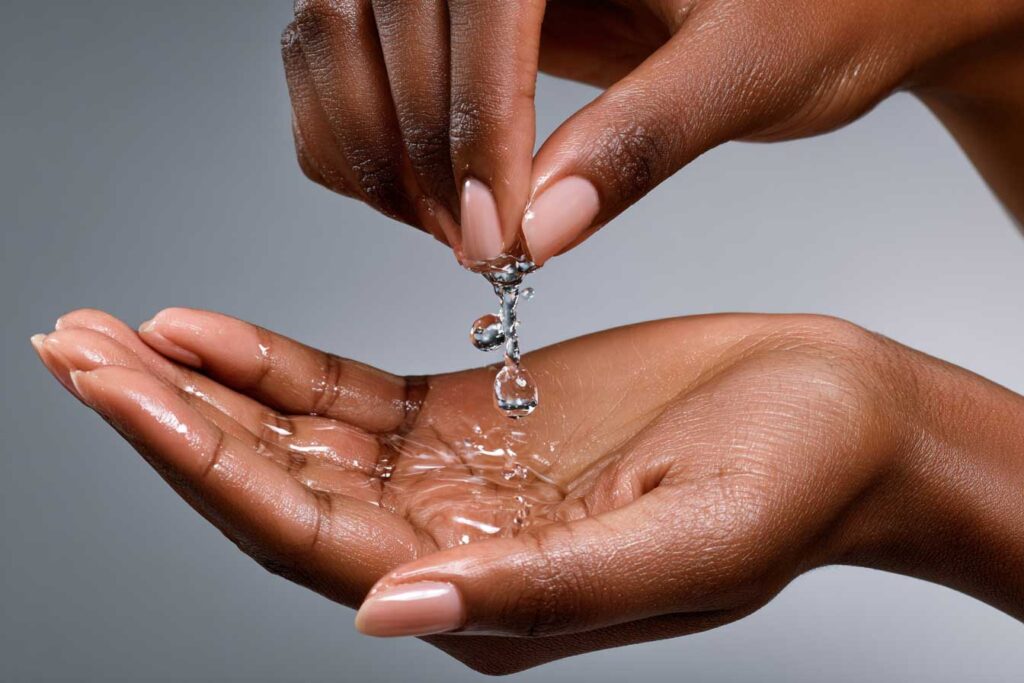
In skincare chemistry, ingredients are classified as either water-soluble or oil soluble. Many of the most beneficial compounds for skin health – like vitamin C derivatives, peptides, and alpha hydroxy acids – are water-soluble. Without a water base, these ingredients can’t be effectively dissolved or delivered.
Water also makes emulsions possible – the elegant blending of oil and water that gives creams their structure. Emulsifiers like glyceryl stearate or cetearyl alcohol act as bridges, holding the water and oil phases together. This system ensures that actives suspended in the water phase remain stable while emollients in the oil phase provide long-lasting moisture.
Removing water disrupts that structure, demanding entirely new formulation strategies. And while anhydrous (water-free) products are growing in popularity, they require alternative carriers such as oils, esters, or butters. Each brings different absorption rates, textures, and preservation challenges.
The Perception of “Filler”
Despite its essential functions, water has a public relations problem. Some consumers see it as a cheap filler that dilutes potency. It’s true that water adds volume inexpensively – but its role is far from empty. The right concentration of water can activate humectants like glycerin or sodium hyaluronate, creating the hydration network that helps skin stay plump and resilient.
When people compare water-based products to oil-rich alternatives, they’re often conflating moisture with richness. A lightweight, water-based moisturizer may feel less “heavy,” but it’s actually increasing hydration by drawing and binding water molecules within the skin. Oils, on the other hand, seal in existing moisture – they don’t provide it.
That’s why Reviva’s Hyaluronic Acid Serum, built on a purified water base, performs so well for dehydrated complexions. Its simple formula – water, hyaluronic acid, and aloe – acts as a moisture magnet, attracting and holding up to 1,000 times its weight in water. It’s the perfect demonstration that sometimes, water is the ingredient that makes all the difference.
Alternatives to Water: The Rise of Anhydrous Formulations
As clean beauty and sustainability movements evolve, brands are exploring ways to reduce or eliminate water. Waterless skincare aims to minimize the industry’s reliance on one of Earth’s most precious resources while offering more concentrated, travel-friendly formats. These formulations replace water with oils, botanical extracts, or humectant alternatives like glycerin and propanediol.
Reviva’s Calming Renewal Serum, for example, uses a blend of argan, hemp, and rosehip oils in place of water. The result is a deeply nourishing serum packed with antioxidants and essential fatty acids. Unlike water-based formulas that focus on hydration, oil-based products prioritize barrier repair and long-term conditioning.
Other water alternatives include:
- Aloe Vera Juice: A soothing plant extract that mimics many of water’s functions while providing anti-inflammatory benefits. Reviva incorporates aloe in dozens of formulas – from their Glycolic Acid Toner to the Collagen Revitalizing Crème – as a botanical substitute for plain water.
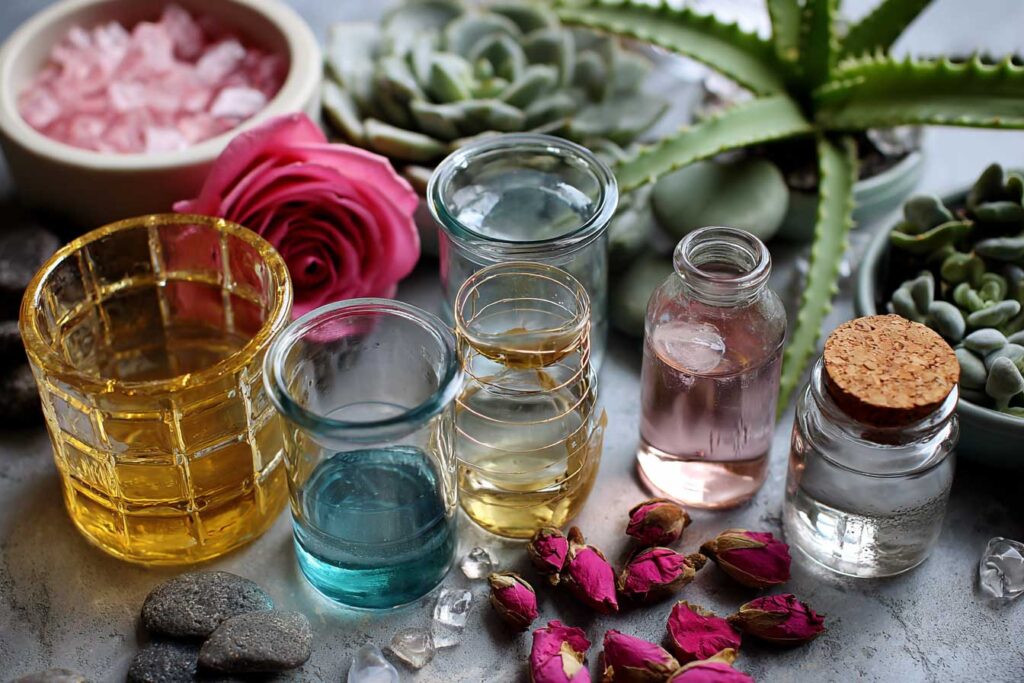
- Hydrosols: Floral waters like rose or chamomile hydrosol offer a natural scent and mild skin benefits, often replacing or complementing water.
- Glycerin and Butylene Glycol: These humectants can serve as primary solvents, offering a thicker texture and enhanced skin adhesion.
- Oil Bases: Ingredients such as jojoba, squalane, and shea butter create anhydrous systems that nourish dry skin while protecting from moisture loss.
These approaches yield concentrated, luxurious textures – but they also limit the types of actives that can be used. Many potent ingredients, including vitamin C derivatives and peptides, degrade or fail to dissolve properly in oil-based environments.
Pros and Cons: Water-Based vs. Water-Free Skincare
The debate between traditional and waterless skincare is less about superiority and more about purpose. Each approach has distinct advantages – and tradeoffs.
Water-Based Formulas: Pros
They feel light, absorb quickly, and deliver hydration directly to the skin. They also support a wide range of actives, making them versatile for serums, toners, and lotions. For sensitive or acne-prone skin, their non-comedogenic nature and pH balance make them gentle and effective.
Water-Based Formulas: Cons
They typically require preservatives to prevent microbial growth. Even though brands like Reviva have eliminated controversial preservatives such as phenoxyethanol, they still rely on safer natural systems like sodium benzoate or potassium sorbate. Water-based products can also have shorter shelf lives once opened.
Waterless or Oil-Based Formulas: Pros
They’re concentrated, require minimal or no preservatives, and are ideal for barrier repair and deep conditioning. They also tend to last longer and perform well in cold or dry climates. For example, Reviva’s Bakuchiol Plus Serum uses nourishing plant oils to deliver retinol-like benefits without irritation, a feat difficult to achieve in water-heavy systems.
Waterless or Oil-Based Formulas: Cons
They can feel heavy, clog pores for certain skin types, and may not deliver hydration to deeper layers. They also limit ingredient versatility since most antioxidants, acids, and peptides prefer a water phase.
In short, water-based products replenish hydration, while oil-based formulas preserve it. The best routines often combine both – layering a water-based serum under an oil-rich cream or balm.
Sustainability and the Future of Water in Skincare
As water scarcity becomes a global concern, even heritage brands are rethinking how much water they use – not only in formulas but across production. While the average skincare product is 60–80% water, innovators are finding creative ways to reduce that footprint.
Concentrates, powders, and solid cleansers eliminate the need for bulky water-based packaging. Some brands now produce solid serums or water-activated masks, where consumers add their own water at home. These formats cut shipping weight and energy use while extending shelf life.
Reviva’s perspective aligns with functional simplicity rather than extremism. Water remains central when it improves performance, but the brand increasingly relies on aloe, botanical oils, and humectant gels to offset unnecessary dilution. The aim isn’t to abandon water – it’s to use it purposefully, where it enhances rather than replaces meaningful ingredients.
For all the innovation surrounding waterless beauty, water continues to be an unparalleled medium for skin compatibility. Human skin itself is about 64% water.
Why Water Still Matters
For all the innovation surrounding waterless beauty, water continues to be an unparalleled medium for skin compatibility. Human skin itself is about 64% water. When a formula mirrors that composition, the skin recognizes it instantly. Hydration equals communication – water-based formulas speak the same biological language as your skin’s cells.
Moreover, water acts as the initial bridge between cleansing and care. In Reviva’s routines, the Cleansing Milk and Glycolic Acid Toner – both water-based – prepare the skin by clearing impurities and rebalancing pH, ensuring subsequent treatments penetrate efficiently. Eliminating water from these foundational steps would compromise product absorption and sensory experience alike.
The Consumer Experience
The emotional and tactile aspects of skincare matter as much as chemistry. Water-based products feel refreshing, cooling, and familiar. They deliver that instant “ahh” sensation – a sensory reassurance of cleanliness and hydration. It’s part of what makes daily rituals comforting rather than clinical.
Waterless products, in contrast, often require adaptation. Concentrated oils and balms demand warming between fingers, careful layering, and sometimes patience before makeup application. For those accustomed to quick-absorbing gels or mists, this can feel like a step backward in convenience.
Still, consumer curiosity about sustainability, minimalism, and efficacy keeps waterless beauty growing. Many appreciate the concentrated feel of a rich oil serum or butter balm, especially for nighttime routines.
The Ideal Balance
Perhaps the most realistic future for skincare isn’t about choosing sides – it’s about balance. A thoughtful combination of both approaches respects the chemistry of hydration and the efficiency of concentrated nourishment.
A Reviva-style regimen might start with a water-based toner to rehydrate and rebalance, followed by a hyaluronic serum to bind moisture, and finish with an oil-based treatment like the Calming Renewal Serum or Bakuchiol Plus Serum to seal everything in. This pairing reflects the skin’s natural structure: a water-rich interior protected by a lipid-based barrier.
That balance – between water and oil, hydration and nourishment – is what gives skin its resilience and glow.
The Future: Smart Hydration
Emerging research points to “intelligent” moisturizers – formulas that adjust their hydration delivery based on environmental humidity and skin condition. Ingredients like biosaccharide gums, cross-linked hyaluronic acids, and micro-encapsulated oils are leading this evolution. These hybrid systems still rely on water but use it more efficiently, locking in moisture while reducing evaporation loss.
Rather than removing water entirely, the trend is toward smarter water use – ensuring every drop in a jar contributes meaningfully to performance.
When Every Drop Matters
The question isn’t whether skincare needs water. It’s whether it uses it wisely. Water’s role as a solvent, carrier, and hydrator remains unmatched, even as brands explore botanical juices, gels, and oils as substitutes. What matters most is intention: that every ingredient – whether water or wax – serves the skin, not just the formula.
In the end, the debate about water in skincare mirrors how we think about balance in life itself. Too much of anything – even something as pure as water – can dilute meaning. But in the right proportion, it brings everything together, allowing science, nature, and skin to speak the same simple, elegant language.