
-
×
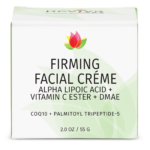 Firming Facial Créme with Alpha Lipoic Acid + Vitamin C Ester + DMAE
1 × $28.00
Firming Facial Créme with Alpha Lipoic Acid + Vitamin C Ester + DMAE
1 × $28.00 -
×
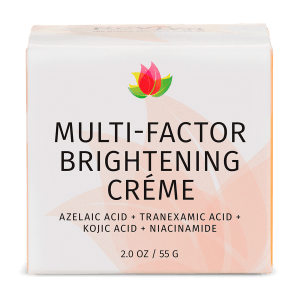 Multi-Factor Brightening Créme
1 × $42.00
Multi-Factor Brightening Créme
1 × $42.00 -
×
 Sea Salt Cleansing Gel
1 × $18.00
Sea Salt Cleansing Gel
1 × $18.00
Astaxanthin
« Back to Glossary Index
« Back to Glossary Index
Astaxanthin, the crimson carotenoid that paints salmon flesh pink and puts the blush in flamingo feathers, is now migrating from seafood platters to serum droppers. Sourced primarily from the microalga Haematococcus pluvialis through CO₂ supercritical extraction, astaxanthin brandishes an antioxidant potency scientists routinely rank fifty times stronger than vitamin E and six thousand times greater than vitamin C in singlet-oxygen quenching assays. The secret lies in its conjugated double bonds, which span both polar and non-polar membranes, allowing the molecule to insert itself across lipid bilayers and neutralize radicals on either side like a cross-domain sentry.
In skin, astaxanthin’s broad-spectrum protection manifests as reduced UV-induced wrinkle depth, preserved epidermal thickness, and lower matrix metalloproteinase (MMP-1) activity – effects documented in a double-blind trial that combined 6 mg oral capsules with 2-percent topical gel. Participants showed a 19-percent improvement in moisture and a 7 percent rise in elasticity, measured by corneometry and viscoelastic analysis. Unlike β-carotene, astaxanthin cannot convert to vitamin A, eliminating hypervitaminosis risk.
Formulating the pigment poses challenges. Its vivid orange-red hue can tint creams a sunset shade, which marketers sometimes flaunt as a “visible antioxidant” signature but which can conflict with mineral sunscreen opacifiers. Encapsulation in lipid nanoparticles or cyclodextrin complexes mutes the color and shields the molecule from photodegradation. Because astaxanthin is oil-soluble, water-based essences require nanoemulsions or phosphatidylcholine carriers to disperse evenly.
Consumers typically meet astaxanthin in after-sun cooling gels, rejuvenating sleeping masks, or brightening facial oils paired with sea-buckthorn and rosehip. A nightly ritual of three drops can impart a healthy apricot cast – temporary but flattering – while the underlying antioxidant action keeps photoaging at bay. For those on prescription retinoids, astaxanthin serves as a soothing adjunct, mitigating oxidative flare-ups without clogging pores. And yes, it is reef-safe and vegan, making it a darling of eco-conscious shoppers.
Astaxanthin (Wikipedia)
Astaxanthin /æstəˈzænθɪn/ is a keto-carotenoid within a group of chemical compounds known as carotenoids or terpenes. Astaxanthin is a metabolite of zeaxanthin and canthaxanthin, containing both hydroxyl and ketone functional groups.
 | |
 | |
| Names | |
|---|---|
| IUPAC name
(3S,3′S)-3,3′-Dihydroxy-β,β-carotene-4,4′-dione
| |
| Systematic IUPAC name
(6S,6′S)-3,3′-[(1E,3E,5E,7E,9E,11E,13E,15E,17E)-3,7,12,16-Tetramethyloctadeca-1,3,5,7,9,11,13,15,17-nonaene-1,18-diyl]bis(6-hydroxy-2,4,4-trimethylcyclohex-2-en-1-one) | |
Other names
| |
| Identifiers | |
3D model (JSmol)
|
|
| ChEBI | |
| ChEMBL | |
| ChemSpider | |
| ECHA InfoCard | 100.006.776 |
| E number | E161j (colours) |
PubChem CID
|
|
| UNII | |
CompTox Dashboard (EPA)
|
|
| |
| |
| Properties | |
| C40H52O4 | |
| Molar mass | 596.84 g/mol |
| Appearance | red solid powder |
| Density | 1.071 g/mL |
| Melting point | 216 °C (421 °F; 489 K) |
| Boiling point | 774 °C (1,425 °F; 1,047 K) |
| Solubility | 30 g/L in DCM; 10 g/L in CHCl3; 0.5 g/L in DMSO; 0.2 g/L in acetone |
| Pharmacology | |
| Legal status |
|
Except where otherwise noted, data are given for materials in their standard state (at 25 °C [77 °F], 100 kPa).
| |


It is a lipid-soluble pigment with red coloring properties, which result from the extended chain of conjugated (alternating double and single) double bonds at the center of the compound. The presence of the hydroxyl functional groups and the hydrophobic hydrocarbons render the molecule amphiphilic.
Astaxanthin is produced naturally in the freshwater microalgae Haematococcus pluvialis, the yeast fungus Xanthophyllomyces dendrorhous (also known as Phaffia rhodozyma) and the bacteria Paracoccus carotinifaciens. When the algae are stressed by lack of nutrients, increased salinity, or excessive sunshine, they create astaxanthin. Animals who feed on the algae, such as salmon, red trout, red sea bream, flamingos, and crustaceans (shrimp, krill, crab, lobster, and crayfish), subsequently reflect the red-orange astaxanthin pigmentation.
Astaxanthin is used as a dietary supplement for human, animal, and aquaculture consumption. Astaxanthin from algae, synthetic and bacterial sources is generally recognized as safe in the United States. The US Food and Drug Administration has approved astaxanthin as a food coloring (or color additive) for specific uses in animal and fish foods. The European Commission considers it as a food dye with E number E161j. The European Food Safety Authority has set an Acceptable Daily Intake of 0.2 mg per kg body weight, as of 2019. As a food color additive, astaxanthin and astaxanthin dimethyldisuccinate are restricted for use in Salmonid fish feed only.