-
×
 Facial Firming Serum (5% DMAE Concentrate)
1 × $24.00
Facial Firming Serum (5% DMAE Concentrate)
1 × $24.00
You may be interested in…


Hydrogen peroxide is a relatively stable reactive oxygen species formed when superoxide dismutase converts two superoxide anions into hydrogen peroxide and oxygen. Unlike many other reactive oxygen species, hydrogen peroxide is not itself a free radical since it has no unpaired electrons, and it is comparatively mild and longer lived, which allows it to diffuse across cell membranes and travel further within tissue than more reactive, short-lived species. In small, controlled amounts, hydrogen peroxide actually functions as a cellular signaling molecule involved in normal processes like wound healing and immune response. The concern arises when hydrogen peroxide accumulates in excess or comes into contact with transition metals like iron or copper, because that combination (known as the Fenton reaction) generates the far more dangerous hydroxyl radical. The enzymes catalase and glutathione peroxidase are the body’s main tools for breaking hydrogen peroxide down into water and oxygen before it can reach that threshold.
 | |||
| |||
| Names | |||
|---|---|---|---|
| IUPAC name
Hydrogen peroxide
| |||
| Systematic IUPAC name
Peroxol Dioxidane | |||
| Other names
Oxidanyl
Perhydroxic acid O-hydroxyol Oxygenated water Peroxaan | |||
| Identifiers | |||
3D model (JSmol)
|
|||
| ChEBI | |||
| ChEMBL | |||
| ChemSpider | |||
| ECHA InfoCard | 100.028.878 | ||
| EC Number |
| ||
| KEGG | |||
PubChem CID
|
|||
| RTECS number |
| ||
| UNII | |||
| UN number | 2015 (>60% soln.) 2014 (20–60% soln.) 2984 (8–20% soln.) | ||
CompTox Dashboard (EPA)
|
|||
| |||
| |||
| Properties | |||
| H2O2 | |||
| Molar mass | 34.014 g·mol−1 | ||
| Appearance | Very light blue liquid | ||
| Odor | slightly sharp | ||
| Density | 1.11 g/cm3 (20 °C, 30% (w/w) solution) 1.450 g/cm3 (20 °C, pure) | ||
| Melting point | −0.43 °C (31.23 °F; 272.72 K) | ||
| Boiling point | 150.2 °C (302.4 °F; 423.3 K) (decomposes) | ||
| Miscible | |||
| Solubility | soluble in ether, alcohol insoluble in petroleum ether | ||
| log P | −0.43 | ||
| Vapor pressure | 5 mmHg (30 °C) | ||
| Acidity (pKa) | 11.75 | ||
| −17.7·10−6 cm3/mol | |||
Refractive index (nD)
|
1.4061 | ||
| Viscosity | 1.245 cP (20 °C) | ||
| 2.26 D | |||
| Thermochemistry | |||
Heat capacity (C)
|
1.267 J/(g·K) (gas) 2.619 J/(g·K) (liquid) | ||
Std enthalpy of
formation (ΔfH⦵298) |
−187.80 kJ/mol | ||
| Pharmacology | |||
| A01AB02 (WHO) D08AX01 (WHO), D11AX25 (WHO), S02AA06 (WHO) | |||
| Hazards | |||
| GHS labelling: | |||
  
| |||
| Danger | |||
| H271, H302, H314, H332, H335, H412 | |||
| P280, P305+P351+P338, P310 | |||
| NFPA 704 (fire diamond) | |||
| Flash point | Non-flammable | ||
| Lethal dose or concentration (LD, LC): | |||
LD50 (median dose)
|
1518 mg/kg[citation needed] 2000 mg/kg (oral, mouse) | ||
LC50 (median concentration)
|
1418 ppm (rat, 4 hr) | ||
LCLo (lowest published)
|
227 ppm (mouse) | ||
| NIOSH (US health exposure limits): | |||
PEL (Permissible)
|
TWA 1 ppm (1.4 mg/m3) | ||
REL (Recommended)
|
TWA 1 ppm (1.4 mg/m3) | ||
IDLH (Immediate danger)
|
75 ppm | ||
| Safety data sheet (SDS) | ICSC 0164 (>60% soln.) | ||
| Related compounds | |||
Related compounds
|
Water Oxywater Ozone Hydrazine Hydrogen disulfide Hydrogen thioperoxide Trioxidane Dioxygen difluoride | ||
Except where otherwise noted, data are given for materials in their standard state (at 25 °C [77 °F], 100 kPa).
| |||
Hydrogen peroxide is a chemical compound with the formula H2O2. In its pure form, it is a very pale blue liquid; however, at lower concentrations, it appears colorless due to the faintness of the blue coloration. The molecule hydrogen peroxide is asymmetrical and highly polarized. Its strong tendency to form hydrogen bond networks results in greater viscosity compared to water. It is used as an oxidizer, bleaching agent, and antiseptic, usually as a dilute solution (3%–6% by weight) in water for consumer use and in higher concentrations for industrial use. Concentrated hydrogen peroxide, or "high-test peroxide", decomposes explosively when heated and has been used as both a monopropellant and an oxidizer in rocketry.
Hydrogen peroxide is a reactive oxygen species and the simplest peroxide, a compound having an oxygen–oxygen single bond. It decomposes slowly into water and elemental oxygen when exposed to light, and rapidly in the presence of organic or reactive compounds. It is typically stored with a stabilizer in a weakly acidic solution in an opaque bottle. Hydrogen peroxide is found in biological systems including the human body. Enzymes that use or decompose hydrogen peroxide are classified as peroxidases.
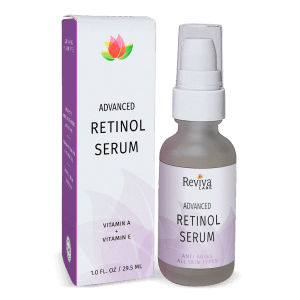
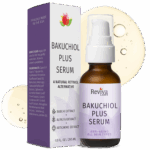
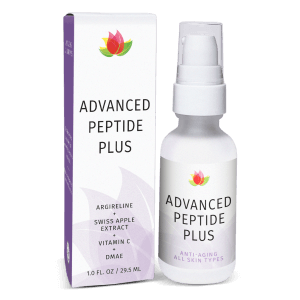
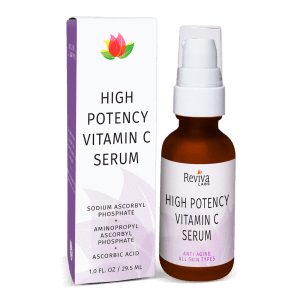

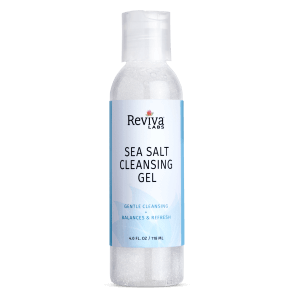
It’s a great feeling to know Reviva is being “handed down” from mother to daughter – and even to their granddaughters. And for our next generation of loyal Reviva users we promise to keep delivering the natural skin care people respect and trust.
Because of our commitment to the safe, effective ingredients and formulations, most of our products are suitable for all skin types. And if a particular formula is not advisable for all skin types, we'll say so on the packaging.
Book your complimentary (free) 15-minute virtual skincare consultation (via Google Meet), and one of our consultants will answer your questions and help you to customize a helpful Reviva skin care routine.
Reviva Labs is committed to being cruelty-free and has been since our beginning. We’ve never tested on animals, and we’ve remained focused on sourcing our ingredients and all components of our products from like-minded companies.