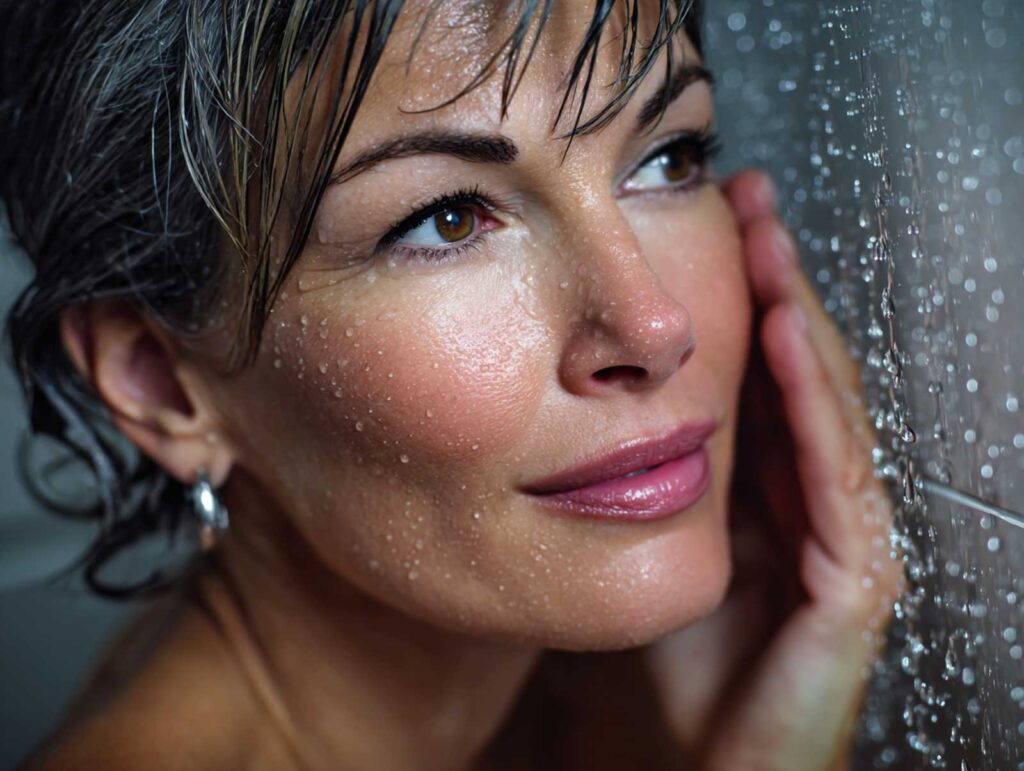
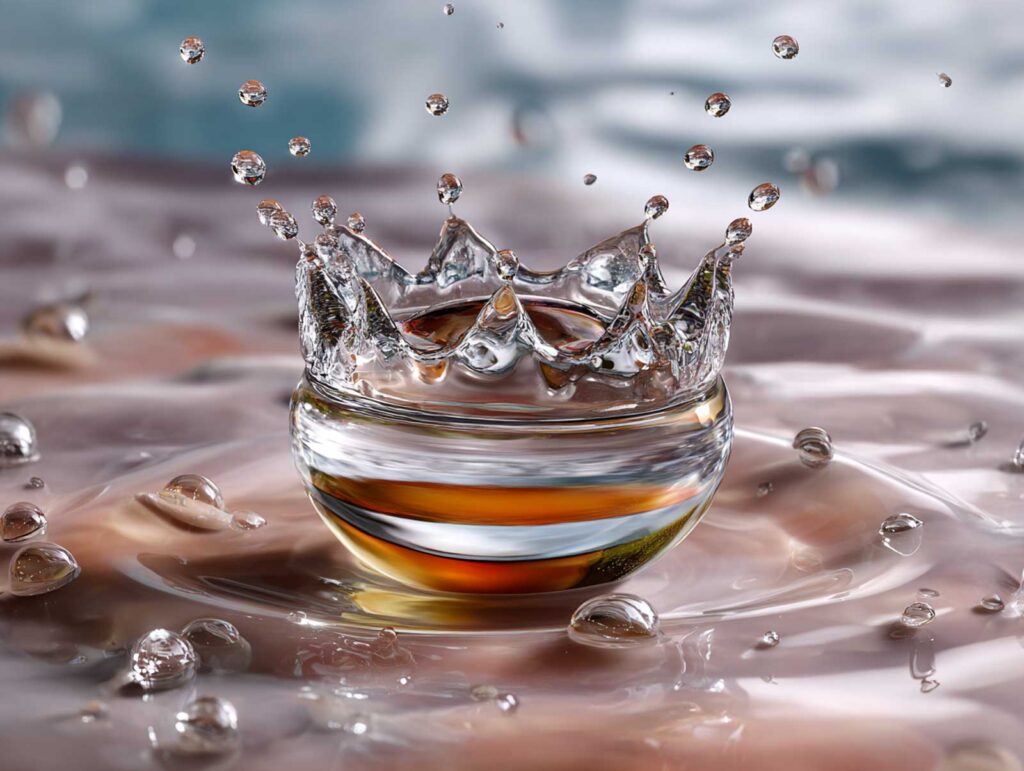
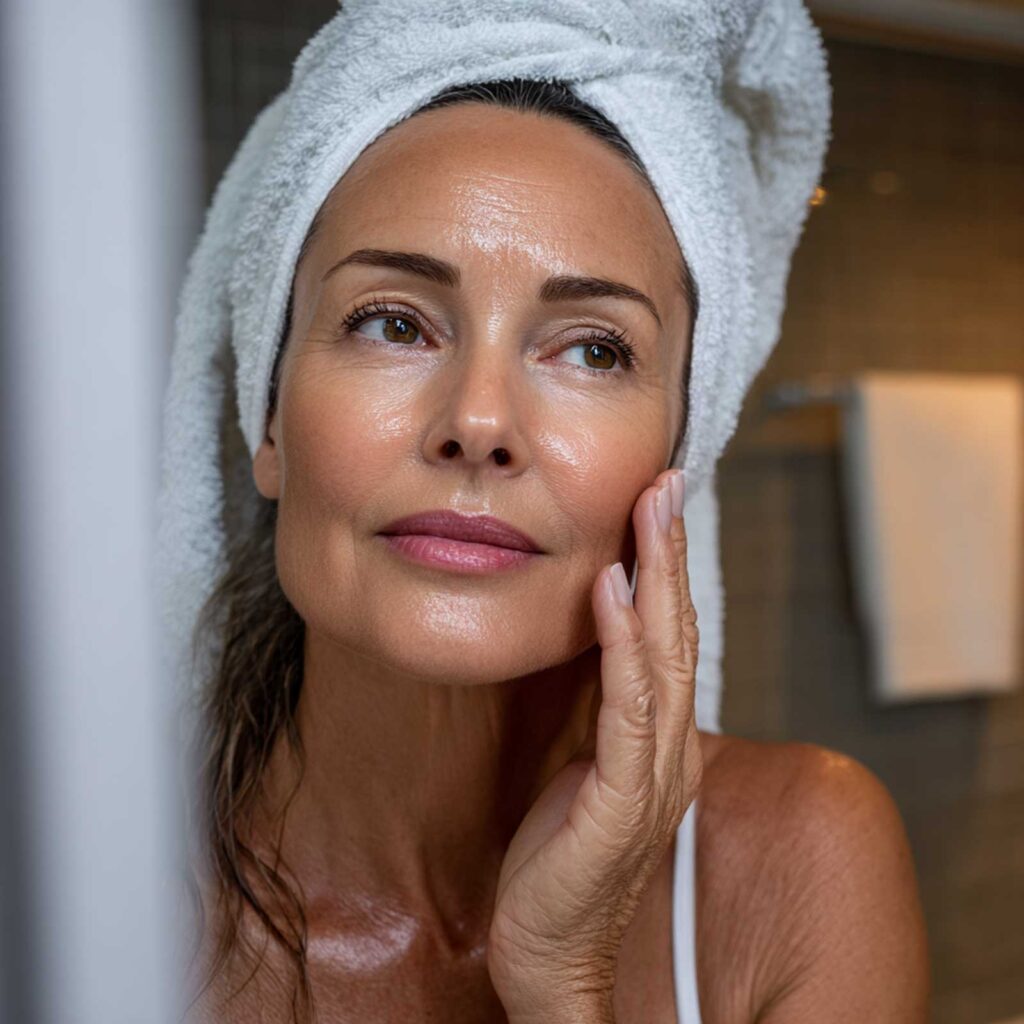
I remember the first time a laboratory slide lit up in brilliant color as a tiny speck of hyaluronic acid swelled with water. The chemist beside me smiled and shared a surprising figure: a single gram of this naturally occurring sugar can attract and bind up to 1,000 grams of water. That visual – and the mind-boggling statistic – changed how I cared for my own complexion and how I describe moisture science to friends, clients, and curious readers. Skin may look solid in the mirror, yet it behaves like a living sponge, and hyaluronic acid is the ingredient that helps that sponge stay springy, dewy, and resilient day after day.
Plump, comfortable skin is never an accident; it is the result of an intact barrier, balanced natural oils, and a steady reservoir of water in the dermis. Hyaluronic acid, often abbreviated HA, excels at topping up that reservoir because its molecular structure is peppered with negative charges that tug at water molecules like magnets. The process is passive – HA does not “create” moisture – but the impact is active and visible. When epidermal cells sit in a water-rich environment they arrange themselves more evenly, reflect light more smoothly, and transmit internal signals that sustain healthy turnover.
Youthful skin naturally contains an abundance of HA, yet levels decline with age, pollution, and ultraviolet exposure. By our mid-thirties the decline becomes measurable, and many of us notice that foundation catches around the nose or that smile lines look etched by midday. Replacing lost HA topically gives the skin a fighting chance to keep its internal water percentage closer to that of younger tissue, and unlike some powerhouse ingredients, hyaluronic acid suits even the most reactive complexions.
Why Water Matters to Every Complexion
When stratum corneum cells flatten and overlap they form a roof-tile pattern that limits evaporation. Water trapped beneath that roof softens keratin, making skin feel flexible rather than brittle. In dry indoor air the gradient pushes moisture outward so aggressively that the roof begins to leak, a process we perceive as tightness or flaking. HA molecules act like emergency plumbers, wedging between those tiles and holding water until the ambient air or a protective cream reduces the stress.
Environmental factors complicate the story. Winter heating saps humidity, long hot showers strip lipids, and leave-on acids or retinoids accelerate turnover before new lipids have formed. Each stressor chips away at the reservoir, and because the sensation of thirst in skin lags behind the actual deficit, many of us realize the problem only after the barrier cracks. Adding hyaluronic acid to a routine is not merely about comfort; it is a strategic repair that restores osmotic balance so the rest of the skincare lineup can perform optimally.
Dermatologists also praise HA for its role in wound healing. Fibroblasts migrating to a cut follow HA-rich pathways, and topical application can encourage those cells in everyday micro-injuries such as post-exfoliation redness. The same chemistry that soothes a scrape can calm a windburned cheek, which is why many professionals recommend an HA serum immediately after in-office peels or lasers.
The Science Behind the Molecule
Hyaluronic acid is a glycosaminoglycan, a tongue-twister that describes long chains of repeating sugar units. Those chains vary in length, and the length determines how each form behaves. High molecular weight HA sits near the surface, reducing transepidermal water loss by forming an invisible, flexible film. Low molecular weight HA weaves deeper, binding water around collagen and elastin networks where plumpness translates into fewer visible fine lines. A well-formulated product often blends multiple weights, a fact worth scanning for on ingredient decks.
Once inside a bottle HA usually appears as “sodium hyaluronate,” the salt form that dissolves easily and lends itself to more stable, lightweight textures. The salt form does not dilute potency. It simply ensures that the polymer unfolds evenly rather than clumping, so every drop reaches skin at full activity. Contrary to online myths, sodium hyaluronate does not “pull” water out of skin in dry climates as long as at least a whisper of humidity remains, or a sealing moisturizer follows.
Injectable fillers use cross-linked hyaluronic acid that resists enzymatic breakdown for months, yet over-the-counter skincare relies on non-cross-linked versions that rinse away cleanly and refresh the reservoir without altering facial volume. That distinction reassures cautious users: topical HA cannot change facial contours overnight, but it can visibly smooth texture within minutes and support elasticity for the long haul.
Spotlight on Skin Benefits That Show Up in the Mirror
The most quoted benefit is plumping of fine lines, but real-world users often notice something even more satisfying – makeup glides rather than clings, and midday creasing softens. HA draws just enough water to cushion powder pigments, so they float rather than settle. Regular use can also diminish the appearance of enlarged pores because hydrated cells line follicles more evenly, casting smaller shadows.
Barrier support is equally significant. Healthy skin maintains a slightly acidic pH, produces lipids in orderly layers, and hosts a diverse microbiome. Dehydration disrupts each pillar. HA serves as a linchpin by stabilizing water content, so lipid-forming enzymes operate efficiently, and resident microbes find the microenvironment they prefer. Many users who add HA report fewer flare-ups of sensitivity or redness after several weeks, evidence that the barrier has regained competence.
Elasticity improves along with moisture because collagen fibrils perform better in a hydrated matrix. Imagine a trampoline: when the mat is taut and moist it rebounds effortlessly, yet when it dries and stiffens it sags. Collagen behaves in a parallel fashion, and studies show measurable increases in skin elasticity after consistent topical HA application.
Building a Two Step Morning, One Step Night Routine
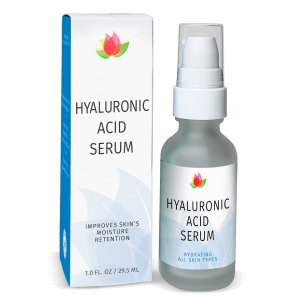
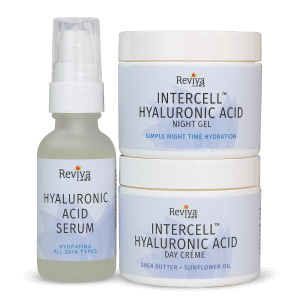
Mornings move fast, so I favor a serum-plus-cream sequence that completes itself before the kettle whistles. Reviva’s Hyaluronic Acid Serum is my first layer on damp skin. The formula suspends pure sodium hyaluronate in an aloe and green tea infused base that feels featherlight, spreads quickly, and absorbs without stickiness. One dropper covers face and neck, and because the ingredient list skips added fragrance, I can pat the residue over the orbital bone without tearing.
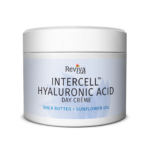
While the serum settles, I brush teeth and jot a mental task list. By the time the list is done the surface feels slightly springy – proof that water has moved where it is needed. Next comes INTERCELL Hyaluronic Acid Day Créme, a silky emulsion enriched with sunflower oil, shea butter, and protective glycogen. The cream locks the serum in place, but its neat, non-greasy finish respects sunscreen and makeup. In muggy July weather it doubles as a stand-alone moisturizer, whereas in February I top it with a thin facial oil or extra moisturizer. Either way the pairing leaves my skin calm through afternoon video calls when overhead lighting is unforgiving.
Evening Care That Works While You Dream
Night care should be restorative rather than elaborate, especially if a morning routine already handles antioxidants and sun defense. INTERCELL Hyaluronic Acid Night Gel rises to that philosophy. The transparent gel blends sorbitol, sodium PCA, and HA into a cool cushion that feels like water breaking over thirsty sand. I smooth a thin layer after cleansing and let it set while dimming lights. A few minutes later I touch my cheek; it feels dew-kissed but not wet, proof that the gel has merged with the skin’s own extracellular matrix. Because the formula omits occlusive waxes it never stains pillowcases, and I wake up to a complexion that looks rested even when sleep was short.
Consistency turns these three steps into a cycle of continuous hydration. The serum refills the well, the Day Créme shields it through daylight stress, and the Night Gel maintains levels while the body repairs itself. No confusing rotations, no elaborate layering charts, just straightforward chemistry working with skin’s natural rhythm. That simplicity matters for adherence; we stick with routines that fit our lifestyle, not those that demand a chemistry degree before breakfast.
Frequently Asked Questions in Real Life Conversations
People often ask whether oily skin needs hyaluronic acid or if it will trigger shine. Oil and water are independent variables. Sebaceous glands release lipids, yet water evaporates regardless of oil production. Many oily individuals suffer dehydration beneath the sheen, and HA replenishes without clogging follicles. Another question centers on seasonal adjustment. Because HA attracts ambient moisture, users in desert climates sometimes fear back-draft dehydration. The solution is pragmatic: mist with water first or apply HA immediately after cleansing when skin is still damp, then seal with a light cream or sunscreen.
Layering with acids or retinoids can sound tricky, yet HA’s neutral chemistry plays well with nearly every active. Apply exfoliating formulas first so they contact fresh skin, then follow with HA to soothe and restore. Finally, storage queries pop up. Keep HA products away from direct sunlight and extreme heat, but refrigeration is optional. The cool temperature may feel refreshing yet is not required for potency.
Patch testing deserves a final mention. While HA itself rarely irritates, other supporting ingredients can, so apply a drop behind the ear for two nights before full-face use. Caution is care, not paranoia.
Putting It All Together for Long Term Radiance
Skin thrives when water is abundant and properly managed. Hyaluronic acid offers a direct route to that abundance, and its safety profile makes it one of the easiest upgrades at any age. Reviva’s trio – the Hyaluronic Acid Serum, INTERCELL Day Créme, and INTERCELL Night Gel – illustrates how effective that upgrade can be when formulations are clean, textures pleasant, and steps minimal. I have coached countless friends and family through complicated regimens only to watch them migrate back to simpler patterns that include HA at the core. Their feedback echoes my own experience: complexion looks fresher, feels smoother, and handles environmental swings with newfound resilience.
Writing this piece reminded me of that glowing slide in the lab and the simple joy of skin that drinks its fill. My dresser may hold amps of exfoliants and brighteners, yet the HA serum and its two companions keep pride of place. When I greet my reflection on rushed mornings or tired evenings, hydrated skin greets me back, and that reciprocity never gets old.
As a long time natural skin care fan I discovered Reviva Labs many years ago. After buying and using Reviva products for several years, I started contributing to Reviva Labs' blog in 2015.


 INTERCELL™ Hyaluronic Acid Night Gel
1 × $18.00
INTERCELL™ Hyaluronic Acid Night Gel
1 × $18.00 Reviva Labs Catalog 1 × $0.00
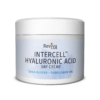 INTERCELL™ Hyaluronic Acid Day Créme
$18.00
INTERCELL™ Hyaluronic Acid Day Créme
$18.00 Collagen Night Créme
$20.00
Collagen Night Créme
$20.00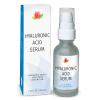 Hyaluronic Acid Serum
$24.20
Hyaluronic Acid Serum
$24.20 High Potency Collagen Serum
$28.00
High Potency Collagen Serum
$28.00