
Clean Beauty, Ingredients, Reviva Labs, Skin Care
Why Hyaluronic Acid Size Matters More Than You Think

Mar
There is a quiet assumption in skincare that smaller is better. Smaller molecules penetrate deeper. Deeper means more effective. That logic sounds clean and modern, and it has driven a wave of fractionated and low molecular weight hyaluronic acid formulas across the market. But skin biology does not always reward that kind of thinking. In fact, when it comes to hyaluronic acid, smaller can come with trade-offs that many brands choose to ignore.
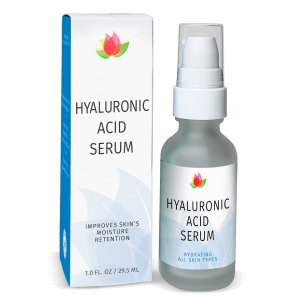
Hyaluronic Acid Recommended Products
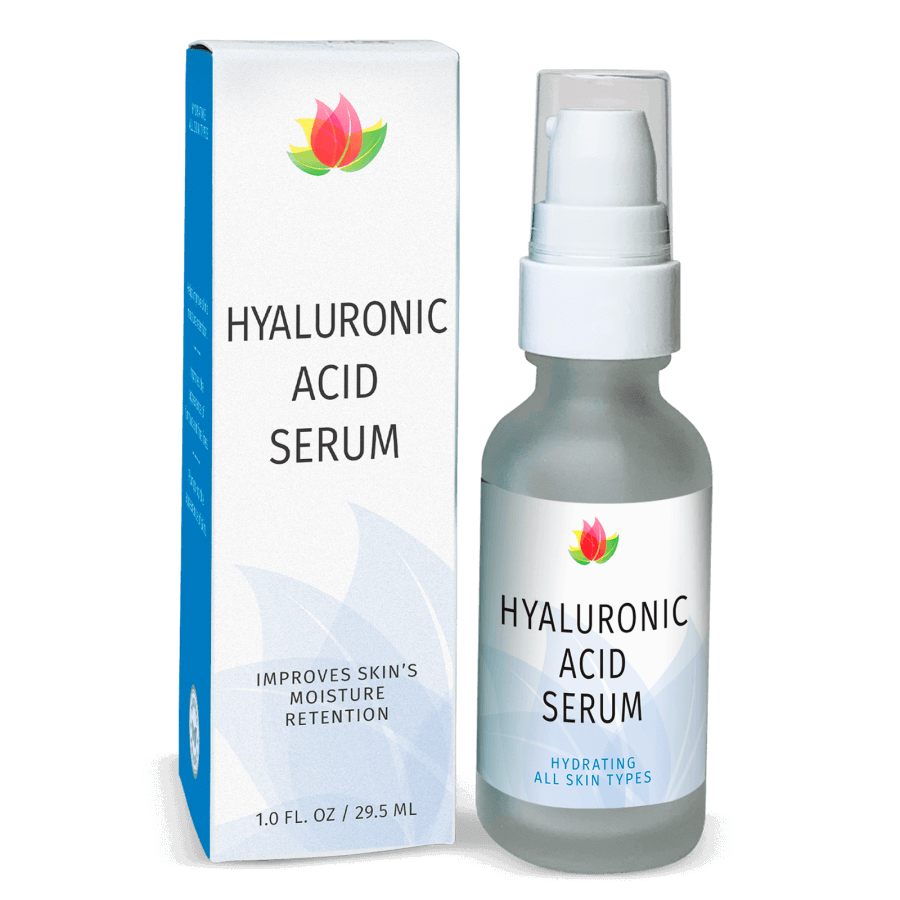

At Reviva Labs, that assumption was challenged early. Stephen Strassler looked at hyaluronic acid not as a trend to chase, but as a functional ingredient with a clear job. That job was not to force its way into the skin. It was to sit where it could do the most good, at the surface, holding water, supporting hydration, and reinforcing the skin’s natural barrier. That decision shaped how hyaluronic acid is used in the brand’s formulations to this day.
To understand why, you need to step back and look at how hyaluronic acid behaves in the body, not just in a lab test or marketing claim.

What Hyaluronic Acid Actually Does on Skin
Hyaluronic acid is often described as a moisture magnet, and that description holds up under scrutiny. It binds water, a lot of it, up to 1,000 times its weight under ideal conditions. That ability is not abstract. It translates directly into how skin looks and feels. When the surface of the skin holds more water, it appears smoother, softer, and more resilient.
But where that hydration happens matters. The outermost layer of the skin, the stratum corneum, acts as a barrier. It regulates water loss and protects against environmental stress. When that layer is well hydrated, it functions better. When it dries out, everything else suffers. Fine lines become more visible. Texture becomes uneven. Sensitivity increases.
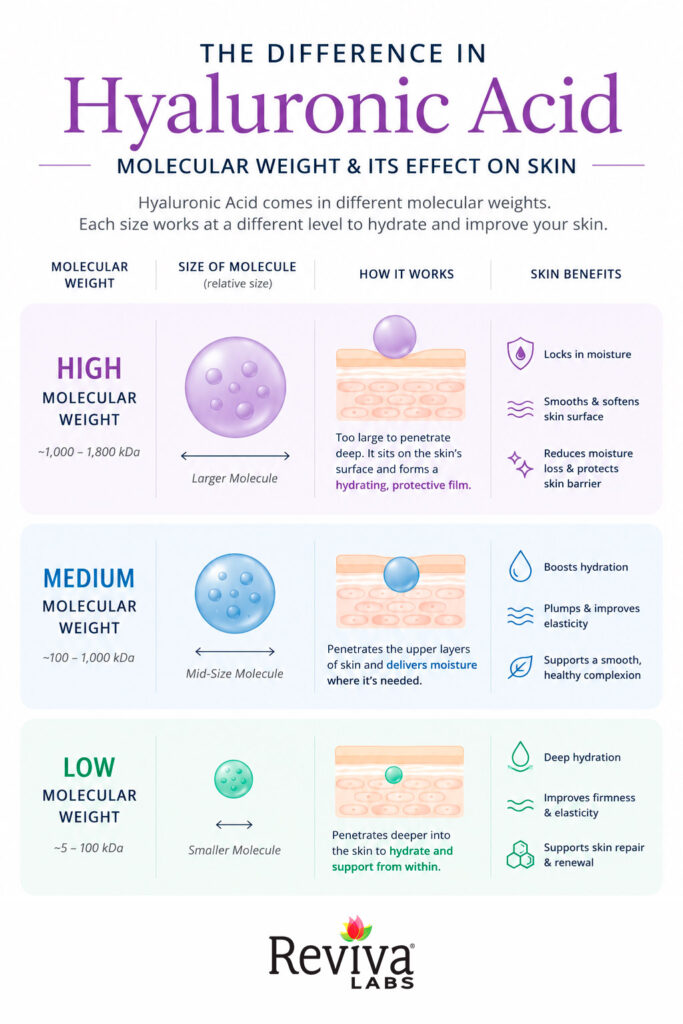
High molecular weight hyaluronic acid sits on that surface. It forms a light, breathable film. It pulls in moisture from the environment and from deeper within the skin. It slows down water loss. It supports the barrier instead of trying to bypass it. That aligns directly with the idea of functional skincare, where each ingredient serves a clear purpose and supports the skin’s natural processes rather than disrupting them .
This is where the conversation usually shifts. Because many modern formulas are built around a different goal.

The Rise of Low Molecular Weight Hyaluronic Acid
Low molecular weight hyaluronic acid is smaller. That means it can penetrate deeper into the skin. On paper, that sounds like an upgrade. Deeper penetration feels more advanced. It gives marketers something to talk about. It creates a sense of innovation.
But biology is not impressed by marketing language. The body treats hyaluronic acid differently depending on its size. High molecular weight hyaluronic acid is associated with normal, healthy tissue. It signals stability. It supports hydration and structure. Low molecular weight hyaluronic acid tells a different story.
In the body, smaller fragments of hyaluronic acid are often created during stress or injury. When tissue is damaged, enzymes break down larger hyaluronic acid molecules into smaller pieces. These fragments are not neutral. They act as signals. They can trigger inflammatory responses. They can activate immune pathways. They are part of how the body responds to trauma.
That does not mean low molecular weight hyaluronic acid is inherently bad. But it does mean it plays a different role. It is not simply a smaller version of the same thing. It behaves differently. It communicates differently with the skin.
This is the nuance that often gets lost. The conversation becomes about penetration depth instead of biological context. And that leads to formulations that prioritize marketing claims over long-term skin health.
Why Surface Hydration Still Wins
There is a tendency to assume that deeper is always better in skincare. But many of the most important functions happen at the surface. The skin barrier is not just a passive layer. It is active. It regulates hydration. It protects against irritants. It plays a role in inflammation.
When you support that barrier, you improve the overall condition of the skin. Hydration improves. Sensitivity decreases. Other products perform better. That is not theory. It is observable in how skin responds over time.
High to medium-high molecular weight hyaluronic acid works with that system. It does not try to bypass it. It creates an environment where the barrier can do its job more effectively. It helps maintain water content where it matters most.
Stephen understood this early. Instead of chasing penetration for its own sake, he focused on function. The goal was not to push hyaluronic acid deeper. The goal was to use it where it delivers the most consistent, visible benefit. That meant keeping it at the surface.
This approach also avoids unnecessary complexity. When you start breaking hyaluronic acid into smaller fragments or combining multiple molecular weights, you introduce more variables. You increase the risk of irritation for some users. You shift the focus away from simple, reliable hydration.
Keeping things straightforward often leads to better results. That philosophy has been part of Reviva Labs from the beginning.

The Inflammation Question No One Talks About Enough
Inflammation is one of the most important factors in skin aging and skin health. Chronic low-level inflammation can accelerate visible aging. It can weaken the barrier. It can make skin more reactive.
Low molecular weight hyaluronic acid has been studied for its role in inflammatory signaling. In certain contexts, it can stimulate the production of inflammatory cytokines. Again, this is part of how the body responds to injury. It is not inherently negative. It is situational.
But when you apply that concept to daily skincare, the question becomes more relevant. Do you want to introduce signals that are associated with tissue stress on a regular basis? Or do you want to support a stable, hydrated environment?
This is where formulation philosophy matters. Not every ingredient needs to push the limits of penetration. Not every formula needs to follow the latest trend. Sometimes the best approach is to support the skin in a way that aligns with its natural behavior.
High molecular weight hyaluronic acid does that. It reinforces hydration without introducing unnecessary signals. It works with the skin instead of trying to outsmart it.
The Misleading Appeal of Fractionated Hyaluronic Acid
Fractionated hyaluronic acid sounds advanced. It suggests precision. It implies a more sophisticated formula. But the term itself does not tell you how those fractions behave.
When hyaluronic acid is broken into smaller pieces, it changes. It is no longer the same molecule with the same function. It interacts with the skin differently. It can penetrate more deeply, but that does not automatically translate into better results.
In many cases, the visible benefits people associate with hyaluronic acid come from surface hydration. That immediate plumping effect. That smoother texture. That soft, hydrated feel. Those benefits do not require deep penetration.
So, the question becomes practical. If surface hydration delivers the visible result people want, why complicate the formula? Why introduce smaller fragments that behave differently and may not provide additional visible benefit?
Stephen’s approach was to avoid unnecessary processing. Keep the molecule intact. Use it where it works best. Let it do its job without overengineering it. That approach also aligns with a broader philosophy of clean, functional skincare. Evaluate ingredients based on how they perform, not how they sound in marketing copy.

A Different Way to Think About Effectiveness
Effectiveness in skincare is often framed as intensity. Stronger actives. Deeper penetration. Faster results. But that model does not always lead to better outcomes.
Skin responds well to consistency. It responds well to support. It responds well to ingredients that reinforce its natural processes. High molecular weight hyaluronic acid fits into that model. It provides steady hydration. It supports the barrier. It enhances the performance of other products by keeping the skin in a balanced state. It does not rely on aggressive mechanisms to deliver results.
This is especially important for people with sensitive or aging skin. As skin matures, it tends to become drier and more reactive. The barrier becomes more fragile. Introducing unnecessary irritation can set off a chain reaction of issues.
A surface-focused approach to hydration avoids that. It gives the skin what it needs without pushing it into a defensive response. That is not a flashy story. It does not rely on buzzwords. But it holds up over time.
Where This Fits in a Real Routine
Hyaluronic acid is often used as a foundational step in a routine. It prepares the skin. It sets the stage for everything that follows. That role is easier to fulfill when the ingredient works at the surface.
Apply it to damp skin. Let it bind water. Follow with a moisturizer to lock that hydration in. That sequence supports the barrier. It improves the performance of subsequent products. It creates a more stable environment for the skin. When hyaluronic acid is designed to penetrate more deeply, that role becomes less clear. It shifts from a surface hydrator to something else. And that can disrupt the simplicity of a routine.
Stephen’s approach keeps that role intact. Use hyaluronic acid where it excels. Let other ingredients handle other functions. Do not ask one ingredient to do everything. This aligns with the broader framework of preparing, preventing, correcting, and enhancing. Each step has a purpose. Each ingredient supports that purpose .
Why This Philosophy Still Holds Up
Trends in skincare change quickly. Ingredients come in and out of focus. New technologies are introduced. But the fundamentals of skin biology remain stable. The skin barrier still matters. Hydration still matters. Inflammation still matters. Those core principles do not shift with trends.
Choosing high to medium-high molecular weight hyaluronic acid is not about resisting innovation. It is about prioritizing function over novelty. It is about asking what the skin actually needs, not what sounds impressive.
Stephen’s early decision reflects that mindset. Keep hyaluronic acid intact. Keep it at the surface. Let it do what it does best. That decision has aged well because it is grounded in how skin works, not in how products are marketed.
Common Questions That Come Up
People often ask if deeper penetration always leads to better hydration. It does not. Hydration at the surface is what most people see and feel. That is where fine lines appear. That is where texture is most noticeable. Supporting that layer delivers visible results.
Another question centers on whether low molecular weight hyaluronic acid is unsafe. It is not unsafe in a general sense. It is used in many formulations. But it plays a different role and may not be necessary for daily hydration-focused products.
There is also confusion about whether combining multiple molecular weights offers the best of both worlds. In theory, it sounds appealing. In practice, it adds complexity without always delivering a clear benefit. Simpler formulations often perform more consistently.
And there is the question of whether high molecular weight hyaluronic acid is outdated. It is not. It remains one of the most reliable ways to hydrate the skin when used correctly.

The Final Takeaway Without the Noise
Hyaluronic acid is not a single, uniform ingredient. Its size changes how it behaves. That detail matters more than most marketing copy suggests.
High to medium-high molecular weight hyaluronic acid stays at the surface. It hydrates. It supports the barrier. It aligns with the skin’s natural structure. Low molecular weight versions penetrate more deeply and can play a role in signaling pathways associated with stress and repair.
Stephen chose to focus on the former. Keep hydration where it delivers the most visible and consistent benefit. Avoid unnecessary fragmentation. Support the skin instead of trying to outmaneuver it.
That choice reflects a broader philosophy. Good skincare does not need to be complicated. It needs to work. And sometimes, the most effective approach is the one that respects the skin’s natural design instead of trying to override it.
References
- High and Low Molecular Weight Hyaluronic Acid Differentially Regulate Human Fibrocyte Differentiation – https://pmc.ncbi.nlm.nih.gov/articles/PMC3191166/
- Topical hyaluronic acid in dermatology – https://www.ncbi.nlm.nih.gov/pmc/articles/PMC3583886/
- Role of hyaluronic acid in skin aging and barrier function
– https://www.ncbi.nlm.nih.gov/pmc/articles/PMC5522662/ - Visualization of the Relationship Between Hyaluronic Acid and Wound Healing: A Bibliometric Analysis – https://pmc.ncbi.nlm.nih.gov/articles/PMC12050653/
- Dressings and topical agents containing hyaluronic acid for chronic wound healing – https://pmc.ncbi.nlm.nih.gov/articles/PMC10373121/