
Natural, Reviva Labs, Skin Care
Why Indoor Heat Dries Out Skin (and How to Calm It This October)

Oct
Quick answer: Indoor heating systems pull moisture from the air, often dropping humidity below 30%—well under the 40-60% range skin needs to stay balanced. This accelerates transepidermal water loss, leaving skin tight, flaky, and reactive. A seasonal routine built around hydration (like a hyaluronic acid serum), overnight repair, and midday rehydration helps support reactive skin barrier repair through the colder months.
As temperatures drop and heating systems switch on, something changes inside your home that most of us never think to check: the air itself. Indoor heating dry skin is one of the most common seasonal complaints we hear about, and for good reason. Forced-air heat can push indoor humidity below 30%, well under the 40-60% range your skin needs to function properly.
For mature, sensitive skin, this shift matters more than it might seem. A compromised barrier lets moisture escape faster and allows irritants in more easily. That’s often what’s behind the tightness, flaking, and sudden reactivity so many women notice this time of year—not a new product, not a change in routine, just the season catching up with their skin.
This post walks through why indoor heat affects your skin barrier, what signs to watch for, and how to build a calming October routine around hydration and repair. We’ll cover our #369 Hyaluronic Acid Serum, #317 Collagen Night Creme, and #576 Rosewater Facial Spray, along with a few supporting options for different skin needs.
How Indoor Heating Dries Out Your Skin and Weakens Reactive Skin Barrier Repair
Forced-air heating systems strip humidity from indoor air. As that air moves through your home or office, it pulls moisture out of your skin’s outer layer through a process called transepidermal water loss. The drier the air, the faster that moisture leaves.
This effect is often worse than outdoor cold alone. Most of us spend far more waking hours indoors once heating season begins, which means skin stays exposed to low humidity for hours at a time, not just during a quick walk outside.
Over time, this thins the skin’s lipid layer—the barrier responsible for keeping moisture in and irritants out. When that layer weakens, skin becomes more reactive to fragrance, temperature shifts, and even skincare products that felt perfectly fine in warmer months. This is where reactive skin barrier repair becomes less of a buzzword and more of a seasonal necessity: supporting the barrier isn’t just about comfort, it’s about keeping skin resilient enough to handle everyday exposure.
What Are the Signs Your Skin Barrier Needs Support?
A weakened barrier tends to show up in familiar ways:
- Tightness after cleansing, even with a gentle formula
- Flaking around the nose or mouth
- Increased sensitivity to products you’ve used for years without issue
- Dull or uneven tone that wasn’t there in warmer months
These are common seasonal responses, not a sign you’re doing something wrong. Skin naturally adjusts to shifts in humidity and temperature, and these symptoms are simply its way of signaling that it needs a bit more support. Addressing barrier health early in the season—rather than waiting until irritation sets in—tends to prevent more stubborn issues down the line.
Building a Calming October Routine for Winter Skin Dryness
A single product rarely solves seasonal dryness on its own. Layering hydration, repair, and targeted care works together to support the barrier through the months ahead. Here’s how we’d build that routine, step by step.
Step 1: Hydrate at the Core
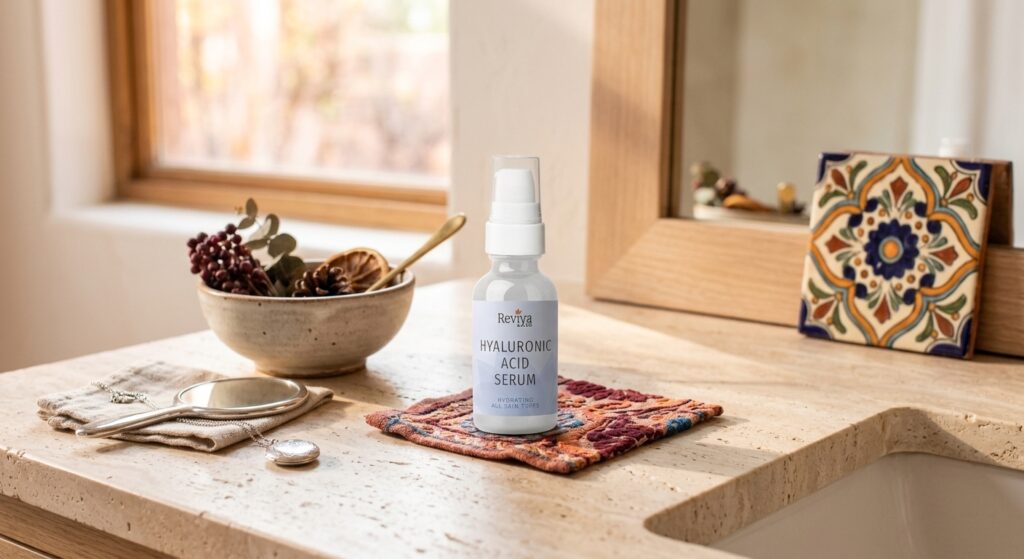
Our #369 Hyaluronic Acid Serum works as the foundation of a barrier-friendly skincare routine. Hyaluronic acid draws moisture into the skin and holds it there, directly countering the drying effects of indoor air. It can hold significant water weight relative to its molecular size, which makes it a non-irritating first step well suited to sensitive or mature skin.
Step 2: Repair Overnight
Skin naturally repairs itself overnight, which makes evening the right time for a richer, more restorative formula. Our #317 Collagen Night Creme supports that process with ingredients designed to work while skin is in repair mode.
For those who prefer a lighter texture or have combination skin, our #390 Intercell Hyaluronic Acid Night Gel offers a gel-based alternative that delivers similar hydration without the heavier feel. Neither option is required—it depends on what your skin responds to best.
Step 3: Rehydrate Midday
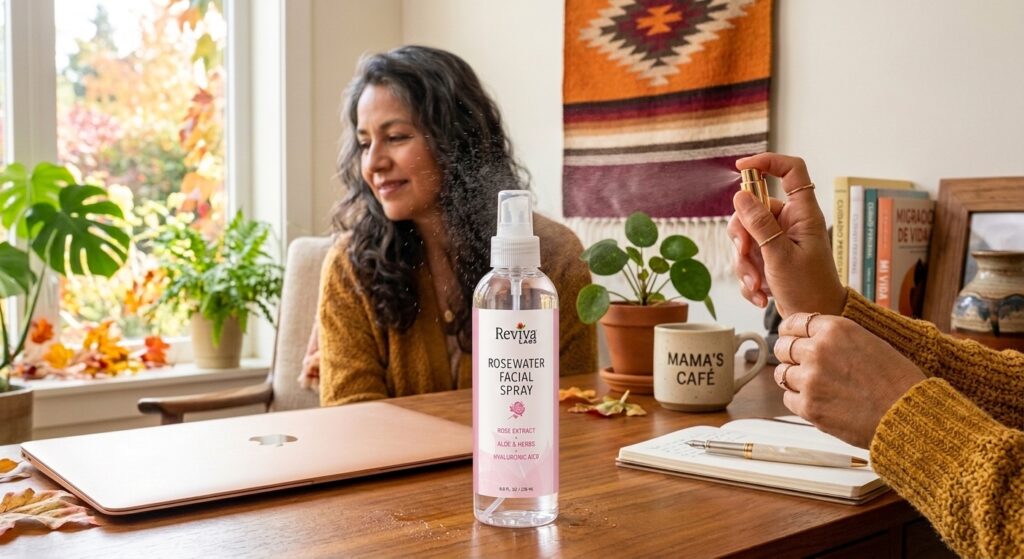
Heated offices and homes don’t pause for your skincare routine, so a midday refresh helps close the gap. Our #576 Rosewater Facial Spray offers a simple way to rehydrate skin during the day without adding an extra step that feels like a chore. A few spritzes, and you’re back to comfortable.
Step 4: Target Specific Dry Patches
Some areas show seasonal dehydration before the rest of the face does—typically around the lips, nose, and cheeks. Our #214 Vitamin E Oil E-Stick is formulated for exactly this kind of localized dryness, and its stick format makes it easy to carry for touch-ups throughout the day.
Optional Step: Calm and Strengthen
If you’re also managing visible redness or reactivity alongside dryness, our #800 Nourishing Niacinamide Serum can offer an additional layer of support. Niacinamide helps strengthen the barrier while working alongside your hydration routine. This step is complementary, not required—not every reader needs every product, and that’s fine.
Why Gentle, Consistent Care Matters Most for Barrier-Friendly Skincare
No single product solves dryness on its own. The combination of core hydration, overnight repair, midday rehydration, and targeted care gives the barrier what it needs to stay resilient through the season. Results build gradually with consistent use, not overnight, and that’s worth setting realistic expectations around. Humidity and skin health are closely linked, and a routine that respects that connection tends to hold up better than one that chases a quick fix.
A Simple Routine for the Season Ahead
Indoor heat is a seasonal, manageable challenge. A few consistent steps—hydrating with the Hyaluronic Acid Serum, repairing overnight with the Collagen Night Creme or Intercell Gel, refreshing midday with the Rosewater Spray, and targeting dry patches with the Vitamin E Stick—can keep skin calm and comfortable through October and beyond.
We’d invite you to explore the full routine on the Reviva Labs site, where you’ll find more detail on each product and how they work together. Look out for this routine in our upcoming emails and social posts this week, too.
Frequently Asked Questions
Why does my skin feel drier indoors than outside in October?
Indoor heating systems lower humidity, often below 30%, which pulls moisture from skin through transepidermal water loss. Since most people spend more time indoors once heating season starts, this effect tends to outweigh outdoor cold exposure.
How long does it take to see results from a barrier-repair routine?
Results build gradually with consistent use, typically over several weeks rather than overnight. Layering hydration, repair, and targeted care supports the barrier steadily through the season.
Do I need every product in this routine, or can I start with just one?
You don’t need every step to see benefit. The #369 Hyaluronic Acid Serum is the most foundational choice if you’re starting with one product, since it addresses core hydration directly.
Is this routine suitable for sensitive or reactive skin?
Yes. Each product in this routine is formulated without harsh fragrance or irritating ingredients, making it appropriate for sensitive and mature skin types that react easily to seasonal changes.
What’s the difference between the Collagen Night Creme and the Intercell Hyaluronic Acid Night Gel?
The Collagen Night Creme offers a richer texture suited to very dry skin, while the Intercell Gel provides similar hydration in a lighter, gel-based formula better suited to combination skin.