

Ingredients, Reviva Labs, Skin Care
Glycolic Acid: Your 6-Week Plan for Smoother Fall Skin
Oct
Quick answer: As fall’s cooler, drier air sets in, skin often turns rough, dull, and harder to cover with makeup. Glycolic acid, a gentle AHA exfoliant, addresses this by loosening dead skin cells at the surface. A consistent 6-week routine—built around a cleanser, toner, and the 10% Glycolic Acid Creme—with planned recovery days delivers visibly smoother, brighter skin by the time winter arrives.
When the heat turns on and the air outside turns crisp, skin notices before we do. The texture that felt smooth all summer suddenly feels rough under our fingertips. Foundation that applied evenly in July starts clinging to dry patches in October. This isn’t imagined—it’s a predictable seasonal shift, and it has a straightforward explanation.
Glycolic acid isn’t a new trend chasing attention on social media. It’s a well-studied exfoliating ingredient with decades of use behind it, and it remains one of the most reliable tools for addressing the rough, dull texture that cooler months bring. We’ve built our approach around a simple premise: consistent, gentle exfoliation paired with built-in recovery time produces real results without unnecessary irritation.
Given six weeks and a thoughtful routine, most people can expect visibly smoother, brighter skin before the season is through. This post walks through why fall is the right time to begin, how glycolic acid works, how to structure a 6-week routine, and how to protect your skin while you do it.
Why Is Fall the Right Time to Start an Exfoliating Routine?
As humidity drops and indoor heating kicks in, skin loses surface moisture faster than it does in warmer months. Without that moisture, dead skin cells don’t shed the way they would in summer—they build up instead, creating the dull, rough texture many of us notice once the leaves start turning.
That buildup explains more than just how skin feels. It’s also why foundation and other base makeup can look patchy or settle unevenly into fine lines and dry patches during fall and winter. Smooth application starts with smooth skin, and dry, flaky texture works against both.
Glycolic acid offers a direct response to this seasonal pattern. It works by loosening the bonds that hold dead skin cells together, helping reveal the smoother skin underneath rather than letting it build up unaddressed. Starting a glycolic acid routine now—before cold, dry air compounds the problem—gives skin a stronger foundation heading into the harshest months of the year.
What Does Glycolic Acid Do, and Why Does It Work?
Glycolic acid is an alpha hydroxy acid (AHA) derived from sugar cane. Its molecular structure is notably small, which allows it to penetrate the skin’s surface more effectively than many other exfoliating acids. That penetration is the mechanism behind its results: glycolic acid exfoliates at the surface level, helping reduce the look of dullness and rough texture with consistent use.
We understand that any mention of acids and sensitive skin together raises a reasonable concern. A measured approach—starting slowly and building gradually—is designed specifically to minimize that risk. This is where recovery days come in. Giving skin time to rebuild its natural barrier between applications isn’t a delay tactic; it’s part of how the routine is designed to work. Skin that’s given room to recover responds better to each subsequent application, which supports stronger results with less irritation over time.
How Do You Build a 6-Week Glycolic Acid Routine?
The 6-week glycolic acid routine follows a simple shape: start slowly, apply products at night, and build frequency gradually as skin adjusts.
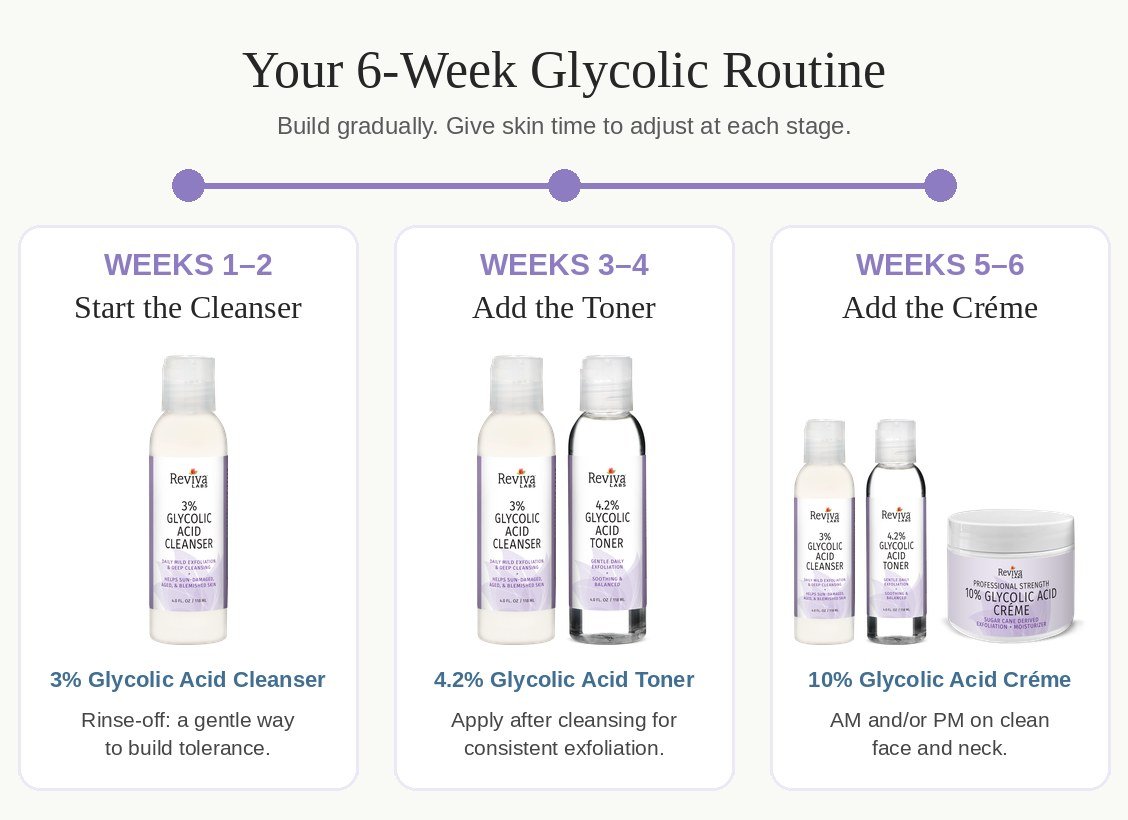
Recovery days are built into the plan from the start. In the early weeks, applications are spaced out, giving skin time to adjust before the frequency increases. This isn’t a routine that front-loads intensity—it’s one that builds toward it deliberately.
Nighttime application matters for a specific reason: using glycolic acid at night works with the skin’s natural repair cycle, rather than against the demands of daytime exposure and sun protection. In practical terms, this means beginning with just a few nights per week in week one, then gradually building toward a more regular cadence by week six as skin demonstrates it’s tolerating the routine well.
What Role Does Each Product Play in the Routine?
A layered glycolic acid routine relies on three products, each with a distinct function.
Glycolic Acid Cleanser is the first step—a gentle way to introduce glycolic acid into a skincare routine without overwhelming the skin. As a rinse-off product, it offers brief contact time, making it a reasonable entry point for anyone new to AHA exfoliants.
Glycolic Acid Facial Toner acts as a bridge step. It refines texture further and preps skin to better receive the treatment product that follows, extending the exfoliating benefit beyond what cleansing alone provides.
10% Glycolic Acid Creme is the hero product and the core of the routine. It delivers a higher, targeted concentration designed for consistent nighttime use, and it’s where most of the visible texture improvement happens over the six weeks.
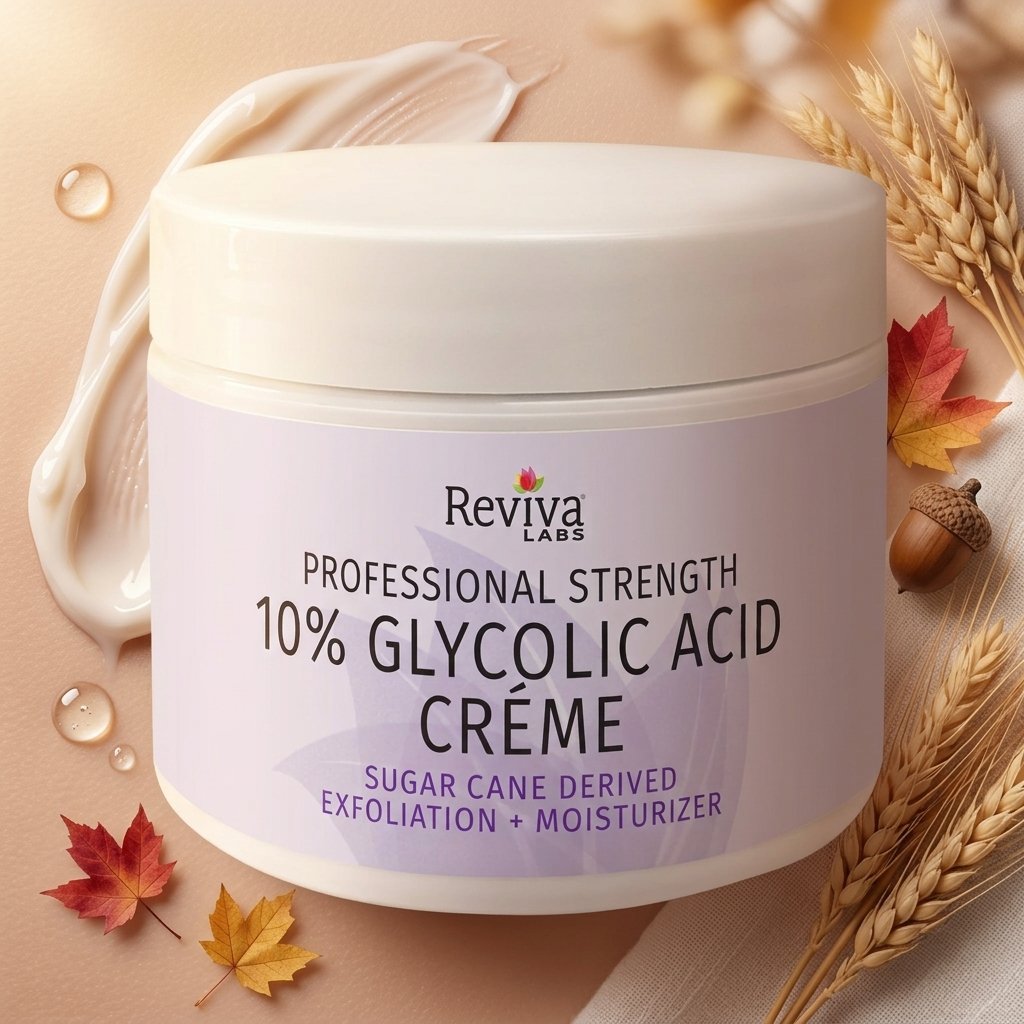
Used together, these three products amplify results. Layering complementary glycolic acid formulas accomplishes more than relying on a single step alone—each one reinforces the work of the others.
How Does Smoother Texture Change the Way Makeup Looks?
Once rough, flaky texture is addressed, the practical benefits extend beyond how skin feels. Foundation and other base makeup glide on more evenly across smoother skin, rather than settling into dry patches or catching on fine lines.
This is a visible, cosmetic benefit as much as a skincare one. Smoother texture means less makeup emphasizing the very areas we’re trying to even out, which is part of why so many people notice a glycolic acid routine’s effects in their makeup application before they notice it anywhere else.
How Do You Keep Skin Comfortable While Exfoliating?
Introducing any new acid calls for some restraint, and a glycolic acid routine is no exception. We recommend introducing one product at a time, watching how skin responds, and adjusting frequency based on individual tolerance—because, as we’ve said before, everyone’s skin is different.
Recovery days remain a built-in safeguard throughout the routine, not just a starting-point precaution. Daily sunscreen is essential while using any exfoliating acid, since fresher skin at the surface is more vulnerable to UV exposure. And it’s worth noting: mild, temporary sensitivity can occur when starting any new acid, and that alone doesn’t mean the routine isn’t working—it often means skin is adjusting as expected.
Start Your Glycolic Acid Routine This Fall
Fall’s cooler, drier air is exactly when skin benefits most from a thoughtful glycolic acid routine, and six weeks is a realistic, achievable timeline for visible change. The layered approach—Glycolic Acid Cleanser, Glycolic Acid Facial Toner, and 10% Glycolic Acid Creme—is designed to work together, with recovery days built in to support comfort along the way.
Frequently Asked Questions
How long does it take to see results from a glycolic acid routine?
Most people begin noticing visible improvements in skin texture and brightness within about six weeks of consistent use, provided the routine includes planned recovery days.
Is glycolic acid safe for sensitive skin?
Glycolic acid can work for sensitive skin when introduced gradually—one product at a time, with recovery days between applications. Starting slowly and monitoring your skin’s response is the safest approach.
What’s the difference between the Glycolic Acid Cleanser, Toner, and Creme?
The Glycolic Acid Cleanser introduces exfoliation gently through brief, rinse-off contact. The Glycolic Acid Facial Toner refines texture further and preps skin for treatment. The 10% Glycolic Acid Creme delivers a higher, targeted concentration and serves as the core nighttime treatment.
Do I need to use sunscreen while using glycolic acid?
Yes. Daily sunscreen is essential while using any exfoliating acid, since freshly exfoliated skin is more vulnerable to UV exposure.
Is some irritation normal when starting a new glycolic acid routine?
Mild, temporary sensitivity can happen when introducing any new acid. Recovery days and a gradual buildup in frequency are designed to minimize this while skin adjusts.