
Ingredients, Reviva Labs, Skin Care
How Antioxidants Protect Skin in Summer and Why You Should Start Before June

May
Every summer, skin takes a hit. Sun exposure intensifies, UV radiation spikes, and the oxidative stress your skin absorbs in just a few months of peak sunshine can translate into changes that show up years later as dullness, uneven tone, and the kind of fine lines that seem to appear overnight. Researchers have found that approximately 80 percent of visible facial aging is attributable to cumulative sun exposure over a lifetime, which means the choices you make right now, before the hottest and brightest months arrive, genuinely matter. Building an antioxidant defense into your skincare routine before June is not a trend. It is one of the most evidence-backed strategies available to anyone who wants skin that stays resilient through summer and beyond.
Antioxidants Recommended Products
The reason timing matters so much comes down to biology. Your skin is not passively waiting to be damaged. It actively defends itself using its own network of antioxidant enzymes and compounds, including vitamins C and E, glutathione, and superoxide dismutase. But this natural defense system has limits, and ultraviolet radiation is exceptionally good at overwhelming it. When UV exposure increases sharply in late spring and summer, the production of free radicals, those unstable molecules that attack healthy cell structures, can outpace the skin’s ability to neutralize them. The result is a condition called oxidative stress, and topical antioxidants applied consistently before UV exposure peaks can help replenish the skin’s own depleted reserves before the season is fully underway.
Think of it less like applying sunscreen on the way out the door and more like training before a competition. The protective effects of antioxidants build over time. Vitamin C, for instance, needs to penetrate the epidermis and reach the dermis to provide meaningful photoprotection, a process that takes consistent daily application rather than a single use. Starting in April or May positions your skin with stronger defenses for the high-exposure months ahead. By the time summer heat arrives, you want those protective pathways already active, not scrambling to catch up.

What Free Radicals Actually Do to Skin
Free radicals are molecules that have lost an electron, making them chemically unstable and highly reactive. To stabilize themselves, they steal electrons from nearby molecules, including the lipids that make up cell membranes, the proteins that form collagen and elastin fibers, and even DNA within skin cells. This chain reaction of electron theft, called oxidation, disrupts normal cellular function and can trigger inflammation pathways that accelerate the breakdown of structural proteins in the dermis. The skin gradually loses its ability to retain moisture, repair itself efficiently, and maintain an even texture. The visible results include increased sensitivity, redness, hyperpigmentation, and a diminished glow that no amount of highlighter can replicate.
UV radiation is the single largest source of free radical generation in the skin, but it is not the only one. Ozone, pollution particles, cigarette smoke, and even infrared heat from screens and the sun all contribute to the oxidative load your skin carries every day. In summer, the compounding effect of longer days, stronger UV indexes, higher temperatures, and increased time outdoors means that load rises dramatically. Antioxidants work by donating electrons to free radicals and neutralizing them before they can cause structural damage, which is why layering multiple antioxidants that work on different parts of the oxidative cascade is a more effective strategy than relying on any single ingredient.
There is an important distinction between antioxidants and sunscreen that is worth stating plainly. Sunscreen reduces the amount of UV radiation that reaches the skin in the first place. Antioxidants address the oxidative damage that occurs even when sunscreen is applied correctly. Both are necessary, and each works differently. No sunscreen blocks 100 percent of UV radiation, and factors like sweat, reapplication gaps, and the unavoidable presence of infrared and visible light mean some oxidative stress reaches the skin regardless. Antioxidants fill that gap by intercepting free radicals that sunscreen alone cannot address.

The Antioxidants With the Strongest Research Behind Them
Vitamin C, formally known as L-ascorbic acid, is arguably the most studied topical antioxidant in dermatological research. It neutralizes free radicals, supports collagen synthesis by acting as a necessary cofactor in the enzymatic conversion of proline and lysine to their stabilized forms, and inhibits excess melanin production, which makes it effective for addressing hyperpigmentation that summer UV exposure tends to worsen. A landmark paper published in the Journal of the American Academy of Dermatology in 2003 by Dr. Sheldon Pinnell documented measurable photoprotective effects from topical vitamin C, establishing a scientific foundation that has since been replicated and built upon across many subsequent studies. Stability is the key challenge with vitamin C formulations, since L-ascorbic acid oxidizes quickly when exposed to air and light, turning an effective serum into a less active one faster than most people realize.
Vitamin E, or tocopherol, is a fat-soluble antioxidant that integrates directly into cell membranes and lipid layers, which makes it particularly effective at protecting the structural integrity of those membranes from oxidative attack. It works in combination with vitamin C in a well-documented way: after vitamin E neutralizes a free radical, it becomes oxidized itself, and vitamin C can regenerate it back to its active form. This recycling relationship means that formulations combining both vitamins deliver substantially more protection than either ingredient alone. Many effective antioxidant formulations build around this pairing precisely because of how well the two compounds complement each other chemically.
Niacinamide, the form of vitamin B3 used in skincare, operates through a different mechanism than vitamins C and E but remains highly relevant to summer skin protection. It supports the skin barrier, which plays a direct role in the skin’s ability to tolerate oxidative stress and inflammatory triggers. A strengthened barrier means less moisture loss, less reactivity to UV-related inflammation, and better overall resilience during the high-exposure months. Niacinamide also addresses post-inflammatory hyperpigmentation, which is one of the most common complaints that follows a summer of sun exposure, particularly in deeper skin tones.
Ferulic acid has become one of the most frequently discussed antioxidant ingredients in serious skincare conversations for a very specific reason. It dramatically stabilizes vitamins C and E when combined with them in a formulation, and research has shown it roughly doubles the photoprotective capacity of a vitamin C and E serum on its own. It achieves this through synergy, not simple addition: ferulic acid appears to anchor the antioxidant activity of the other compounds and extend their functional lifespan within the formulation. For anyone building a summer antioxidant routine around vitamin C, looking for ferulic acid as a companion ingredient in the same product is worth the attention.

Why the Window Before June Is the One That Counts
Skin cells respond to consistent topical application over time rather than to single heroic doses. This is true of nearly every functional skincare ingredient, and antioxidants are no exception. When you apply a vitamin C serum daily for several weeks, the concentration of ascorbic acid within the epidermis and upper dermis rises incrementally, reaching levels that provide meaningful photoprotection. Starting that process in late April or early May means that by the time UV index values climb in June, July, and August, that reservoir is already in place. Starting in July, when the damage is actively accumulating, means you are perpetually playing from behind.
There is also a behavioral component to the timing argument. New skincare habits take time to establish, and anyone who has ever introduced an active ingredient to their routine knows there can be an adjustment period. Vitamin C serums, for instance, occasionally cause mild tingling or flushing when first introduced, particularly in sensitive skin or at higher concentrations. Working through that adjustment phase in April is far preferable to doing so in July when you are also navigating increased sun exposure and the potential for post-inflammatory sensitivity. Establishing a stable, tolerated antioxidant routine before summer means you can use it confidently and consistently throughout the season.
The skin’s natural antioxidant reserves are also depleted by the end of summer in ways that can take months to restore. Glutathione levels drop under sustained UV exposure. Superoxide dismutase activity declines. The enzymatic repair systems that handle DNA damage operate at a lower efficiency. Starting antioxidant support proactively gives these systems reinforcement before they are strained, rather than supplementing them after they are already compromised. The difference in outcomes, both immediately visible and in terms of long-term skin health, is meaningful.

Building an Antioxidant Routine That Actually Works
The most effective placement for antioxidant serums is in the morning, applied after cleansing and before moisturizer and sunscreen. This positions them as a preparatory layer that supports the skin’s defenses before UV exposure begins for the day. Vitamin C specifically should be applied to clean, dry skin so that it can penetrate effectively without the barrier created by residual product. The sequence matters because antioxidants work best when they are closest to the skin’s surface and beneath the occlusive or partially occlusive layer of sunscreen, not diluted into the sunscreen itself.
Concentration and pH are important variables that distinguish effective vitamin C products from ineffective ones. L-ascorbic acid requires a pH below 3.5 to penetrate the skin’s acidic barrier, which is part of why it can cause tingling in sensitive skin. Products formulated at higher pH values may feel more comfortable but often deliver less of the active antioxidant to the layers where it can do meaningful work. Concentrations between ten and twenty percent are generally considered the effective range, with concentrations above twenty percent offering diminishing returns and greater irritation potential. Packaging matters significantly, too: vitamin C serums in opaque, airtight packaging preserve potency far better than those in clear glass droppers exposed to repeated air exchange.
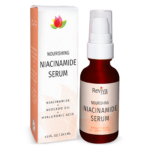
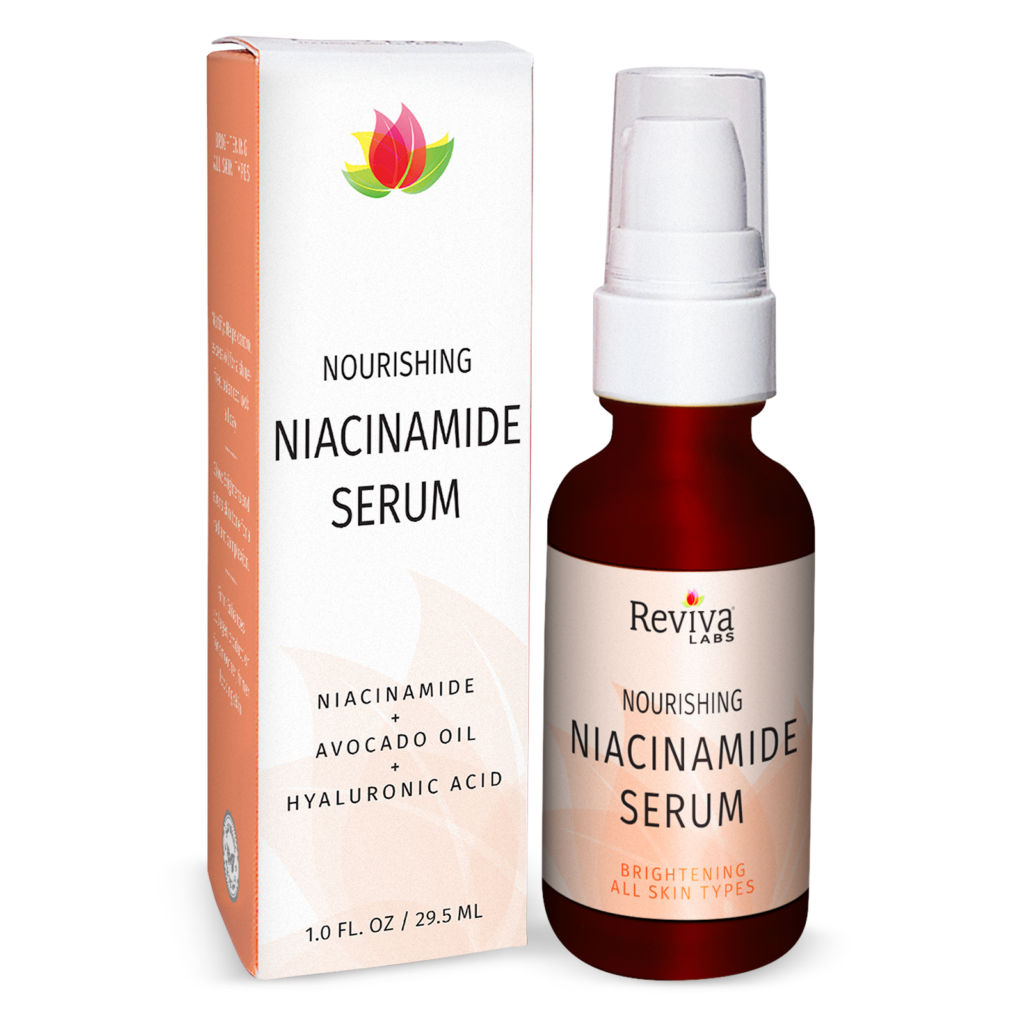
At Reviva Labs, the Niacinamide Serum offers a strong complement to a morning vitamin C routine, providing B3 support for barrier function and tone alongside the antioxidant activity of other products in the regimen. For anyone building a layered approach, pairing a targeted vitamin C antioxidant step with a niacinamide-based serum addresses multiple aspects of oxidative and inflammatory stress simultaneously. The two ingredients are compatible and work on complementary pathways, making them a practical foundation for summer skin prep that does not require an overwhelmingly complicated routine.
Evening application of antioxidants is worth considering as well, even though UV protection is not the primary concern after dark. Skin repair and cellular renewal processes peak at night and providing antioxidant support during those hours can enhance recovery from daytime oxidative stress. Vitamin E and plant-based antioxidants like green tea extract, resveratrol, and bakuchiol derivatives are often incorporated into evening formulations for exactly this reason. A two-part approach, antioxidants in the morning for protection and antioxidants in the evening for repair, offers more complete coverage during the months when skin is under the greatest environmental pressure.

Antioxidants Across Skin Types and Concerns
One of the genuinely good things about antioxidant ingredients is that they are broadly appropriate across skin types, though the specific formulations that work best vary. Oily and acne-prone skin often tolerates water-based vitamin C serums well, while those with drier skin may find that vitamin E-rich, oil-blended formulations provide the antioxidant activity they need alongside meaningful emollient support. Sensitive skin types may need to approach L-ascorbic acid carefully, starting with lower concentrations and monitoring for reactivity, or choosing derivative forms like ascorbyl glucoside or sodium ascorbyl phosphate that are less acidic and more tolerable while still providing antioxidant activity, even if at a somewhat reduced potency compared to the pure form.
For skin concerns centered on hyperpigmentation, which tends to be a central issue for many people after summer sun exposure, the combination of vitamin C for its melanin-inhibiting properties, niacinamide for its ability to reduce the transfer of pigment to surface skin cells, and broad-spectrum sunscreen as a preventive layer is one of the most evidence-supported approaches available without a prescription. Antioxidants in this context are not just protective; they are actively therapeutic. When reactive oxygen species trigger excess melanin production as part of an inflammatory response, neutralizing those free radicals earlier in the process reduces the downstream pigmentation that follows.
People with mature or aging skin have particularly strong reasons to build antioxidant protection into their spring and summer routines. Collagen synthesis naturally slows with age, and the oxidative damage from UV exposure accelerates that decline further. Antioxidants that support collagen-producing pathways, vitamin C being the most direct example, serve a dual function: they neutralize free radicals and they provide the raw material support that fibroblasts need to maintain collagen output. Every summer season that passes with robust antioxidant protection in place is one where the skin’s structural integrity is better preserved relative to what unprotected exposure would have produced over the same period.
Frequently Asked Questions
Q: Can I apply antioxidants and sunscreen at the same time?
A: You can, and the two are designed to work together rather than replace each other. Antioxidants should generally go on first, applied to clean skin and allowed to absorb for a minute or two before sunscreen is applied over them. Mixing them directly into sunscreen is not recommended, as it can compromise the stability of both products. Using them in sequence as separate steps preserves the integrity of each formulation and maximizes the benefit of both.
Q: How long does it take to see results from a vitamin C serum?
A: Protective effects begin building as soon as vitamin C penetrates the epidermis, but visible results, particularly improvements in skin tone and brightness, typically become noticeable after four to eight weeks of consistent daily use. Collagen-related improvements in firmness and texture may take three to six months to become apparent. Consistency matters far more than concentration in determining outcomes and starting earlier rather than later before summer gives you more time to build both the visible and structural benefits.
Q: Are antioxidants effective for all skin tones?
A: Yes, and the benefits are particularly meaningful for deeper skin tones that are more prone to post-inflammatory hyperpigmentation following sun exposure. Vitamin C and niacinamide, both well-studied antioxidant and skin-evening ingredients, are broadly appropriate across all skin tones. The main consideration for deeper skin tones is that antioxidant protection paired with consistent broad-spectrum sunscreen use is one of the most effective available approaches to preventing the hyperpigmentation that UV-triggered inflammation tends to produce.
Q: What does it mean when a vitamin C serum turns orange or brown?
A: When a vitamin C serum oxidizes, it transitions in color from its original pale yellow to orange and eventually to a brownish amber tone. This color change indicates that the ascorbic acid has already reacted with oxygen and lost much of its antioxidant activity. An oxidized serum is not harmful to apply, but it is also not providing meaningful protection. Keeping vitamin C serums in a cool, dark location, using opaque packaging, and replacing them within three to four months of opening helps preserve potency throughout the product’s useful life.
Q: Is it possible to use too many antioxidants at once?
A: Combining antioxidants is generally beneficial and often produces synergistic effects rather than additive ones, as the vitamin C and E example illustrates. However, layering multiple highly active, low-pH products in a single routine can increase the risk of irritation, particularly for sensitive skin. Vitamin C should not be combined in the same application step with certain exfoliating acids, as the interaction can cause excessive reactivity. Building a routine thoughtfully, introducing ingredients one at a time and monitoring for any sensitivity response, allows you to take advantage of antioxidant synergy without overwhelming the skin.
Q: Do dietary antioxidants help skin the same way topical ones do?
A: Diet and topical application are complementary but not interchangeable. Dietary antioxidants, from foods rich in vitamins C and E, beta-carotene, and polyphenols, support the body’s systemic antioxidant capacity and can positively affect skin health over time. However, the concentrations of antioxidants that reach the skin through circulation are much lower than what is delivered directly via topical application. For meaningful photoprotective benefit at the skin’s surface where UV damage occurs, topical antioxidants applied consistently to that specific tissue are the more direct and effective approach.
References
- Farris PK. Topical vitamin C: a useful agent for treating photoaging and other dermatologic conditions. Dermatologic Surgery. 2005;31(7 Pt 2):814-817. PMID: 16029671. https://pubmed.ncbi.nlm.nih.gov/16029671/
- Flament F, Bazin R, Laquieze S, et al. Effect of the sun on visible clinical signs of aging in Caucasian skin. Clinical, Cosmetic and Investigational Dermatology. 2013;6:221-232. doi:10.2147/CCID.S44686. PMC3790843. https://www.ncbi.nlm.nih.gov/pmc/articles/PMC3790843/
- Murray JC, Burch JA, Streilein RD, Iannotta MA, Hall RP, Pinnell SR. A topical antioxidant solution containing vitamins C and E stabilized by ferulic acid provides protection for human skin against damage caused by ultraviolet irradiation. Journal of the American Academy of Dermatology. 2008;59(3):418-425. PMID: 18485527. https://pubmed.ncbi.nlm.nih.gov/18485527/
- Pullar JM, Carr AC, Vissers MCM. The roles of vitamin C in skin health. Nutrients. 2017;9(8):866. doi:10.3390/nu9080866. PMC5579659. https://www.ncbi.nlm.nih.gov/pmc/articles/PMC5579659/