
Ingredients, Natural, Reviva Labs, Skin Care
How Barrier Oils Help Repair Skin After a Long Summer

Sep
If your skin has felt tighter or more reactive than usual as summer ends, oils are probably not the first thing you’d reach for. There’s a common assumption that oil and stressed, sensitive skin don’t mix. A thought that oil sits on top of skin and makes things feel heavier rather than helping. That assumption misses a fairly important distinction. Not all oils behave the same way on skin, and the right ones do far more than sit on the surface. Certain plant oils actively support the skin’s ability to repair itself, and after a summer of heat, sweat, and sun exposure, that support can matter quite a bit.
The skin barrier relies on a mix of lipids, ceramides, cholesterol, and free fatty acids, arranged in layers that hold skin cells together and keep moisture from escaping. When that arrangement is disrupted by UV exposure, heat, or over cleansing, the barrier becomes less effective, and transepidermal water loss increases. Certain plant derived oils supply fatty acids that closely resemble what skin already produces, which allows them to integrate into that lipid structure rather than just coat it. This is different from oils that simply create a temporary film on the surface. It’s closer to giving skin raw material it can actually use.

What the Research Shows About Barrier Oils
One clinical study published in Lipids in Health and Disease offers a useful illustration of how measurable this effect can be. Researchers chemically damaged skin on healthy volunteers, then treated some of the damaged sites twice daily with an oil containing a specific anti-inflammatory fatty acid. Compared to untreated damaged skin, the treated sites showed significantly greater reduction in transepidermal water loss over the following weeks, with the treated areas showing a 125 percent greater reduction in water loss by day three and still showing meaningfully faster recovery by day twenty-eight. That’s a fairly striking demonstration that the right oil isn’t just sitting on the skin looking glossy. It’s actively participating in how quickly the barrier bounces back after damage.
Late summer skin, even without a specific chemical injury, deals with a comparable kind of cumulative barrier stress. Heat increases water loss through the skin, UV exposure disrupts the lipid layers that hold moisture in, and repeated sun protection application and removal adds its own wear over months. Introducing barrier supportive oils at this point in the season gives skin the raw materials it needs to rebuild that structure, rather than asking it to do the work with depleted resources.
Why Ingredient Choice Matters More Than the Word Oil
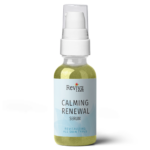
Not every oil is formulated with skin barrier repair in mind, and the specific fatty acid profile matters. Oils rich in linoleic acid and other essential fatty acids tend to integrate well into the skin’s own lipid structure. Some oils are chosen more for their scent or their marketing appeal than for what they actually contribute to barrier function. Reviva Labs’ Calming Renewal Serum, for example, was formulated around exactly this idea, combining Argan, Rosehip, and Hemp oils with calming Ayurvedic herbs rather than relying on a single trendy ingredient. Formulas like this are built to work with skin’s own repair processes instead of just sitting on top of them.
It’s also worth understanding why some of these formulas skip water altogether. Anhydrous, oil-based serums keep their active ingredients more concentrated since there’s no water diluting the formula, and without water, there’s less need for the preservative systems that water-based products require. For skin that’s already feeling reactive at the end of summer, that can mean fewer potential irritants in the mix, which is one more reason barrier repair oils tend to be well tolerated even on skin that’s currently more sensitive than usual.

How to Introduce Barrier Oils Without Overloading Skin
A little goes a long way with these formulas, and applying too much at once doesn’t speed up repair, it just leaves skin feeling greasy without any added benefit. A few drops, gently pressed rather than rubbed into slightly damp skin, is usually enough to see a difference over a few weeks. Layering them under a heavier moisturizer at night, rather than relying on the oil alone, tends to work well for most skin types, since the oil supports the lipid barrier while the moisturizer helps lock in hydration on top.
If summer has left your skin feeling less resilient than it should, barrier oils are one of the more evidence backed ways to help it recover, provided the formula is actually built around ingredients that integrate with skin’s own structure rather than just sitting on the surface.
Frequently Asked Questions
Do barrier oils clog pores?
Not typically, though it depends on the specific oil and your individual skin type. Oils with fatty acid profiles similar to skin’s own lipids, like those found in Argan or Rosehip oil, are generally well tolerated even on oilier or acne prone skin.
Can I use a barrier oil if my skin is already oily?
Yes, in most cases. Barrier support isn’t only relevant for dry skin. Oily skin can also have a compromised barrier after a summer of heat and sun exposure, and a light, well formulated oil can help without adding heaviness.
Should barrier oils be applied before or after moisturizer?
Most anhydrous oil serums are designed to be applied before a heavier moisturizer, since the oil supports the lipid barrier while the moisturizer helps seal in hydration on top.
How long does it take to see results from using a barrier oil?
Many people notice a difference in comfort and texture within two to three weeks of consistent use, though full barrier repair can take longer depending on how stressed the skin was to begin with.
Are barrier oils safe to use every day?
Yes, for most people, daily use is appropriate and often necessary to see consistent benefit, particularly during a period of active barrier repair like late summer.
References
- Berger, A. “Delta-5 oil, containing the anti-inflammatory fatty acid sciadonic acid, improves skin barrier function in a skin irritation model in healthy female subjects.” Lipids in Health and Disease, 2022. https://doi.org/10.1186/s12944-022-01643-9