
Clean Beauty, Ingredients, Natural, Reviva Labs, Skin Care
Why Your Skin Gets More Reactive at the End of Summer
Aug
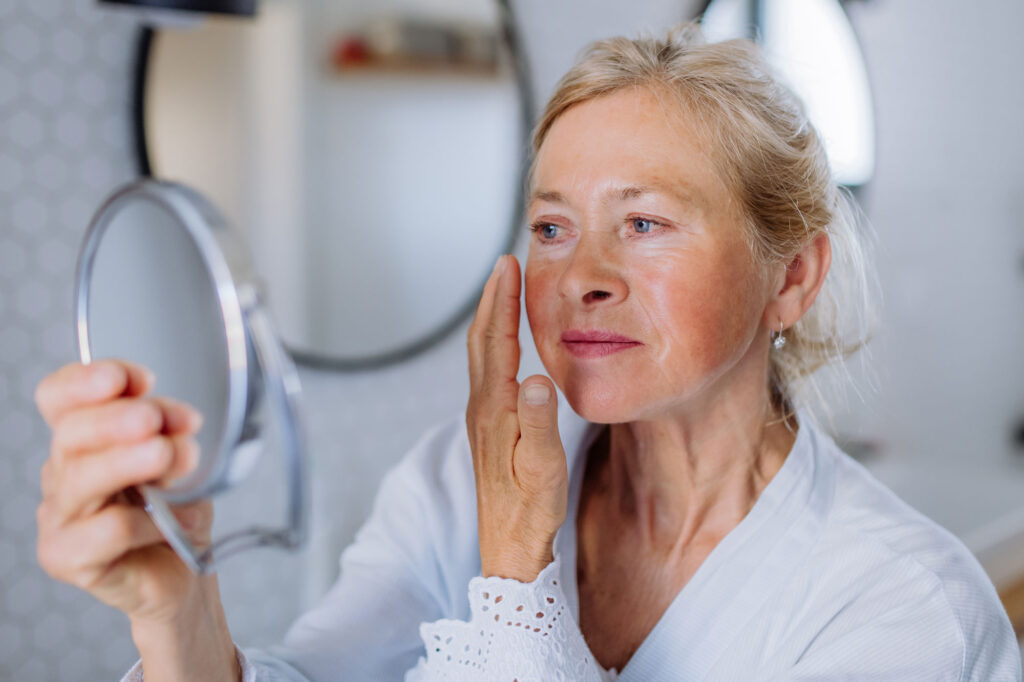
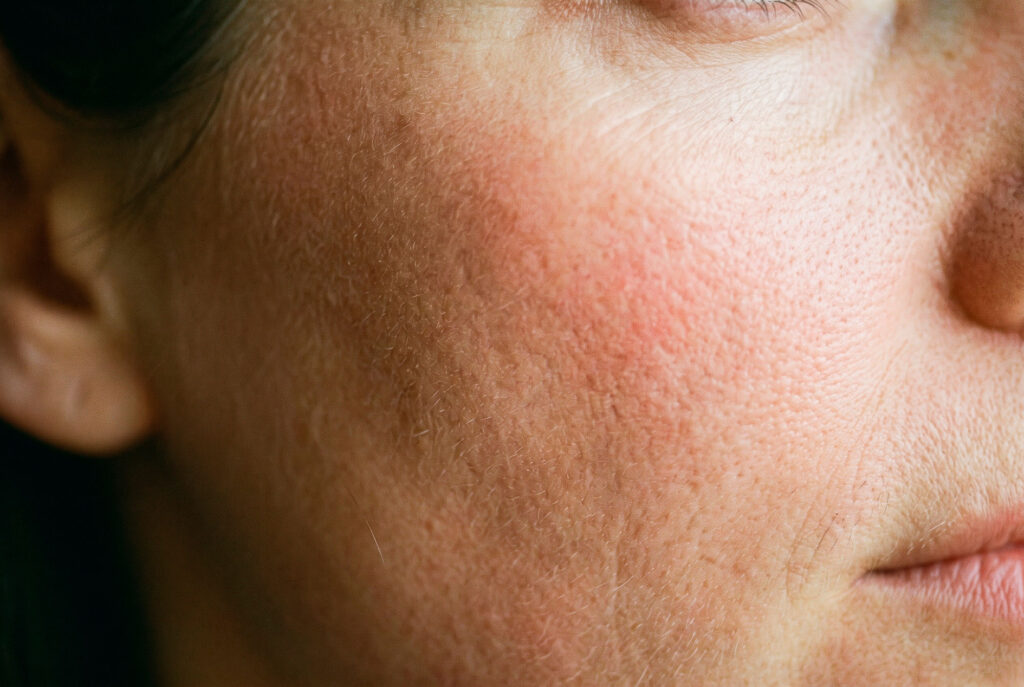
By the time August rolls into September, plenty of people notice something is different about their skin, even if a sunburn healed weeks ago. It isn’t dramatic. There’s no rash, no obvious redness that jumps out in the mirror. It’s subtler than that, a kind of low-grade irritability that shows up as extra sensitivity to products you’ve used all year, a tightness that wasn’t there in June, or skin that flushes more easily than usual. If that sounds familiar, there’s a real physiological reason behind it, and it has everything to do with what a full season of heat and sun exposure does to the outermost layer of your skin.
Researchers who study skin barrier function have a specific way of measuring this kind of change. They track something called transepidermal water loss, or TEWL, which is essentially a measurement of how much water escapes through the skin’s surface. A healthy barrier holds moisture in efficiently, so TEWL stays low. A compromised barrier lets more water escape, and TEWL climbs. In a study published in Skin Research and Technology, researchers tracked TEWL across the summer months in 43 healthy adults and found it increased at multiple measurement sites as the season progressed, with average readings on the back of the hand rising from 3.76 grams per square meter per hour in May to 4.81 by September. That isn’t a subtle shift. It’s measurable evidence that skin genuinely becomes less efficient at holding onto moisture the longer it’s exposed to a hot, sun heavy season.

What Actually Happens to Skin Over a Long Summer
A few different stressors stack on top of each other over the course of a summer. None of them alone would cause much trouble, but together they add up. UV exposure disrupts the structure of the lipids that hold skin cells together in the outer layer, even on days when a sunburn never develops. Heat increases blood flow to the skin’s surface, which can make skin more reactive to touch and to products. Sweat, especially when it isn’t rinsed off promptly, can irritate the surface and disturb the skin’s natural pH. Air conditioning pulls moisture out of indoor air, which means skin gets dehydrated at home even after a day spent avoiding direct sun. None of these individually would necessarily be noticeable. Stacked over ten or twelve weeks, they add up to a barrier that simply isn’t functioning the way it did back in early June.
Why this matters is less about how skin looks and more about how it behaves. A weakened barrier reacts more strongly to things it used to tolerate without issue. A serum that felt fine in the spring might sting now. A cleanser that never bothered you might leave skin feeling tight. This usually isn’t a sign that you’ve developed a new allergy out of nowhere. It’s more often a sign that the barrier’s ability to buffer against mild irritants has worn down, so things that were always mildly irritating are now getting through more easily.
Why This Shows Up More at the End of Summer Than in the Middle of It
This skin change tends to peak in late August and September rather than in July, when sun exposure is often at its most intense. Skin’s response to cumulative stress isn’t always immediate. Barrier disruption tends to build gradually, and the effects often lag behind the exposure that caused them. By the time you’re several weeks into summer, you’re not just dealing with today’s sun and sweat, you’re dealing with the accumulated effect of every day before it. That’s part of why late summer often feels like the moment things catch up, even though the sun exposure driving it may have peaked weeks earlier.
There’s also a seasonal timing issue at play. Many people start introducing new products in early fall. Perhaps it’s a retinol, a stronger exfoliant, or a heavier moisturizer meant for cooler weather. If skin is already dealing with a compromised barrier from summer, adding new actives on top of that can make irritation worse rather than better. This is one of the more common reasons people report a flare up of sensitivity right as the seasons change, even when the new product itself isn’t inherently harsh.
What Helps While Skin Recovers
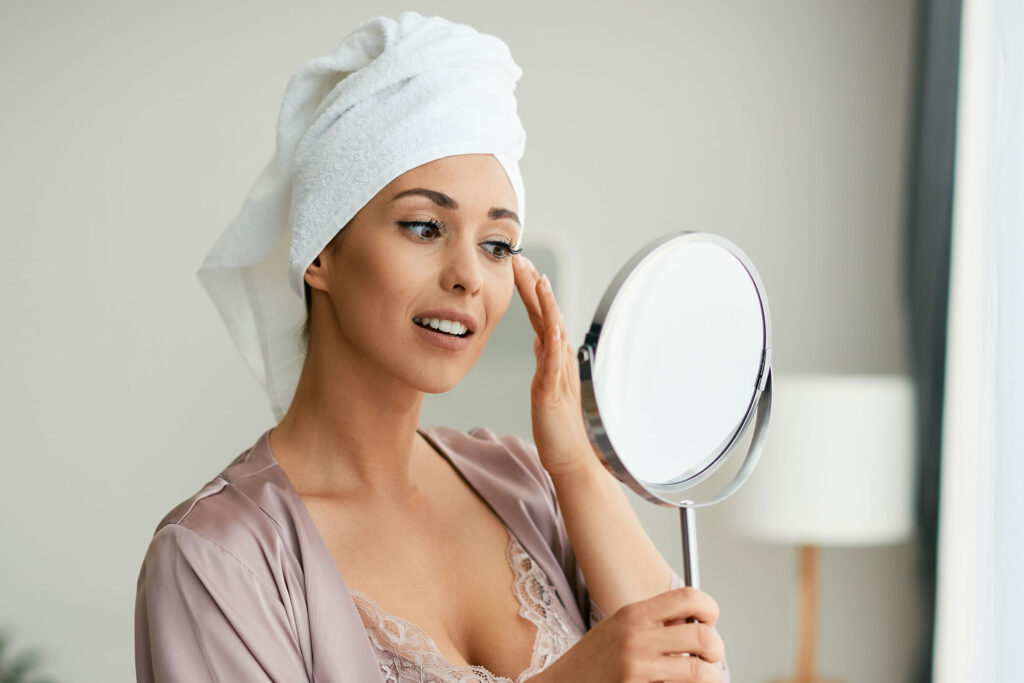
The good news is that skin barrier function is genuinely recoverable, and it doesn’t usually take an elaborate routine. Simplifying your routine for a stretch, rather than adding more products, tends to give skin room to settle. Ingredients that support the skin’s natural lipid barrier, rather than ones that exfoliate or resurface, are generally more appropriate during this window. Gentle cleansing matters more than people expect, since a cleanser that’s too stripping can undo whatever calming work the rest of your routine is doing. Patience matters too. Barrier recovery isn’t instant, and giving skin a few weeks of a simplified, calming approach tends to produce better results than trying to fix everything at once.
If you’ve noticed your skin acting differently than it did a few months ago, you’re not imagining it, and you’re not alone. It’s a predictable, well documented response to a season that asks a lot of the skin’s outer layer. Recognizing it for what it is, rather than assuming something has gone wrong, makes it a lot easier to respond with the right kind of care instead of overcorrecting with something too aggressive.
Frequently Asked Questions
Why does my skin feel more sensitive in late summer than earlier in the season?
Skin barrier stress tends to build gradually over weeks of heat, sun, and sweat, so the effects often show up later in the season rather than during the peak of it. By late summer, the cumulative impact of the whole season tends to surface at once.
Is increased sensitivity in late summer the same as a sunburn?
No. This kind of sensitivity can happen even without a visible sunburn. It reflects gradual changes to the skin barrier’s ability to retain moisture and buffer against irritation, which is a different process than the inflammation caused by burned skin.
Should I stop using my usual skincare products if my skin feels reactive?
Not necessarily but simplifying your routine for a few weeks and focusing on gentle, barrier supportive products often helps more than eliminating everything at once. If a specific product is causing noticeable stinging or redness, it’s reasonable to pause that one product while your skin recovers.
How long does it take for skin to recover from summer barrier stress?
It varies by individual, but many people notice improvement within a few weeks of simplifying their routine and avoiding harsh actives. Consistent, gentle care tends to matter more than any single product.
Is it a bad time to start using retinol or exfoliating acids in late summer?
It can be, especially if your skin is already showing signs of sensitivity. Waiting until the barrier has had a chance to recover, or introducing new actives very gradually, tends to reduce the risk of irritation.
References
- Seno, S., et al. “Quantitative evaluation of skin barrier function using water evaporation time related to transepidermal water loss.” Skin Research and Technology, 2023. https://doi.org/10.1111/srt.13242