
Clean Beauty, Ingredients, Natural, Reviva Labs, Skin Care
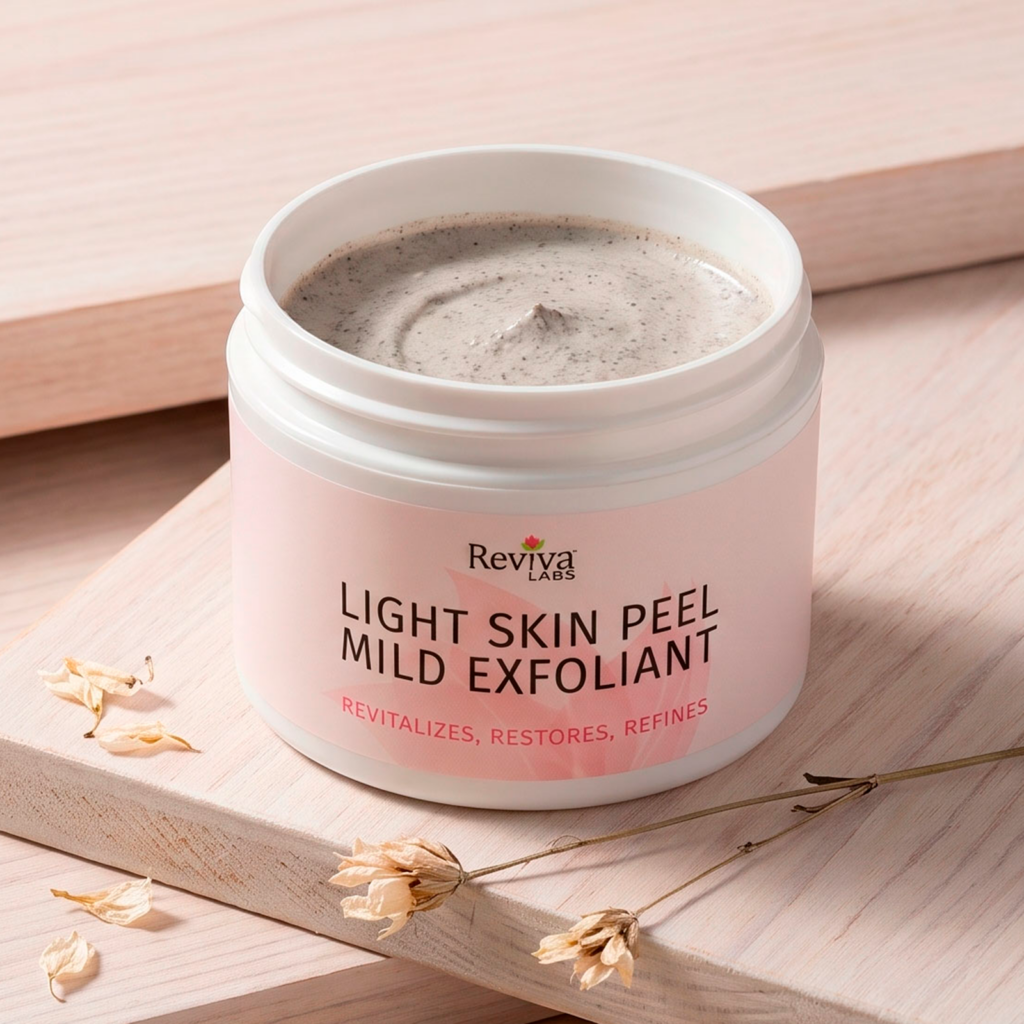
What Is Actually Inside Light Skin Peel Mild Exfoliant
Aug
The United States Food and Drug Administration permits salicylic acid in over-the-counter products at concentrations between 0.5 and 2 percent, a range established through its official monograph guidance for topical treatments. That narrow window exists for a reason; it represents the level at which salicylic acid is both effective and well tolerated for regular use. It is also a useful starting point for making sense of a formula like our Light Skin Peel Mild Exfoliant, since knowing how each ingredient is meant to perform, and at what level, helps explain why a product works the way it does rather than leaving you to take a brand’s word for it.
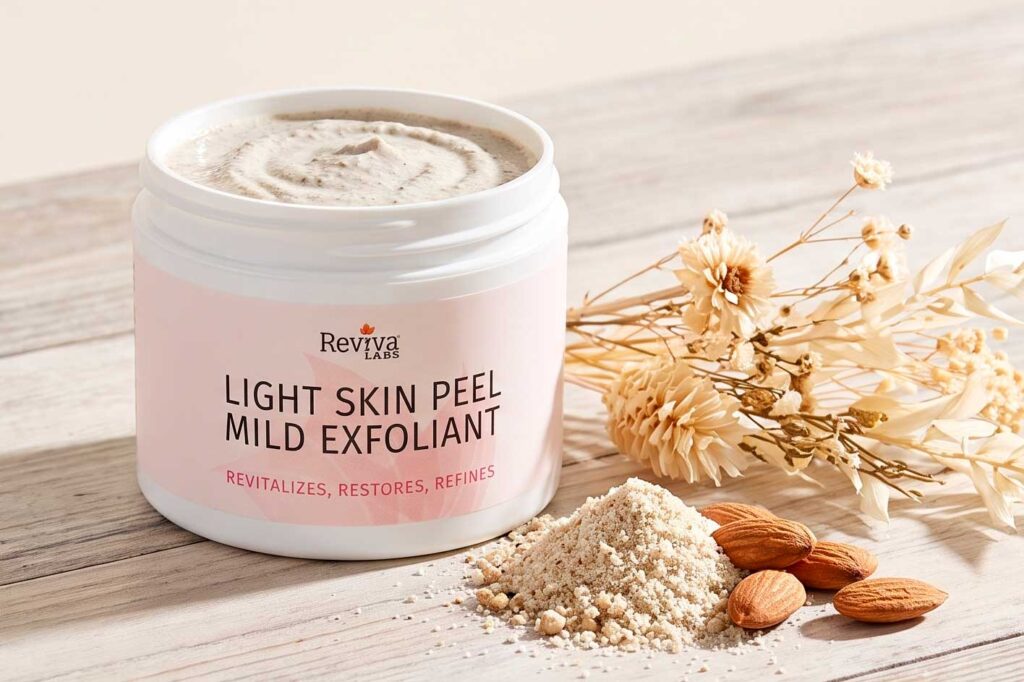
Reading an ingredient list can feel a little like reading a foreign language, a string of unfamiliar names in an order that does not obviously tell you anything about what the product will actually do on your skin. Light Skin Peel Mild Exfoliant includes five ingredients that do most of the meaningful work, salicylic acid, papain, almond meal, kaolin clay, and zinc oxide, alongside supporting ingredients like chamomile extract and thyme oil that round out the formula. Knowing what each of these five does, and why they were chosen together, tells a more complete story than any marketing claim could on its own.
Salicylic acid and its role in the formula
Salicylic acid belongs to a category called beta hydroxy acids, which are distinct from the more commonly discussed alpha hydroxy acids like glycolic or lactic acid. The key difference comes down to solubility, salicylic acid is oil soluble, which allows it to penetrate into pores where oil resides rather than only working across the surface of the skin. This is part of why it has such a long history in formulas aimed at clearer, more refined looking skin, its ability to reach into the pore itself sets it apart from acids that primarily work at the surface.
In Light Skin Peel Mild Exfoliant, salicylic acid works alongside the formula’s enzyme component to loosen the bonds holding dead cells in place, helping unclog pores and support a more even, refined texture. Because the FDA’s guidance caps effective over the counter use at 2 percent, a well formulated product operates within that established range rather than pushing higher concentration in search of faster results, a decision that prioritizes consistent, comfortable use over aggressive, potentially irritating strength.
Papain, the enzyme at the heart of the formula
Papain is a proteolytic enzyme derived from papaya, and it works through an entirely different mechanism than salicylic acid. Rather than adjusting the skin’s surface pH, papain directly breaks down the specific protein bonds, mainly keratin and desmosomal proteins, that hold dead surface cells together. This enzymatic action is part of what gives the product its gentler profile compared to a purely acid based peel, since papain targets the already dead, spent cells at the surface rather than broadly affecting a wider area of skin.
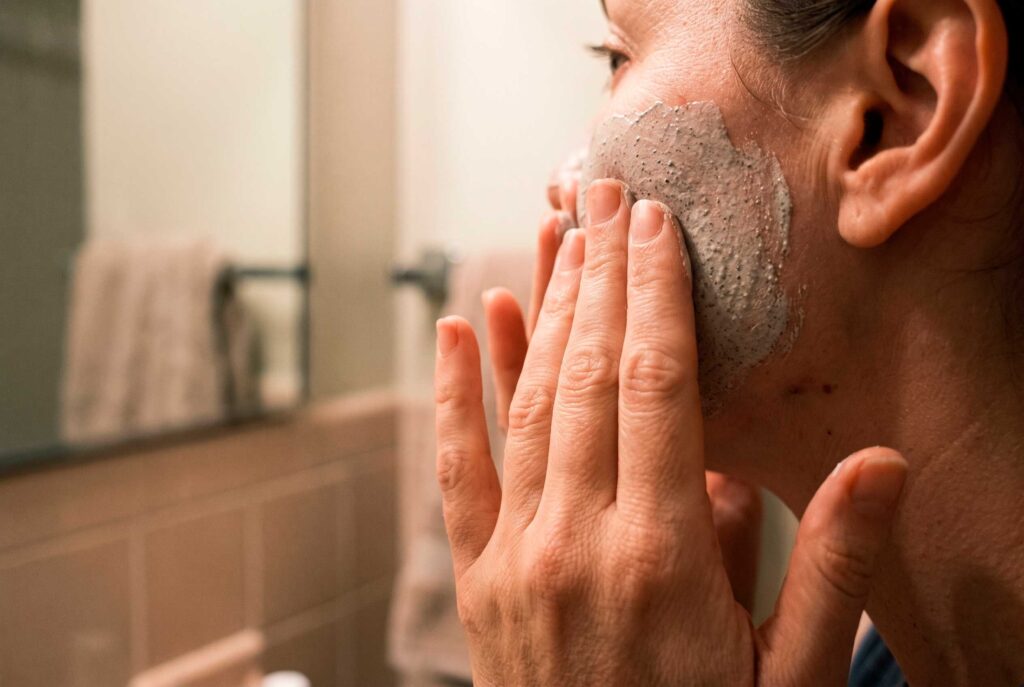
This is also why the product is described as a mask exfoliant rather than a leave on treatment. Papain needs a window of contact time to do its work effectively, which is why the formula is designed to be applied, left to dry for roughly ten minutes until it hardens slightly, and then massaged off with a warm, damp cloth. That drying and massaging step is not just a sensory ritual, it is part of how the enzyme’s activity translates into visible results, gently lifting away buildup as the mask is removed rather than requiring it to sit on skin indefinitely.
Almond meal and kaolin clay working together
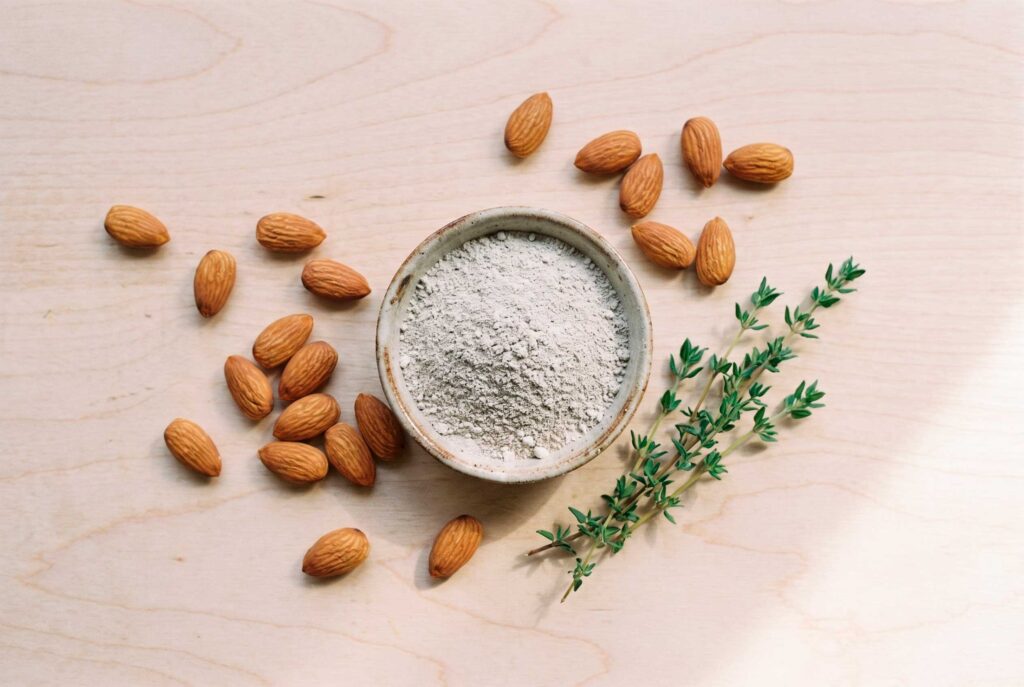
Almond meal, made from finely ground sweet almond seed, contributes a very mild physical exfoliating quality to the formula, working in tandem with the enzymatic action of papain rather than relying on physical abrasion alone. Almonds are also naturally rich in vitamin E and B vitamins; nutrients associated with supporting the skin’s appearance and helping it feel nourished rather than stripped after exfoliation. Because the particles in almond meal are considerably finer and softer than many physical scrub ingredients, they add a gentle textural element without the risk of the micro tearing associated with coarser exfoliating granules.
Kaolin clay serves a different purpose entirely, absorbing excess oil and helping draw out everyday buildup from the skin’s surface. This is part of why the formula works well as a mask format; kaolin clay has a long-standing reputation in skin care for its ability to gently pull impurities to the surface without the harshness associated with stronger clays like bentonite. Combined with almond meal’s mild texture and papain’s enzymatic action, kaolin clay rounds out a formula that addresses buildup from multiple angles rather than relying on a single mechanism to do all the work.
Zinc oxide and its supporting role
Zinc oxide is perhaps best known for its use in mineral sunscreens, but it plays a different role in this formula, functioning as a natural skin protectant and anti-irritant that helps soothe the skin during the exfoliation process. Because exfoliation, even a gentle enzyme-based version, introduces a degree of stimulation to the skin’s surface, having a calming ingredient in the same formula helps balance that effect, supporting a smoother experience overall rather than leaving skin feeling stripped or reactive afterward.
Zinc oxide is also associated with helping regulate the appearance of excess oil, which complements kaolin clay’s absorbing properties within the same formula. Together, these two ingredients help the mask feel balanced rather than either purely drying or purely soothing, an important consideration for a product intended for regular, weekly use across a range of skin types rather than a single narrow category of skin concern.
Why the supporting ingredients matter too
Beyond the five core ingredients, a formula like this also includes a small set of supporting players that quietly round out the experience without headlining the label. Chamomile flower extract is included for its calming, soothing reputation, a natural complement to zinc oxide’s anti-irritant properties and a useful addition to any formula that involves an active exfoliating step. Thyme oil contributes its own long history in natural formulations, valued for centuries in traditional preparations and included here as part of the overall botanical profile of the mask rather than as a headline active ingredient.
These supporting ingredients rarely get much attention in ingredient breakdowns, largely because they are not doing the heavy lifting that salicylic acid or papain are. But a well-built formula considers the whole experience, not just the primary mechanism of action, and small additions like chamomile and thyme oil contribute to how comfortable and pleasant a mask feels to use, which circles back to one of the most underrated factors in any skin care routine, a product that feels good to use is a product people actually keep using.
Allantoin, another ingredient found in the formula, is worth a brief mention as well. It is widely recognized in skin care for its soothing, skin conditioning properties and frequently appears in formulas designed to be used on skin that is undergoing some form of active treatment, exactly the context in which it appears here. Its presence reinforces the same underlying philosophy running through the entire formula, active exfoliation paired with deliberate, supportive ingredients that help the whole experience feel balanced rather than harsh.
Reading the ingredient list with more confidence
One of the more practical benefits of learning how a formula like this actually works is that it changes how you read ingredient lists going forward, not just for this particular product but for skin care generally. Once you know that salicylic acid works differently than papain, or that kaolin clay serves a different purpose than zinc oxide, ingredient lists stop feeling like an intimidating wall of unfamiliar names and start reading more like a list of specific jobs, each ingredient included for a defined reason rather than simply padding out a label.
This kind of label literacy is particularly useful for anyone who has been burned before by a product that promised results but delivered irritation instead. Knowing what a beta hydroxy acid actually does, or how an enzyme differs from a physical exfoliant, gives you a much stronger basis for evaluating new products as they come along, rather than relying entirely on marketing language or a brand’s own claims about efficacy. That kind of informed evaluation tends to serve skin care conscious consumers far better over the long run than chasing whatever ingredient happens to be trending at the moment.
It is worth remembering that even well-chosen ingredients work best in the context of a sensible routine, not as an isolated fix. A formula built around salicylic acid, papain, almond meal, kaolin clay, and zinc oxide can only do its job properly if it is used at an appropriate frequency, generally two to three times weekly for most people, and followed by the kind of supportive hydration that helps skin recover comfortably and feel balanced after any exfoliating step.
How these ingredients work as a system
What makes a well-built formula different from simply combining several beneficial ingredients in one jar is how those ingredients are balanced to work together rather than against each other. In Light Skin Peel Mild Exfoliant, salicylic acid and papain address the removal of buildup through two distinct, complementary mechanisms, one working on pore level oil and the other on surface level protein bonds. Almond meal adds a gentle textural element without introducing harsh abrasion, kaolin clay absorbs excess oil and impurities, and zinc oxide helps calm and balance the overall effect, so the finished result feels refined rather than reactive.
This kind of layered formulation reflects a broader philosophy in how the product was built, rather than relying on a single powerful ingredient at an aggressive concentration, the formula spreads the work across several milder mechanisms that support each other. The result tends to be a more comfortable experience for regular, weekly use, precisely the kind of consistency that makes any exfoliation routine actually effective over time rather than something used once and abandoned after an uncomfortable reaction.
Frequently Asked Questions
What are the main benefits of salicylic acid in this formula?
Because salicylic acid is oil soluble, it can reach into the pore itself rather than only working across the surface of the skin, which helps clear congestion and support a more refined, even looking texture. Paired with papain’s enzymatic action, it addresses buildup through two different pathways at once, one working inside the pore and the other on the surface.
What does papain actually do that salicylic acid does not?
Papain works by breaking down the protein bonds holding dead skin cells together, a mechanism separate from salicylic acid’s ability to penetrate oily pores. Using both together allows the formula to address buildup through two different pathways rather than relying on a single ingredient alone.
Why is almond meal used instead of a harsher scrub ingredient?
Almond meal offers a very mild physical texture that complements the enzymatic action of papain without the risk of the micro tearing that coarser exfoliating particles can cause, particularly relevant for skin that has become more delicate with age.
Does kaolin clay dry out the skin?
Kaolin clay is considered one of the gentler clays used in skin care, generally milder than stronger options like bentonite, and it is balanced in this formula by zinc oxide’s soothing properties, which helps prevent the mask from feeling overly drying after use.
What is zinc oxide doing in an exfoliating mask if it is usually found in sunscreen?
Zinc oxide has properties beyond sun protection, including a soothing, anti-irritant effect that helps calm skin during the exfoliation process. In this formula, it works to balance the more active ingredients rather than providing any sun protection benefit.
How often should I use a product with this ingredient combination?
Two to three times per week is generally well tolerated for most skin types, though anyone new to the formula may want to start with once weekly and observe how their skin responds before increasing frequency.