
Clean Beauty, Ingredients, Natural, Skin Care
Why Formulators Choose Safflower Oil Instead of Sunflower Oil

Feb
A skincare formula does not succeed because one ingredient sounds familiar. It succeeds because every component earns its place. Oils sit at the center of that decision-making process. They determine how a product spreads, how it wears, and how skin feels long after application. For formulators, the difference between safflower oil and sunflower oil rarely feels minor. It often defines whether a product feels balanced or burdensome.
To consumers, these oils appear interchangeable. Both come from seeds. Both appear light compared to richer botanical oils. Both show up across natural skincare. But once a formulator works with them in real formulas, their differences become difficult to ignore. One supports restraint and balance. The other leans into comfort and softness. Choosing between them shapes the entire sensory and functional profile of a product. The decision almost never begins with marketing. It begins with skin behavior.
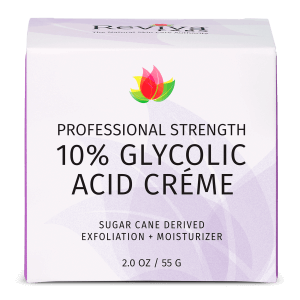
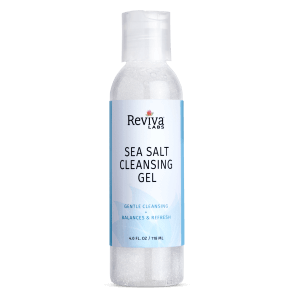
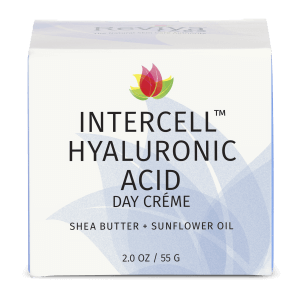
A Few Safflower Oil or Sunflower Oil Products

How Oil Choice Shapes the Entire Formula
In formulation, oils do more than moisturize. They influence how actives dissolve, how emulsions stabilize, and how products behave under stress. A cream that pills, separates, or feels greasy often suffers from an oil system that works against its purpose. Formulators learn early that oils set the tone long before fragrances or actives enter the picture.
Safflower oil and sunflower oil both offer neutral color and mild scent, which makes them appealing from a stability standpoint. Neither overwhelms a formula visually or aromatically. Yet once blended into emulsions or serums, their personalities emerge. Texture, absorption speed, and after feel shift in noticeable ways. Those shifts guide decisions more reliably than ingredient trends ever could.

Safflower Oil and the Value of Restraint
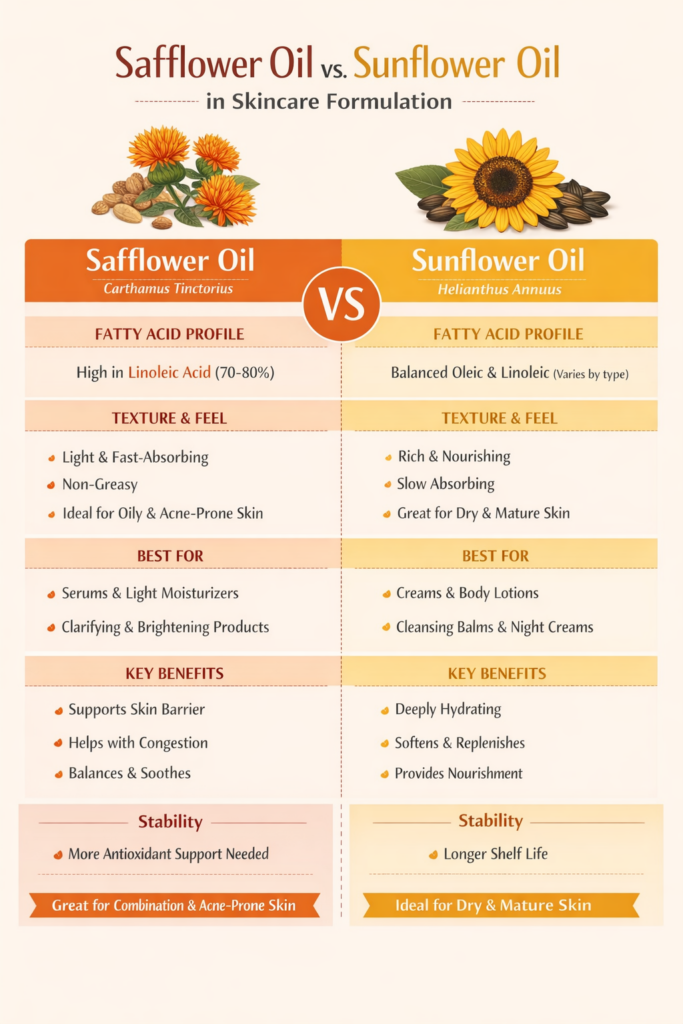
Safflower oil comes from Carthamus tinctorius seeds and is defined by its fatty acid profile. Cosmetic-grade safflower oil contains a high percentage of linoleic acid, often exceeding seventy percent. This single characteristic explains much of its appeal in facial skincare.
Linoleic acid plays a structural role in the skin barrier. It supports the lipid matrix that keeps moisture regulated and skin resilient. When skin lacks sufficient linoleic acid, it often feels rough, unbalanced, or prone to congestion. Introducing it through topical products can improve comfort without heaviness.
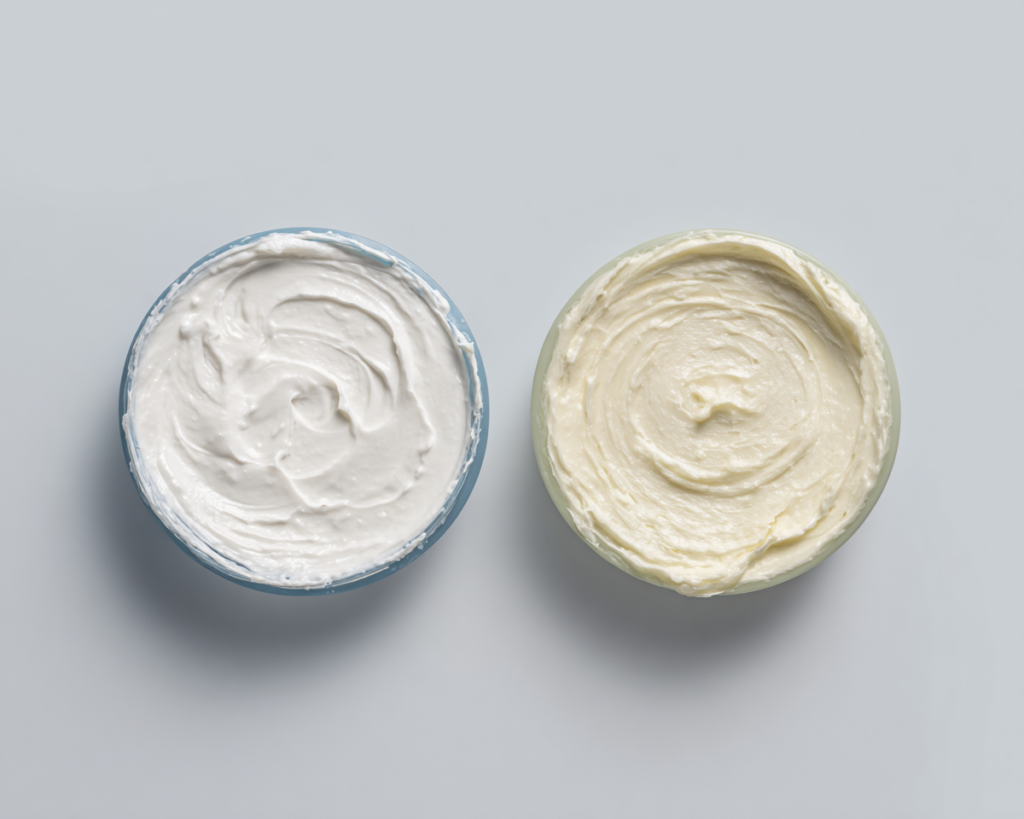
From a sensory perspective, safflower oil behaves with discipline. It spreads easily across skin but absorbs quickly. It leaves little residue and minimal shine. Skin feels conditioned rather than coated. That quality makes safflower oil especially useful in daily facial products where lightness matters.
Formulators often reach for safflower oil when working on serums, brightening creams, or lightweight moisturizers intended for consistent use. The oil supports barrier function without interfering with wear. Makeup sits better. Skin feels calm rather than slick. Over time, that experience builds trust.
Why Safflower Oil Works Well With Active Ingredients
Active-heavy formulas place extra demands on carrier oils. Exfoliating acids, brighteners, and antioxidants can challenge skin tolerance if the base feels heavy or occlusive. Safflower oil helps ease that tension.
Because it absorbs quickly and leaves little residue, safflower oil allows actives to perform without competing for attention. Skin receives support without distraction. For formulas targeting uneven tone, blemishes, or texture concerns, this balance proves valuable.
Formulators often observe fewer complaints of congestion or heaviness when safflower oil replaces richer oils in leave-on products. The oil supports comfort while allowing skin to regulate itself. That balance matters in products meant for long-term use rather than occasional treatment.
Sunflower Oil and the Role of Comfort
Sunflower oil enters formulation discussions for different reasons. Derived from Helianthus annuus seeds, sunflower oil brings familiarity and softness. Its fatty acid profile varies depending on the cultivar, which means formulators must specify the type they intend to use. Traditional sunflower oil contains more oleic acid, while high-linoleic versions behave closer to safflower oil.
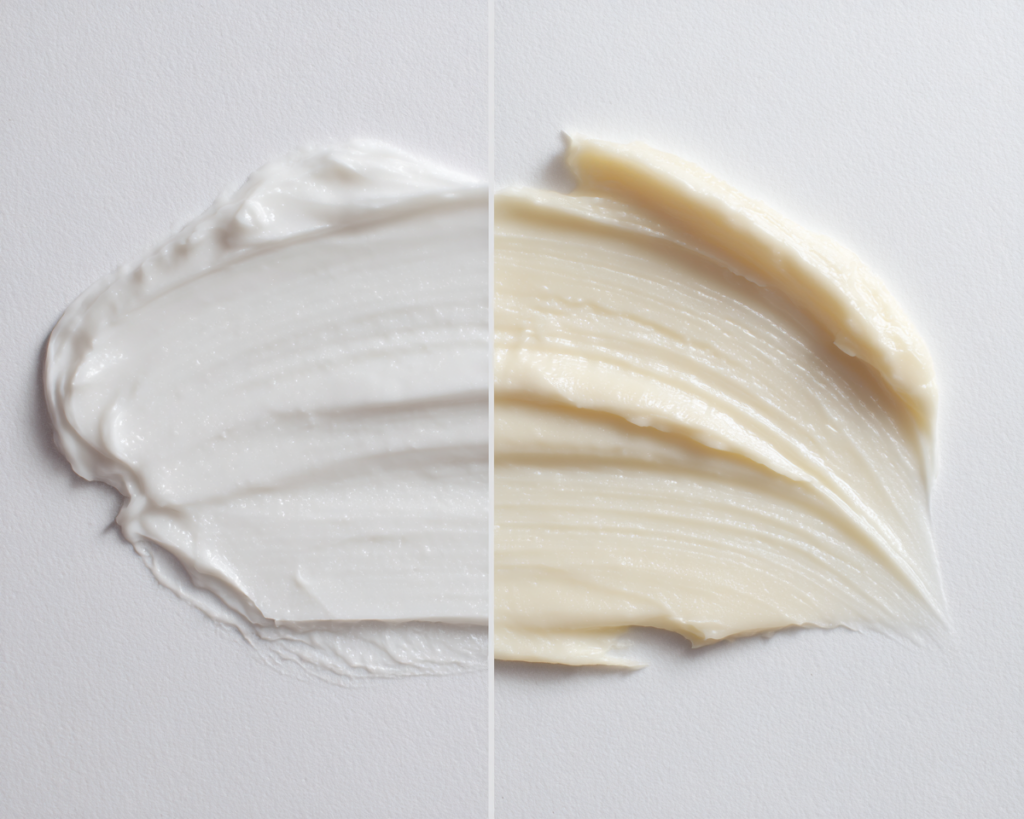
Standard sunflower oil tends to feel richer on skin. It absorbs more slowly and leaves a noticeable after feel. Many users associate this sensation with nourishment. Skin feels protected rather than bare. In certain contexts, that perception matters.
Formulators often favor sunflower oil in richer creams, body products, and cleansing formulas. The oil provides cushion and slip, improving spread and sensory comfort. In massage products, it allows hands to glide without drag. In cleansing oils and balms, it helps dissolve makeup while softening skin.
Dry and mature skin types often respond well to sunflower oil’s lingering softness. In overnight products or rinse-off formats, its heavier feel becomes an advantage rather than a drawback.
Fatty Acids and Skin Response
The difference between these oils becomes clearest when examining fatty acids. Linoleic acid supports barrier balance and fluidity. Oleic acid improves spread and penetration but can disrupt balance when present in excess. Safflower oil strongly favors linoleic acid. Sunflower oil occupies a middle ground unless specified as high-linoleic.
For skin prone to congestion, excess oleic acid can create problems. It may interfere with the lipid organization of the stratum corneum and contribute to uneven texture. That risk makes safflower oil a safer choice for daily facial products aimed at combination or oily skin.
Sunflower oil performs better where softness and comfort matter more than speed of absorption. Its oleic acid content enhances flexibility and cushion, which benefits dry areas and body care applications. The oil excels where richness improves experience rather than detracts from it.
Stability Inside Real-World Formulas
Stability influences more than shelf life. It affects scent, color, and consumer trust. Oils rich in polyunsaturated fatty acids oxidize more easily, which can create off notes over time. Safflower oil, because of its high linoleic acid content, typically requires antioxidant support.
Formulators address this with tocopherols, botanical antioxidants, or chelating systems. When supported correctly, safflower oil performs reliably in modern formulas. Still, its needs must be acknowledged during development.
Sunflower oil, particularly high-oleic versions, offers improved oxidative stability. This resilience can simplify preservation systems and extend shelf life. In products exposed to air or light, that stability may tip the scale.
Both oils perform well when handled properly. The difference lies in how much support each requires to remain stable under stress.
Consistency, Sourcing, and the Reality of Scale
Beyond skin feel, formulators must consider supply consistency. Oils vary based on harvest conditions, processing, and cultivar. Those variations can shift fatty acid ratios enough to alter texture or stability.
Sunflower oil benefits from large-scale global cultivation. Supply chains remain robust, but variability between standard and specialty grades requires vigilance. Specifications must remain tight to avoid unexpected shifts.
Safflower oil sometimes carries slightly higher costs and narrower sourcing, but it often delivers greater consistency once cosmetic-grade specifications are established. That predictability matters in long-term production. Reformulating due to ingredient drift costs time and trust.
For formulators managing large product lines, consistency often outweighs minor cost differences.
Consumer Perception Versus Formulation Logic
Consumers recognize sunflower oil. It feels familiar and comforting. Safflower oil sounds less common, which can read as technical or unfamiliar. Yet perception rarely outweighs performance.
When a product absorbs well, wears comfortably, and causes fewer issues, consumers respond positively regardless of ingredient familiarity. Over time, skin experience builds loyalty faster than ingredient recognition.
Experienced formulators prioritize results. If safflower oil delivers better wear and tolerance, it earns its place. If sunflower oil improves comfort where needed, it justifies its role.
Where Each Oil Clearly Belongs
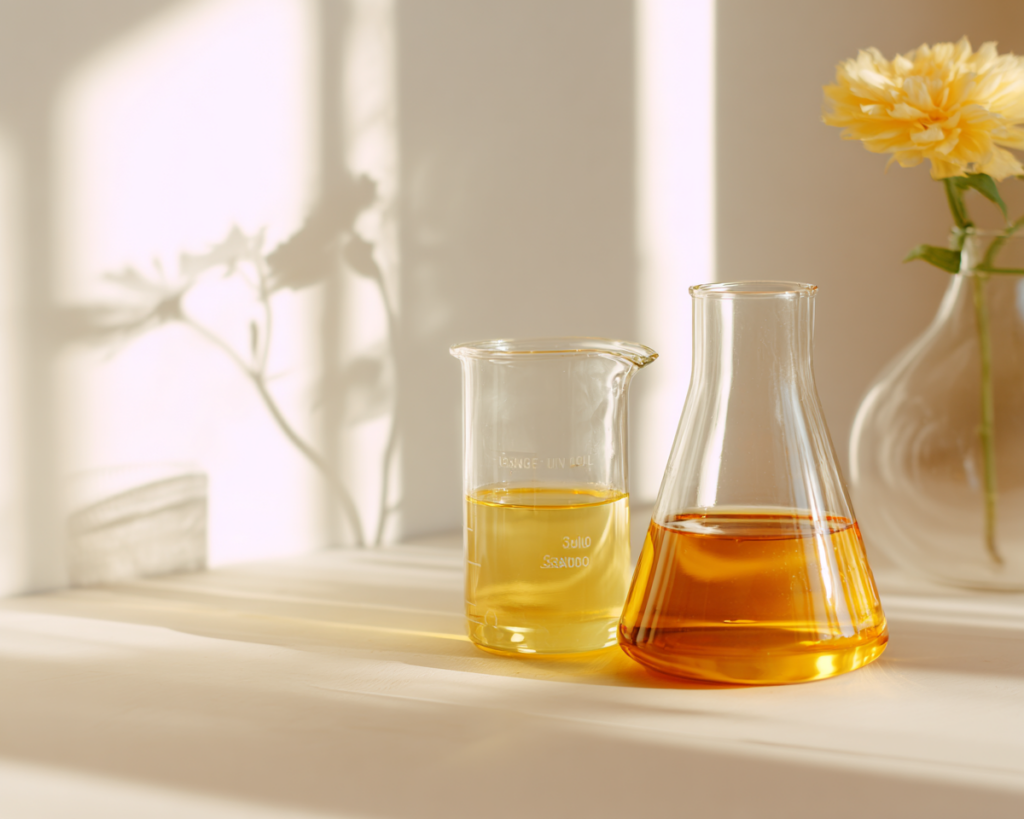
Certain formulas practically choose the oil themselves. Lightweight facial serums and brightening creams benefit from safflower oil’s restraint. Rich body creams, cleansing oils, and massage products often favor sunflower oil’s softness.
Many successful formulas blend both, using safflower oil as a structural backbone and sunflower oil to add cushion. That balance reflects intention rather than compromise.
The oil system defines how a product lives on skin. It determines whether someone feels comfortable throughout the day or eager to rinse something away.
The Final Decision
When a formulator chooses safflower oil over sunflower oil, the decision reflects purpose. It signals a focus on balance, absorption, and long-term wear. When sunflower oil takes the lead, it signals comfort, softness, and familiarity.
Neither oil serves every formula. Each earns its place through performance, not reputation. Consumers may never notice the choice by name. Their skin notices every time they use the product. And in formulation, that response tells the real story.