
Clean Beauty, Ingredients, Natural, Reviva Labs, Skin Care
How Sugar Cane Becomes the Glycolic Acid in Your Skincare

Jul
Sugar cane is one of the most efficient plants on earth at turning sunlight into stored sugar, and that simple biological talent is exactly why it became the starting point for glycolic acid. I still find it a little remarkable that a plant grown for centuries to sweeten food and drink also holds the building blocks for one of skincare’s most trusted exfoliating ingredients. The connection is not obvious at first glance, since sugar cane juice looks like nothing more than sweet, cloudy liquid. Yet within that liquid sits the sucrose that microorganisms can transform into glycolic acid through fermentation, a process that has quietly become one of the more interesting stories in modern skincare sourcing. Knowing how that transformation happens gives you a much better sense of why this ingredient behaves the way it does once it reaches your skin.

From Field to Juice
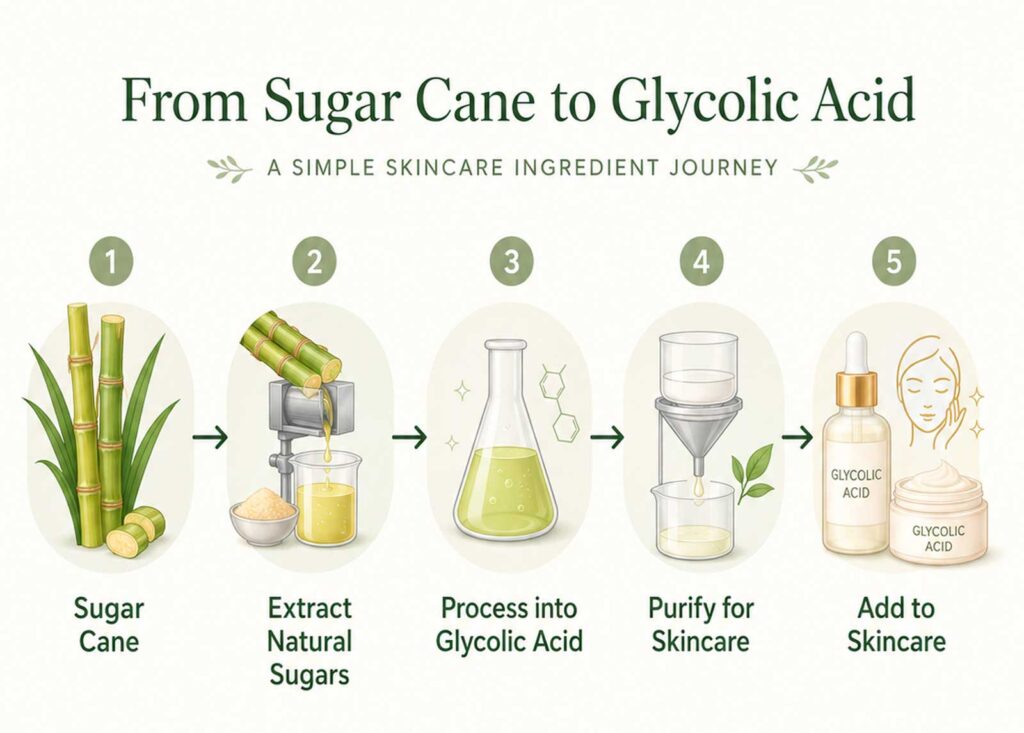
Sugar cane grows in dense, tall stalks packed with sucrose, and harvesting is the first step in a long production chain that eventually ends in a skincare jar. Once cut, the stalks are crushed or shredded to release their juice, a process that mills have refined for generations in order to extract as much sugar as possible with minimal waste. The raw juice that comes out is dark, sweet, and full of natural sugars along with plant fibers and minerals that need to be filtered out before anything else can happen. Producers typically clarify this juice using heat and settling processes that remove solid material, leaving behind a cleaner liquid rich in fermentable sugar. This clarified juice, or the molasses left over after sugar crystals have been extracted, becomes the feedstock for the fermentation stage that follows it. Some manufacturers use raw cane juice directly, while others rely on molasses, a thick byproduct of sugar refining that still carries plenty of usable sucrose even after most of the crystallized sugar has been removed. Either way, the goal at this stage is the same, which is to deliver a sugar rich, fermentable liquid to the microorganisms that will do the real chemical work later on.
The Fermentation Stage
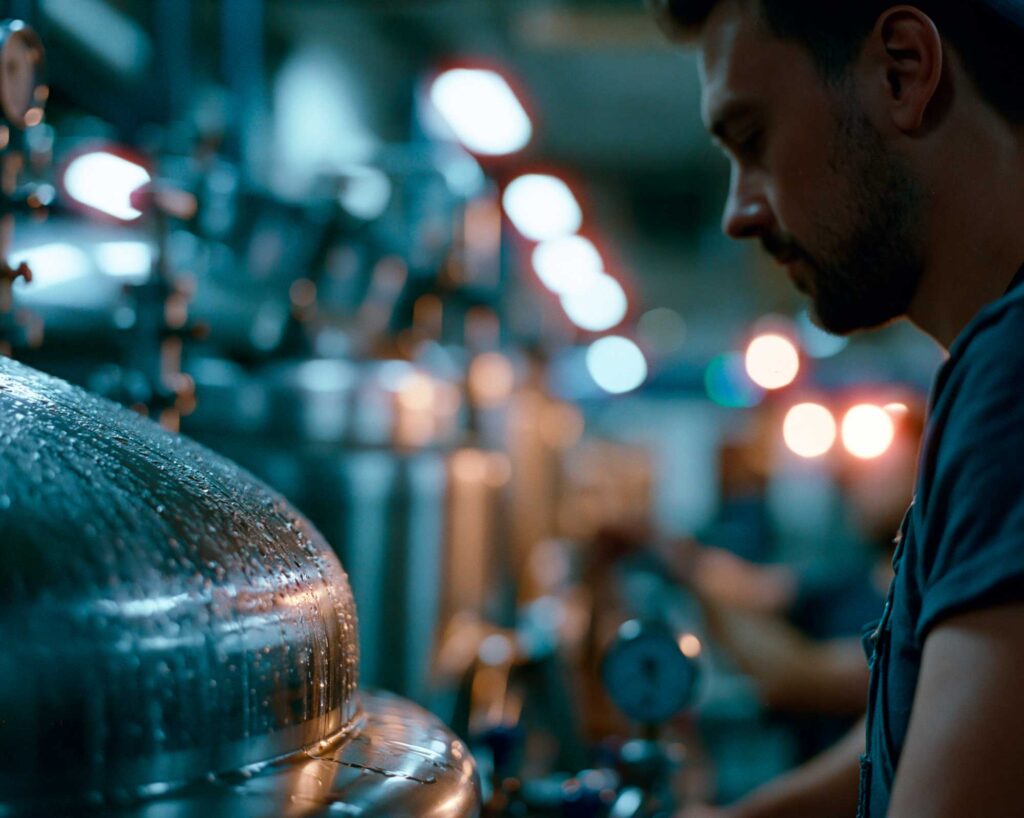
Fermentation is where sugar cane’s sucrose actually becomes glycolic acid, and it happens inside large steel tanks rather than anything resembling a kitchen recipe. Manufacturers introduce specific strains of bacteria or yeast into the sugar rich liquid, organisms that have been selected because they can metabolize sucrose and produce glycolic acid as an output of their own growth. Patent literature on this process describes maintaining a fairly narrow pH range, generally somewhere between five and seven, because conditions outside that window can slow microbial activity or reduce the yield of usable acid considerably. As the microorganisms consume the sugar, they release glycolic acid into the surrounding liquid, along with carbon dioxide and other fermentation byproducts that get filtered out later. Temperature, oxygen levels, and nutrient availability are all controlled carefully throughout this stage, since even small shifts can change how efficiently the culture converts sugar into finished acid. This is a slow, monitored process that can run for several days, not something that happens in a single quick reaction the way many people imagine industrial chemistry working. It is much closer to brewing than it is to typical synthetic chemistry, and that similarity is part of why glycolic acid is often described as naturally derived rather than purely synthetic.
Purifying the Raw Acid
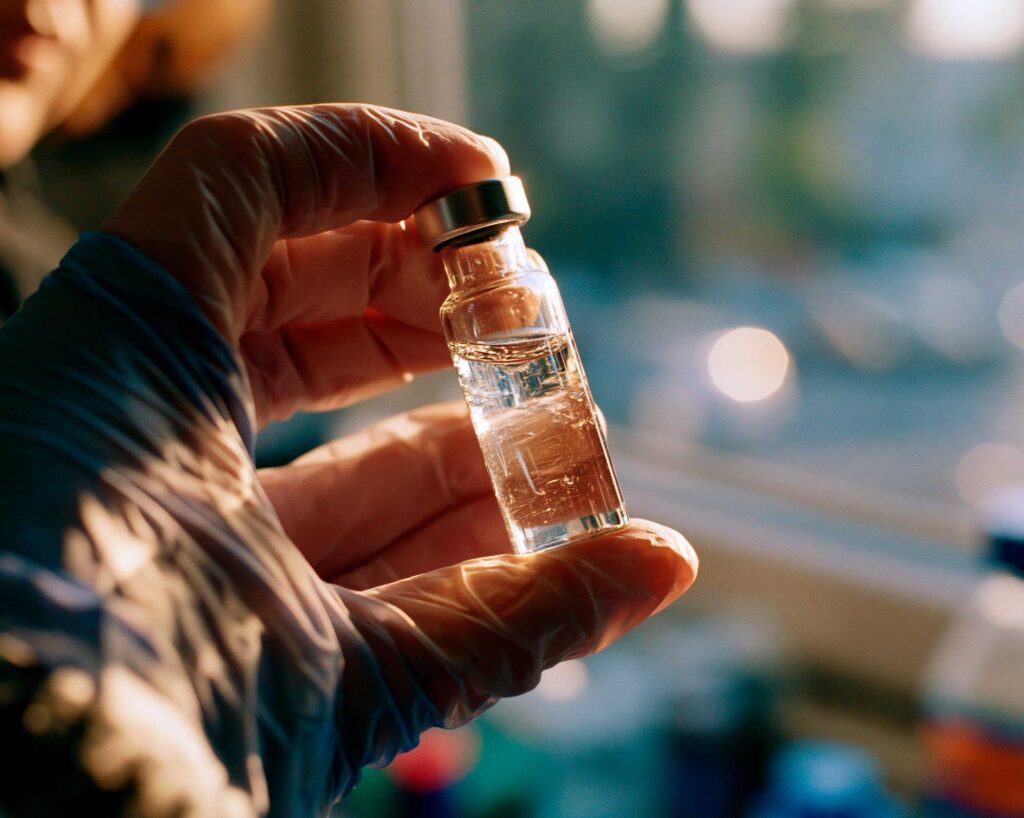
Once fermentation finishes, what remains in the tank is a cloudy broth that contains glycolic acid mixed together with leftover sugars, dead cell material, and other fermentation residues. That mixture is nowhere near ready for a skincare formula, so the purification stage exists to separate the acid from everything else floating around it. Filtration removes solid biomass first, followed by additional steps like ion exchange or crystallization that isolate glycolic acid from residual sugars and mineral salts. Manufacturers often repeat these purification steps multiple times to reach the level of purity required for cosmetic use, since even small amounts of contamination can affect a formula’s stability or trigger unwanted reactions down the line. The acid is then typically concentrated into a stock solution with a known, verified percentage of glycolic acid, and that stock solution becomes the starting point formulators actually work with. This concentrated raw material is what eventually gets diluted down into the specific strengths you see listed on skincare packaging, whether that is a gentle daily cleanser or a stronger overnight treatment. Quality testing at this stage checks for purity, exact concentration, and the absence of unwanted byproducts before the material is ever allowed to reach a formulation lab.

Why Sugar Cane Is the Preferred Source
Glycolic acid can technically be produced through synthetic routes or extracted in trace amounts from other plants like sugar beets, pineapples, or unripe grapes, but sugar cane remains the dominant commercial source for good reason. Cane juice contains an especially high concentration of fermentable sucrose relative to its volume, which makes the extraction and fermentation process noticeably more efficient than working with lower sugar plants. That efficiency matters enormously at industrial scale, where even small differences in yield translate into significant cost and resource savings across a full production run. Sugar cane is also a fast growing, renewable crop that many regions already cultivate at scale for food production, so the agricultural infrastructure needed to support cane based glycolic acid largely already exists. This is part of why the ingredient gets marketed as naturally derived, since its origin traces back to an ordinary plant sugar rather than petroleum-based synthesis. None of this means every gram of glycolic acid on the market comes from cane, since synthetic routes and other bio-based methods exist and are sometimes chosen for cost or supply chain reasons instead. Still, when a product highlights cane derived glycolic acid, it is pointing specifically to this fermentation pathway rather than a lab built alternative to it.
What Happens Once It Reaches a Formula
After purification, glycolic acid arrives at a skincare lab as a concentrated raw ingredient that still needs to be engineered into something usable on skin. Formulators dilute it to a specific percentage, adjust the surrounding pH, and often combine it with buffering agents that keep the acid from being too aggressive on first contact with the skin’s surface. This is where a lot of the practical differences between finished products come from, since a gentle low percentage cleanser behaves very differently than a stronger overnight treatment, even though both trace back to the exact same raw material. The molecule itself is the smallest of the alpha hydroxy acids, which allows it to penetrate the outer layer of skin more readily than larger acids like lactic or mandelic acid can manage. That small size is a big part of why glycolic acid has a reputation for working quickly and visibly, exfoliating the surface layer of built-up dead skin cells and encouraging smoother, more even looking texture underneath. It is also why formulators pay such close attention to concentration and frequency of use, since a molecule that penetrates easily needs a properly balanced formula to avoid unnecessary irritation for the person using it. None of this chemistry happens by accident, and the careful engineering that follows fermentation is just as important as the biological process that created the acid in the first place.
Safety Considerations Worth Knowing
Glycolic acid has a long track record of use in professional and at home skincare, but it is not an ingredient to treat casually, and manufacturers are required to communicate that clearly. Research reviewed by the Food and Drug Administration found that after four weeks of regular use, alpha hydroxy acids increased volunteers’ sensitivity to UV related skin reddening by 18 percent, an effect that reversed within roughly a week of discontinuing use. That finding is exactly why daytime sun protection matters so much whenever glycolic acid is part of a routine, since exfoliated, sensitized skin is simply more vulnerable to sun damage during the period it is actively being used. This does not mean the ingredient should only be used at night, since plenty of glycolic formulas are designed for daytime use as long as they are paired with adequate broad-spectrum sunscreen. It does mean sunscreen is not optional and skipping it while using an exfoliating acid meaningfully raises the odds of irritation or sunburn for anyone in that routine. People with sensitive or compromised skin barriers should also introduce glycolic acid gradually, starting with lower concentrations and less frequent use before working up to anything stronger over time. Patch testing a new product before applying it broadly remains one of the simplest ways to catch a reaction before it ever becomes a bigger problem.

The Bigger Picture on Sourcing
There is a reason ingredient sourcing has become such a consistent talking point in skincare marketing, and glycolic acid’s sugar cane origin is a good example of why that conversation matters. Consumers who care about clean formulations are often just as interested in where an ingredient came from as they are in what it actually does on skin, and a fermentation based, plant derived process tends to read as more transparent than a purely synthetic one. That said, natural origin alone does not automatically make an ingredient gentler or safer, and glycolic acid’s effectiveness comes with real considerations around concentration, frequency, and sun protection regardless of where the raw sugar originally came from. Brands that lean on cane derived sourcing are usually trying to signal a connection to agriculture and fermentation science rather than claiming the ingredient behaves differently because of its origin. Knowing the actual production chain, from field to fermentation tank to finished formula, gives you a much more grounded way to evaluate those claims than a label alone ever could on its own. It also explains why glycolic acid, despite being a carefully refined ingredient by the time it reaches a bathroom shelf, still gets described as naturally derived with a fairly straight face by the people who make it.
Where the Process Continues to Evolve
Fermentation technology for glycolic acid has continued to develop as researchers look for ways to improve yield, reduce cost, and rely on renewable feedstocks more heavily than older synthetic methods required. Scientists have experimented with different microbial strains, including engineered strains of yeast and bacteria, aiming to squeeze more glycolic acid out of the same amount of sugar cane feedstock. Some of this research even explores byproducts of sugar cane processing itself, like filter cake left over from juice clarification, as an additional carbon source that would otherwise go to waste. That kind of resourcefulness matters both economically and environmentally, since it means, less raw cane is needed to produce the same volume of finished acid over time. It also reflects a broader shift across the ingredient supply chain toward processes that lean on biology rather than heavy industrial chemistry wherever that tradeoff makes practical sense. For a molecule as small and reactive as glycolic acid, these incremental improvements in fermentation efficiency add up to a meaningfully different production footprint than the industry had a generation ago. The next time you read that a glycolic product is derived from sugar cane, that label is describing a genuinely active and still evolving area of fermentation science, not a static or purely marketing driven claim.
Frequently Asked Questions
Is glycolic acid vegan if it comes from sugar cane fermentation?
The sugar cane feedstock itself is plant based, and the fermentation organisms used to convert it are typically bacteria or yeast rather than anything animal derived. That said whether a finished product qualifies as vegan depends on the complete ingredient list and formulation, not just the source of the glycolic acid itself, so it is worth checking each product individually.
Does glycolic acid from sugar cane work differently than synthetic glycolic acid?
Once purified, glycolic acid is a single, well-defined molecule regardless of whether it started in a sugar cane fermentation tank or a synthetic process, so it behaves the same way on skin. The sourcing conversation is mostly about sustainability and ingredient transparency rather than a difference in how the final molecule performs.
Why does glycolic acid penetrate skin faster than other exfoliating acids?
Glycolic acid has the smallest molecular size among the alpha hydroxy acids, which allows it to move through the outer skin layer more readily than larger molecules like lactic or mandelic acid. That efficient penetration is a major reason it has such a strong reputation for visible exfoliation.
Can glycolic acid be used during the day, or only at night?
Many glycolic acid products are formulated for daytime use as long as they are paired with a broad-spectrum sunscreen, since sun protection is what manages the increased UV sensitivity associated with AHA use. Whether a specific product is meant for morning, evening, or both ultimately depends on its individual directions for use.
Is sugar cane the only natural source of glycolic acid?
Sugar cane is the dominant commercial source because of how efficiently it ferments, but glycolic acid also occurs in trace amounts in sugar beets, pineapples, and unripe grapes. None of those alternative sources are used at meaningful commercial scale because their fermentable sugar content is comparatively low.
Does using glycolic acid make skin more prone to sunburn?
Research reviewed by the FDA found that regular AHA use increased UV related skin sensitivity by 18 percent after four weeks of use, which does raise the practical risk of sunburn without proper sun protection. That increased sensitivity is reversible and generally resolves about a week after discontinuing use.
References and Sources
- U.S. Food and Drug Administration, “Alpha Hydroxy Acids,” Cosmetic Ingredients, https://www.fda.gov/cosmetics/cosmetic-ingredients/alpha-hydroxy-acids
- U.S. Federal Register, “Guidance for Industry: Labeling for Cosmetics Containing Alpha Hydroxy Acids,” https://www.fda.gov/regulatory-information/search-fda-guidance-documents/guidance-industry-labeling-cosmetics-containing-alpha-hydroxy-acids