
Clean Beauty, Ingredients, Natural, Reviva Labs, Skin Care
How to Choose the Right Glycolic Acid Strength for Your Skin
Jul
The Cosmetic Ingredient Review panel concluded back in 1998 that glycolic acid is safe for daily, unsupervised use at concentrations up to ten percent, provided the finished product holds a pH of 3.5 or higher, a finding the FDA still cites in its own summary of alpha hydroxy acid safety. That single guideline shapes nearly every glycolic toner on shelves today, from four percent formulas built for everyday comfort to seven percent versions aimed at people who already reach for direct acids without hesitation.
Plenty of ordinary toners on the market advertise seven percent glycolic acid, or fifteen percent, or twenty-eight percent, or even higher. If you’re newer to acids, it’s tempting to treat that number as the whole decision. It isn’t. Percentage tells you part of the story – and higher percentages aren’t always better. What it does inside your routine depends just as much on pH, on what else is in the bottle, and on how your own skin has responded to exfoliating acids in the past.
What Glycolic Acid Actually Does for Your Skin
Glycolic acid belongs to the alpha hydroxy acid family and carries the smallest molecule size among the AHAs used in skin care. That small size lets it move through your skin’s outer layer more readily than larger acids like lactic acid or malic acid, which is part of why formulators treat concentration and pH with real care rather than chasing the highest number they can justify.
Once it’s on your skin, glycolic acid loosens the bonds holding dead cells to the surface, encouraging them to shed more evenly than they would on their own. With repeated use, you tend to notice smoother texture, a more even tone, and less buildup around pores. None of that requires a high percentage to happen. Even a modest concentration produces measurable exfoliation when you use it consistently over weeks rather than days.
Concentration Is Only Part of the Story
A toner formulated at a higher percentage but buffered toward a less acidic pH can behave more gently on your skin than a lower percentage formula sitting at a more acidic pH, and the reverse holds true just as often. Percentage alone doesn’t settle how much active acid is actually available to interact with your skin at any given moment.
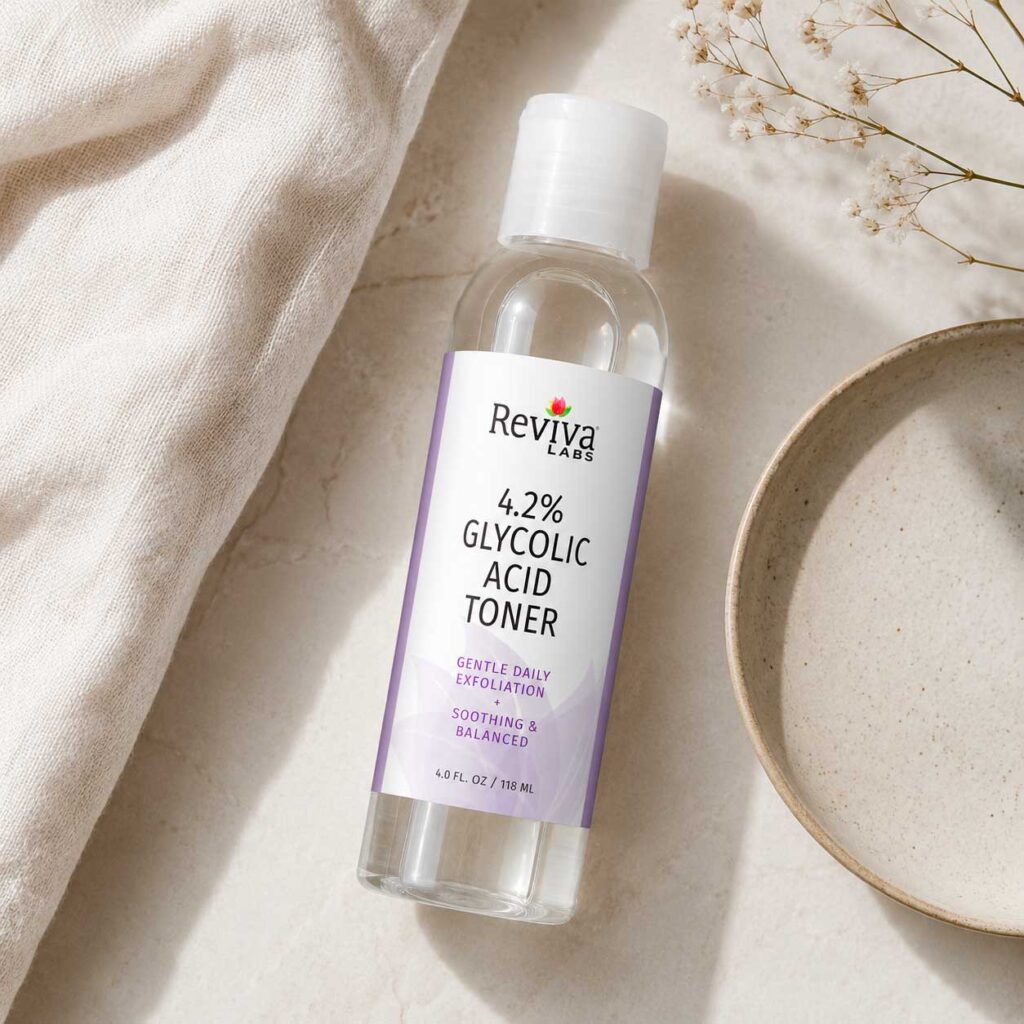
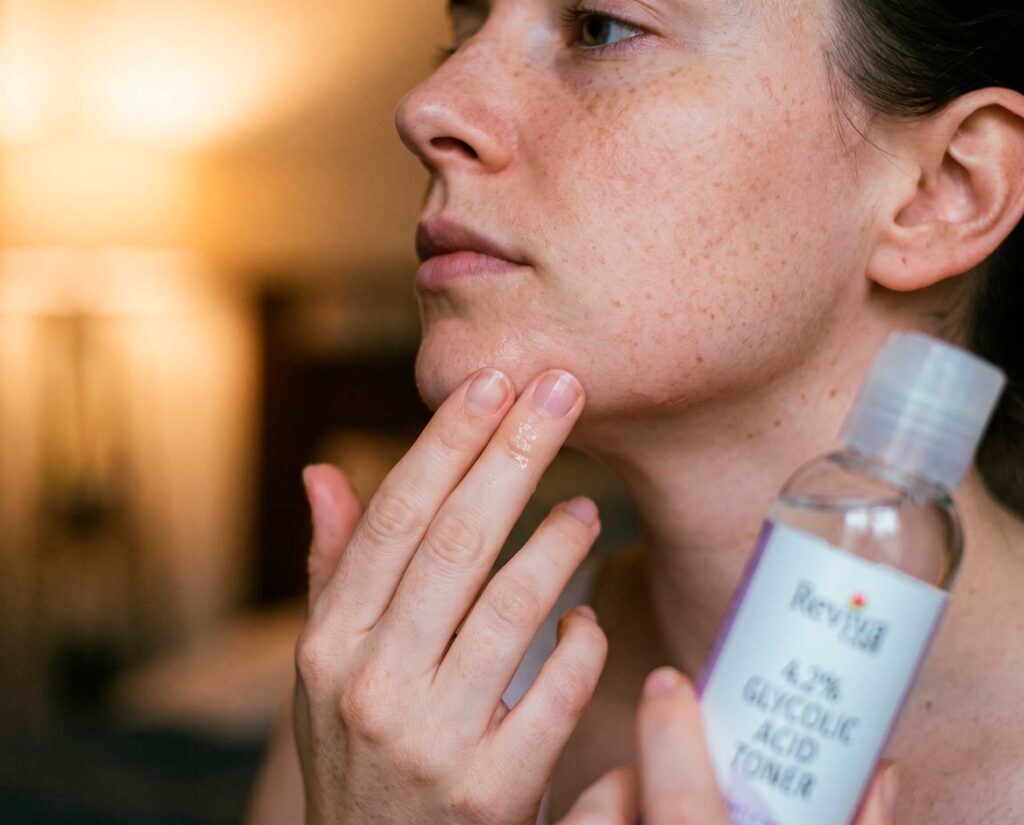
Reviva Labs’ Glycolic Acid Toner is formulated at 4.2 percent glycolic acid, sourced from sugar cane, at a pH of approximately 4.0. That combination puts it toward the gentler end of the range most brands work within, and that’s by design. It’s built to sit inside a daily routine without asking you to make a lot of adjustments elsewhere.
What’s in Reviva’s 4.2% Glycolic Acid Toner
Here’s the full spec, in one place, so you know exactly what you’re working with:
| Glycolic acid concentration | 4.2% |
| Formulation pH | Approximately 4.0 |
| Size | 4 fl oz (118 ml) |
| Key supporting ingredients | Aloe leaf juice, sodium hyaluronate (hyaluronic acid), allantoin, lavender oil |
| Added synthetic fragrance | None |
| Recommended frequency | Twice daily, per product directions |
If You’re New to Direct Acids, Gentler Usually Wins
If you’re newer to chemical exfoliation, or if your skin reddens easily, you’ll generally do better easing in with a lower percentage formula. Paired with aloe and hyaluronate, a toner like this one is built to layer into an existing routine without demanding much else change around it.
If you use a retinoid, a gentler glycolic step is usually the safer pairing, since stacking a strong acid on top of an already active retinoid raises your odds of dryness or flaking. Mature skin, which often carries a thinner and more reactive barrier than it did a decade earlier, also tends to respond better to a toner that prioritizes soothing ingredients alongside the acid rather than maximizing percentage.
When a Stronger Formula Might Make Sense
If you already use direct acids regularly and tolerate them well, you might want a more noticeable exfoliating step, and stronger formulas exist for exactly that reason. But a stronger formula isn’t automatically a better one. It simply asks more of your skin, which only makes sense once you’ve already built up some tolerance. If you’re not sure where you land, starting gentler and working up costs you very little time and spares you the setback of overdoing it.
Ingredients Beyond the Acid
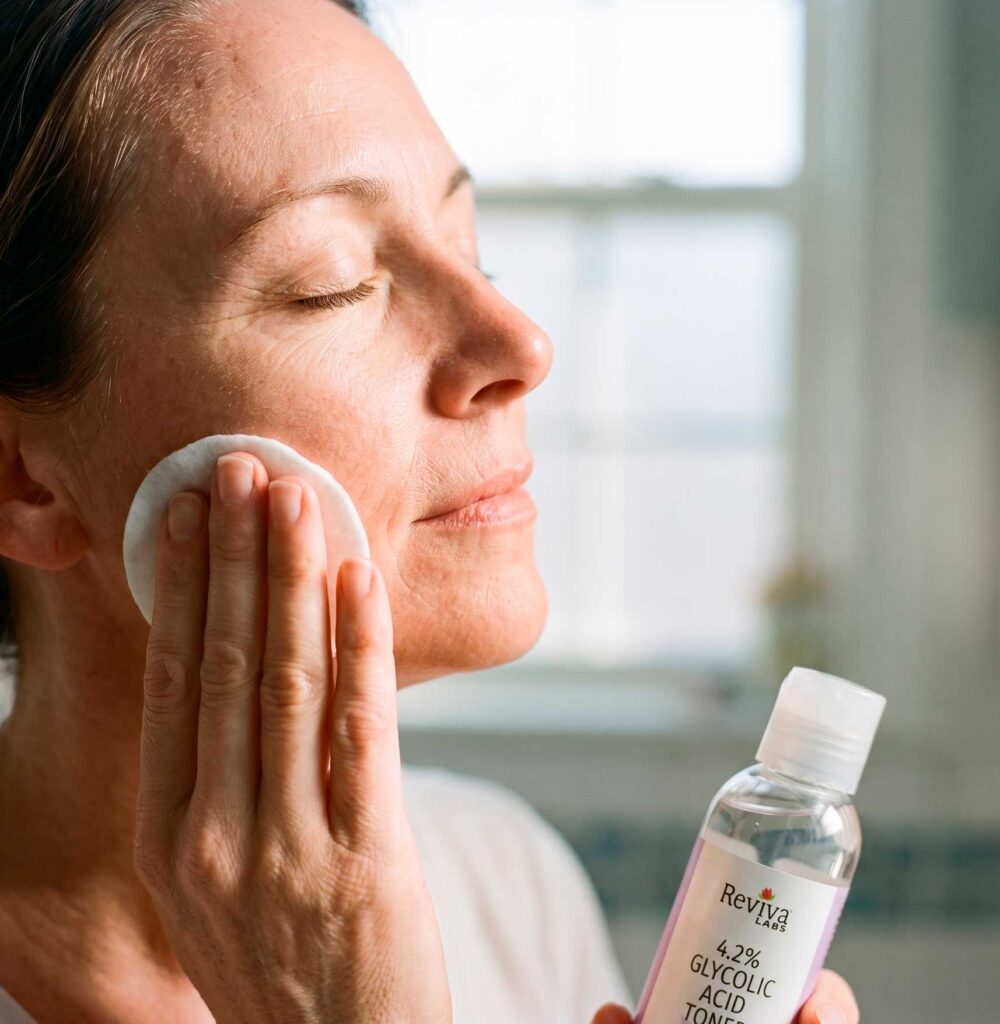
Sodium hyaluronate holds water at your skin’s surface, which helps offset the temporary dryness a direct acid can sometimes cause. Allantoin has a long history in skin care as a soothing agent and shows up in plenty of sensitive skin formulas well beyond this one product. Aloe leaf juice and a small amount of lavender oil round out the formula, chosen mainly to soften the experience of using an acid toner rather than to add exfoliating power on top of what the glycolic acid already provides.
What You’re Paying For
At eighteen dollars for a four-ounce bottle, this toner reflects a smaller batch, naturally sourced formula from a brand that’s been making skin care since 1973. You’re paying for that history and for the hyaluronate included for added hydration, not just for the acid itself. Whether that’s worth it to you probably comes down to how much you value a simpler, more established formulation over squeezing out the lowest possible cost per ounce.
Building It Into a Full Routine
A glycolic toner rarely works in isolation. This one is meant to sit inside a broader routine, applied after cleansing and before a treatment product, fitting a fairly traditional cleanse, tone, treat, moisturize sequence. Moisturizer and sunscreen are the two steps that make a glycolic toner sustainable over the long run rather than something you abandon after a week of dryness.
How to Introduce It Safely
Patch test on the inside of your forearm before applying it to your face. It’s worth the extra day it takes. Start with every other night for the first one to two weeks so you can gauge how your skin responds before committing to daily use. Wear sunscreen the following morning without exception, since glycolic acid increases how easily your skin sunburns. Avoid layering it on the same night as a retinoid or another direct acid until you know how your skin handles each one individually, and if you notice ongoing redness, stinging that doesn’t fade within a minute or two, or visible peeling, step back to a lower frequency.

Frequently Asked Questions
Is a higher glycolic acid percentage always better for your skin?
Not necessarily. Percentage interacts with pH, and a product’s overall effect depends on the formulation as a whole rather than one number on the label. Plenty of people get excellent results from a lower percentage toner used consistently, while a higher percentage product used too often can lead to irritation that sets progress back rather than speeding it up.
Can you use a glycolic acid toner every day?
Some formulas are designed for daily use, and this one is labeled for twice daily application. But if you’re new to direct acids, easing in gradually is still the safer path, regardless of what the label allows.
Do you need sunscreen if you use a glycolic acid toner at night?
Yes. Glycolic acid increases sun sensitivity for a period after use, not only on the day it’s applied, so daily sunscreen the following morning is a standard recommendation from dermatologists.
What’s the difference between a toner and a dedicated exfoliating treatment?
A toner is typically a lighter weight, quick absorbing step used after cleansing, while a dedicated exfoliating treatment might be left on longer or used less frequently for a more intensive effect. This product falls into the toner category, applied with a cotton pad or your fingertips and left on rather than rinsed off.
Can sensitive skin tolerate glycolic acid?
It depends on the individual and the formula. Lower percentage formulas paired with soothing ingredients like aloe or allantoin tend to be better starting points for reactive skin, and a patch test remains the most reliable way to find out how your own skin will respond before committing to regular use.
References and Sources
- U.S. Food and Drug Administration. Alpha Hydroxy Acids. https://fda.gov/cosmetics/cosmetic-ingredients/alpha-hydroxy-acids