
Clean Beauty, Reviva Labs, Skin Care
Moisturizer or Facial Oil First? How to Layer Reviva Serums the Right Way

May
Facial oils do not replace water. They help seal, soften, cushion, and treat, depending on the formula. That small distinction changes the entire way you should layer your skincare, and it matters more than most routine guides let on.
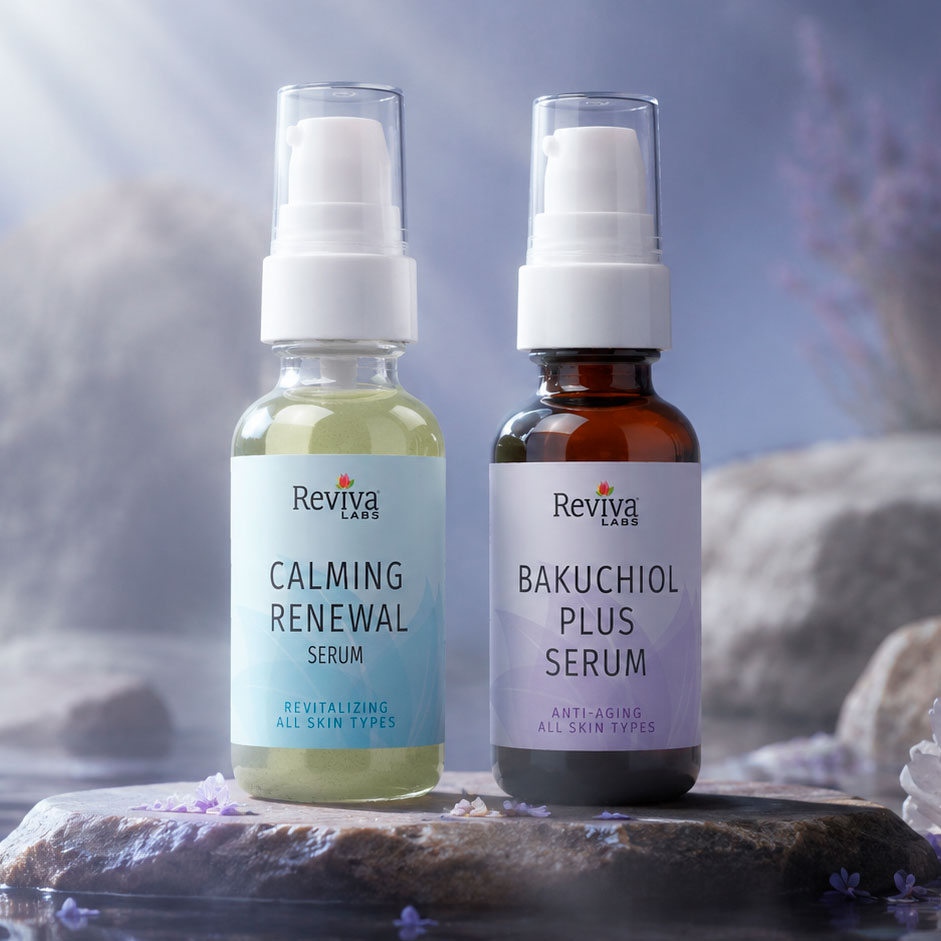
Few questions in skincare create more confusion than this one: should moisturizer or facial oil go first? The simple answer is moisturizer first, facial oil second. But Reviva Labs has two anhydrous facial oil serums, Bakuchiol Plus Serum and Calming Renewal Serum, and those products sit in a different category than a plain carrier oil. The answer deserves more care than a single sentence can offer. These are not generic oils. They are treatment serums built without water, using oil-soluble actives, nourishing plant oils, and botanical extracts that are designed to do specific things for your skin.
That means they occupy a special place in any routine. They work best after water-based hydration has been applied, but before you call the routine finished. If your skin needs hydration, use your water-based serum, gel, toner, or cream first. Then apply your anhydrous facial oil serum to help soften, support, and seal the look of healthy skin. That sequence lets each product do what it was made to do, without either one working against the other.
Getting the order right also affects how your products feel on skin. Apply oil first and water-based products become harder to spread evenly. They can pill, sit on top without absorbing, or simply feel less comfortable. Reverse the order and everything settles more naturally. Understanding the logic behind layering makes routine-building less guesswork and more intention.
What Anhydrous Actually Means
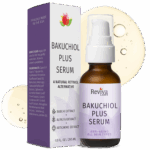
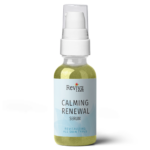
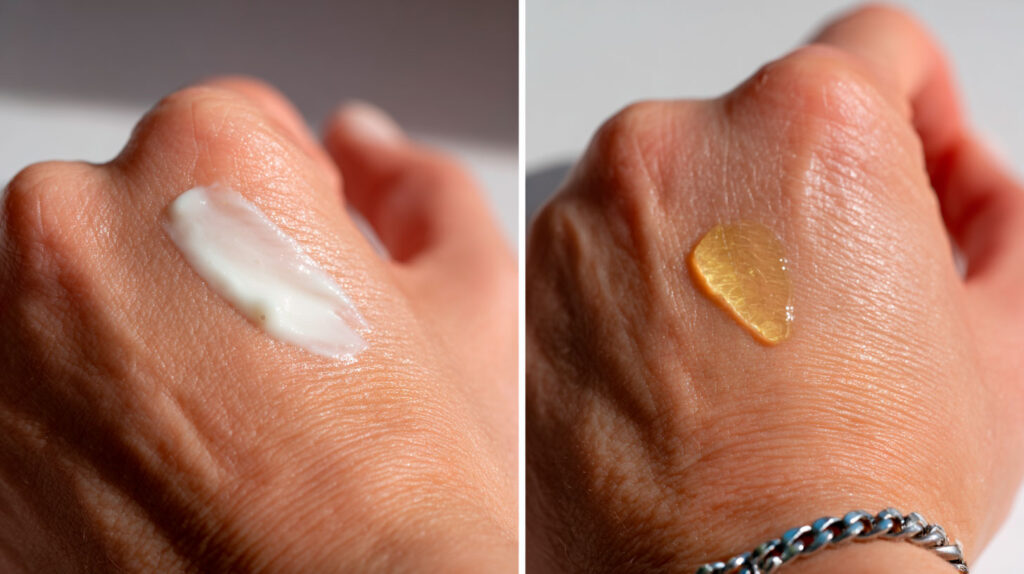
Anhydrous means waterless. In skincare formulation, an anhydrous product contains no water as part of its base. Instead, it relies entirely on oils, oil-soluble actives, waxes, and botanical extracts. Reviva describes Calming Renewal Serum as a waterless serum made from oils, plant extracts, and oil-soluble actives. Bakuchiol Plus Serum is also formulated as an anhydrous face oil serum, featuring 0.6% bakuchiol in an oil base. Both sit in a category that is genuinely distinct from a cream or lotion, even if they serve some of the same goals.
This matters because water-based products and oil-based products behave differently on skin and carry different types of ingredients. Water-based products often include humectants such as hyaluronic acid, sodium PCA, glycerin, or niacinamide. These ingredients work by attracting moisture to the skin’s surface or supporting functions that help the skin hold on to what it already has. Oil-based serums do something different. They soften the skin’s texture, nourish the barrier, support comfort, and reduce the feeling of dryness and tightness that can set in by the end of the day.
Neither category is better than the other. They do different jobs, and a thoughtful routine puts each product in the position where it performs at its best. Trying to replace a water-based hydration step with an oil-based serum or skipping the oil serum because you already have a cream, can leave gaps in what your skin actually receives. Knowing what each product is made of is the first step to figuring out where it belongs.
Some products blur these lines by including both water and oil components. A standard moisturizer, for example, is typically an emulsion. It combines water, humectants, emollients, and often occlusives into a single formula. An anhydrous serum like Bakuchiol Plus Serum or Calming Renewal Serum contains none of that water phase. It is entirely oil-based, which means it behaves like an oil, spreads like an oil, and should be layered like one.

Why Moisturizer Usually Goes Before Facial Oil
A moisturizer usually contains some combination of water, humectants, emollients, and barrier-supporting ingredients. It brings hydration and immediate comfort to the skin. A facial oil serum is richer and more lipid focused. It helps soften the surface and creates a more conditioned, cushioned feel. Because the oil is denser and more occlusive by nature, it tends to form a layer that other products have a harder time penetrating if it goes on first.
That is why moisturizer usually comes first in a routine. If you apply an oil-based product before a water-based cream or gel, you create a barrier that the water-based product then has to compete with. The cream may spread unevenly, feel less comfortable, or simply not absorb the way it should. When you apply the water-based product first and follow with an oil, each layer is placed in a more logical order. Water reaches the skin, and oil helps seal what is already there.
Think of the routine in terms of texture and function rather than a fixed list of steps. Lightweight water-based products go early. Creams go next. Anhydrous facial oil serums go near the end, especially at night or during periods when skin feels dry, tight, reactive, or depleted. That sequence is flexible enough to accommodate different skin types and different levels of routine complexity, but the logic behind it holds across most situations.
The one meaningful exception is very dry skin that tends to lose moisture rapidly. In those cases, some people prefer applying a thin layer of facial oil first to slow moisture loss before layering water-based products. This approach works for some skin types, but it is not the default, and it is not how Reviva’s anhydrous treatment serums are designed to be used. For most people, and for most routines, moisturizer first and facial oil serum last produces the better result.
Where Bakuchiol Plus Serum Fits in a Routine
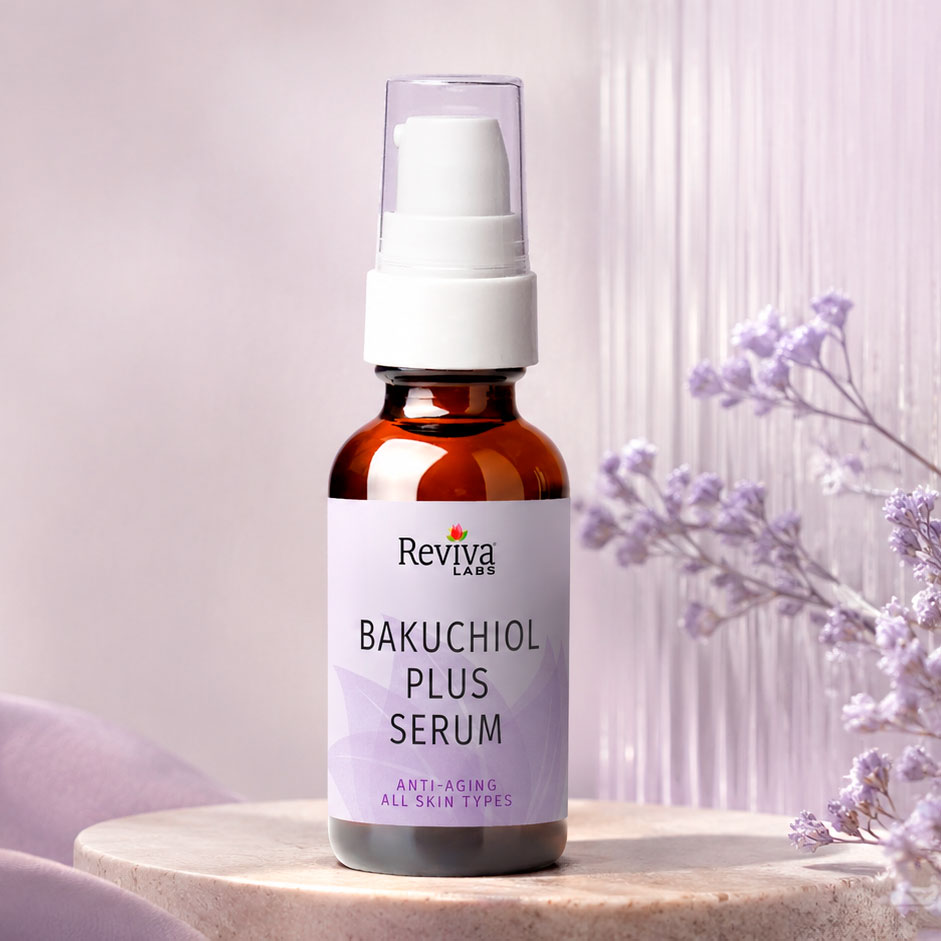
Bakuchiol Plus Serum is an anhydrous facial oil serum featuring 0.6% bakuchiol. The formula pairs bakuchiol with alfalfa extract, artichoke extract, and other antioxidant-rich ingredients in a waterless oil base. Reviva positions it as a natural retinol alternative designed to support the appearance of smoother, more youthful-looking skin, making it a treatment serum as much as it is a facial oil. That dual identity is important for understanding where it belongs in a routine.
Because it is both a treatment serum and a facial oil, placement depends on what else you are layering around it. If you are using a lightweight water-based toner, essence, hyaluronic acid serum, or niacinamide serum, apply those first. Then use Bakuchiol Plus Serum. If your skin still wants more cushioning after the serum, you can apply a cream on top, particularly at night. That three-part sequence of water-based hydration, treatment serum, and optional cream is a workable foundation for many skin types.
For many people, Bakuchiol Plus Serum will be a finishing step after a moisturizer. For drier skin, it works well over a hydrating cream, adding a soft lipid layer over what the cream already delivered. For skin that dislikes heavy layering, it can follow a lighter water-based serum without another cream on top. The best order for any individual depends on how their skin feels ten minutes after application, not how many steps appear on a general routine chart. Skin tells you what it needs if you pay attention to it.
Bakuchiol has attracted significant interest in the skincare world as a plant-derived compound with properties that support skin renewal. Research published in the International Journal of Cosmetic Science found that bakuchiol showed comparable activity to retinol in terms of supporting the appearance of smoother skin and reducing the look of fine lines, but with a better tolerability profile. That kind of evidence base gives Bakuchiol Plus Serum more substance than a simple plant oil, which is why its placement as a treatment step rather than a finishing oil matters.
Where Calming Renewal Serum Fits in a Routine
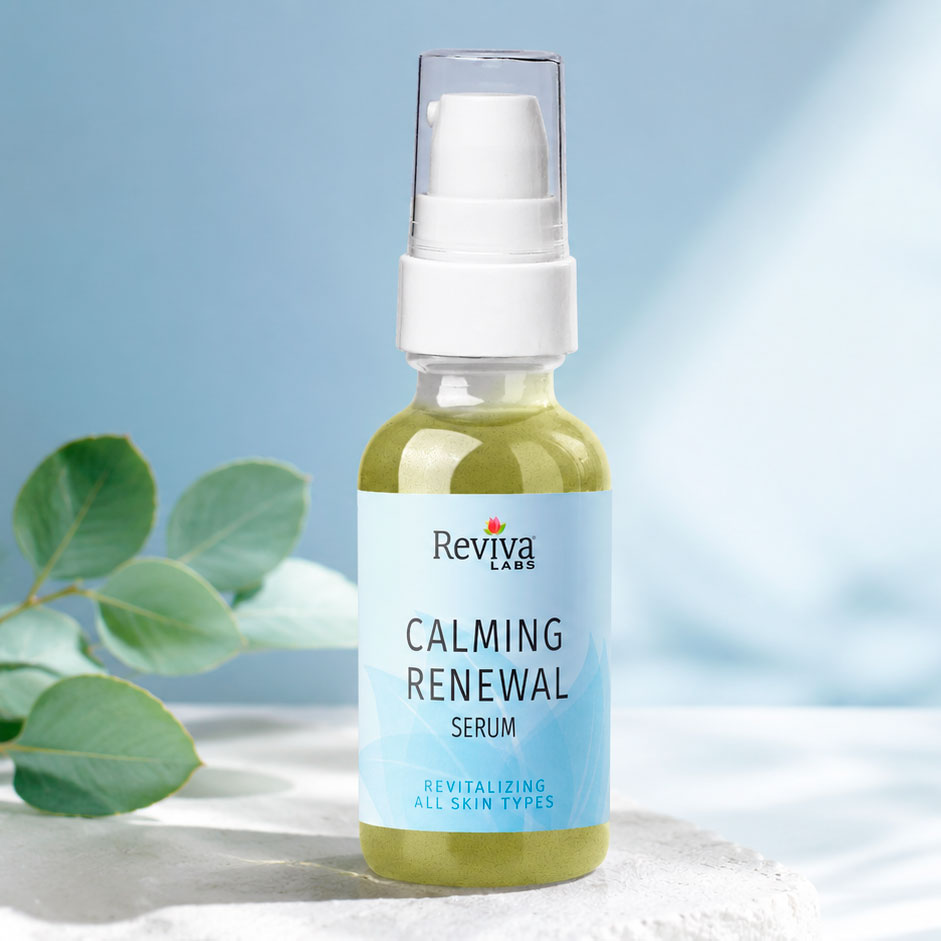
Calming Renewal Serum is also an anhydrous face oil serum. Reviva describes it as a formula built around argan, rosehip, jojoba, and hemp oils, combined with botanical actives including ashwagandha, shiitake, chinaberry, turmeric, and red seaweed. It is positioned for a calmer, more radiant-looking complexion and includes essential fatty acids and nourishing plant oils that help support a soft, comfortable skin surface. The overall intent of the formula is comfort and restoration.
This serum makes the most sense when skin feels dry, delicate, stressed-looking, or in need of extra care. Use it after water-based hydration and before or after cream depending on your skin type and how much layering your skin tolerates well. If your skin feels easily overwhelmed or tends to react to too many steps, apply your moisturizer first and then press a small amount of Calming Renewal Serum over it. If your skin is dry and responds well to oils, apply the serum after your water-based products and follow with cream for maximum comfort.
Because Calming Renewal Serum is oil-based and rich in essential fatty acids, a few drops are typically enough. Using more does not produce better results. The goal is a soft, comfortable finish where the skin feels nourished but not coated. Over-application of any facial oil serum can make the skin feel heavy and interfere with how subsequent products layer over it, which is why starting with less is almost always the right move when getting used to an oil-based product.
Argan oil, one of the key oils in this serum, has been studied for its emollient properties and its content of oleic and linoleic acid. Hemp seed oil similarly contributes linoleic acid, which is relevant for supporting the skin’s surface. Rosehip oil is valued for its fatty acid profile and its contribution to a softer skin feel. These oils are not decorative additions to the formula. They each bring something functional to the skin, which is why the serum works best when it has direct access to the skin rather than being layered under products that might block its absorption.
Building a Reviva Routine That Layers Well
For daytime, keep the routine simple and focused. Cleanse, apply toner or mist if you use one, apply a water-based serum, apply moisturizer, and then sunscreen. If you use Bakuchiol Plus Serum or Calming Renewal Serum in the morning, use a light amount and give it time to settle before applying sunscreen. Sunscreen needs an even film to perform correctly, so avoid applying too much facial oil underneath it. A thin layer of oil serum pressed gently into the skin will be less disruptive to sunscreen application than a heavy amount worked into the surface.
For nighttime, you have more flexibility and more room to layer. Cleanse thoroughly, apply toner or a water-based serum, apply any treatment products you use, and then apply Bakuchiol Plus Serum or Calming Renewal Serum. If your skin wants more comfort after the oil serum, finish with a cream. If your skin feels balanced after the oil serum alone, stopping there is entirely valid. The routine should match how your skin feels, not how many steps feel like enough.
The most practical rule to keep in mind is water first, cream next, oil last. But with Reviva’s anhydrous treatment serums, there is room to fine-tune that order based on what your skin type needs. Use them after water-based hydration. Then decide whether your skin benefits from a cream layered over them, or whether the oil serum provides enough of a finishing layer on its own. Either answer is correct, depending on the person.
One practical consideration is how your routine interacts with your environment. In cold or dry weather, skin loses moisture more quickly, and adding an anhydrous serum as a final step can make a noticeable difference in how comfortable skin feels through the day or overnight. In warmer or more humid conditions, a lighter application or skipping the oil serum on some days might suit skin better. Routines are not static documents. They are living habits that should respond to what skin actually needs across seasons, climates, and periods of stress.

Do You Need Both a Moisturizer and a Facial Oil Serum
Not always. If your skin feels consistently balanced with a moisturizer alone, adding an oil serum every night is not necessary. Products should earn their place in a routine by making a noticeable difference. If you add Bakuchiol Plus Serum or Calming Renewal Serum and your skin feels no different than it did without it, that tells you something. If you add it and your skin feels softer, more comfortable, or more settled by morning, that tells you something different.
Oily skin can still be dehydrated, but it often does better with lighter layers overall. In that case, a water-based hydrator applied first and a very small amount of oil serum used only on dry zones can be a better approach than skipping the serum entirely. One or two drops pressed gently into the cheeks or outer face, while avoiding the oilier T-zone, can add comfort without contributing to excess shine. Combination skin benefits from this kind of targeted approach more than any fixed routine.
Dry skin tends to benefit most from this kind of layering. Hydration first, cream second, oil serum third gives skin water, then comfort, then a soft lipid finish that helps hold everything in place. People with dry skin often find that an oil serum used as a final step makes the biggest difference in how skin feels when they wake up the next morning. That overnight test is one of the most reliable ways to assess whether a new product is working for you.
Sensitive or reactive skin should introduce any new product, including an anhydrous serum, slowly. Start with a few drops a few nights a week and observe how skin responds over two or three weeks before building up. Anhydrous serums are concentrated by nature because they contain no water to dilute the active ingredients. That concentration is part of what makes them effective, and it is also why a conservative introduction period makes sense for anyone whose skin tends to react.
Choosing Between Bakuchiol Plus Serum and Calming Renewal Serum
Choose Bakuchiol Plus Serum when your routine focuses on the visible signs of aging, texture concerns, fine lines, uneven tone, and a smoother-looking complexion. Bakuchiol has become a genuinely interesting ingredient in skincare because it offers a plant-derived path toward skin renewal that is generally well-tolerated, including by people who find traditional retinol too strong or too disruptive to their routine. Reviva’s formula keeps it in an anhydrous oil base at 0.6% concentration, which places it within the range discussed in published cosmetic research.
Bakuchiol Plus Serum fits naturally into a nighttime routine focused on renewal. Apply it after water-based serums and before a cream if needed. If you already use stronger exfoliants or other active treatments, be thoughtful about how many treatment steps you stack in a single night. A steady, consistent routine applied with patience almost always produces better long-term results than an aggressive approach that piles multiple actives together. Bakuchiol Plus Serum works best when it has space to do its job without being crowded by competing steps.
Choose Calming Renewal Serum when your skin needs comfort, softness, and a calmer-looking finish above all else. Its oil base includes argan, rosehip, jojoba, and hemp oils, while the botanical side brings in ingredients like ashwagandha, shiitake, turmeric, chinaberry, and red seaweed. Reviva positions it as a nourishing, calming facial oil serum for a more radiant, renewed-looking complexion. That is a different goal than visible aging, and the right serum to reach for depends on what your skin is asking for at any given time.
Calming Renewal Serum works especially well when your skin feels tight, dry, overworked, or less resilient than usual. It can be particularly valuable in colder weather, after travel, after a period of over-exfoliation, or simply when your skin signals it needs a softer approach than usual. Pair it with a gentle cleanser and a straightforward moisturizer rather than surrounding it with too many active steps. Let it be the comfort layer it was designed to be, and it delivers.
Using Both Serums in One Routine
You can use both Bakuchiol Plus Serum and Calming Renewal Serum, but most people do not need both in the same routine on the same night. They serve different primary purposes. Bakuchiol Plus Serum focuses more on visible skin renewal and the appearance of aging. Calming Renewal Serum focuses more on comfort, nourishment, and a calmer-looking complexion. Using them simultaneously on the same night is layering two oil-based products, which can feel heavy and deliver diminishing returns.
A better approach for most people is to alternate. Use Bakuchiol Plus Serum on nights when your routine is focused on smoothing and visible renewal. Use Calming Renewal Serum on nights when your skin feels dry, sensitive, or in need of additional comfort. This keeps the routine flexible and responsive without overloading the skin with product. It also lets you observe how each serum behaves independently, which makes it easier to understand what each one is contributing.
If your skin is dry and tolerant, you can experiment with using one serum in the morning and one at night. Start with a minimal amount of each and give the experiment at least two weeks before drawing conclusions. Anhydrous serums are inherently concentrated, and more is rarely better. A few drops go a long way, and the skin can only work with so much at once. Patience and restraint produce better results with oil-based serums than enthusiasm and excess.
The broader lesson is that these two serums are tools with specific jobs, not products to be layered for the sake of layering. Identify what your skin needs on any given night, pick the serum that addresses that need, and apply it in the right place in your routine. That approach, simple and direct as it is, is more reliable than any fixed multi-serum system.
The Simple Rule That Makes Layering Easier
Moisturizer usually goes before facial oil. Water-based hydration should reach the skin before an oil-rich product creates a softer, more conditioned finish over it. That is the foundational principle behind layering, and it holds across most skincare routines regardless of the specific products involved. Reviva’s Bakuchiol Plus Serum and Calming Renewal Serum add nuance to that rule because they are treatment serums, not plain oils, but the principle still applies. Use them after your water-based hydration step. Then decide whether your skin needs a cream on top.
For a simple Reviva routine, the sequence is: cleanse, hydrate with a water-based product, moisturize, and then apply your anhydrous facial oil serum as the final step. For a lighter routine, the sequence can be cleanse, apply a water-based serum, and then use Bakuchiol Plus Serum or Calming Renewal Serum as the finishing step without a separate cream. For dry skin that needs maximum comfort, the sequence might be cleanse, apply water-based hydration, apply cream, and then press a few drops of oil serum over the top. All three approaches are valid for different skin types and different seasons.
Good layering does not need to be complicated or prescriptive. Give skin water first. Add comfort next. Finish with oil-based nourishment only where your skin benefits from it. That logic holds whether you are using two products or six. Reviva’s anhydrous serums make the most sense when they occupy the right position in that sequence, applied after hydration and before or after cream depending on what your skin type actually requires.
The most reliable way to know if your routine is layered well is simple: your skin should feel comfortable, not overloaded, within ten to fifteen minutes of application. If products are pilling, sitting on the surface, or making skin feel greasy rather than soft, the layering order or the product amounts may need adjustment. Pay attention to how your skin responds and let that feedback guide the routine, rather than following a rigid order that was never designed with your specific skin in mind.
Frequently Asked Questions
Can I apply a facial oil serum before moisturizer?
The general recommendation is to apply moisturizer before facial oil. Water-based products absorb better when they reach the skin without an oil layer sitting on top. Applying oil first can create a barrier that makes moisturizer harder to spread and absorb. For anhydrous treatment serums like Bakuchiol Plus Serum and Calming Renewal Serum, applying them after moisturizer or after water-based serums gives them the right surface to work with. Some people with very dry skin prefer oil before moisturizer, but this is the exception rather than the standard.
What does anhydrous mean in skincare?
Anhydrous means the product contains no water. An anhydrous serum is made entirely from oils, oil-soluble actives, waxes, and plant extracts without a water phase. Bakuchiol Plus Serum and Calming Renewal Serum are both anhydrous. Because they contain no water, they do not carry water-soluble ingredients like hyaluronic acid or niacinamide. They behave like oils on the skin, which is why they layer best after water-based products have been applied first.
How many drops of facial oil serum should I use?
Two to four drops is typically enough for the full face. Anhydrous serums are concentrated by nature because they contain no water to dilute the formula. Starting with fewer drops and warming them between the palms before pressing gently into the skin gives the most even application. Using more products does not produce better results and can make subsequent layering steps feel heavy or interfere with sunscreen application in a morning routine.
Can I use Bakuchiol Plus Serum and Calming Renewal Serum on the same night?
You can, but most people do not need both in a single routine. They serve different purposes. Bakuchiol Plus Serum is focused on visible skin renewal and smoothing. Calming Renewal Serum is focused on comfort, nourishment, and a calmer-looking complexion. Using both on the same night means layering two oil-based products, which can feel heavier than necessary. Alternating between them based on what your skin needs on any given night tends to produce better results than stacking them together.
Does facial oil serum go on before or after sunscreen?
Sunscreen should always be the final step in a morning routine. Apply facial oil serum before sunscreen, not after. Sunscreen requires an even, uninterrupted film on the skin to provide its stated protection and applying it over a heavy oil layer can compromise how evenly it spreads and settles. Use a minimal amount of oil serum in the morning, allow it to absorb, and then apply sunscreen as the last step before you go outside.
Is Bakuchiol a retinol replacement?
Bakuchiol is often described as a natural retinol alternative because research has shown it supports skin renewal and the appearance of smoother, more even-looking skin. It is not chemically identical to retinol, and the mechanisms by which it works differ. However, published research indicates comparable visible results with better tolerability for many people. Reviva’s Bakuchiol Plus Serum uses 0.6% bakuchiol in an anhydrous oil base, which places it within the range discussed in the published literature on the ingredient.
Can oily skin use a facial oil serum?
Oily skin can use a facial oil serum, but the approach matters. Oily skin typically needs lighter layers overall, so starting with one or two drops applied only to drier areas such as the cheeks or outer face can deliver some of the benefits without contributing to excess shine in the T-zone. Bakuchiol Plus Serum used sparingly at night can work well for oily skin focused on visible aging concerns. Calming Renewal Serum may be better reserved for oily skin that experiences dry patches or seasonal dryness rather than as a regular nighttime step.
References and Sources
- Dhaliwal S, et al. Prospective, randomized, double-blind assessment of topical bakuchiol and retinol for facial photoageing. British Journal of Dermatology. 2019;180(2):289-296. https://doi.org/10.1111/bjd.16918
- Chaudhuri RK, Bojanowski K. Bakuchiol: a retinol-like functional compound revealed by gene expression profiling and clinically proven to have anti-aging effects. International Journal of Cosmetic Science. 2014;36(3):221-230. https://doi.org/10.1111/ics.12117
- Draelos ZD. A clinical evaluation of the comparable efficacy of hyaluronic acid-based foam and ceramide-containing emulsion cream in maintaining skin hydration in subjects with normal to dry skin. Journal of Cosmetic Dermatology. 2011;10(3):185-188. https://doi.org/10.1111/j.1473-2165.2011.00572.x