
Clean Beauty, Natural, Reviva Labs, Skin Care
The 4-Step Spring Skincare Reset That Replaces 10 Products

Apr
There is a specific kind of skincare fatigue that sets in around late winter. Your bathroom shelf has accumulated half-used bottles from every season, well-intentioned purchases that made sense in the moment, and a routine that has gradually expanded to the point where just finishing your morning skincare feels like a part-time job. Spring is the natural moment to confront that shelf and ask an honest question: is all of this actually doing more than a focused, simple routine would? The answer, for most people, is no.
The skincare industry has a financial interest in convincing you that more products equal better skin. That is not how skin biology works. Your skin has a finite capacity to absorb and process active ingredients at any given time. Beyond a certain point, layering more products does not multiply results. It multiplies the chance of irritation, ingredient conflicts, and the kind of barrier disruption that leads to breakouts, sensitivity, and the perpetual feeling that your skin is not quite right. A four-step spring reset is not about doing less. It is about doing the right things with precision and letting your skin actually function the way it is designed to.
4-Step Spring Skincare Reset + 2 Alternates


Why More Products Are Not Solving the Problem
Skin has a natural renewal cycle. Every 28 to 40 days, depending on your age, your entire surface layer of skin cells replaces itself. That process requires nothing from you beyond basic support, and it is happening whether or not you have a 12-step routine. The products you apply are not driving that regeneration; they are either supporting it or interfering with it. When your routine is overloaded, you create a situation where your skin is perpetually reacting to inputs rather than settling into its own healthy rhythm.
Ingredient conflicts are far more common than most people realize. Retinol and vitamin C can destabilize each other when used together in the same routine. Niacinamide, while genuinely useful, can sometimes reduce the efficacy of vitamin C when layered directly over it. Glycolic acid and peptides work at different pH levels, meaning one can render the other less effective depending on application order. None of this means you cannot use good ingredients. It means that a curated, intentional four-product routine will often outperform a crowded shelf of individually excellent products that are not playing well together.
There is also a cost argument worth making. A spring reset toward simplicity does not mean cheap or ineffective. It means investing in four products that work exceptionally well rather than twenty products that collectively cancel each other out. The money you would spend on a dozen products you use inconsistently is almost always better spent on four products you actually finish and repurchase because you can see what they are doing.
Step One: A Cleanser That Actually Does Two Jobs
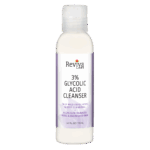
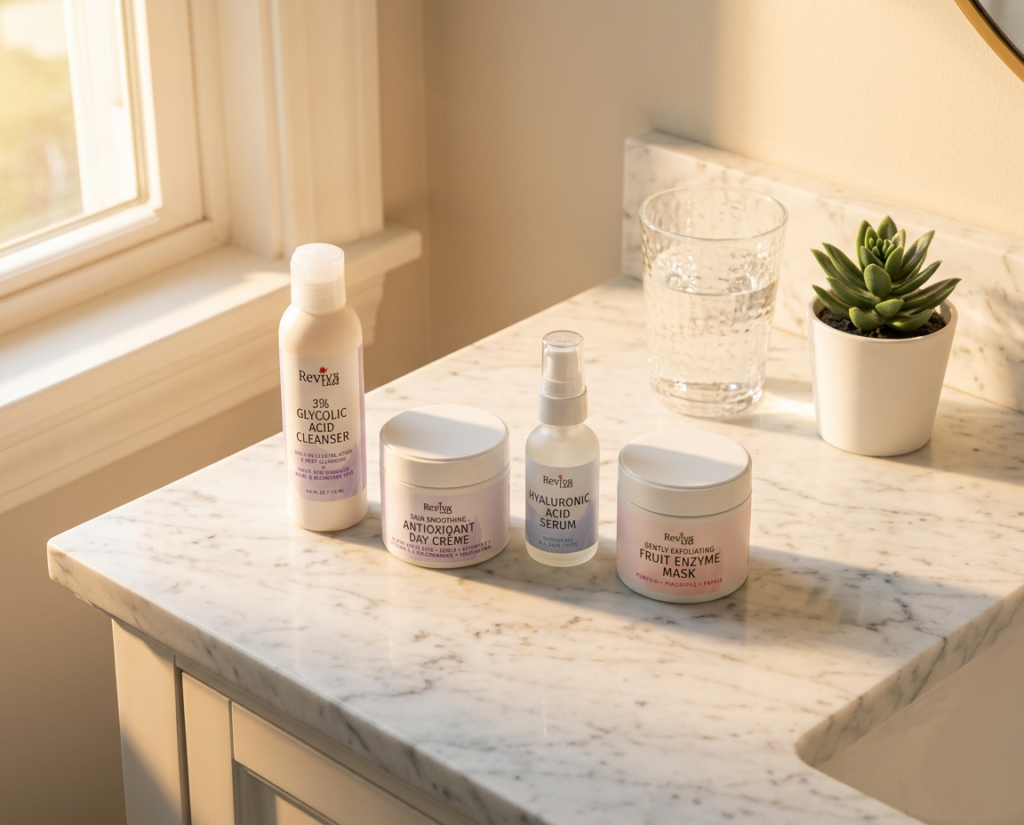
The cleanser is where the most immediate opportunity for simplification exists. Most people own two or three cleansers. They have a gentle milky one for dry days, a foaming one for oily days, and some kind of scrub for days when they want exfoliation. A well-formulated glycolic acid cleanser collapses all three use cases into one. It cleanses, it gently exfoliates via the acid, and its soothing ingredients like aloe vera and chamomile make it gentle enough for daily use without requiring a separate sensitive-skin backup.
The reason glycolic acid works so well in a cleanser format is that it does meaningful work even during brief contact with the skin. You do not need it to sit for twenty minutes to get the benefit. Massaging it in for one to two minutes gives the acid enough time to begin dissolving dead cell bonds at the surface, which means you are getting mild exfoliation every time you wash your face rather than saving it for a once-a-week treatment night. Reviva Labs’ Glycolic Acid Cleanser with 3% glycolic acid does exactly this, working equally well for aging skin, sun-damaged skin, and oily or blemished skin because the combination of cleansing and light exfoliation addresses multiple concerns without requiring a product for each one.
With a glycolic acid cleanser as your foundation, you eliminate the need for a separate daily exfoliant, a toning scrub, and potentially even a pore-clearing product. Three products become one. That is the math behind a simpler, more effective routine. You are not removing steps so much as consolidating them into a single product that earns its place in the lineup.
Step Two: A Serum That Addresses the Deepest Need
After cleansing, your skin is prepped and receptive. This is the step where a targeted serum earns its place, and also where a lot of people go wrong by using three serums instead of one. The question to ask is this: what does my skin need most right now, as we move into spring? For the vast majority of people, the answer is hydration. Winter depletes the skin’s natural moisture reserves. Even if you were moisturizing all winter, the combination of cold air, indoor heat, and reduced humidity typically leaves skin with a moisture deficit that shows up as dullness, uneven texture, and fine lines that seem more visible than usual.
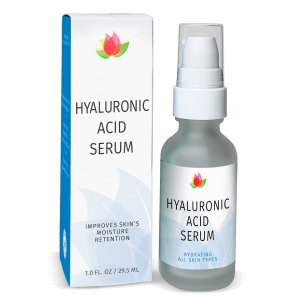
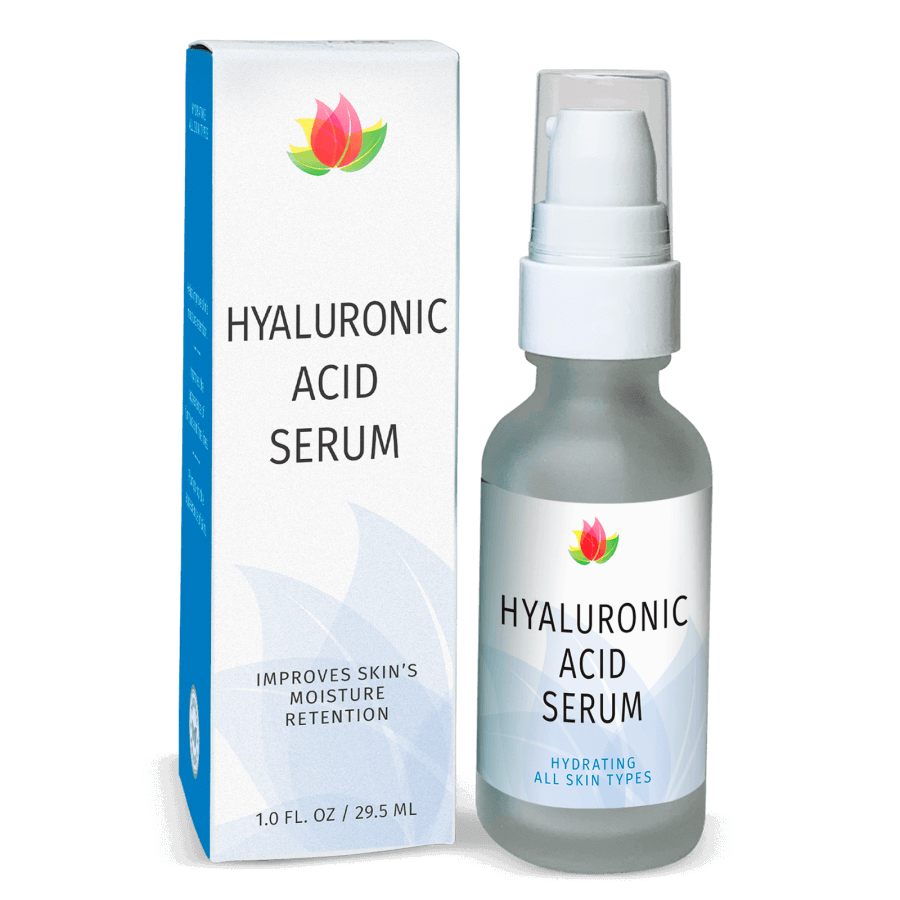
Hyaluronic acid is the singular ingredient that addresses this at the root level. As a naturally occurring component of the skin matrix, it does not function like a topical moisturizer that sits on the surface. It draws water into the skin and holds it there at a molecular level. A well-formulated hyaluronic acid serum applied to slightly damp skin creates a reservoir of moisture that your moisturizer then seals in, making the entire hydration system work more efficiently. Reviva Labs’ Hyaluronic Acid Serum uses sodium hyaluronate at a meaningful concentration alongside aloe vera and green tea extract, keeping the formula straightforward and effective without the ingredient noise of a serum trying to do everything at once.
Choosing one primary serum for your spring reset is a deliberate act of discipline that pays off. If you use one serum consistently every morning and evening for four weeks, you will know exactly what it is doing to your skin. You will be able to attribute any improvement or issue directly to that product. That kind of clarity is almost impossible when you are rotating four or five different serums on different days. Simplicity gives you data. Data helps you make better decisions for your skin.
Step Three: A Moisturizer With Antioxidant Defense
In spring, your moisturizer needs to do one thing your winter moisturizer probably did not prioritize: protect against environmental stress. UV radiation, pollution, and the oxidative damage from just being outside are all intensifying as the season shifts. A moisturizer loaded with antioxidants provides that protection as a built-in benefit of every morning application, rather than requiring you to add a separate antioxidant serum to your routine.
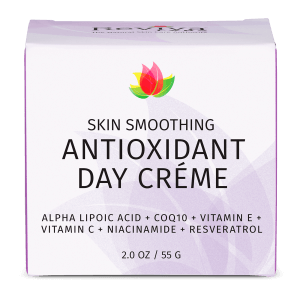
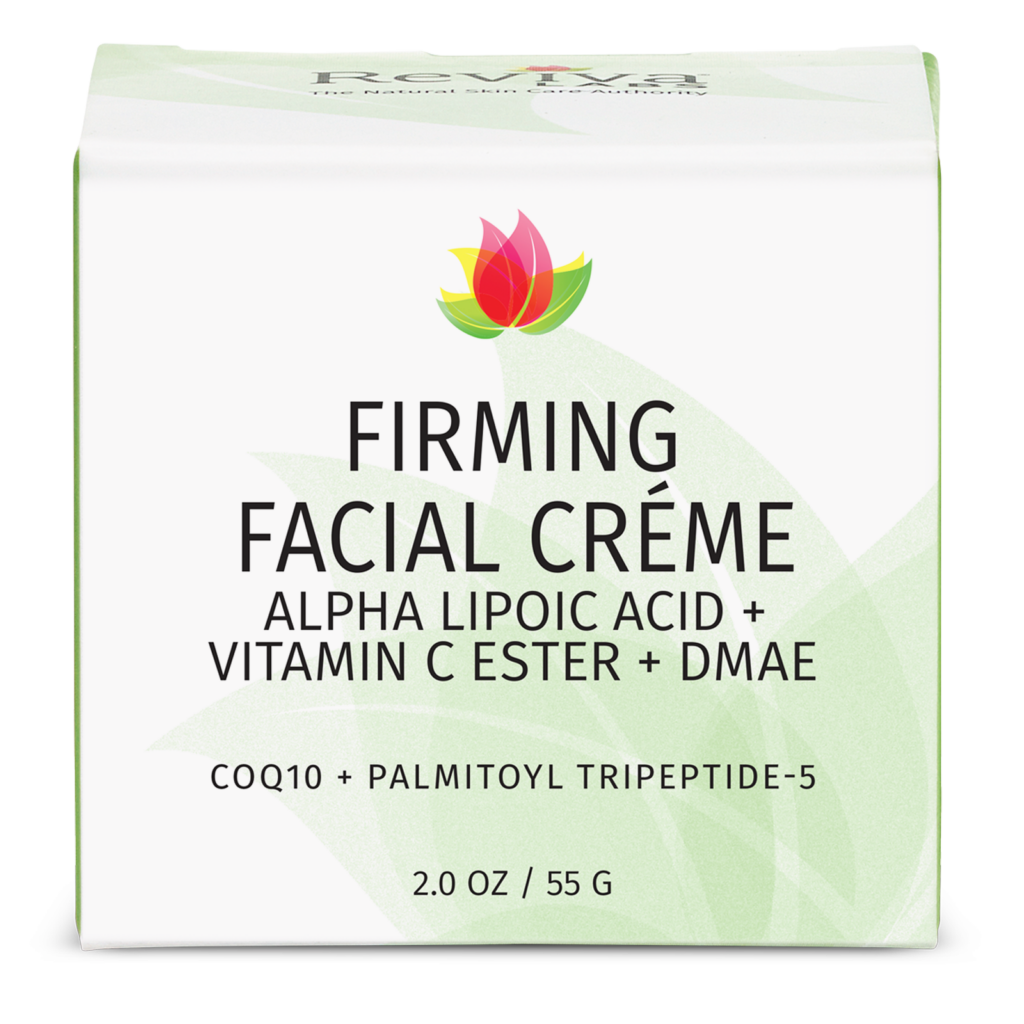
The word antioxidant gets used loosely in skincare marketing, so it is worth being specific about what you want to see in a spring moisturizer. Alpha lipoic acid is a particularly effective antioxidant because it works in both water-based and oil-based environments within the skin, giving it broader coverage than many single-action antioxidants. CoQ10 supports cellular energy production while neutralizing free radicals. Vitamin C in the form of magnesium ascorbyl phosphate provides the brightening and collagen-support benefits of vitamin C in a stable, non-irritating form. Resveratrol and green tea polyphenols round out the defense. When these ingredients appear together in a moisturizer, you are getting comprehensive antioxidant coverage without adding a separate serum or treatment product to your routine.
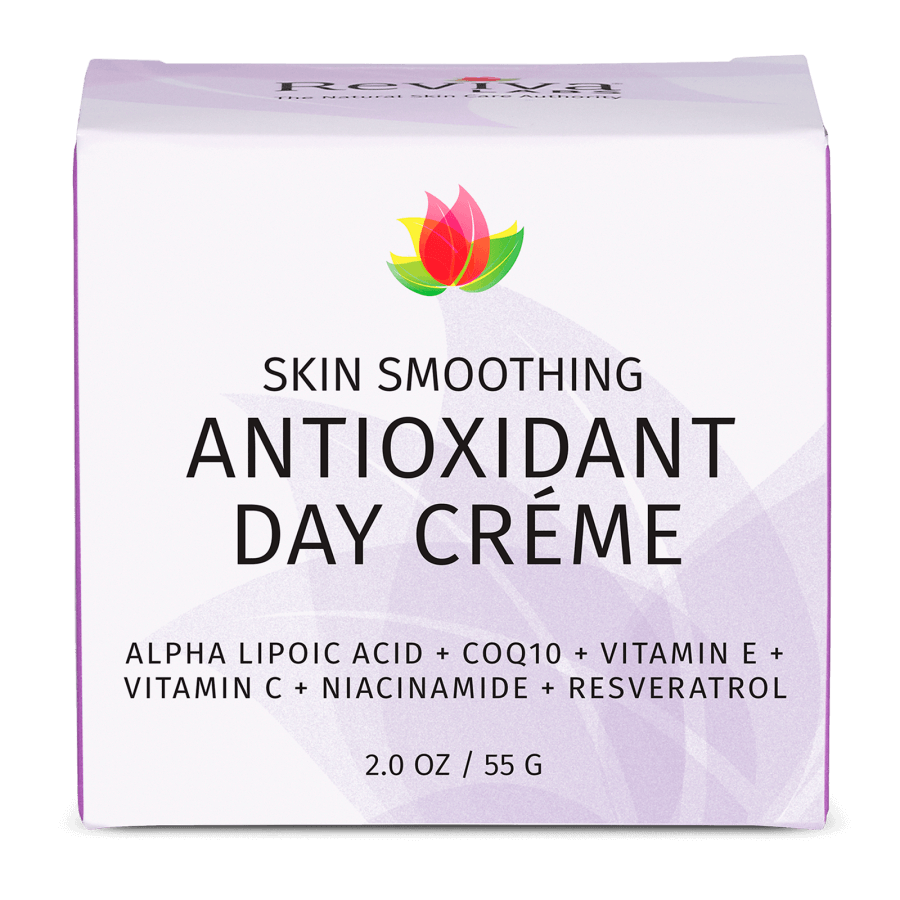
Reviva Labs’ Antioxidant Day Creme contains all of these alongside nourishing oils including rosehip seed, borage, and flaxseed. It functions as a moisturizer, an antioxidant treatment, and a skin-nourishing product simultaneously. In a four-step routine, that kind of multi-functionality is exactly what you are looking for. One jar is doing the work of what most people have split across two or three products on their shelf.

Step Four: A Weekly Mask That Replaces the Rest
The fourth step is not a daily one, and that is part of what makes it so effective. A well-formulated mask used once or twice a week performs the deep exfoliation, pore clearing, and skin tone correction that people typically chase across multiple daily products without ever quite getting there. By reserving this kind of intensive treatment for designated mask days rather than loading your daily routine with it, you avoid the over-exfoliation trap and give your skin recovery time between treatments.
Fruit enzyme masks are particularly valuable in spring because they address the specific issues that accumulate over winter, which are dead cell buildup, dullness, and congested pores, using a mechanism that is both effective and gentle enough for transitional skin. Enzymes from papaya (papain) and pineapple (bromelain) digest the surface layer of dead cells without the pH sensitivity and potential irritation of high-concentration acid treatments. They work within a narrow range of conditions, which actually makes them more predictable and less likely to cause sensitivity than some acid-based treatments when used on skin that is still adjusting to seasonal change.
Reviva Labs’ Fruit Enzyme Mask pairs those fruit enzymes with kaolin and bentonite clays for pore purification, pumpkin ferment for antioxidant support, and aloe vera for soothing. The combination gives you exfoliation, detoxification, and skin tone improvement in a single weekly or twice-weekly treatment. If you are currently using a separate brightening treatment, a separate pore mask, and a separate exfoliating treatment on different days, this one mask consolidates all three. That is how your four-step routine replaces ten products without sacrificing any of the outcomes you actually care about.
Making the Four Steps Work Together
The sequencing of these four products is straightforward and follows the basic logic of skincare layering: thinnest to thickest, with each layer creating the conditions for the next to work better. Cleanse first to remove surface debris and begin light exfoliation. Apply serum to freshly cleansed, still-slightly-damp skin so the hyaluronic acid has water available to draw in. Apply moisturizer while the serum is still absorbing, so the cream can seal in the moisture the serum has introduced rather than just sitting on top. Use SPF as your last step every morning. On mask days, use the mask after cleansing and before serum, treating it as an intensive weekly treatment that sets up the rest of your routine.
A 2021 study published in the Journal of Cosmetic Dermatology found that skin barrier function improved significantly when subjects maintained a consistent simplified routine over eight weeks compared to a rotating multi-product regimen. The consistency itself was identified as a contributing factor to improved outcomes, separate from the specific products used. This is the part of the simplicity argument that gets overlooked most often. Your skin learns your routine. When it knows what to expect, it stops being in a constant reactive state and can start doing the repair and renewal work it is designed to do.
The spring reset is not a permanent constraint on your skincare. It is a recalibration. Once you have established a clear baseline with these four products and you know exactly how your skin responds to each one, you can make intentional additions later based on specific needs rather than impulsive purchases. That is a fundamentally more effective way to build a skincare routine than starting with everything and trying to figure out what is doing what.

What You Can Stop Buying
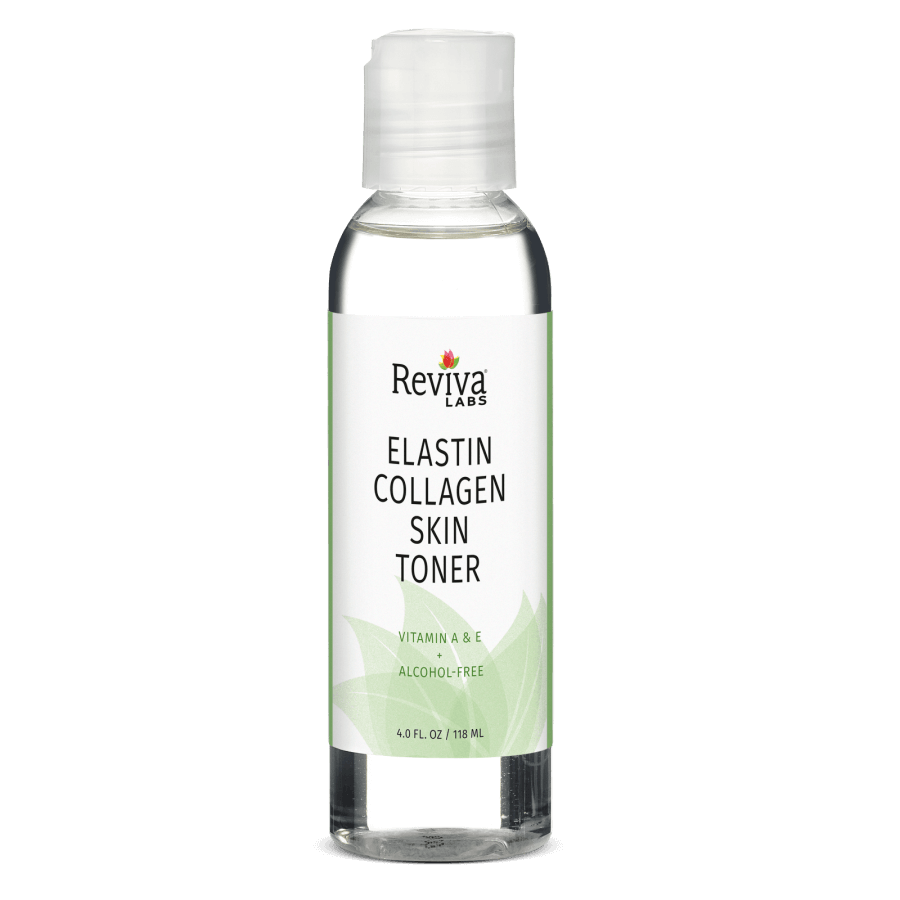
Here is the practical takeaway. With a glycolic acid cleanser as your foundation, you likely do not need a separate toner, a daily scrub, or a dedicated pore-clearing product. With a hyaluronic acid serum as your targeted treatment, you do not need separate hydrating mist products, dewy essence layers, or multiple serum SKUs addressing slightly different angles of the same concern. With an antioxidant day cream, you may be able to eliminate a separate vitamin C serum, a separate antioxidant booster, and a separate brightening treatment. With a weekly enzyme mask, you can skip the daily exfoliating pad, the separate brightening mask, and the pore strip routine.
Not every product on your shelf is expendable. Some of your current products may genuinely be filling a need that these four do not cover. The point is to evaluate critically rather than accumulate by default. Look at each product you currently own and ask: is this doing something distinct that nothing else in my four-step routine is already doing? If the answer is yes, it may deserve to stay. If the answer is maybe or it overlaps with something else, this is the spring to let it go.
Simplicity in skincare is not a step backward. It is often a step toward better skin, less irritation, and a clearer picture of what actually works for you. Spring is the right moment for that reset. The shelf will thank you, and so will your skin.
FAQs
Can a 4-step routine really replace a 10-step one without losing results?
For most people, yes. The skin has a finite absorption capacity, and beyond a certain point, additional products create diminishing returns or active interference between ingredients. A well-chosen set of four products that each address a distinct need, cleansing and exfoliation, targeted hydration, antioxidant moisturizing, and intensive weekly treatment, covers the main categories of effective skincare without the redundancy that builds up in larger routines. Results improve when products work together rather than over each other.
Do I need to stop using all my current products at once to do this reset?
No. The most effective approach is to identify which products in your current routine most closely align with the four reset steps and start there, letting the others gradually run out rather than discarding them all immediately. The transition to a simpler routine is actually more manageable when done gradually, and it lets you observe how your skin responds to each change rather than overwhelming it with a complete overhaul at once.
Is glycolic acid safe to use every day as a cleanser?
At concentrations around 3%, as found in a daily cleanser formulation, glycolic acid is well-tolerated for daily use by most skin types when paired with soothing ingredients like aloe vera and chamomile. The key difference between a daily cleanser with glycolic acid and a treatment-strength leave-on product is contact time. A rinse-off cleanser delivers a shorter, gentler exposure that is appropriate for daily use. Starting with once-daily use and ensuring you have SPF in your morning routine is the sensible way to introduce it.
How often should I use a fruit enzyme mask in a simplified spring routine?
Once a week is the right starting frequency, particularly if you are also using a glycolic acid cleanser daily. After two to three weeks of consistent once-a-week use, you can assess whether your skin responds well enough to move to twice a week. Twice a week is typically the upper limit for enzyme masks in combination with a daily exfoliating cleanser, because stacking too much exfoliation of any kind can compromise the barrier and cause the sensitivity and breakouts you are working to avoid.
What if my skin is already pretty minimal and I only use three or four products?
Then you are already ahead of the curve, and the spring reset is simply a matter of swapping winter-specific products for spring-appropriate ones. The main adjustments are usually moving from heavier, more occlusive moisturizers to lighter antioxidant-rich formulas, and making sure your cleanser is doing double duty on mild exfoliation. You do not need to add products to do a spring reset. In your case, it is purely about optimizing what you already have for the new season’s conditions.
Talking Skincare Webinar – Keep your skincare stupidly simple.

References
- Draelos, Z.D. (2021). The science of skin care: From moisturizers to treatments. Journal of Cosmetic Dermatology, 20(4), 985-991. https://doi.org/10.1111/jocd.13756