
Natural, Reviva Labs, Skin Care
How to Transition Your Skincare Routine from Winter to Spring Without Breaking Out

Apr
Every spring, the same thing happens. You step outside and feel that first real warmth on your face, and somewhere in the back of your mind you think: maybe it’s time to change things up. Then you swap out your thickest winter moisturizer for something lighter, add a new product or two because the season feels fresh, and within two weeks you’re dealing with breakouts you haven’t seen since high school. You are not alone. Seasonal skincare transitions are one of the most common triggers for skin disruption, and most of it is entirely preventable with the right approach.
Spring brings genuine, measurable changes to the environment around you. Humidity rises, temperatures increase, UV intensity climbs even on cloudy days, and the air itself shifts in ways your skin has to adapt to. The products that kept your skin comfortable through dry winter months can suddenly feel heavy, pore-clogging, or irritating as those environmental conditions change. Your skin barrier, which has been working overtime to fight dry, cold air all winter, now needs a different kind of support. The disconnect between what your skin was getting and what it now needs is exactly where breakouts, congestion, and flares come from.
Why Winter Routines Work Against You in Spring
Think about what winter skincare is designed to do. It compensates for cold air stripping moisture from your skin, indoor heating drying you out further, and a compromised barrier that needs extra lipids to stay intact. Rich occlusive creams and heavy serums make complete sense in that context. They sit on the skin’s surface, slow transepidermal water loss, and give your barrier the fatty acids it needs to hold together. In winter, that is exactly right. In spring, those same products can start trapping dead skin cells, sebum, and environmental debris in a way that clogs pores and triggers congestion.
The mistake most people make is switching everything at once. They feel the warmth of the new season and do a full medicine cabinet purge, replacing all their heavy products with lighter ones in the same weekend. That is a recipe for a reactive skin response. Your microbiome has been calibrated to one set of products, your barrier is accustomed to a certain level of occlusion, and your skin’s natural exfoliation cycle has slowed down over winter. When you change too many variables too fast, you get inflammation, sensitivity, and often breakouts that seem to come out of nowhere.
A 2019 analysis published in the Journal of Investigative Dermatology found that UV exposure is the leading cause of premature skin aging, responsible for up to 80 percent of visible facial aging signs. That finding holds regardless of season.
There is also the dead cell buildup issue that almost nobody talks about. Winter skin tends to accumulate a thicker layer of dead cells on the surface, partly because cold and dry air slows natural cell shedding, and partly because heavy winter products can sit over that buildup without moving it along. By the time spring arrives, many people are walking around with a visible dullness that is really just layers of cells waiting to be cleared away. If you jump straight to lighter products without addressing that backlog, you can actually irritate skin that has not been properly prepared.

The Right Way to Phase Out Winter Products
The key word in a successful seasonal transition is gradual. You are not performing a seasonal reset overnight. You are making a series of small, deliberate swaps over two to four weeks, giving your skin time to adjust at each stage. Start with your heaviest products, the ones with the highest occlusive content, and simply use them every other night instead of every night. This alone starts moving your skin toward lighter hydration without shocking the barrier.
After about a week of that, introduce your lighter spring moisturizer on the alternating nights. You are not replacing the heavy cream entirely yet; you are letting your skin experience both products while it acclimates. Pay attention during this phase. Is your skin feeling dry on the mornings after the lighter product? Do you notice any clogged pores when you use the heavier one? Your skin will tell you what it needs if you slow down enough to listen. Most people are rushing through their routine rather than observing how their skin is actually responding.
The cleanser swap should happen early in this process, not last. Winter cleansers tend to be extremely gentle and low foaming because aggressive cleansing in cold weather strips skin fast. In spring, you may find that your gentle winter cleanser is not thoroughly clearing the increased sebum your skin naturally produces as temperatures rise. Moving to a cleanser that incorporates mild exfoliating acids is a smart early move. Glycolic acid, one of the most researched alpha-hydroxy acids, works at the surface to gently dissolve the bonds holding dead cells together, clearing the deck for spring skin without the aggressive scrubbing that triggers inflammation. Reviva Labs’ Glycolic Acid Cleanser uses 3% glycolic acid alongside soothing aloe vera and chamomile extract, which makes it effective without being harsh during that first delicate phase of transition.

Introducing Exfoliation Without Triggering a Reaction
The timing of when you introduce exfoliation matters enormously. If you start with chemical exfoliants before your skin has had a chance to acclimate to lighter products, you risk overexposing a barrier that is already adjusting. The better approach is to get your basic product swaps underway first, wait until your skin has been stable for about a week, and then bring in exfoliation. Begin with once a week and see how your skin handles it before moving to twice a week.
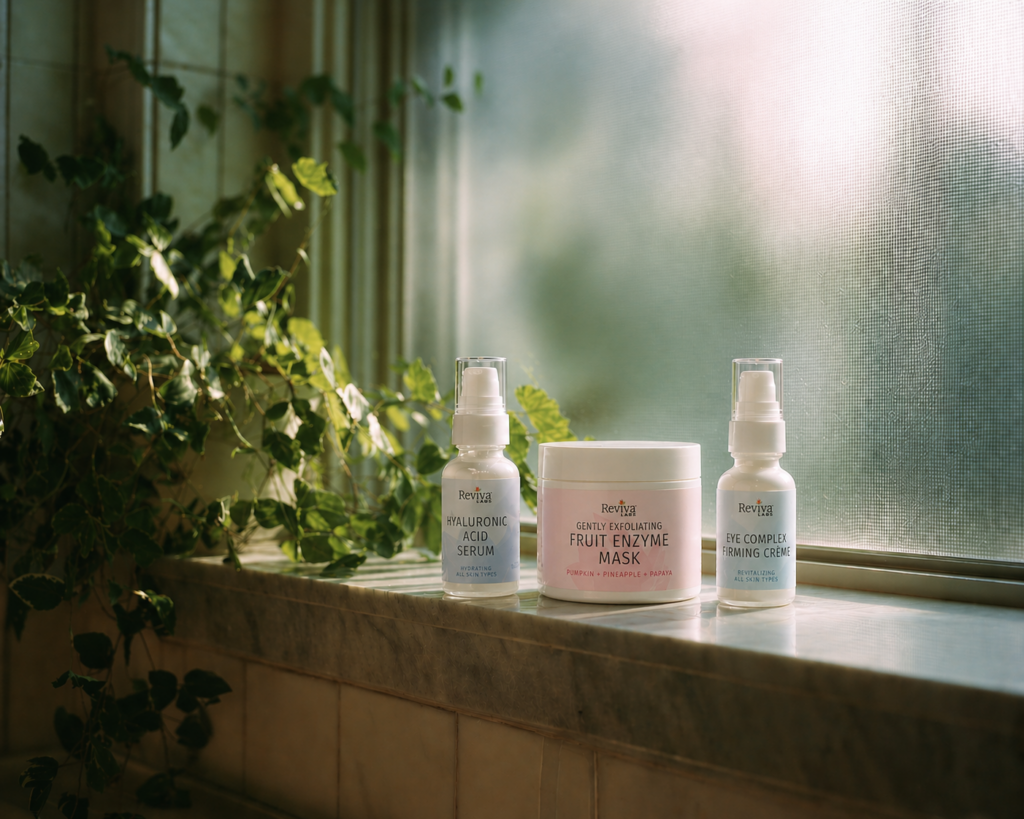
Enzyme-based exfoliation is particularly well-suited to this transitional period. Fruit enzymes from papaya and pineapple work differently than acids because they break down the protein bonds in dead skin cells rather than dissolving the cellular glue the way glycolic acid does. This means they tend to be more forgiving for skin that is in an in-between state, neither fully winter-mode nor fully spring-ready. A fruit enzyme mask used once a week gives you meaningful exfoliation with less risk of pushing a reactive skin over the edge. Reviva Labs’ Fruit Enzyme Mask combines bromelain from pineapple, papain from papaya, and pumpkin ferment with kaolin clay to draw out impurities while the enzymes work. It is a genuinely useful tool during transition weeks because it addresses the dead cell backlog without the same intensity as a leave-on acid product.
What you want to avoid during this phase is layering multiple exfoliating products at the same time. If you are using a glycolic acid cleanser in the morning and a fruit enzyme mask twice a week, that is already a meaningful amount of exfoliation for transitioning skin. Adding a toner with acids, a retinol serum, and a vitamin C product on top of that is how you end up with a damaged barrier that breaks out and stays irritated for weeks. More exfoliation is not better. Consistent, well-timed exfoliation is better.
Rebuilding Hydration for the New Season
A common mistake in spring skincare is equating ‘lighter’ with ‘less hydrating.’ The goal is not to reduce moisture; it is to change the delivery mechanism. Heavy occlusive creams from winter are no longer the right vehicle, but your skin still needs substantial hydration to function well, especially while it is adapting to a new seasonal environment. Hyaluronic acid is the bridge ingredient here. It is a humectant, meaning it draws water into the skin from the environment and from deeper skin layers rather than sitting on top and blocking things up the way occlusives do.
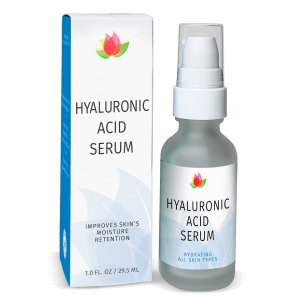
In spring, with humidity rising and the air holding more water, hyaluronic acid becomes significantly more effective than it was in winter. The molecule can hold many times its weight in water and uses atmospheric moisture to keep doing so throughout the day. Swapping your heavy night cream for a hyaluronic acid serum followed by a lighter moisturizer is one of the cleanest ways to maintain your skin’s hydration levels while moving to formulas that are more appropriate for warmer weather. Applying a serum like Reviva’s Hyaluronic Acid Serum to slightly damp skin right after cleansing maximizes the absorption, because the humectant has water available to draw in immediately.
Do not interpret a lighter feel as less protection. A well-formulated lightweight moisturizer is doing the same barrier support work as a heavy winter cream, just with a different ratio of ingredients. The transition is not about doing less for your skin. It is about doing the right things for the season you are actually in.

Sun Protection Is the Non-Negotiable
Spring is when a lot of people get burned, literally and figuratively, by underestimating UV intensity. The sun sits higher in the sky than it did in winter, UV-B rays are intensifying even when it does not feel hot outside, and if you have been doing any kind of exfoliation during your transition, your fresh new skin cells are more vulnerable than they would be otherwise. A 2019 analysis published in the Journal of Investigative Dermatology found that UV exposure is the leading cause of premature skin aging, responsible for up to 80 percent of visible facial aging signs. That finding holds regardless of season.
The practical implication is simple: if you do not already have a consistent SPF habit, spring is the moment to build one. If you do have one, spring is the moment to check that your product is still within its shelf life (most sunscreens degrade and lose efficacy after about 12 months once opened). Daily SPF 30 or higher, applied as the last step of your morning routine after moisturizer, is not optional if you are also exfoliating. Chemical exfoliants remove the cells that would otherwise be absorbing some of that UV hit. You are getting the benefit of clearer skin, but you are also getting more direct UV exposure as a result.
Reapplication throughout the day matters more in spring and summer than in winter. A single morning application is not doing the job if you are spending meaningful time outdoors. The general recommendation from dermatologists is to reapply every two hours of sun exposure. If you have makeup on, a mineral SPF setting spray can make midday reapplication practical.
Managing the Combination Skin Complication
Spring transitions are notoriously difficult for combination skin, because different zones of your face may be behaving as if they are in different seasons at the same time. Your T-zone is already producing more sebum in response to rising temperatures while your cheeks are still feeling the dryness left over from winter. This asymmetry is real and your routine needs to account for it rather than treating your entire face the same way.
Zone-specific application is not as complicated as it sounds. You can apply a lighter gel-texture moisturizer to your T-zone while using something slightly richer on drier areas. You can focus exfoliation on the areas that need it, typically the nose and chin, while being gentler around the cheeks and eye area where skin tends to stay drier. Treating your face as a single uniform surface is the source of a lot of seasonal breakout frustration for combination skin types.
Resist the urge to overcorrect on oil control. When skin feels more oily than usual in early spring, the instinct is to reach for the most mattifying, drying products available. This almost always backfires. Skin that gets too stripped of oil compensates by producing more. A consistent, balanced routine that gently manages oil without stripping is far more effective long-term than aggressive drying that triggers rebound sebum production. Balance is the goal, not suppression.
A Realistic Four-Week Transition Timeline
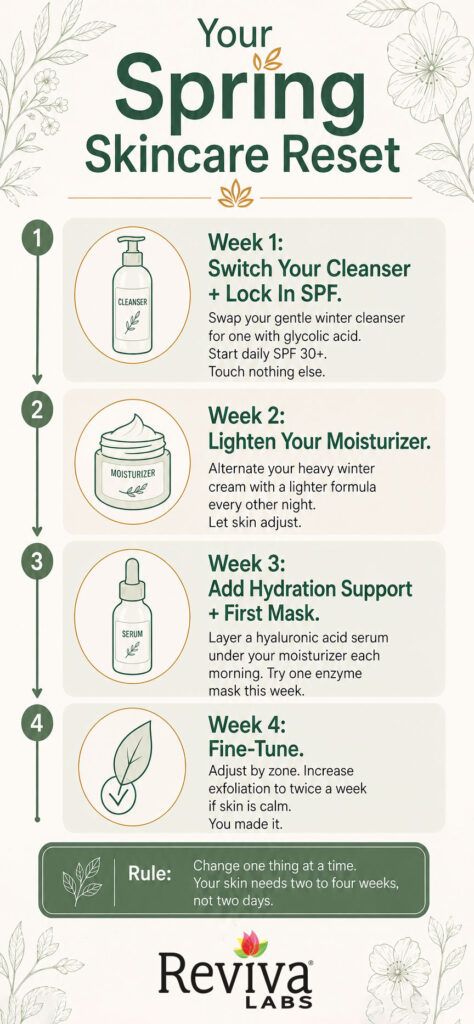
Week one is about the cleanser and SPF. Swap your gentle winter cleanser for something that incorporates mild exfoliating acid like glycolic, and lock in your daily SPF habit if it is not already solid. Do not touch anything else yet. Give your skin one week with just these two changes.
Week two is about your moisturizer. Start alternating your heavy winter moisturizer with a lighter spring option every other day. If you use a richer night cream, continue it on the alternating nights while introducing a lighter formula on the others. Notice whether your skin is comfortable on the lighter product mornings before deciding to make it your full-time choice.
Week three is when you bring in dedicated hydration support. If you have not been using a hyaluronic acid serum, add it in the morning between your cleanser and moisturizer. This is also a good week to do your first enzyme mask if your skin has been stable. Once a week is the right frequency to start.
Week four is about fine-tuning. By now your skin should have a sense of its new baseline. If you are still experiencing dryness in certain zones, adjust product richness in those areas. If you want to increase exfoliation to twice a week, this is the week to try it. If everything is calm and clear, you have successfully completed the transition without breaking out. That is the goal.
FAQ
Can I switch my skincare routine all at once when spring arrives?
Switching everything at once is one of the most reliable ways to trigger a breakout or skin reaction. Your skin’s microbiome and barrier function are calibrated to your current products, and sudden changes disrupt that calibration. A two-to-four-week gradual swap, starting with your cleanser and heaviest products, gives skin time to adjust without the inflammatory response that comes from overwhelming it with too many new variables at once.
How do I know if my skin is purging or actually breaking out from new products?
Purging from chemical exfoliants like glycolic acid tends to produce small, uniform breakouts in areas where you typically break out, and it clears within four to six weeks of consistent use. Breakouts from product irritation or clogged pores often show up in new locations, feel different in texture (often larger, more congested, less uniform), and do not clear as predictably. If breakouts appear only in new areas after you introduce a product, that product is more likely the cause than a purge.
Do I really need to change my routine if my skin feels fine going into spring?
Skin that feels fine can still benefit from seasonal adjustments. Even if you are not experiencing obvious discomfort, heavy winter products may be contributing to subtle congestion that has not yet surfaced as visible breakouts. Lighter products in spring also tend to absorb better in warmer conditions, which means your active ingredients are working more efficiently. At minimum, check that your moisturizer’s texture is still appropriate for the humidity level and your sun protection is current.
Is it safe to exfoliate during the transition period?
Yes, but the timing and frequency matter. Wait until your basic product swaps have been in place for about a week before introducing exfoliation. Start with once-a-week use of either a chemical exfoliant or an enzyme mask, not both simultaneously. Avoid stacking multiple exfoliating products in the same routine. As long as you are not overdoing it and you have daily SPF in place, spring exfoliation is not only safe but genuinely beneficial for clearing winter buildup.
Why does spring make combination skin worse?
Rising temperatures stimulate sebaceous glands, which increases oil production, particularly in the T-zone. At the same time, skin that has been dry all winter may still be producing less oil in drier facial areas. This creates an imbalance that feels more extreme than usual. Zone-specific product application, using lighter textures where skin is oily and slightly richer textures where it is still dry, is the most practical way to manage the difference without overcorrecting in either direction.
References
- Flament, F., Bazin, R., Laquieze, S., Rubert, V., Simonpietri, E., & Piot, B. (2013). Effect of the sun on visible clinical signs of aging in Caucasian skin. Clinical, Cosmetic and Investigational Dermatology, 6, 221-232. https://doi.org/10.2147/CCID.S44686