
Clean Beauty, Ingredients, Natural, Reviva Labs, Skin Care
Bakuchiol vs Retinol
Apr
What the Science Actually Says About Nature’s Retinol Alternative
A science-informed guide for skincare enthusiasts seeking effective, gentler anti-aging solutions
More than 80 percent of visible facial aging is caused not by time alone but by the sun. That number, reported in a landmark study and cited extensively in dermatological literature, reframes everything we think we know about why skin shows its age. Wrinkles, uneven pigmentation, loss of firmness, rough texture: most of it traces back to cumulative ultraviolet exposure, a process known as photoaging. For decades, retinol has been the gold-standard topical treatment for reversing those signs. But retinol comes with real limitations. Irritation, flaking, stinging, and sun sensitivity cause many people to abandon it. For those who are pregnant, trying to conceive, or simply have sensitive skin, the conversation has needed a new direction. That direction has a name: bakuchiol.
Bakuchiol (pronounced buh-KOO-chee-ol) is a plant-derived compound with a centuries-long history in Ayurvedic and Traditional Chinese Medicine. In recent years it has attracted serious scientific attention, not just as a marketing story but as a clinically studied ingredient. The research has produced a compelling case. Bakuchiol functions as what scientists call a functional analog of retinol, meaning it triggers similar cellular responses in the skin without the same structural limitations. It activates retinoid receptor pathways, supports collagen synthesis, and reduces wrinkle severity at rates comparable to retinol, all with a dramatically better tolerability profile.
This article draws on peer-reviewed clinical research, including a landmark comparative study published in the British Journal of Dermatology and a systematic review published in the Journal of Integrative Dermatology, to provide a clear-eyed look at what bakuchiol actually does, how it compares to retinol, who stands to benefit most, and why formulation context matters more than the ingredient alone.
What Photoaging Actually Does to Skin
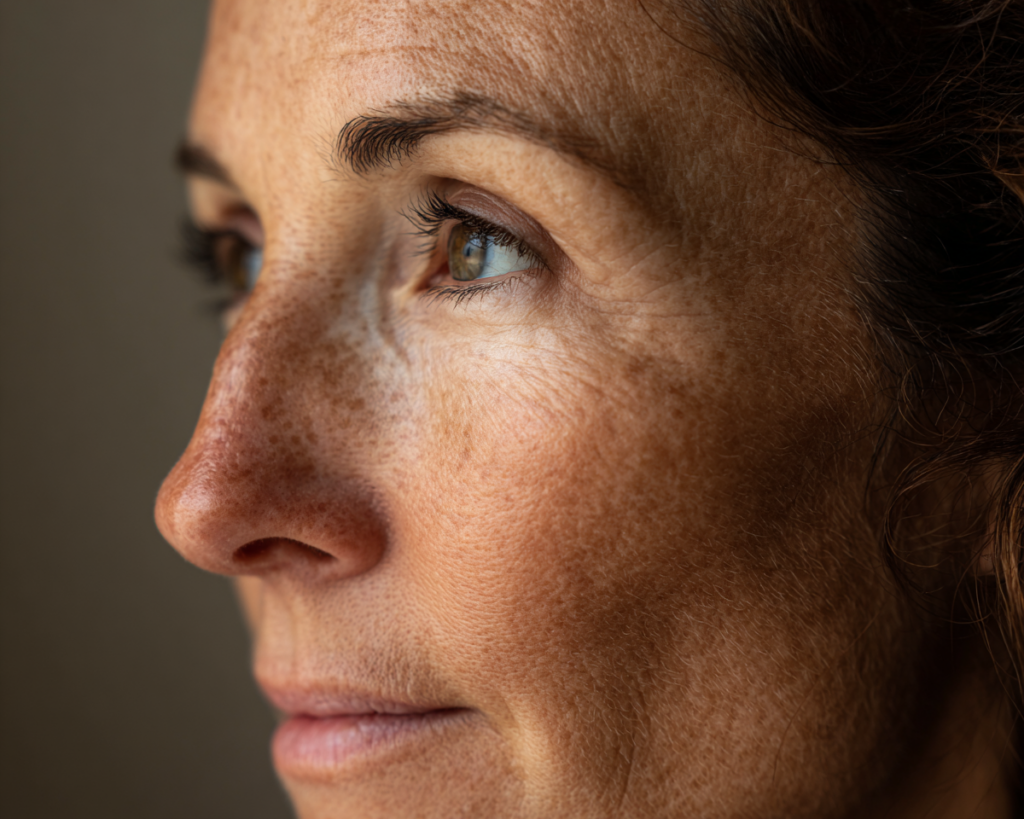
To appreciate what bakuchiol does, it helps to understand the biological problem it is addressing. Photoaging is not simply aging accelerated. It is a distinct set of processes driven by chronic ultraviolet radiation. UVA rays, which penetrate deeply into the dermis, are the primary culprits for long-term skin aging. UVB rays affect the outer epidermis more acutely and are the main cause of sunburn. Both contribute to photoaging through several overlapping mechanisms. The most consequential involve reactive oxygen species, collagen degradation, and barrier dysfunction.
When UVA hits skin, it generates reactive oxygen species, unstable molecules that attack cellular structures and disrupt the skin’s antioxidant defenses. Over time, chronic UVA exposure overwhelms those defenses entirely. The result is oxidative stress that accelerates breakdown at every level of the dermis. Simultaneously, UV exposure upregulates enzymes called matrix metalloproteinases, which degrade collagen. Collagen types I and III, both critical for skin strength and elasticity, are progressively lost. The ratio between them shifts in a direction associated with older skin, and the net result is the deflated, lined appearance characteristic of photoaged faces. Collagen IV and VII, responsible for maintaining the structural connection between skin layers, are also diminished, contributing to visible wrinkle formation at the dermal-epidermal junction.
UVB radiation compounds the problem through a different route. It disrupts the stratum corneum, the outermost layer of skin responsible for maintaining the moisture barrier. When this barrier is compromised, water loss increases, skin dehydrates, texture degrades, and the skin becomes more vulnerable to further environmental damage. The clinical picture of advanced photoaging includes deep furrows, leathery texture, irregular pigmentation, telangiectasias, and even precancerous lesions. Preventing this damage requires sun avoidance and sunscreen. Reversing it has historically required retinoids.
Why Retinol Has Long Led the Anti-Aging Conversation
Topical retinol has an extensive evidence base behind it. As a derivative of vitamin A, it binds to retinoid receptors in skin cells, accelerating cell turnover, stimulating collagen production, and reducing the accumulation of abnormal pigment. Over decades of research, retinol has been shown to reduce fine lines, improve skin tone, and address many of the hallmark signs of sun damage. Prescription-strength retinoids such as tretinoin are even more potent, though the side effects become more pronounced accordingly. Retinol, the over-the-counter form, is milder but still carries real tolerability challenges for a significant portion of users.
Those challenges are not trivial. Stinging, burning, peeling, and increased sun sensitivity are common enough that dermatologists have coined the term “retinoid reaction” to describe the adjustment period many people experience when starting use. For some, that reaction never fully resolves. The experience is particularly acute for those with sensitive, rosacea-prone, or reactive skin types. Beyond tolerability, there is a more serious concern: retinol and its relatives are teratogenic, meaning they carry known risks of birth defects when used during pregnancy. This is not a theoretical risk but a documented one, which is why topical retinoids are contraindicated during pregnancy across major medical guidelines. The result is a large group of people, including those who are pregnant, nursing, or trying to conceive, who are effectively excluded from the retinol conversation entirely.
The demand for something that works as well without these drawbacks has been building for years. Bakuchiol arrived in the clinical literature at exactly the right moment.
The Science Behind Bakuchiol
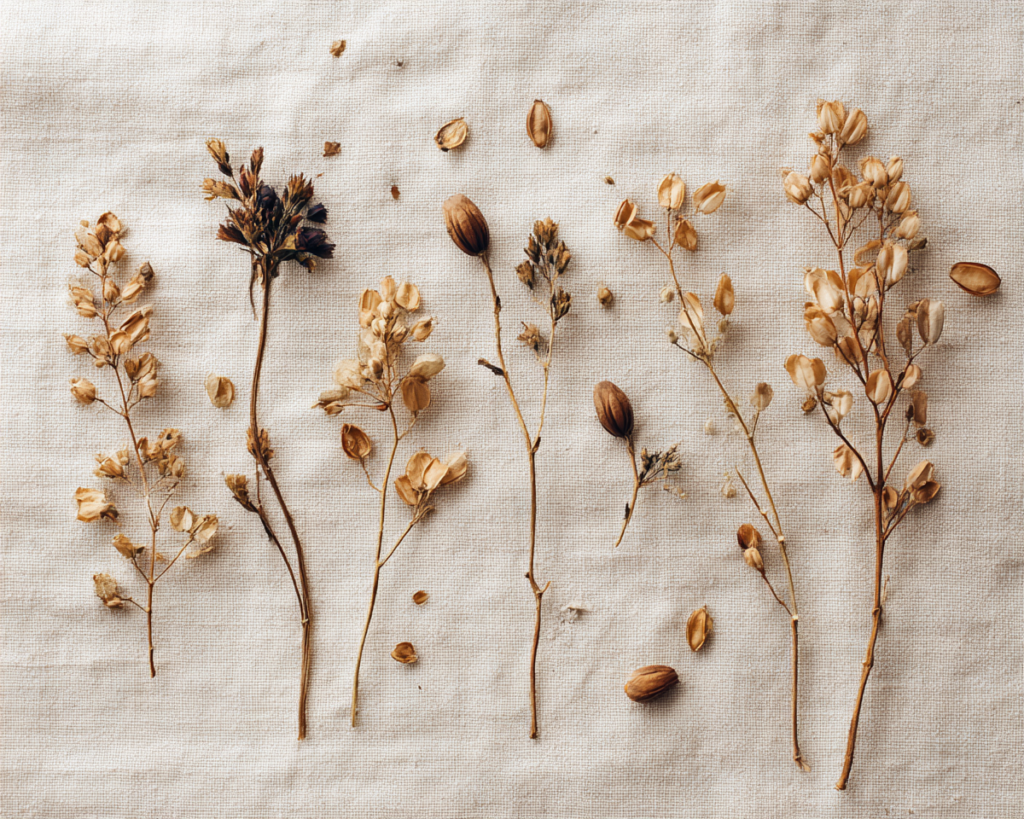
Bakuchiol is a meroterpene phenol, a specific class of plant compound first isolated from the seeds of Psoralea corylifolia, an herb known in Ayurveda as babchi and in Traditional Chinese Medicine as bu gu zhi. The plant has been used medicinally for thousands of years, primarily for skin conditions including psoriasis and eczema, and it harbors approximately 100 known bioactive compounds. Bakuchiol, isolated in 1966, is the one that has attracted the most scientific interest for cosmetic applications. Its pharmacological profile is broad: anti-inflammatory, antioxidant, antimicrobial, and anti-acne properties have all been documented in research.
What makes bakuchiol particularly interesting for anti-aging is not that it is structurally similar to retinol, because it is not. Retinol is a 20-carbon molecule with a specific cyclohexenyl ring and configuration. Bakuchiol looks nothing like it. What they share is functional behavior at the cellular level. Gene expression profiling studies have shown that bakuchiol upregulates many of the same genes as retinol, including those involved in collagen synthesis and retinoid receptor signaling. This is what “functional analog” means in practice: different structure, comparable biological outcome. It does not work through exactly the same pathway but arrives at a similar destination, which is why comparing the two compounds in clinical trials yields results as close as the research has found.
Beyond its retinol-like activity, bakuchiol brings its own distinct antioxidant properties to the table. It helps neutralize the reactive oxygen species that UVA generates, addressing photoaging at one of its root mechanisms rather than only downstream effects. Research also indicates that this antioxidant activity is amplified when bakuchiol is combined with other antioxidant compounds, a finding with direct implications for how formulations are designed. The ingredient is also photostable, meaning it does not degrade when exposed to sunlight the way some actives do, and it does not increase photosensitivity. This allows it to be used during the day, a significant practical advantage over retinol.
Head-to-Head: What the Clinical Evidence Shows
The most direct evidence comes from a randomized, double-blind, 12-week study published in the British Journal of Dermatology in 2019, led by Dr. Sunny Dhaliwal and colleagues. Forty-four participants were assigned to use either bakuchiol 0.5% cream twice daily or retinol 0.5% cream once daily. High-resolution facial photography was taken at baseline and at weeks 4, 8, and 12. A dermatologist blinded to treatment assignment graded pigmentation and erythema at each visit. The findings were striking in their consistency.
Both bakuchiol and retinol significantly reduced wrinkle surface area and hyperpigmentation over the 12-week period. There was no statistically significant difference between the two compounds in their anti-aging efficacy. Both worked. Where the results diverged was in tolerability. Participants using retinol reported significantly more stinging than those using bakuchiol. Itching and burning were also more common in the retinol group, though those differences did not reach statistical significance. Scaling, a hallmark of retinol irritation, was more frequently reported among retinol users as well. The researchers concluded that bakuchiol is comparable to retinol in its ability to improve photoaging and is better tolerated.
A systematic review published in the Journal of Integrative Dermatology analyzed the full body of available literature on topical bakuchiol for photoaging, covering studies from 2014 through 2021. The findings aligned closely with the Dhaliwal trial. Across every study reviewed, bakuchiol improved photoaging with minimal side effects in both normal and sensitive skin populations. The review also highlighted bakuchiol’s antioxidant advantages and noted that pairing it with other antioxidants may produce enhanced photoprotective effects. The review authors concluded that bakuchiol can serve as a key ingredient for individuals who cannot tolerate retinoids, including those seeking natural alternatives and those who are pregnant or nursing.
Bakuchiol vs Retinol: A Side-by-Side Look
The table below summarizes the key differences and similarities based on current clinical evidence.
| Feature | Bakuchiol | Retinol |
| Source | Plant-derived (Psoralea corylifolia) | Vitamin A derivative (synthetic/animal) |
| Anti-aging Efficacy | Comparable to 0.5% retinol | Well-established, gold standard |
| Skin Irritation | Minimal | Common (stinging, scaling) |
| Sun Sensitivity | No photosensitivity | Increases photosensitivity |
| Pregnancy Safety | Considered safer option | Contraindicated (teratogenic risk) |
| Antioxidant Properties | Yes, enhanced with co-antioxidants | Limited antioxidant action |
| Use Frequency | AM and/or PM | Typically, PM only |
One nuance worth noting is that most clinical research on bakuchiol has used it at the 0.5% concentration level, which is also the standard test concentration used in comparative retinol studies. Real-world formulations vary, and the concentration of an active ingredient relative to its supporting ingredients always matters. The context in which bakuchiol is delivered, meaning the base formula, accompanying actives, and overall skin tolerance of the user, will influence outcomes just as it does with any skincare active.
Who Benefits Most From Bakuchiol
The clinical evidence points to several populations for whom bakuchiol is an especially meaningful option. People with sensitive or reactive skin who have tried retinol and experienced persistent irritation represent a substantial group. For them, bakuchiol offers a validated pathway to the same anti-aging outcomes without the skin disruption that makes retinol impractical. This includes people with rosacea, eczema, or chronically dry skin, conditions where barrier function is already compromised and retinol-induced irritation can be particularly uncomfortable.
Those who are pregnant, nursing, or trying to conceive make up another clear group. While no topical active should be introduced during pregnancy without consulting a healthcare provider, the mechanism of bakuchiol does not involve the same vitamin A pathway that makes retinoids teratogenic. The Journal of Integrative Dermatology review noted that bakuchiol may be considered a safer option for this population based on its mechanism of action, even in the absence of clinical pregnancy studies. The lack of research in pregnant populations is a limitation, but the reasoning from mechanism is considered sound.
Daytime users represent a third group. Because bakuchiol does not increase photosensitivity and is photostable, it can be incorporated into a morning routine in a way that retinol cannot. This adds flexibility that matters for people whose skincare routines are primarily AM-focused. Finally, those who simply prefer plant-based, clean formulations will find that bakuchiol’s botanical origin and well-studied safety profile align well with their values without requiring a sacrifice in clinical performance.
Why Formulation Context Matters
An ingredient does not exist in isolation. Bakuchiol’s anti-aging and antioxidant properties are amplified when paired with complementary actives, a point the clinical literature makes explicitly. Formulations that combine bakuchiol with other antioxidants can deliver broader photoprotective and anti-aging coverage than bakuchiol alone. This synergy principle reflects how most high-performance skincare actually works: combinations tend to outperform single-ingredient approaches, particularly when the formulation is designed around ingredient compatibility and skin physiology.
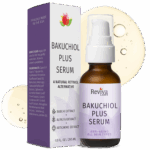
Alfalfa extract, for example, is rich in Vitamins A, B, D, E, and K, along with chlorophyll and polyphenols, making it a potent antioxidant and nutrient-dense skin support ingredient. Artichoke extract has been studied for its ability to diminish the visible appearance of fine lines, improve skin elasticity, and support a more even complexion. When combined with bakuchiol in an oil-based serum format, these three ingredients operate across different but complementary mechanisms: bakuchiol addressing retinoid-pathway anti-aging, alfalfa delivering broad antioxidant and nutritive support, and artichoke targeting visible elasticity and tone. The result is a formulation approach that reflects exactly what the research recommends.
The delivery vehicle matters too. Oil-based serums allow bakuchiol and lipophilic antioxidants to penetrate efficiently, reaching the layers of the dermis where collagen synthesis and degradation occur. A well-constructed anhydrous formula can deliver active ingredients without the dilution effects that come with water-based systems, which is why face oil serums have become a legitimate platform for serious anti-aging actives rather than just a moisturizing luxury.
Addressing Common Concerns About Natural Skincare Actives
A recurring skepticism about plant-derived skincare actives is that the “natural” label substitutes for clinical evidence, and that efficacy claims are built on tradition rather than data. Bakuchiol is a meaningful counter-example to that concern. It has been subjected to the same study design standards as synthetic actives, including randomized, double-blind, placebo-controlled trials. The head-to-head comparison with retinol at equivalent concentrations is not a testimonial; it is a prospective clinical trial published in a peer-reviewed dermatology journal. The evidence for bakuchiol is not just credible; it is exceptionally strong for an ingredient of its age in the cosmeceutical literature.
This does not mean bakuchiol will replace retinol for every user or in every context. Retinol has deeper evidence base accumulated over decades, and prescription-strength retinoids remain the most potent topical anti-aging tools available. But retinol is not accessible to everyone. It has real side effects that make consistent use difficult for a meaningful portion of the population, and it has real contraindications that exclude others entirely. Bakuchiol does not try to be retinol; it offers a validated, plant-derived path to many of the same outcomes with a substantially more tolerant profile.
What the science makes clear is that the choice between bakuchiol and retinol is not a choice between effective and ineffective. It is a choice between two clinically validated approaches with different tolerability profiles, safety considerations, and practical usage parameters. That is a meaningful scientific distinction, and it is the one that should guide skincare decisions.
Building an Evidence-Based Routine Around Bakuchiol
The practical advantage of bakuchiol’s tolerability is that it removes the adjustment period that retinol often requires. There is no gradual introduction protocol needed, no “retinoid reaction” to push through, and no restriction to nighttime-only application. Bakuchiol can be applied morning and evening from day one, which means consistent daily use is significantly easier to maintain. Consistency is one of the most important variables in any active skincare routine; the ingredient that gets used regularly will outperform the ingredient that sits on a shelf because it causes too much irritation.
Daily sunscreen use remains essential regardless of which retinol alternative you choose. UV protection is the single most effective intervention for preventing further photoaging, and no topical active ingredient substitutes for it. Bakuchiol’s photostability means it will not degrade in your morning routine, but protecting skin from UV exposure remains the foundation on which any anti-aging routine is built. Pairing bakuchiol with a broad-spectrum SPF 30 or higher every morning provides both protective and corrective coverage in one daily routine.
Hydration matters too. Photoaged skin often shows compromised barrier function and reduced transepidermal water retention. Supporting the moisture barrier with ingredients like hyaluronic acid or ceramides alongside a bakuchiol serum creates conditions where active anti-aging work can proceed more effectively. Thinking about bakuchiol not as a standalone product but as one part of a layered, complementary routine will yield better results than treating it as a single-ingredient solution.
Frequently Asked Questions
| Question | Answer |
| Is bakuchiol really as effective as retinol for anti-aging? | Yes, clinical research supports comparable efficacy. A randomized, double-blind 12-week study published in the British Journal of Dermatology found that bakuchiol 0.5% cream delivered results equivalent to retinol 0.5% cream for reducing wrinkle severity and hyperpigmentation, with significantly fewer side effects. |
| Can people with sensitive skin use bakuchiol? | Bakuchiol is well-tolerated even by sensitive skin types. Unlike retinol, it does not trigger the stinging, scaling, or peeling that many users experience. This makes it a strong option for those who have not been able to tolerate retinol in the past. |
| Is bakuchiol safe to use during pregnancy? | While no ingredient should be used during pregnancy without medical guidance, bakuchiol is generally considered a safer option compared to retinol, which carries known teratogenicity concerns. Bakuchiol does not share retinol’s mechanism that raises those concerns. Always consult a healthcare provider. |
| Can bakuchiol be used morning and night? | Yes. Unlike retinol, which is typically recommended for nighttime use only due to photosensitivity, bakuchiol can be applied both morning and evening. Its photostability makes it suitable for daytime use alongside sunscreen. |
| Does bakuchiol work better when combined with other antioxidants? | Research suggests it may. Studies indicate that bakuchiol’s photoprotective effects can be enhanced when formulated alongside other antioxidants. This synergy is one reason pairing bakuchiol with ingredients like alfalfa extract and artichoke extract, as found in certain serums, can provide broader skin benefits. |
| How long does it take to see results from bakuchiol? | Clinical studies observed measurable improvements in wrinkle severity and hyperpigmentation after 12 weeks of consistent use, with the most notable results at the end of the study period. Like most actives, patience and daily application are key. |
| Is bakuchiol vegan and natural? | Yes. Bakuchiol is a plant-derived compound extracted from the seeds of Psoralea corylifolia, commonly known as babchi, and is considered vegan. It has been used for centuries in Ayurvedic and Traditional Chinese Medicine practices. |
Bakuchiol vs Retinol Podcast:

References and Sources
- Dhaliwal S, Rybak I, Ellis SR, et al. Prospective, randomized, double-blind assessment of topical bakuchiol and retinol for facial photoaging. Br J Dermatol. 2019;180(2):289-296. https://doi.org/10.1111/bjd.16918
- Park SJ. A comprehensive review of topical bakuchiol for the treatment of photoaging. Journal of Integrative Dermatology. 2022. https://jintegrativederm.org/doi/10.64550/joid.9jag0x17
- Schikowski T, et al. Association of UV radiation with skin aging: epidemiological evidence. Dermatoendocrinology. 2013;5(2):215-220. Referenced in Park SJ 2022 as source for 80% solar aging statistic.
- Chaudhuri RK, Bojanowski K. Bakuchiol: a retinol-like functional compound revealed by gene expression profiling and clinically proven to have anti-aging effects. Int J Cosmet Sci. 2014;36(3):221-230. https://doi.org/10.1111/ics.12117
- Sharad J. Glycolic acid peel therapy: a current review. Clin Cosmet Investig Dermatol. 2013;6:281-288. (Background on retinoid mechanisms and photoaging framework.)
- Darlenski R, Surber C, Fluhr JW. Topical retinoids in the management of photodamaged skin: from theory to evidence-based practical approach. Br J Dermatol. 2010;163(6):1157-1165. https://doi.org/10.1111/j.1365-2133.2010.09936.x