

Clean Beauty, Reviva Labs, Skin Care
The Case for Starting Every Reset With a Gentle Cleanse

Sep
Skincare conversations tend to focus on serums, treatments, and whatever the ingredient of the season is. Cleansing rarely gets the same attention, largely because it feels like the boring, obvious first step rather than the place where real results happen. That reputation undersells how much a proper cleanse actually determines whether everything that follows in a routine works the way it’s supposed to.
The basic logic is straightforward. Serums, oils, and moisturizers are formulated to absorb into clean skin. If a layer of residue is sitting on the surface, whether that’s leftover sunscreen, sweat, or the day’s accumulated oil and pollution, everything applied after has to compete with that instead of penetrating the skin. A reset routine that skips a proper cleanse is essentially asking the rest of the routine to work through a barrier it was never meant to work through.

What Gets Left Behind Without a Proper Cleanse
Sunscreen residue is a particularly good example of how easy it is to underestimate what’s still sitting on skin at the end of the day. A study published in the Journal of Cosmetic Dermatology tested how effectively different cleansing methods removed sunscreen from skin, and the results were more intense than most people would expect. For water resistant sunscreen, plain water left roughly 59 percent of the sunscreen behind, and a standard cleanser still left about 37 percent, while a more thorough cleansing method brought that down to under 6 percent. Even for non-waterproof sunscreen, a proper cleanser meaningfully outperformed water alone. That’s a lot of residue sitting on skin overnight if cleansing is treated as an afterthought.
Left in place, that kind of residue doesn’t just sit there passively. It mixes with the sebum and dead skin cells that accumulate throughout the day, and over time that contributes to clogged pores and a duller overall complexion. It also means that a serum or moisturizer applied on top isn’t reaching clean skin, which reduces how effective it is.

Why a Gentle Formula Matters as Much as a Thorough One
Thorough cleansing doesn’t have to mean harsh cleansing, and for skin that’s already feeling reactive after a long summer, that matters. A cleanser that strips too aggressively can leave skin feeling tight and can actually worsen barrier stress rather than helping it. This is especially relevant during a reset period, when the goal is to calm skin down. A cream based, gentle formula like Reviva Labs’ Cleansing Milk is built around this idea, using botanical oils to lift away residue effectively without leaving skin feeling stripped afterward.
There’s a reason cleansing is often described as the foundation of a routine rather than just the first step. Every other product depends on it working properly. A high-quality serum applied over improperly cleansed skin is, in a very literal sense, not reaching the skin it was formulated for.
How to Approach Cleansing During a Reset
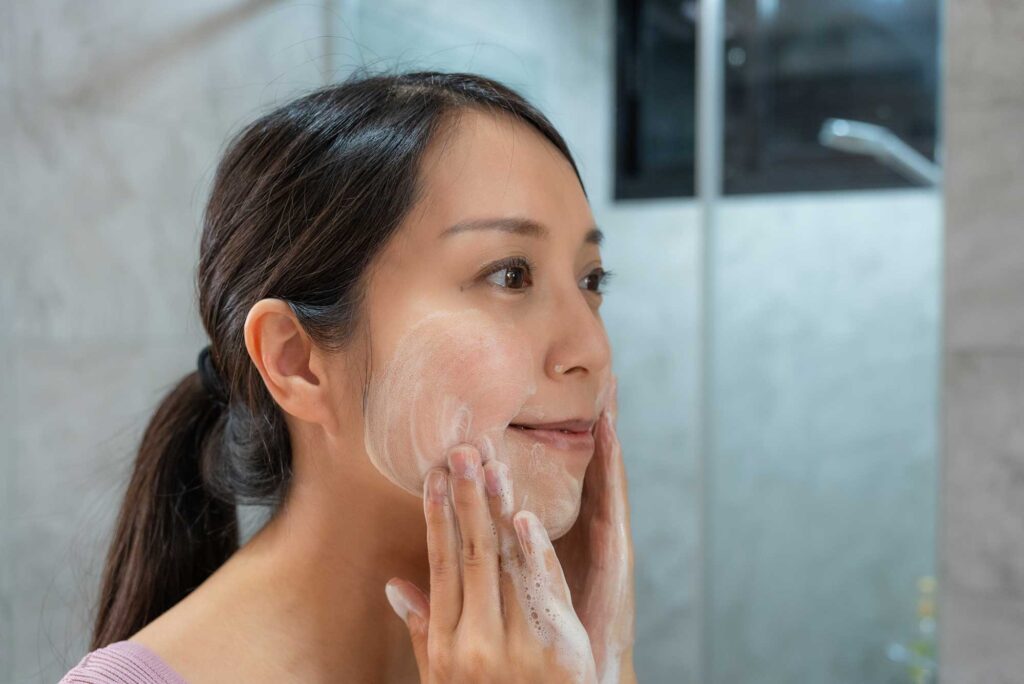
During a reset period specifically, it helps to think of cleansing as an active part of the calming process rather than a neutral step you rush through before the real products go on. Massaging a gentle cleanser into skin for a full thirty to sixty seconds, rather than a quick ten second rinse, meaningfully improves how thoroughly residue is removed. Lukewarm water, rather than hot, helps avoid stripping the skin further. Patting skin dry rather than rubbing also reduces unnecessary friction on skin that’s already sensitive.
If you’re building a reset routine after a long summer, starting with cleansing rather than treating it as an inconsequential step is one of the simplest changes that can make a measurable difference. Everything applied afterward works better once skin is actually clean, and a gentle approach to that first step sets the tone for how well the rest of the routine performs.
Frequently Asked Questions
Is double cleansing necessary if I don’t wear heavy makeup?
Not always. Double cleansing is most useful for removing waterproof sunscreen or heavy makeup. If you wear a lighter, non-waterproof sunscreen and minimal makeup, a single thorough cleanse is often sufficient.
How long should I actually spend cleansing my face?
Massaging a cleanser into skin for thirty to sixty seconds is generally more effective at removing residue than a quick rinse, particularly if you’ve worn sunscreen or makeup that day.
Can over cleansing damage my skin barrier?
Yes. Cleansing too frequently, using water that’s too hot, or using a formula that’s too stripping can all contribute to barrier damage, which is why gentle, cream-based formulas are often recommended during a reset period.
Do I need a different cleanser for morning and night?
Not necessarily. Many people can use the same gentle cleanser both morning and night, though a lighter rinse may be sufficient in the morning if nothing heavy was applied overnight.
What’s the difference between a cleansing milk and a foaming cleanser?
A cleansing milk typically has a creamier, non-foaming texture and tends to be gentler on skin, while foaming cleansers can be more effective at cutting through oil but may be more stripping for sensitive or reactive skin.
References
- Chen, Y., et al. “The optimal cleansing method for the removal of sunscreen: Water, cleanser or cleansing oil?” Journal of Cosmetic Dermatology, 2020. https://doi.org/10.1111/jocd.12995