
Clean Beauty, Ingredients, Natural, Reviva Labs, Skin Care
Why Your Favorite Products Suddenly Feel Like They Stopped Working
Aug
There is a specific kind of frustration that shows up around month three of a skincare routine. The serum that used to leave your skin glowing now just sits there. The moisturizer that once felt rich and absorbing now feels like it is pooling on the surface, refusing to sink in. Your first instinct is to blame the product. Maybe the formula changed, maybe your skin got used to it, maybe you need something stronger. But there is a much simpler explanation that most people never consider, and it has nothing to do with the bottle sitting on your counter.
According to research published by the National Institutes of Health, the human epidermis fully renews itself roughly every 40 to 56 days, a cycle that slows as we age and as environmental stress accumulates on the skin’s surface. That means the outermost layer of your skin, the part every serum, cream, and treatment has to pass through, is made up of cells that are quite literally on their way out. When that shedding process slows down or gets interrupted, those cells do not just disappear. They stack up. And a stack of dead, flattened cells sitting on top of your skin is not exactly an inviting surface for a lightweight vitamin C serum or a peptide cream to penetrate.
This is not a niche concern reserved for dermatology textbooks. It is likely the single most overlooked reason a favorite product starts to feel like it lost its magic. Skincare brands spend enormous resources formulating actives that visibly improve tone, texture, and the appearance of fine lines, but none of that matters if the product cannot get where it needs to go. Absorption is not a given. It is a condition that has to be earned, and the surface of your skin is the gatekeeper.
The Buildup Nobody Talks About
Dead skin cell accumulation sounds dramatic, but it is actually a completely normal, everyday occurrence. Your skin sheds constantly, and in a healthy, younger complexion, that shedding keeps pace with new cell production underneath. The two processes stay in balance, and the surface of your skin stays relatively even, smooth, and receptive to whatever you put on it. Problems start when that balance tips, which happens for a long list of ordinary reasons including age, dehydration, seasonal dryness, sun exposure, and even something as simple as switching to a heavier moisturizer that traps cells in place rather than helping them release.
Once that balance tips, the buildup is not always obvious to the naked eye. You are not necessarily looking at visible flaking or rough patches, though that can happen too. More often it shows up as subtle dullness, a slightly uneven texture you can feel more than see, or a general sense that your skin looks tired even when you are getting enough sleep. Makeup can start sitting differently. Highlighter can look patchy instead of luminous. These are all quiet signals that the surface layer has thickened just enough to change how light reflects off your skin and how well your products can settle into it.
The tricky part is that this kind of buildup develops gradually, so there is rarely a single moment where you notice it happening. It creeps in over weeks, which is exactly why so many people assume their skincare simply stopped delivering results rather than considering that the surface conditions changed underneath it. By the time the frustration sets in, the buildup has often been accumulating for a while, which is also why a single exfoliating session rarely solves it. Consistency matters more than intensity here, and that distinction trips up a lot of people who reach for something harsh hoping for a fast fix.
Why Absorption Quietly Breaks Down
Think about the outermost layer of your skin, the stratum corneum, as a kind of natural roof. It is designed to protect what is underneath, and it does that job by being tightly packed and somewhat resistant to outside substances. That is a feature, not a flaw, because your skin needs a barrier to keep moisture in and irritants out. The problem is that this same protective quality works against you when there are extra layers of dead cells sitting on top of an already resistant surface. Instead of one roof, you effectively have two, and the second one is made entirely of cells that have no active function left.
Serums formulated with ingredients like peptides, antioxidants, or hydrators are designed to work at a specific depth in the skin, not just sit on top of it. When there is a buildup of dead cells creating extra distance between the product and the living tissue underneath, much of that formula simply never reaches where it is meant to go. Some of it evaporates. Some of it gets wiped away with a pillowcase or a towel. Very little of it actually does the job you paid for, and you have no way of knowing that is happening because the bottle looks and smells exactly the same as it did the day it started working.
This is part of why so many skincare routines feel like they plateau rather than fail outright. It is rarely that a product suddenly becomes ineffective. It is that the pathway to where it needs to go gets narrower over time. Removing that barrier does not add anything new to your routine in terms of ingredients. It simply clears the path so what you are already using can do the job it was designed to do in the first place, which is a fairly compelling reason to treat exfoliation as foundational rather than optional.
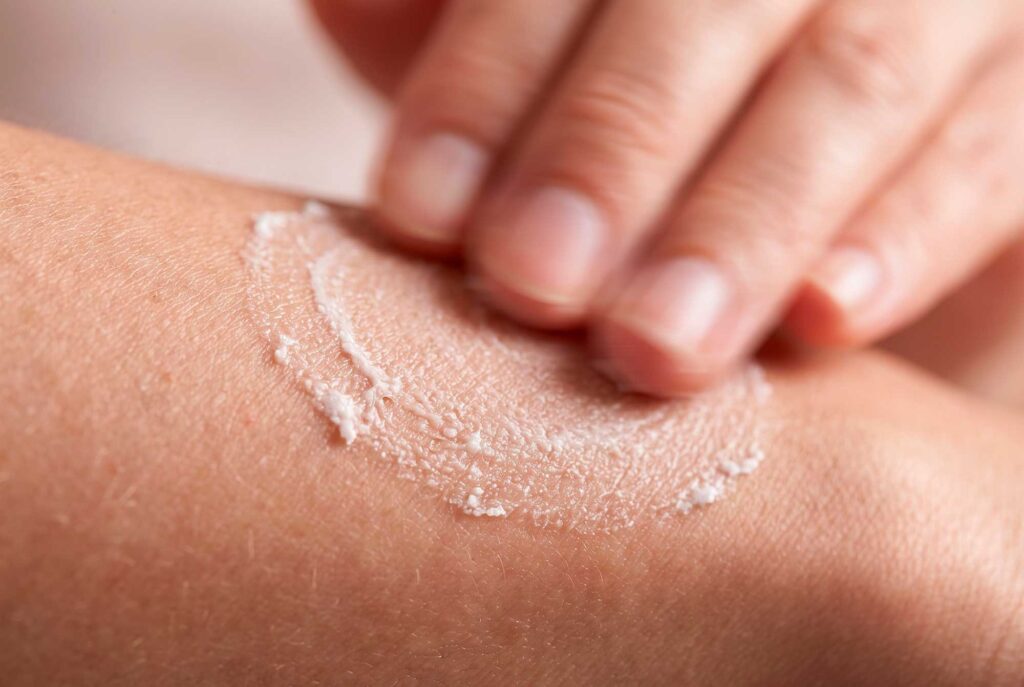
It Is Not Your Serum; It Is What Is Sitting On Top Of It
There is a tendency in skincare culture to chase the next active ingredient whenever results stall. A stronger retinoid, a higher percentage of vitamin C, a trendy new peptide complex. Sometimes that chase is warranted, but often it treats the wrong problem entirely. If the surface of your skin is not prepared to receive what you are applying, upgrading the formula will not necessarily upgrade your results. You could be layering increasingly potent products onto a surface that was never going to let them through efficiently in the first place.
This reframing tends to be a relief for people who have spent money chasing new products without seeing the payoff they expected. It is not that your instincts about wanting visible results were wrong. It is that the missing step happened earlier in the process than most routines account for. Cleansing removes surface debris and makeup. Toning can help rebalance the skin after cleansing. But neither of those steps is specifically designed to lift away the layer of compacted, lifeless cells that builds up over days and weeks. That is a distinct task, and it requires a distinct step.
Gentle, regular exfoliation is that step, and it does not need to be aggressive to be effective. In fact, aggressive exfoliation tends to backfire by disrupting the skin barrier and creating irritation that makes absorption problems worse, not better. The goal is not to scrub away layers of skin. It is to encourage the natural shedding process along, so it keeps pace with what your skin is producing underneath, which is a much gentler and more sustainable approach than most people assume exfoliation requires.
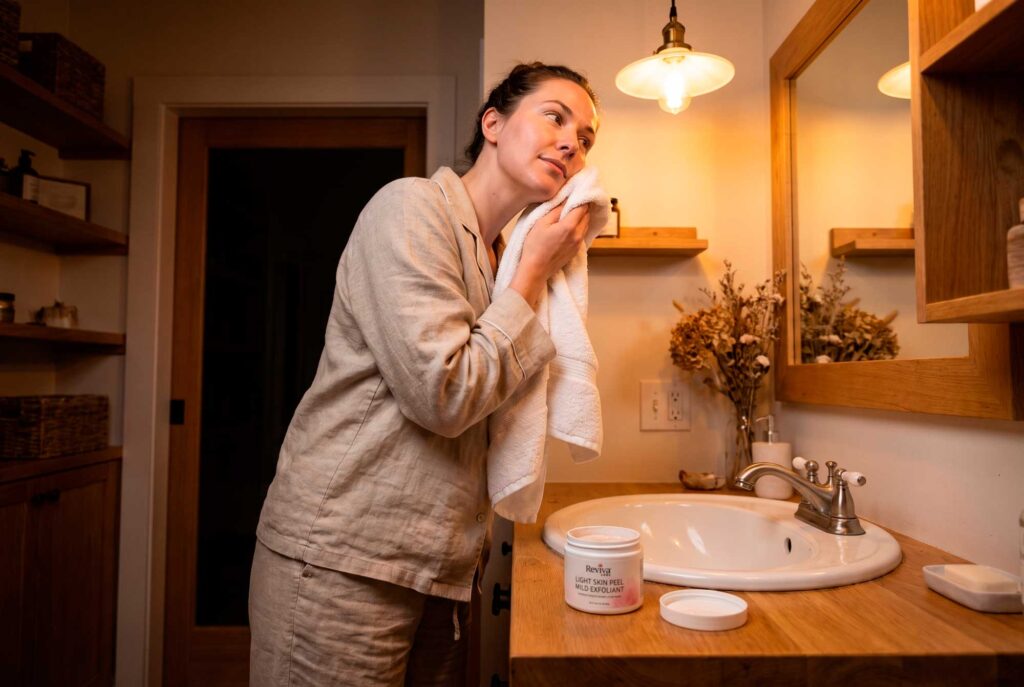
Enzymes And Acids Do The Heavy Lifting
Not all exfoliation works the same way, and the distinction matters for anyone who has tried a gritty scrub and ended up with irritated, red skin instead of the smooth finish they were hoping for. Physical exfoliants rely on friction, which can be uneven and harsh depending on how much pressure you use and how coarse the particles are. Enzyme and mild acid-based formulas work differently. They gently loosen the bonds between dead cells, so they release more evenly, without the scraping motion that tends to aggravate sensitive or reactive skin.
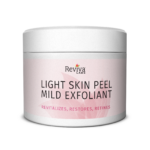
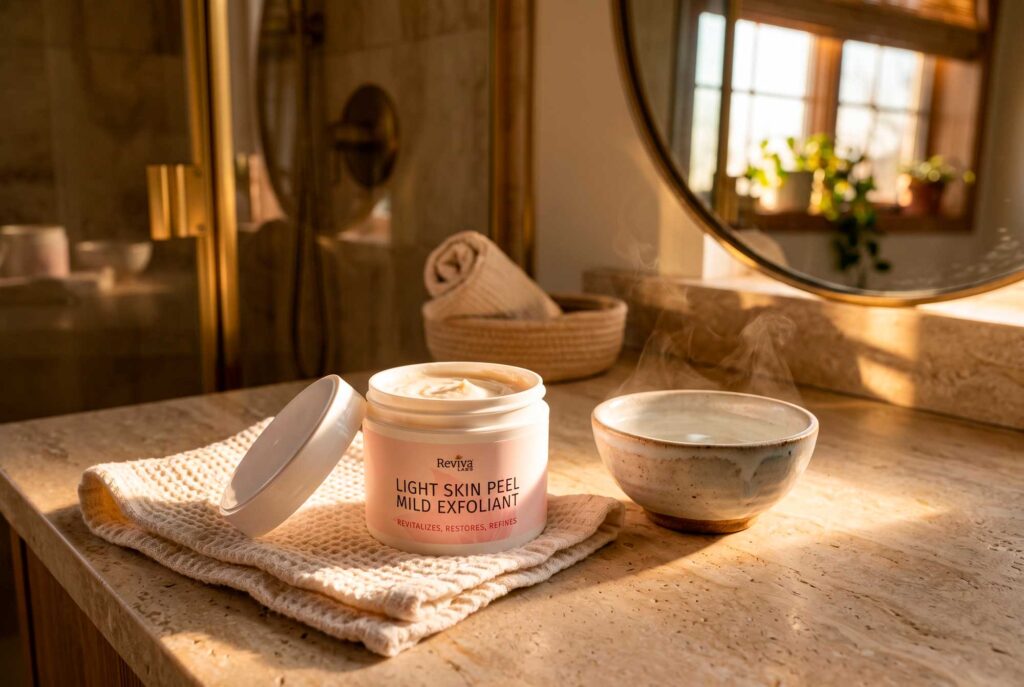
Reviva Labs’ Light Skin Peel Mild Exfoliant is built around that gentler approach. It combines papain, a fruit enzyme, with a modest amount of salicylic acid, kaolin clay, and finely milled almond meal to help loosen and lift away hardened, dried skin cells without relying on rough physical friction. Because the formula is enzyme forward rather than acid heavy, it tends to suit people who have found stronger chemical exfoliants too aggressive, while still delivering a noticeably smoother, more even feeling complexion. Used two to three times a week, it is meant to support the skin’s own shedding process rather than force it.
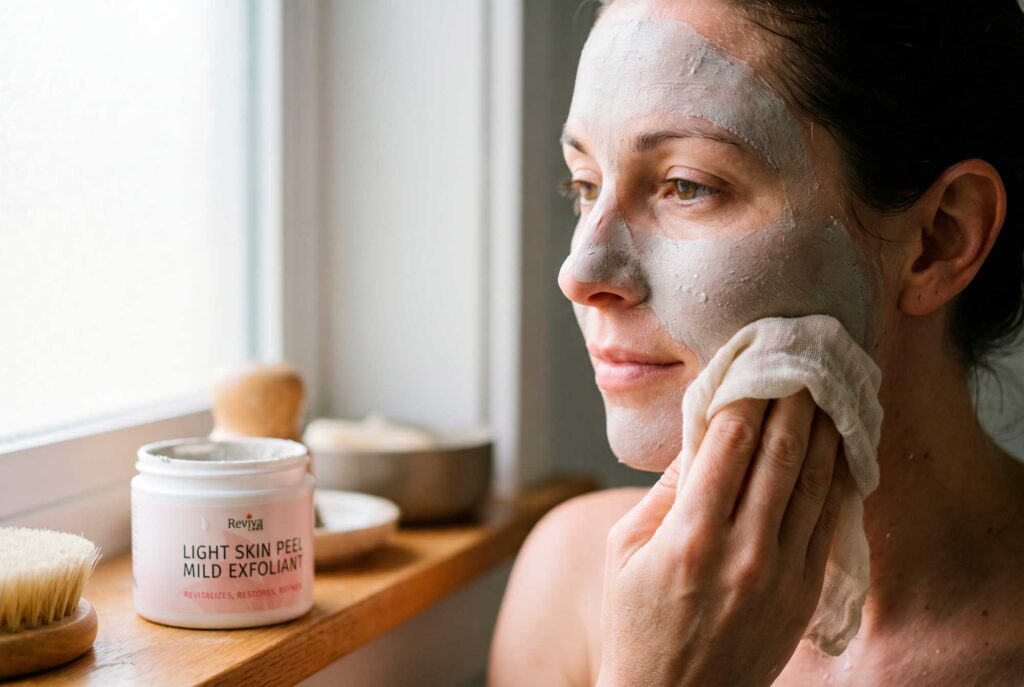
The mask format is also worth mentioning because it changes the experience compared to a leave on serum or a rinse off scrub. You apply it, let it dry, and then massage it off, which gives the enzymes and acid time to work on the surface before you physically help the process along during removal. That combination of chemical loosening and gentle mechanical removal tends to feel more thorough without feeling harsh, which is exactly the balance most people are looking for when they are wary of anything labeled a peel.
How Often Is Actually Too Often
This is where a lot of well-intentioned routines go wrong. If a little exfoliation helps, it is tempting to assume more must help more, but skin does not work that way. Over exfoliating strips away cells your skin has not finished protecting yet, and it can compromise the very barrier that keeps moisture in and irritants out. The result is often redness, sensitivity, and in some cases the appearance of texture actually getting worse rather than better, which is the opposite of what anyone reaching for an exfoliant is trying to achieve.
Two to three sessions a week tends to be a reasonable range for most skin types when using a mild, enzyme-based formula, though sensitive or reactive skin may do better starting closer to once a week and building up gradually. Watching how your skin responds matters more than following a rigid schedule. If your skin feels tight, looks flushed, or seems more reactive to other products after exfoliating, that is a signal to pull back rather than push through. Skincare works best when it is responsive to what your skin is actually telling you, not when it follows a calendar regardless of how your complexion looks that week.
It also helps to think about exfoliation as one part of a rhythm rather than an isolated step. The products you use afterward matter just as much as the exfoliant itself, because freshly exposed skin is often more receptive and slightly more vulnerable at the same time. That is generally a good moment to follow up with hydrating, soothing formulas rather than anything with additional actives that could compound the effect and tip your skin from refreshed into irritated.
Building The Habit Without Overwhelming Your Skin
The easiest way to make exfoliation stick is to anchor it to something you already do consistently, like a weekend skincare routine or a specific evening you already treat as a reset. Trying to remember an extra step scattered randomly through a busy week rarely lasts but tying it to an existing habit tends to hold up over time. Many people find that pairing it with a slower evening, when there is time to let the mask dry fully before massaging it off, makes the whole process feel less like a chore and more like a small ritual worth keeping.
Pay attention to what you use immediately afterward as well. Freshly exfoliated skin tends to absorb hydrating serums and moisturizers noticeably better, so this is actually a good moment to apply the products you have been disappointed in lately. If a serum felt like it was doing nothing before, testing it on freshly exfoliated skin can be a genuinely useful way to see whether the product itself was the issue or whether the surface layer was the real obstacle all along. Many people are surprised by how differently a familiar product performs once the path to the skin is actually clear.
Give the habit a few weeks before judging the results. Because buildup accumulates gradually, clearing it and restoring a consistent shedding rhythm also takes a little time to show up as a visible difference. Skin that has been under a layer of dulling buildup for months will not necessarily look transformed after a single session, but a steady two to three times a week rhythm tends to produce a noticeably smoother, brighter, more receptive complexion within three to four weeks for most people. Patience paired with consistency tends to outperform any single dramatic step.
Frequently Asked Questions
How do I know if dead skin buildup is actually the problem and not something else?
A few common signs include a dull or tired looking complexion despite adequate sleep and hydration, makeup that looks patchy or sits unevenly, a rough texture you can feel more than see, and serums or moisturizers that seem to sit on the surface rather than absorbing. If those signs sound familiar and you have not been exfoliating regularly, it is a reasonable place to start.
Can I exfoliate if I have sensitive or reactive skin?
Yes, though the approach matters. Enzyme based formulas tend to be gentler than physical scrubs or strong chemical peels and starting with once a week rather than two to three times a week gives sensitive skin time to adjust. Watching for redness, tightness, or increased reactivity to other products is the best way to gauge whether the frequency is right for you.
Should I exfoliate before or after cleansing?
Exfoliating masks like an enzyme-based clay formula are typically used after cleansing, on skin that is free of makeup and surface debris but not yet layered with other products. This gives the exfoliating ingredients direct contact with the skin rather than competing with residue left behind from the day.
Will exfoliating help my other products work better immediately, or does it take time?
Some improvement in how products feel on the skin can be noticeable right after a single session, since surface buildup is physically reduced. However, the more meaningful, cumulative benefit of smoother texture and better product absorption tends to build over three to four weeks of consistent use, since it takes time to restore a steady shedding rhythm.
Is it possible to exfoliate too much even with a gentle formula?
Yes. Even mild, enzyme based exfoliants can cause irritation and barrier disruption if used excessively. Two to three times a week is a reasonable ceiling for most skin types, and any sign of persistent redness, tightness, or sensitivity is a signal to scale back rather than continue at the same frequency.
Do I still need to moisturize after exfoliating?
Absolutely. Removing surface buildup does not replace hydration, and freshly exfoliated skin often benefits even more from a good moisturizer since the pathway for absorption has just been cleared. Skipping moisturizer after exfoliating can leave skin feeling tight or dry, especially in cooler or drier climates.
References
- National Institutes of Health, National Center for Biotechnology Information. “Making an epidermis.” PMC. https://pmc.ncbi.nlm.nih.gov/articles/PMC2861991/