

Ingredients, Natural, Reviva Labs, Skin Care
What Your Vitamin C Serum Is Actually Doing Under the Surface

Aug
Vitamin C has been a skincare staple for so long that it is easy to stop thinking critically about what it’s actually doing. It sits in nearly every brightening routine, gets recommended by nearly every dermatologist, and shows up in more serums than almost any other single ingredient. That familiarity is well earned, but it also means a lot of people apply it every morning without really knowing why, or what a realistic timeline for results actually looks like. Given how much research exists on this one ingredient, it deserves a closer look than the average bottle label provides.

The Science Behind The Hype
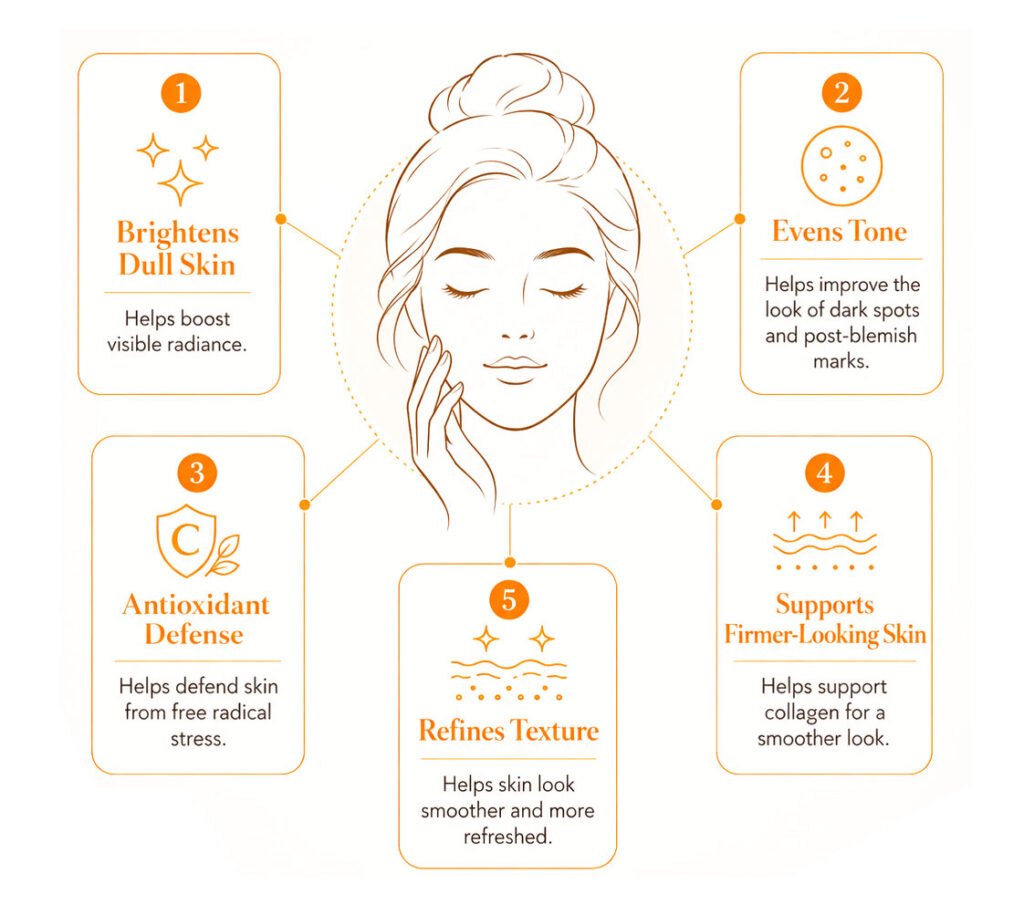
Vitamin C, chemically known as ascorbic acid, is one of the most extensively studied ingredients in dermatology, and for good reason. It plays a direct role in collagen synthesis, meaning the skin literally cannot produce stable, properly formed collagen without an adequate supply of it. That is not a marketing claim, it is basic biochemistry, and it is a big part of why topical Vitamin C has become such a cornerstone ingredient in routines focused on firmness and long-term skin resilience rather than just a quick brightening effect.
Beyond collagen support, Vitamin C functions as a genuinely powerful antioxidant. Skin is exposed to environmental stress constantly, from UV rays to pollution to general oxidative wear over time, and antioxidants help neutralize some of that damage before it accumulates into visible signs of aging or uneven tone. Vitamin C also has a documented effect on tyrosinase, an enzyme involved in melanin production, which is why it shows up so often in brightening formulas aimed at dark spots and overall tone.
A frequently cited double blind study published in Experimental Dermatology tested a topical cream containing five percent Vitamin C against a placebo over a full six-month period on photoaged skin. The researchers found meaningful clinical improvement in the treated skin compared to placebo, evaluated through both visual assessment and more objective topographical measurements. Six months is a considerably longer study window than most consumer skincare research, and it reflects just how gradually this particular ingredient tends to work.
Why The Form Of Vitamin C Actually Matters
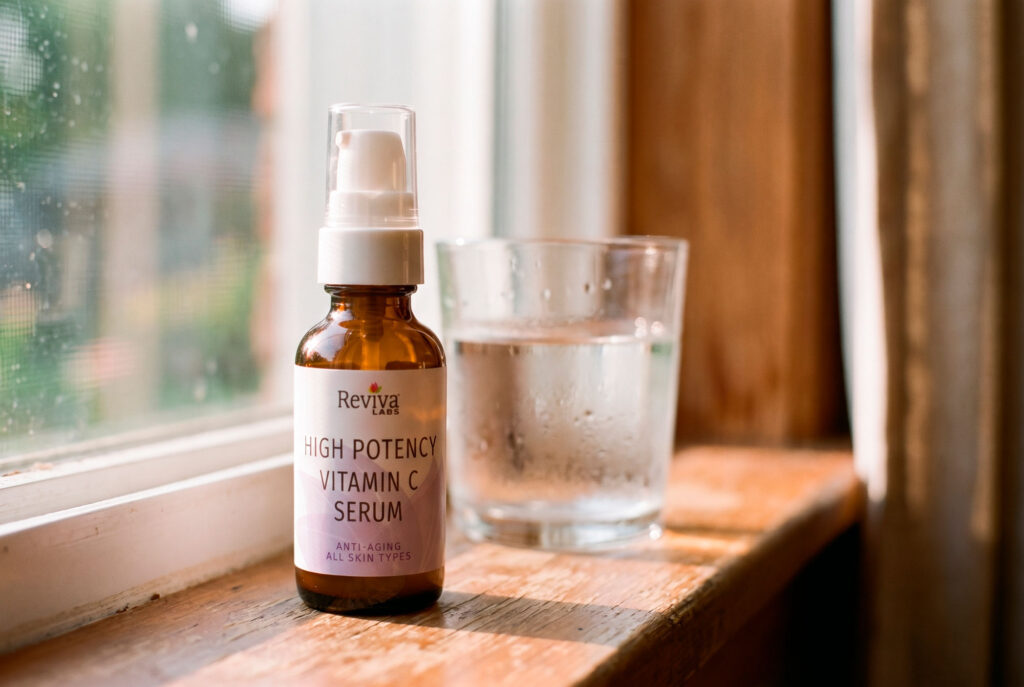
Not every Vitamin C serum is formulated the same way, and that distinction matters more than most people realize. Pure L-ascorbic acid is the most extensively researched form and can be highly effective, but it is also notoriously unstable, prone to oxidizing and losing potency once a bottle is opened and exposed to air and light. A serum that has oxidized will often turn a darker yellow or brown color, and at that point it has largely lost its usefulness as an active ingredient, even though it may still look fine at a glance.
Because of that instability issue, many formulators use more stable derivatives instead, or in combination with L-ascorbic acid. Sodium Ascorbyl Phosphate and Aminopropyl Ascorbyl Phosphate are two commonly used derivatives that offer better shelf stability while still delivering meaningful antioxidant and brightening benefits once they convert to active ascorbic acid within the skin. A formula blending multiple forms together is often trying to get the best of both worlds, the well documented efficacy of L-ascorbic acid alongside the added stability and gentler feel of its derivatives.
This is worth knowing before comparing products purely on percentage claims. A serum boasting a very high percentage of unstable Vitamin C that has partially oxidized on the shelf may actually deliver less active ingredient to the skin than a lower percentage, well stabilized, multi derivative formula that has been properly protected from light and air throughout its shelf life. Packaging matters here too, since Vitamin C serums stored in clear glass or exposed to frequent air contact tend to degrade faster than those in opaque, airless packaging.

Setting Realistic Expectations For Results
Given how gradual the mechanisms behind Vitamin C actually are, from slow collagen support to antioxidant protection that only prevents future damage rather than reversing existing damage overnight, it makes sense that visible results build over months rather than days. Someone applying a well formulated serum every morning for two weeks and expecting a dramatically different complexion is almost certainly going to be disappointed, not because the product failed, but because that is simply not how the underlying biology works. Collagen production in particular operates on a biological timeline measured in weeks and months, so no topical ingredient, however well researched, can shortcut that process into a matter of days.
The six-month study window used in that Experimental Dermatology research is a useful benchmark to keep in mind. Most people will not wait six full months before forming an opinion about a new serum, and that is understandable, but it is worth recognizing that meaningful, clinically documented change in this particular study took that long to fully manifest and be measured. Earlier, more subtle changes, slightly brighter overall tone or a bit more resilience against everyday environmental stress, often show up sooner, even if the more dramatic collagen related benefits take longer to become visible.
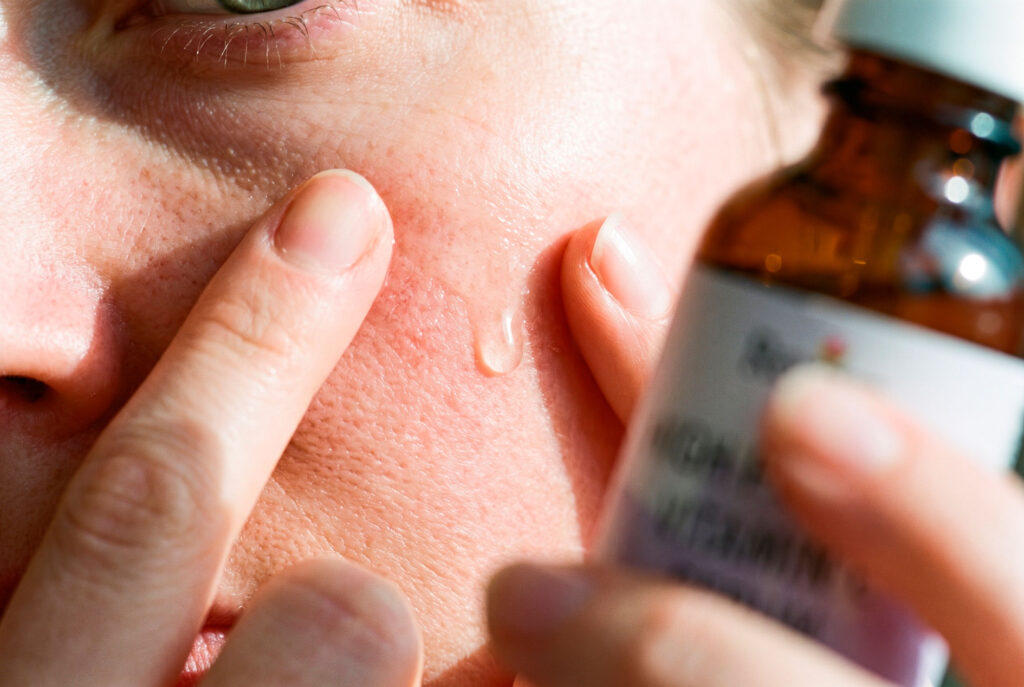
Patience aside, there are ways to give a Vitamin C serum its best possible chance to perform well. Applying it to clean, dry skin in the morning, before sunscreen, allows for better absorption than layering it over other heavier products first. Storing the bottle away from direct sunlight and heat, and keeping the cap tightly closed between uses, both help slow the oxidation process that can quietly rob a serum of its potency long before the bottle is empty.
How Vitamin C Fits Into A Broader Brightening Routine
Vitamin C rarely works in isolation in a well-built skincare routine, and it does not need to. It pairs particularly well with other brightening ingredients that work through different mechanisms, since combining an antioxidant and tyrosinase inhibitor with something like Niacinamide, which works primarily by blocking pigment transfer, tends to produce more noticeable results than either ingredient used entirely on its own. That layered approach mirrors how a lot of modern brightening formulas are designed, addressing discoloration from multiple angles at once rather than relying on a single mechanism.
Timing within a routine matters as well. Vitamin C is most commonly recommended for morning use, partly because its antioxidant properties help provide an extra layer of protection against the environmental stress the skin will encounter throughout the day. Following it with a broad-spectrum sunscreen is essential regardless of what else is in the routine, since sun protection remains the single most important factor in preventing the kind of UV driven discoloration and collagen breakdown that brightening serums are working to address in the first place.
For anyone building a routine around Vitamin C for the first time, starting with a lower frequency, perhaps every other morning for the first week or two, is a reasonable way to gauge how skin responds before committing to daily use. Most people tolerate Vitamin C well, but it can occasionally cause mild tingling or sensitivity, particularly in more concentrated formulas, and easing into it tends to reduce the chance of any irritation derailing an otherwise promising routine. Once tolerance is established, daily morning use tends to be the most effective long-term approach for anyone chasing the collagen and antioxidant benefits the research points toward.
Storage Habits That Protect Your Investment
A genuinely well formulated Vitamin C serum represents a real investment, both in cost and in the months of consistent use it takes to see results, which makes proper storage worth taking seriously. Heat and light are the two biggest enemies of Vitamin C stability, so a bathroom shelf that gets direct afternoon sun or sits near a hot shower is actually one of the worst possible storage spots, even though it is the most convenient. A cool, dark drawer or cabinet away from the shower and any windows will meaningfully extend how long a serum stays effective.
The cap matters more than people tend to assume as well. Every time a bottle is left open, even briefly, oxygen has a chance to interact with the formula and begin the oxidation process that slowly degrades potency. Closing the cap firmly and immediately after each use, rather than leaving it loosely resting on top while getting ready, is a small habit that adds up meaningfully over the weeks a bottle is in regular use.
Buying in smaller quantities that will actually be used within a few months, rather than a large bottle that sits half-finished for the better part of a year, is another practical way to make sure the serum being applied is still delivering an active dose. A partially oxidized serum is not harmful, it simply is not doing much anymore, and continuing to apply it under the assumption that it is still working can quietly stall progress on the exact results someone is trying to achieve. Checking the color and scent of a serum every so often is a simple, free way to catch oxidation before months pass without anyone noticing the formula has quietly stopped pulling its weight.
A Realistic Way To Think About This Ingredient
Vitamin C is not a trend that skincare will eventually move past, it is closer to a foundational ingredient with decades of accumulating research behind it, which is precisely why it has stayed relevant while countless trendier actives have come and gone. Treating it as a long-term relationship rather than a quick fix tends to produce far more satisfying results, both because that mindset matches the actual biology involved and because it encourages the kind of consistent daily habit that any brightening or antioxidant ingredient genuinely needs to perform well. The people who tend to be happiest with their Vitamin C serum are rarely the ones chasing overnight change, they are the ones who folded it into a routine and simply kept going.
None of this means Vitamin C is the only ingredient worth using, or that it will single handedly solve every skin concern someone might have. It is one well researched piece of a broader routine, most effective when paired thoughtfully with sun protection, other complementary actives, and realistic expectations about timeline. Approached that way, rather than as a miracle product expected to transform skin within a couple of weeks, a good Vitamin C serum tends to earn its place in a routine and keep it for years.
Frequently Asked Questions
How long does it take to see results from a Vitamin C serum?
Meaningful clinical improvement in one well documented study took a full six months to reach its clearest measured results, though subtler changes in tone and resilience may become noticeable somewhat sooner with consistent daily use.
What is the best time of day to use Vitamin C?
Morning is most commonly recommended, since its antioxidant properties can help provide additional protection against environmental stress throughout the day, always followed by sunscreen.
Why did my Vitamin C serum turn orange or brown?
That color change usually indicates the serum has oxidized and lost much of its potency, which happens naturally as L-ascorbic acid is exposed to air and light over time, especially once a bottle has been opened.
Can Vitamin C be used with other active ingredients?
Yes, it generally pairs well with ingredients like Niacinamide and Hyaluronic Acid, though introducing new actives one at a time helps identify how skin responds to each addition.
Is a higher percentage of Vitamin C always better?
Not necessarily. Stability, formulation, and packaging often matter more than raw percentage, since a well stabilized lower percentage formula can outperform an unstable higher percentage one that has already begun to oxidize.
Does Vitamin C replace the need for sunscreen?
No. Vitamin C offers antioxidant support but does not provide the broad-spectrum UV protection that sunscreen does, and the two should always be used together rather than as substitutes for one another.
References
- Humbert PG, Haftek M, Creidi P, et al. Topical ascorbic acid on photoaged skin. Clinical, topographical and ultrastructural evaluation: double-blind study vs. placebo. Experimental Dermatology. 2003;12(3):237-244. https://pubmed.ncbi.nlm.nih.gov/12823436/