
Ingredients, Natural, Reviva Labs, Skin Care
Why One Brightening Ingredient Is Rarely Enough

Aug
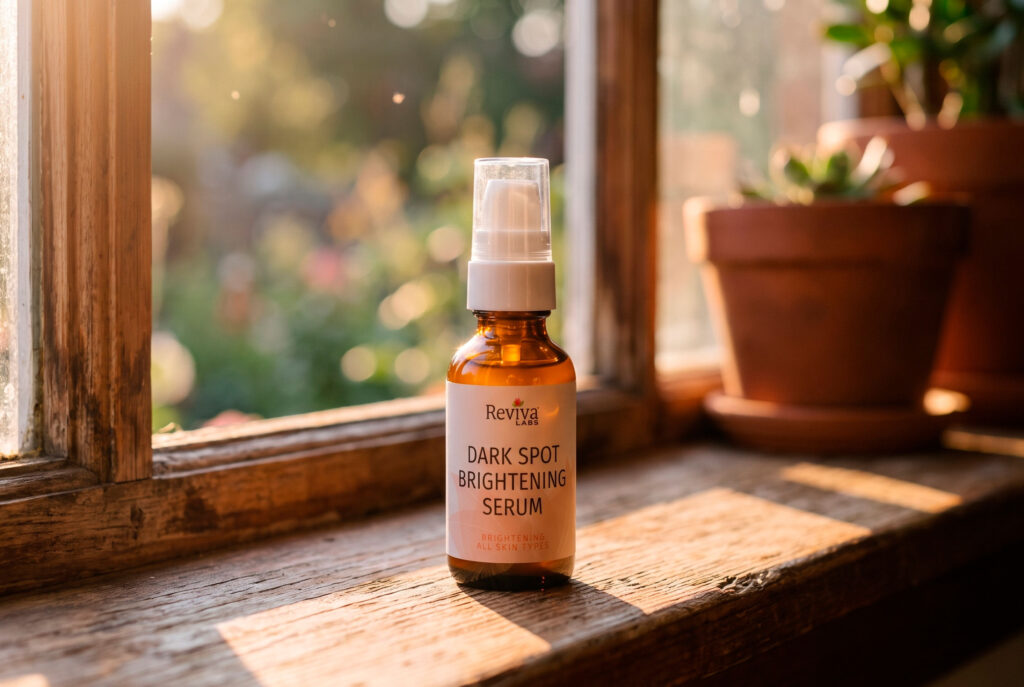
Anyone who has spent time browsing brightening serums has probably noticed a pattern. The most effective formulas rarely lean on a single hero ingredient the way marketing often suggests. Instead, they smartly combine several brighteners, each working through a slightly different biological pathways. There’s genuinely a good reason for this approach beyond simply looking impressive on ingredient lists. Dark spots and uneven tone are not caused by one single process, so treating them effectively tends to require more than one tool.
Why Discoloration Is More Complicated Than It Looks
A dark spot might look like a simple, uniform patch of extra pigment, but the biology behind it is considerably more layered. Melanin production involves a whole cascade of steps, from the enzyme activity that triggers pigment synthesis to the process by which that pigment actually transfers from melanocytes into the surrounding skin cells where it becomes visible. Different ingredients interrupt different points along that cascade, which is exactly why combining several of them tends to outperform relying on just one.
Niacinamide, for example, works primarily by inhibiting the transfer of melanin from melanocytes into keratinocytes, rather than blocking pigment production at its source. A well-known study on the ingredient found that it inhibited this melanosome transfer process by somewhere between 35 and 68 percent in controlled research settings, with clinical trials in the same body of research showing a significant decrease in visible hyperpigmentation after just four weeks of consistent topical use. That’s a meaningfully fast timeline compared to some other brightening ingredients, and it’s part of why Niacinamide has become such a common component in multi-ingredient formulas.
Other ingredients target different stages entirely. Kojic Acid and Arbutin both interfere more directly with tyrosinase, the enzyme responsible for actually producing melanin in the first place, essentially slowing production before it reaches the transfer stage that Niacinamide targets. Glycolic Acid works through an entirely different mechanism, gently exfoliating the surface layer of skin to accelerate the natural turnover process that gradually clears existing pigment, while botanical extracts like Bearberry and Licorice Root bring their own additional brightening properties into the mix.
How A Multi Ingredient Formula Actually Works Together
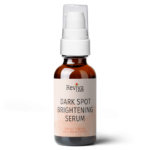
Think of discoloration as a problem with separate causes converging on one visible result, rather than a single switch that needs to be flipped off. A formula addressing pigment production, pigment transfer, and skin cell turnover simultaneously is working the problem from three directions at once, rather than hoping one mechanism alone can compensate for everything happening beneath the surface. That’s the core logic behind combining ingredients like Glycolic Acid, Kojic Acid, Niacinamide, Vitamin C, Arbutin, Resveratrol, Bearberry, and Licorice Root into a single serum rather than picking just one and hoping for the best.
There’s also a resilience benefit to this approach that’s easy to overlook. Individual skin varies enormously in how it responds to any single active ingredient; someone might see a dramatic response to Niacinamide but only a modest one to Kojic Acid, while someone else experiences the exact opposite. A formula built around several brighteners working simultaneously has more paths to producing a visible result for any given person, since it is not entirely dependent on how strongly one particular ingredient happens to interact with that individual’s specific skin biology.
Antioxidants play a supporting but genuinely important role in these formulas as well. Ingredients like Resveratrol and Vitamin C derivatives do not just brighten existing discoloration, they also help defend against the ongoing oxidative stress that contributes to new pigment formation in the first place. Including that kind of forward-looking protection alongside ingredients addressing existing spots means a well-built formula is not only correcting the past, it is also working to reduce how much new discoloration develops going forward.

Setting Expectations For A Multi Brightener Routine
Even with several ingredients working simultaneously, discoloration still doesn’t disappear overnight, and it’s worth being honest about that going in. The four-week timeline for visible Niacinamide related improvement mentioned earlier represents one of the faster acting mechanisms in a typical brightening formula, but the fuller picture, meaningfully faded spots and genuinely more even tone, tends to build gradually over a couple of months of consistent daily use rather than showing up all at once in the first few weeks. Ingredients like Kojic Acid and Glycolic Acid generally work on a slower timeline than Niacinamide, so the combined formula’s overall improvement tends to accelerate the longer it’s used rather than plateauing after the initial month.
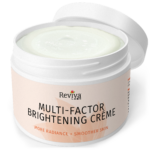
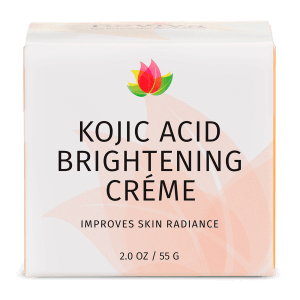
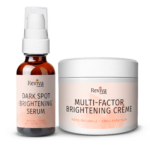
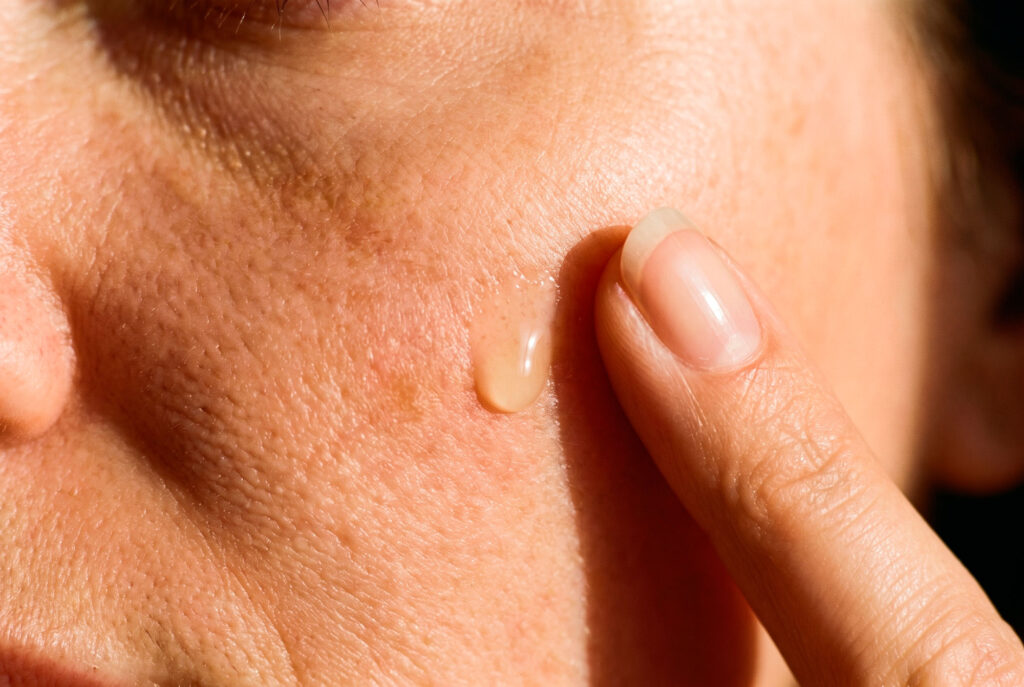
Applying a serum like this directly to areas of visible concern, rather than sweeping it broadly across the entire face, can help concentrate the ingredients where they are needed most. Many multi brightener formulas are designed to be used both morning and evening, applied to clean skin and allowed to fully absorb before layering anything else on top, which gives the ingredients the best possible contact time with the areas that actually need the attention. Following with a richer brightening cream, particularly one built around complementary ingredients like Azelaic Acid or Tranexamic Acid, can add another layer of support without duplicating the same mechanisms already at work in the serum.
Sun protection remains essential here as it is with any other brightening ingredient, arguably more so given how many of the mechanisms involved are actively working to reduce melanin that UV exposure is simultaneously trying to produce. Skipping sunscreen while using a multi-ingredient brightening serum is a bit like trying to bail water out of a boat with a hole still letting more in. The serum can only do so much if daily sun exposure keeps generating new pigment as fast as the formula is working to fade the old. A broad-spectrum sunscreen applied every morning, reapplied through the day when spending real time outdoors, protects the progress the serum is working to build rather than letting it get undone by the next afternoon in the sun.

Who Benefits Most From A Combination Approach
People dealing with several different types of discoloration at once, some sun induced spots alongside a bit of post inflammatory marking from an old blemish, for example, tend to be particularly good candidates for a multi-ingredient formula, since a single targeted ingredient might handle one type of spot well while leaving another largely untouched. A broader formula gives every type of discoloration present something working on it, rather than leaving certain spots essentially untreated simply because they did not respond to whichever single ingredient someone happened to choose. That breadth of coverage is often the biggest practical advantage over a single active serum, particularly for anyone whose discoloration has more than one visible cause.
Anyone who has tried one or two individual brightening ingredients in the past without seeing the results they hoped for is also a reasonable candidate to consider a combination formula instead. It’s entirely possible that a single ingredient simply wasn’t the right match for their particular skin, and a formula working through several mechanisms simultaneously increases the odds that at least one of those pathways will produce a noticeable, satisfying result rather than leaving the whole routine feeling like it never quite worked. Rather than deciding that brightening ingredients in general do not work for their skin, it’s often worth trying a formula that hedges across several mechanisms before giving up on the category altogether.
Consistency remains the deciding factor regardless of how many ingredients a formula contains. A well-built eight ingredient serum used inconsistently will still underperform a simpler formula used religiously every single day, so building any brightening step into an existing routine, rather than treating it as an occasional add on, remains the single most reliable predictor of whether someone ends up satisfied with their results months down the line. No combination of ingredients, however well researched, can compensate for a routine that only happens two or three times a week, which is worth remembering the next time a busy stretch tempts a skipped evening or two.
What To Look For On An Ingredient Label
Reading a brightening serum’s ingredient list with a bit more knowledge can make the difference between an informed purchase and a guess based purely on marketing language. Ingredients are listed in descending order by concentration, so brighteners appearing early in the list are generally present in more meaningful amounts than ones buried near the end alongside preservatives and stabilizers. A formula listing several recognizable brighteners within the first half of its ingredient list is usually a good sign that those actives are present at levels likely to produce a real effect.
It also helps to recognize that botanical extracts like Bearberry and Licorice Root, while genuinely beneficial, tend to work more gently and gradually than concentrated actives like Niacinamide or Glycolic Acid. Their presence in a formula is a meaningful bonus rather than the primary engine driving results, so a serum built primarily around botanicals with only trace amounts of the more clinically established actives may under deliver relative to one where those established ingredients appear at meaningful concentrations. A well-balanced formula tends to lead with the researched actives and layer the botanicals on top as supporting players rather than the other way around.
Texture and skin feel are worth factoring in too, since a serum that feels unpleasant or greasy is far less likely to survive as a daily habit than one that absorbs cleanly and fits comfortably under the rest of a routine. The most effective serum on paper still needs to be one someone will actually reach for every morning and evening without dreading the way it feels going on.
Ultimately, the ingredient list is a useful starting point, but consistent use over a realistic timeline is what actually determines whether any formula, however well designed, ends up delivering the visible results someone is hoping for. Reading labels carefully is a good habit, but it is only the first step toward the daily consistency that actually moves the needle.

Frequently Asked Questions
Why do brightening serums often contain so many different ingredients?
Discoloration involves several separate biological processes, from pigment production to pigment transfer to skin cell turnover, so combining ingredients that each target a different stage tends to outperform relying on a single mechanism alone.
How long does it take to see results from a multi-ingredient brightening serum?
Some individual ingredients like Niacinamide can show measurable improvement within about four weeks, while the fuller, more visible result across all the areas of concern typically builds over a couple of months of consistent daily use.
Can a brightening serum be used with a brightening créme in the same routine?
Yes, many routines layer a serum under a créme, particularly when the créme contains complementary ingredients that work through different mechanisms than what is in the serum, rather than duplicating the same active ingredients twice.
Is it safe to use several brightening ingredients at once?
Well formulated multi-ingredient serums are generally designed with compatible concentrations in mind, though anyone with particularly sensitive skin should still introduce a new product gradually and watch for any signs of irritation.
Do I need to use a brightening serum every day to see results?
Consistency matters more than almost any other single factor, and daily use, whether once or twice depending on the specific formula, tends to produce meaningfully better results than sporadic or occasional application.
Does a brightening serum replace the need for sunscreen?
No. Sun protection remains essential alongside any brightening routine, since ongoing UV exposure continues generating new pigment even while a serum is working to fade existing discoloration.
References
- Hakozaki T, Minwalla L, Zhuang J, et al. The effect of niacinamide on reducing cutaneous pigmentation and suppression of melanosome transfer. British Journal of Dermatology. 2002;147(1):20-31. https://pubmed.ncbi.nlm.nih.gov/12100180/