
Ingredients, Natural, Reviva Labs, Skin Care
What a Longevity Coach Wanted to Know About Clean Skincare

Jun
When Debbie Potts walked the aisles of Natural Products Expo West in Anaheim this past March, she was not hunting for another expensive miracle in a jar. As a longevity coach who reads ingredient labels the way some people study restaurant menus, she has spent years telling her audience that what you put on your skin matters as much as what you put in your body. So, when she stopped at the Reviva Labs booth, asked for samples, and later invited us onto The Coach Debbie Potts Show, the questions she brought were the good kind. They were specific, a little skeptical, and rooted in real curiosity about why a clean product line could work without carrying a three-figure price tag. That conversation turned into one of the more honest discussions about skincare we have had in a long while, and it is worth sharing with anyone who has ever felt lost in a sea of beauty promises.

Her central question was simple and fair. Why does a brand most people have never heard of manage to do something well for around twenty-five dollars when the products she usually finds doing the same job cost a hundred dollars or more? It is a question we hear often, and the answer reveals a great deal about how the beauty industry actually operates. Price in skincare is frequently tied to packaging, celebrity endorsements, and the story a brand wants to tell, rather than the quality of what sits inside the bottle. We have spent more than fifty years choosing the opposite path, and that single choice was the thread running through the entire episode.
A Half Century of Doing Things the Hard Way
Reviva Labs was founded in the 1970s by Stephen and Judy Strassler, a couple whose passion for skincare bordered on obsession. Stephen was the first licensed male esthetician in the country, and that hands on background shaped everything that followed. The two of them traveled the world searching for ingredients, brought them home, and reformulated them into products built to solve real skin concerns rather than to chase whatever was fashionable that season. There is a story we still tell about Stephen filling the family refrigerator with so many sample formulas that Judy could barely fit the groceries inside. That kind of devotion set a standard that still guides the company today, long after both founders have passed, and it explains why we started in salons, moved into health food stores, and remain most at home on the shelves where shoppers actually read what they are buying.
The founders held one rule above all others. Nothing goes into a formula unless it does something useful. Marketing teams across the industry love to sprinkle a trendy ingredient into a product so they can print its name on the front of the box, even when the amount inside is far too small to matter. Stephen rejected that approach from the very beginning, and we have kept rejecting it ever since. Every ingredient in a Reviva formula has to earn its place by being useful, and that one discipline is the reason our products often look shorter and simpler on the label than people expect.
That discipline also changes what the word functional means to us. A functional ingredient is one that contributes to how the product performs, not one that contributes to how the product sells. When you build a line that way, you stop adding filler, you stop reaching for whatever buzzword is trending, and you start treating the label as a promise rather than a billboard. It is slower work and it is less glamorous, yet it produces something a thoughtful shopper can trust. Debbie picked up on that immediately, because it matches the way she teaches people to evaluate supplements, food, and everything else they bring into their lives.

Why Ingredient Lists Tell the Real Story
One of the most practical moments in the conversation came when Debbie reminded her listeners that ingredients on any label are listed in descending order by amount. The thing near the top of the list is the thing you are mostly buying. That rule holds true for food, and it holds true for skincare, and once you start reading labels this way, a lot of clever marketing quietly falls apart. A product that promises a powerhouse ingredient while burying it near the bottom of the list is telling on itself. We encouraged her audience to look up resources like the Environmental Working Group, learn what they are actually applying to their skin, and ask a blunt question about each ingredient, which is whether it is there to work or there to sell.
The ingredients you tend to find in many mass market products include synthetic fragrance, artificial color, and preservatives that range from unnecessary to genuinely controversial. Fragrance alone is one of the most common triggers for irritation and sensitivity, which matters a great deal for skin that is already shifting with age. We have spent decades working to use cleaner options, leaning on naturally derived ingredients where they are the best choice and on well-studied science where that serves the skin better. None of this is about chasing a label that simply says natural for its own sake. It is about choosing what works, leaving out what does not, and staying willing to revisit those choices as new research arrives.
That willingness to revise is something Debbie flagged as a good sign rather than a weakness, and we happen to agree with her. If you compare a Reviva formula today against the same product from ten years ago, you may notice differences, because new information about ingredients and their long-term effects keeps surfacing. A brand that never changes anything is not always being consistent. Sometimes it is simply ignoring what the science now shows. We would rather adjust a formula and explain the reason than freeze a recipe in place just to avoid the effort of improving it.
The Hyaluronic Acid Conversation Most Brands Skip
Few ingredients get more attention than hyaluronic acid, and few are more often gotten wrong. It is a humectant, which means its job is to attract water and hold it close to the skin, so the surface stays soft and looks dewy. Where brands differ is in how they use it, and this is exactly where the episode got pleasantly technical. We favor a higher to mid-range molecular weight hyaluronic acid that rests on the surface and draws moisture toward it, rather than fracturing the molecule into tiny pieces engineered to push deep into the skin. Forcing fragments of an ingredient through the skin barrier can create problems, and we would rather work with the skin than against it.
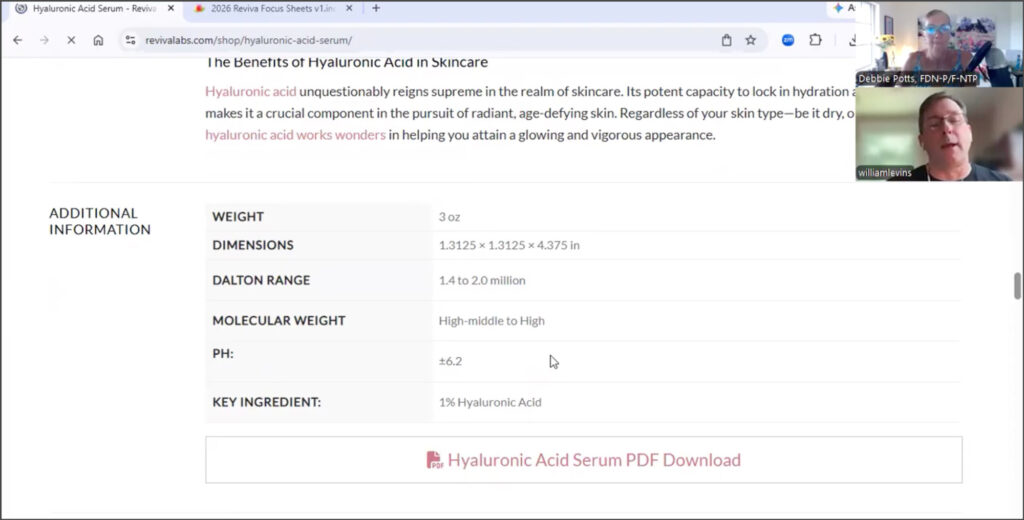
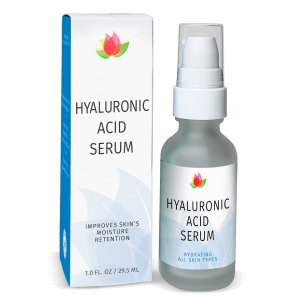
This is also where transparency becomes more than a slogan. On most of our product pages you will find the actual percentage of the key ingredient, and in the case of our Hyaluronic Acid Serum you will see that it contains one percent hyaluronic acid alongside roughly ten ingredients in total. We even list the molecular weight range in Daltons and the pH, because a curious shopper deserves to know these things before spending money. Compare that to a competing serum that might carry more than twenty ingredients for what should be a straightforward humectant, and the difference becomes hard to ignore. Hyaluronic acid does not need a crowd of helpers to do its job, and a short honest list is very often the sign of a formula that respects both the ingredient and the person using it.

What Actually Changes in Skin as We Age
Debbie asked the question that sits at the heart of so much midlife frustration. Why do fine lines appear around the eyes and mouth seemingly overnight when nothing in your routine has changed? The honest answer is that the change has been building quietly beneath the surface for years. A review published in the journal Plastic and Aesthetic Research notes that skin collagen tends to peak between the ages of twenty-five and thirty-four, then declines by roughly twenty five percent over the following four decades. Collagen and elastin form the framework that keeps skin firm and springy, so as they gradually diminish, the skin starts to lose its structure, and that is when the lines around the nose and mouth and the softening along the jaw begin to show.
This is precisely why our founders believed so strongly in a preventative approach, and it is advice that still holds up beautifully. If you treat your skin kindly when you are younger, you tend to face fewer concerns later, much the way Debbie talks about getting ahead of health issues instead of waiting to treat symptoms. None of this means you are out of options once lines appear, because you are absolutely not. It simply means the smartest moment to start caring for your skin is always right now, whatever your age happens to be. Caring well includes protecting your skin from the sun, supporting it with thoughtful topical care, and paying attention to the broader habits that influence how your skin looks and feels over the years.
Debbie’s own philosophy centers on what she calls being healthy from the inside out, and she speaks often about gut health, nutrition, sleep, and stress as factors that eventually show up on the skin. That perspective belongs to her work as a coach, and we were genuinely glad to take part in a skincare conversation that respects the whole person rather than promising that one cream will fix everything at once. Our role in that picture is honest and specific. Topical skincare cares for the skin you can see and touch, supporting its moisture, its texture, and its overall appearance, while the rest of your wellness routine does its own separate work. When those two efforts move in the same direction, the results tend to feel steadier and more lasting, and that is a message we are perfectly happy to stand behind.
Ingredients That Earn Their Place
The conversation naturally turned toward the active ingredients that give certain products their reputation. We talked about DMAE, an antioxidant long associated with the look of firmer and more toned skin when it is used consistently over time. We talked about peptides, which are short chains of amino acids meant to mimic or support signals tied to the skin’s own natural processes, and which appear in many of our targeted treatments. These ingredients are not magic, and we are careful never to pretend that they are. They are well chosen materials used at meaningful levels, which is a very different thing from a famous name added in a token amount so it can decorate the front of a box.
When Debbie asked for a personal favorite, the answer was our Bakuchiol Plus Serum. Bakuchiol is a plant derived ingredient frequently described as a gentle alternative to retinol, offering a similar approach to the look of smoother and more even skin without some of the sensitivity that retinol can bring for certain people. It fits our philosophy neatly, because it is both naturally sourced and supported by a growing interest within the skincare community. We mention it here not as a hard sell but as one clear example of how a clean formula and an effective formula are not opposites at all. They can be, and in our experience, they very often are, the exact same thing in the same bottle.
Help That Does Not Push a Cart
One theme Debbie kept circling back to was how overwhelming it can feel to choose products when every single option sounds wonderful. She is right about that, and it is a problem we try to solve in a way that is honestly a little unusual for this industry. We offer a free virtual skincare consultation where a real person talks through your skin, your concerns, and your current routine, and we will gladly tell you to keep using something you already love when it is clearly working for you. We are not interested in selling you a shelf full of products you do not actually need. There is also a short skincare quiz for anyone who wants quick direction without booking a full session, and both tools live right on our website for free.
What stayed with us most from the episode was Debbie’s relief that good skincare does not have to be a luxury reserved for people with enormous budgets. So much of what drives skincare prices upward has nothing to do with the formula and everything to do with image and packaging. We have always believed that clean, functional, effective skincare should be something an ordinary person can comfortably afford, and keeping our prices reasonable is a deliberate decision rather than a happy accident. The episode reminded us why that choice matters so much, because a coach who could recommend nearly anything to her audience chose instead to recommend honesty and value. That is the reputation we have worked more than fifty years to build, and it is exactly the one we plan to keep earning.

Frequently Asked Questions
What makes Reviva Labs different from other clean skincare brands?
The biggest difference is discipline about ingredients. Every ingredient in a Reviva formula is chosen to do something useful rather than to look impressive on the label, which is why our ingredient lists tend to be shorter, and our pricing tends to be lower than products that lean heavily on marketing.
Why are Reviva Labs products so affordable compared with similar formulas?
Much of the cost in premium skincare comes from packaging, advertising, and brand image rather than the formula itself. We keep our packaging practical and our marketing modest on purpose, which lets us invest in quality ingredients while keeping prices reasonable for everyday shoppers.
At what age should I start using skincare that supports aging skin?
Collagen and elastin begin to decline gradually from the mid-twenties, so a preventative routine started earlier tends to pay off later. That said, it is never too late to begin, and a thoughtful routine can support the look and feel of your skin at any age.
What is the difference between high and low molecular weight hyaluronic acid?
Higher molecular weight hyaluronic acid rests on the surface of the skin and draws moisture toward it, helping the surface stay hydrated and dewy. Very low molecular weight versions are designed to penetrate more deeply, which some brands favor but which can carry a higher chance of irritation for sensitive skin.
Is bakuchiol a good alternative to retinol?
Bakuchiol is a plant derived ingredient often used as a gentler option for people who find retinol too irritating. It offers a similar focus on the look of smoother and more even skin, and it tends to be well tolerated, which makes it a popular choice for sensitive or reactive skin.
How do I figure out which products are right for my skin?
The simplest starting point is the free skincare quiz on the Reviva Labs website, which offers quick direction in a few minutes. For something more personal, the free virtual skincare consultation lets you talk through your skin and your routine with a real person who can build a plan around what you already use.
References
- Reilly DM, Lozano J. Skin collagen through the lifestages: importance for skin health and beauty. Plastic and Aesthetic Research. 2021;8:2. https://www.oaepublish.com/articles/2347-9264.2020.153
- Varani J, Dame MK, Rittie L, et al. Decreased collagen production in chronologically aged skin. The American Journal of Pathology. 2006;168(6):1861-1868. https://ajp.amjpathol.org/article/S0002-9440(10)62205-5/fulltext