
Clean Beauty, Natural, Reviva Labs, Skin Care
Why Dewy Skin and Shiny Skin Are Not the Same Thing

Jun
Your forehead can hold as many as 900 sebaceous glands inside a single square centimeter of skin, one of the highest concentrations found anywhere on the human body. That single fact explains a lot about why so many people stare into the mirror by midafternoon and wonder whether the glow they see is something to celebrate or something to blot away. The truth is that two very different things can make skin catch the light, and they ask for opposite responses. One is a sign of health and balance, and the other is usually a signal that something needs adjusting. Learning to tell them apart changes how you care for your face far more than any single product ever could.
I have watched people make the same mistake for years. They notice a sheen, decide their skin is too oily, and reach for the strongest mattifying cleanser they can find. A week later the sheen is worse, their cheeks feel tight, and they assume they simply have difficult skin. What actually happened is that they treated hydration as if it were oil, or oil as if it were a hydration problem, and the skin pushed back. Skin is responsive, and it tends to overcorrect when you strip it, so before you change a single step in your routine, it helps to know which kind of light your face is actually reflecting.
What Dewy Skin Really Means
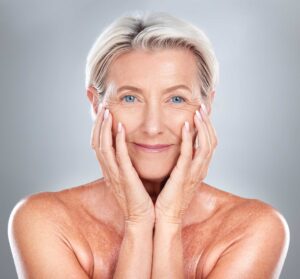
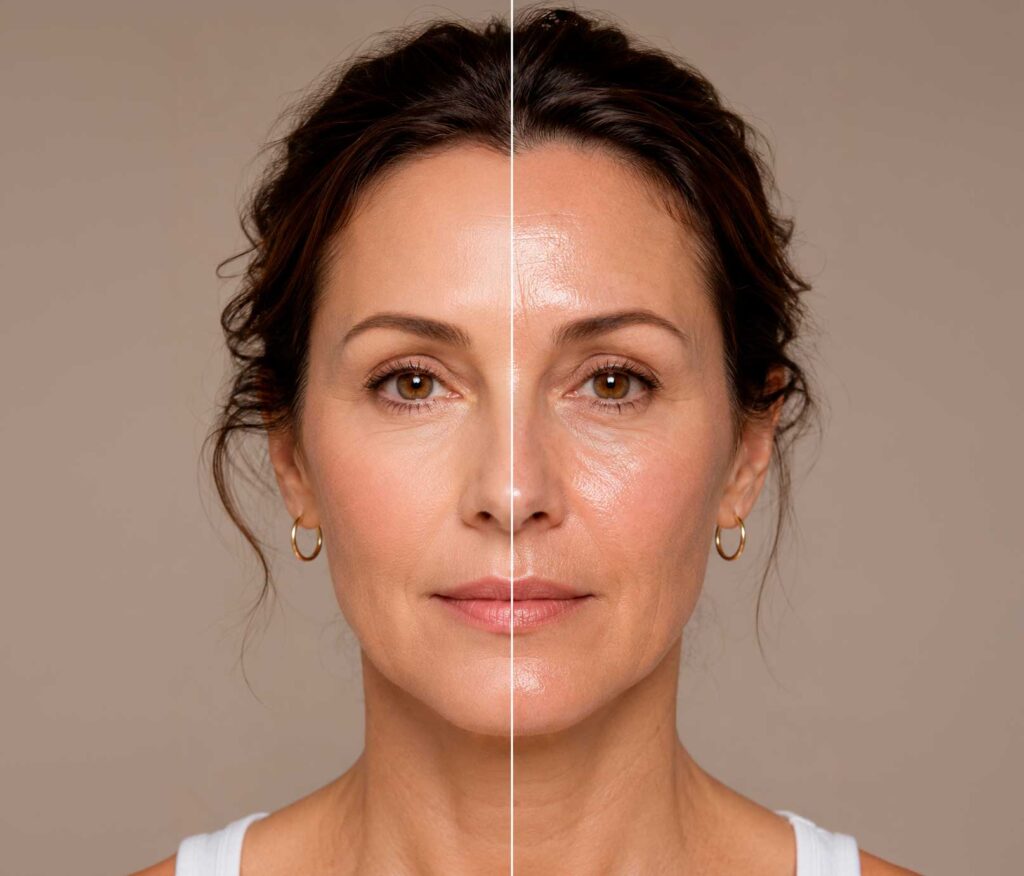
Dewy skin is what happens when the outer layer of your skin is holding enough water. The technical name for that layer is the stratum corneum, and you can picture it as a brick wall where the bricks are skin cells, and the mortar is a mix of lipids and water. When that mortar is well hydrated, light bounces off the surface in a soft, even way that reads as luminous rather than slick. The glow looks like it is coming from inside the skin, spread across the cheeks and the whole face rather than pooling in one spot. People describe it as fresh, plump, and healthy, and they are usually right.
Hydration is about water, not grease, and this is the part most people miss. A dewy finish comes from humectants, which are ingredients that attract and bind moisture, and from a barrier that keeps that moisture from escaping into the air. Hyaluronic acid and glycerin are two of the most familiar humectants, and they work by pulling water into the upper layers of the skin, so cells look full instead of flat. When skin is plump with water, fine lines soften, texture smooths, and the surface reflects light gently and uniformly. This is the look most people are chasing when they say they want to glow, and it signals that the skin barrier is doing its job.
Dewy skin also tends to feel comfortable. There is no tightness after cleansing, no flaking around the nose, and no greasy residue when you press a tissue to your cheek. The finish stays fairly consistent through the day rather than building into a slick by noon. If you touch your face and it feels supple and bouncy instead of either tight or oily, you are most likely looking at hydration doing exactly what it should. That quiet comfort is the tell that separates a healthy glow from a surface problem.
What Shiny Skin Is Actually Telling You
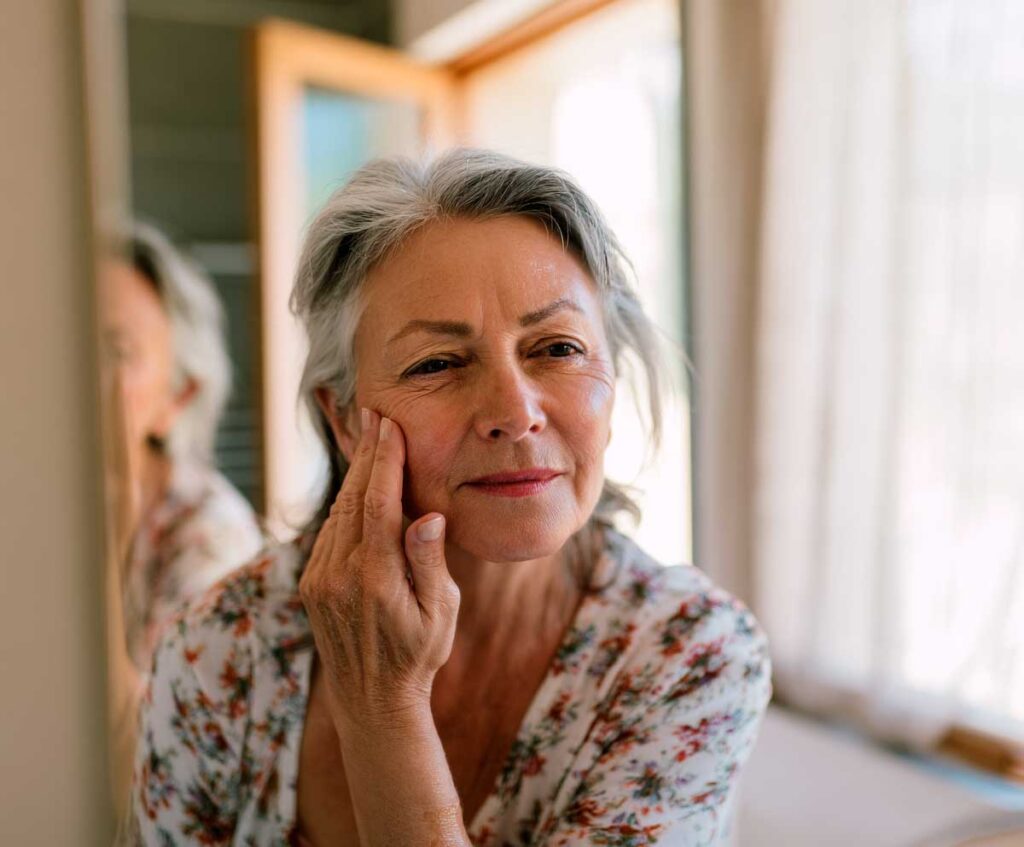
Shiny skin is a different story, and it comes from oil sitting on top of the skin rather than water held within it. Your sebaceous glands produce an oily substance called sebum, and sebum is not the enemy. It coats the skin, slows water loss, and helps keep the surface flexible and protected. The problem is one of amount and location, because when glands produce more sebum than the skin needs, that excess gathers on the surface. There it reflects light in a harder, wetter looking way that most people read as greasy rather than glowing.
The location is the giveaway. Shine tends to concentrate in the T-zone, meaning the forehead, the nose, and the chin, because those areas carry the densest clusters of sebaceous glands. That is exactly why the forehead and nose go slick first while the cheeks may stay matte or even feel a little dry. The same gland density that protects those zones also makes them the first to look oily when production runs high. Sebum output is driven largely by hormones, which is why oiliness often shifts with puberty, stress, the menstrual cycle, and age. Heat and humidity push it higher too, which is why a summer afternoon can turn a balanced face shiny by lunch.
There is one more clue worth knowing. Shine from oil often arrives with companions such as enlarged looking pores, makeup that slides or separates as the day goes on, and the occasional clogged pore or breakout. A hydration glow rarely brings any of that along with it. If your sheen is patchy, parked mostly down the center of your face, and paired with a slick feel when you touch it, you are almost certainly dealing with surface oil rather than internal moisture. Naming that correctly is the first real step toward managing it well.

The Mix Up That Wrecks Routines
Here is where most people go wrong, and it is worth slowing down on. Oily skin and dehydrated skin can live on the same face at the same time, and they constantly get confused for each other. Oiliness is a skin type, largely set by your glands and your hormones. Dehydration is a temporary condition, meaning a simple lack of water in the skin, and anyone can experience it regardless of type. You can have skin that pumps out plenty of oil and still does not hold enough water, which feels contradictory until you remember that oil and water are two separate systems doing two separate jobs.
When dehydrated skin gets stripped of oil, it often responds by making even more. The logic of the skin goes something like this. If you scrub away the protective layer of sebum with harsh cleansers and strong mattifiers, the barrier weakens, water escapes faster, and the glands ramp up oil production to compensate for the loss. The result is skin that feels tight and looks shiny at the very same time, which sends people deeper into the exact routine that caused the problem. Breaking that loop almost always means adding water back rather than removing more oil. That is the counterintuitive move that finally settles things down.
You can run a simple check at home without any special tools. Cleanse your face gently, wait about thirty minutes without applying anything, and then look closely in good light. If your skin looks evenly soft and feels comfortable rather than tight, your hydration is in good shape.
This is also why the old advice to skip moisturizer because your skin is oily is so often wrong. Oily skin still needs water and denying it hydration tends to make the oiliness worse rather than better. The goal is not to wage war on shine by drying the face into submission. The goal is to give the skin enough water that it stops overproducing oil to protect itself. Once you separate the water question from the oil question in your own head, the right routine becomes much easier to build, and you stop fighting your skin and start working with it.
How to Tell Which One You Are Seeing
You can run a simple check at home without any special tools. Cleanse your face gently, wait about thirty minutes without applying anything, and then look closely in good light. If your skin looks evenly soft and feels comfortable rather than tight, your hydration is in good shape. If the center of your face turns slick and reflective while the cheeks stay matte or feel a little parched, you are looking at oil in the T-zone, possibly alongside dehydration elsewhere. The pattern across your whole face tells you far more than any single shiny patch ever could.
Pay attention to feel as much as look. Pinch a little skin on your cheek and release it, then watch how it behaves. Skin with enough water springs back quickly and feels cushioned, while dehydrated skin can look a little crepey and bounce back more slowly. Dewy skin feels supple under your fingers, and oily skin leaves a faint slip on your fingertips when you touch the T-zone. These small tests cost nothing and teach you to read your own face instead of guessing, and over a week or two of checking, you start to see your real patterns clearly.
Timing matters as well. A hydration glow is fairly stable through the day, while oil shine tends to build, peaking in the afternoon and getting heavier in heat. If you take a photo at nine in the morning and another at three, a hydration glow looks similar in both, but oil shine grows noticeably between the two. Watching how your face changes across the hours is one of the most reliable ways to separate the two responses. It turns a confusing snapshot into a clear story you can act on.

Building a Routine That Glows Without the Grease
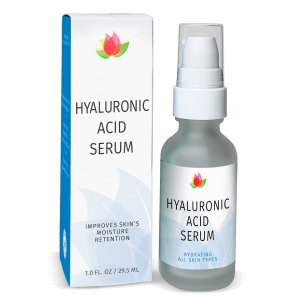
The fix for most people is gentler than they expect. Start by treating the water question directly with a lightweight humectant step, since drawing moisture into the skin supports the kind of soft, even glow that reads as healthy. A water based hyaluronic acid serum layered onto slightly damp skin gives the upper layers something to hold, which is why Reviva Labs has kept its Hyaluronic Acid Serum in the lineup as a simple way to add water without heaviness. Apply that step before anything richer so the humectant can grab moisture first. Then seal it with a moisturizer suited to your skin so the water you just added does not evaporate away, because that order matters more than the number of products you own.
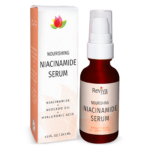
For oil control, the smarter approach is balance rather than brute force. Ingredients such as niacinamide can help regulate the look of excess oil and refine surface texture without stripping the barrier, which is why a niacinamide based serum like the Nourishing Niacinamide Serum can sit comfortably in an oily or combination routine. The aim is to ease oil production gently while keeping the skin hydrated, not to scrub the face dry and hope for the best. Blotting papers handle midday shine in the moment without disturbing your routine underneath. Harsh, tight feeling cleansers tend to backfire, so trade them for something that leaves skin clean but never squeaky and let the rest of the routine do the steady work.
The season changes the math too, and it is easy to forget that. Summer heat and humidity raise sebum output and sweat, so a face that felt balanced in winter may turn shinier in July even though nothing about your routine changed. That is a cue to lighten heavier creams and lean harder on water-based hydration rather than to start stripping oil away. Winter, with its dry indoor air, usually calls for more sealing support to keep water locked in. Adjusting with the seasons keeps both the water and oil systems in their comfortable range all year, because your skin is not the same in every month and your routine should not pretend that it is.
Reading Your Own Skin With Confidence
Once the difference clicks, you stop seeing every sheen as a flaw to erase. A soft, even luminosity across the cheeks is something to protect, and a slick T-zone by afternoon is something to manage, and those two responses rarely call for the same fix. The mirror becomes far less confusing when you know whether you are looking at water or oil. You will reach for the right step instead of the harshest one, and that shift saves money, time, and a great deal of frustration. Small knowledge like this compounds quietly over the years.
The core idea is small enough to carry with you everywhere. Dewy is water you want to keep, shiny is oil you want to balance, and the same face can show both at once in different zones. Hydrate generously, regulate oil gently, and adjust as the weather and your hormones shift through the year. Skin tends to reward that kind of patient, informed care with exactly the healthy glow most people are chasing in the first place. The more you read your own face, the less you ever have to guess.
Frequently Asked Questions
Is dewy skin just oily skin with a nicer name?
No, and treating them as the same thing leads people astray. Dewy describes a soft, even glow that comes from skin holding enough water, spread fairly evenly across the face and comfortable to the touch. Oily shine comes from sebum sitting on the surface, usually concentrated in the T-zone, and it often feels slick rather than supple. They can look similar in a quick glance, but their causes and their fixes are opposite.
Can I have oily and dehydrated skin at the same time?
Yes, and it is far more common than people realize. Oiliness is a skin type set mostly by your glands and hormones, while dehydration is a temporary lack of water that any skin type can experience. A face can produce plenty of oil while still struggling to hold water in its upper layers, which is why some people feel tight and look shiny at once. The answer in that case is to add water through hydration, not to strip more oil.
Should I skip moisturizer if my skin is oily?
Skipping moisturizer usually backfires for oily skin. When you remove too much oil and add no water back, the barrier weakens and the glands often produce even more sebum to compensate. A lightweight, water-based hydration step paired with a moisturizer suited to your skin tends to calm oil production over time. The goal is balance rather than dryness.
Why does my face get shinier in summer?
Heat and humidity stimulate the sebaceous glands to produce more sebum, and you also sweat more, which adds to the surface sheen. Because the T-zone carries the densest sebaceous glands, it tends to turn slick first when the weather warms up. The smart adjustment is to lighten heavy creams and lean on water-based hydration rather than to start aggressively stripping oil. Blotting papers help manage shine in the moment without disrupting the routine underneath.
How can I tell if my glow is hydration or oil?
Cleanse, wait about thirty minutes, and look in good light. An even, soft luminosity across the whole face that feels comfortable points to hydration, while a slick reflective center paired with matte or tight cheeks points to oil in the T-zone. Hydration glow stays steady through the day, but oil shine builds and peaks in the afternoon. Watching the pattern and the timing together gives you a reliable read.
Does drinking water make skin look dewy?
Staying well hydrated supports overall skin health but drinking water alone does not reliably produce a dewy surface. The glow you see comes from water held in the outer layer of the skin, which depends heavily on humectants and a healthy barrier applied topically. Think of internal hydration as helpful support and topical humectants as the part that does the visible work. Both matter, and neither replaces the other.
References
- Cancellieri G., et al. Influence of the sebaceous gland density on the stratum corneum lipidome. PMC, U.S. National Library of Medicine. https://pmc.ncbi.nlm.nih.gov/articles/PMC6068117/
- Healthline. Sebum: What Is It, How to Remove Excess on Face, Hair, Scalp, More. https://www.healthline.com/health/beauty-skin-care/sebum