
Ingredients, Reviva Labs, Skin Care
The Best Time of Day to Target Firmness Dark Spots and Dryness

Jul
Your skin does not behave exactly the same way at 8 a.m. as it does at 10 p.m. Research into skin physiology has found measurable daily rhythms in hydration, barrier function, temperature, oil production, and transepidermal water loss. One human study measuring skin every two hours across a 24-hour period documented clear circadian changes in several of these functions. Those shifts do not mean there is one magical hour when skincare suddenly works better, but they do give us a smart framework for building a routine around what your skin faces during the day and what it needs overnight.
This becomes especially useful when you are trying to address several visible signs of aging at once. Firmness, dark spots, and dryness do not come from one process, and one product rarely addresses all three equally well. A peptide treatment can focus on the appearance of lines and loss of firmness. A brightening serum can address uneven tone and visible discoloration. A richer night cream can reinforce moisture and soften the dry, crepey appearance that often becomes more noticeable with age.
The key is putting each product into a routine where it makes sense and where you will use it consistently. For a regimen built around Reviva Labs Multi-Peptide Complex, Dark Spot Brightening Serum, and Collagen Night Creme, you do not need an elaborate twelve-step schedule. You need a logical morning routine, a supportive evening routine, and enough consistency to give your skin time to respond.

Your Morning Routine Has a Different Job
Morning skincare prepares your face for the hours ahead. Your skin will encounter sunlight, dry indoor air, heat, cold, wind, pollution, makeup, perspiration, and repeated changes in humidity. Because of this, an effective morning routine should focus on targeted treatment followed by hydration and protection. It should also layer comfortably enough that you will actually follow it every day.
Dark spots deserve special attention in the morning because light exposure plays such a large role in visible pigmentation. The American Academy of Dermatology states that effective care for dark spots begins with sunscreen. It also notes that visible light can worsen some forms of hyperpigmentation, which is why tinted sunscreens containing iron oxides are often recommended for people prone to persistent discoloration. A brightening serum can address the appearance of existing uneven tone, but daytime sun protection helps defend the progress you are trying to make.
This makes Reviva Labs Dark Spot Brightening Serum a natural fit for a consistent routine that includes serious daytime sun protection. The formula combines eight brightening ingredients: niacinamide, glycolic acid, kojic acid, arbutin, a Vitamin C derivative, resveratrol, bearberry, and licorice root. These ingredients approach visible discoloration from different directions rather than relying on a single brightening ingredient.
The product contains glycolic acid, so individual tolerance matters when deciding how often to use it and whether morning or evening works best for your skin. For someone whose skin comfortably tolerates the formula, it can fit into a morning routine beneath moisturizer and broad-spectrum sunscreen. People with sensitive skin, or those already using other exfoliating products, often find evening use easier to manage. The important point is not forcing an active formula into a particular clock time. It is creating a repeatable schedule that protects the skin from unnecessary irritation.

Where Dark Spot Brightening Serum Fits
After cleansing in the morning, apply treatment serums before heavier creams. This gives lighter formulas direct contact with clean skin and prevents richer products from interfering with comfortable application. Dark Spot Brightening Serum belongs in this treatment stage. Let it settle, follow with the rest of your routine, and always finish daytime skincare with appropriate sun protection.
Niacinamide is one reason the serum fits well into a broader brightening strategy. Clinical research has found improvements in the appearance of irregular pigmentation from topical formulas containing niacinamide. Other ingredients in the formula, including kojic acid, arbutin, licorice, bearberry, and Vitamin C, expand the brightening approach beyond a single pathway.
Glycolic acid adds another dimension by supporting surface exfoliation. Dead surface cells can contribute to a dull, uneven appearance, so controlled exfoliation can help skin look clearer and more refined over time. More is not always better, though. Stacking several exfoliating acids, scrubs, retinoids, and strong brighteners into the same routine can create irritation, and irritation can work against your goal of achieving a calmer, more even-looking complexion.
This is where timing becomes practical rather than theoretical. If you already use an exfoliating toner, retinol, or another acid treatment at night, using Dark Spot Brightening Serum during a separate routine can reduce the number of strong products competing for the same application window. You can also alternate treatments across evenings based on your skin’s tolerance. A good schedule should make your routine easier on your skin, not more complicated.
Firmness Is a Long Game
Loss of firmness does not happen overnight. It develops gradually as the structural characteristics of skin change with age, environmental exposure, repeated facial movement, and changes in hydration. The visible result often appears as deeper lines, softer facial contours, or folds that seem more pronounced than they did years earlier.
Peptides have become important cosmetic ingredients because specific peptide compounds can support visible improvements in characteristics associated with aging skin. A 2026 systematic review and meta-analysis examining oral and topical peptides reported improvements across measures including wrinkles, elasticity, hydration, and brightness, while also noting differences among formulations and studies. This is an important distinction. “Peptides” describes a broad family of compounds, not one universal ingredient with one universal result.
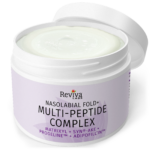
Reviva Labs Multi-Peptide Complex takes a multi-peptide approach. The formula includes Palmitoyl Pentapeptide-4, Dipeptide Diaminobutyroyl Benzylamide Diacetate, and Trifluoroacetyl Tripeptide-2, alongside sodium hyaluronate, glycerin, panthenol, Vitamin E, a Vitamin C derivative, shea butter, jojoba oil, and additional conditioning ingredients. It was developed specifically to target the appearance of deeper facial lines, including nasolabial folds.
Unlike retinol or a strong exfoliating acid, a peptide treatment does not automatically belong only in an evening routine. Multi-Peptide Complex can fit into either morning or evening skincare, and using it consistently matters more than chasing a specific hour on the clock. For someone especially focused on firmness and deeper lines, morning and evening application creates an easy rhythm, provided the rest of the routine remains comfortable.

The Best Time for Multi-Peptide Complex
Morning use gives Multi-Peptide Complex a clear place between cleansing and moisturizer. Apply it to the areas where deeper lines and loss of firmness are most noticeable, including nasolabial folds and other facial areas you want to target. Follow with moisturizer as needed and sunscreen as the final skincare step.
Evening application works equally well from a routine-design perspective. After cleansing, apply the peptide treatment before your richer night moisturizer. This pairing makes particular sense for mature or dry skin because the peptide step targets the visible appearance of lines and firmness while the final moisturizer addresses surface softness, comfort, and moisture retention.
The bigger issue is consistency. Cosmetic skincare works through repeated application. Applying a peptide product aggressively for four nights, forgetting it for two weeks, then restarting is not the same as building it into a dependable routine. Clinical research on topical anti-aging ingredients typically evaluates results after weeks or months of repeated use because visible skin changes take time.
There is also no reason to keep changing products simply because your skin does not look dramatically different after several days. Hydration can create faster cosmetic changes because well-moisturized skin often looks temporarily smoother and plumper. Changes involving the appearance of established lines, texture, tone, and firmness usually require more patience. Photography under consistent lighting every four weeks often gives you a clearer picture of progress than checking the mirror every morning.
Nighttime Is Prime Time for Moisture
Dryness often feels worse at night, and there is a physiological reason nighttime skincare deserves special attention. Human research has documented circadian variation in transepidermal water loss, a measurement related to how water escapes through the skin. Skin barrier behavior changes across the day and night rather than staying completely constant for 24 hours.
This does not mean your skin “switches into repair mode” at exactly 10 p.m., a phrase often repeated in beauty marketing as though the skin follows an alarm clock. Skin biology is more nuanced. Circadian rhythms influence processes involving barrier function, cell activity, temperature, blood flow, and other physiological functions. Sleep quality also appears relevant. In one study, people classified as good sleepers showed 30% greater skin-barrier recovery 72 hours after barrier disruption than poor sleepers.
From a practical skincare perspective, nighttime gives you one major advantage. You can apply richer moisturizing products without worrying about sunscreen layering, makeup compatibility, perspiration, or how your face feels during a busy day. Your evening routine can prioritize comfort and moisture while you sleep. That is where Collagen Night Creme earns its place.
What Collagen Night Creme Does at Night
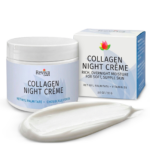
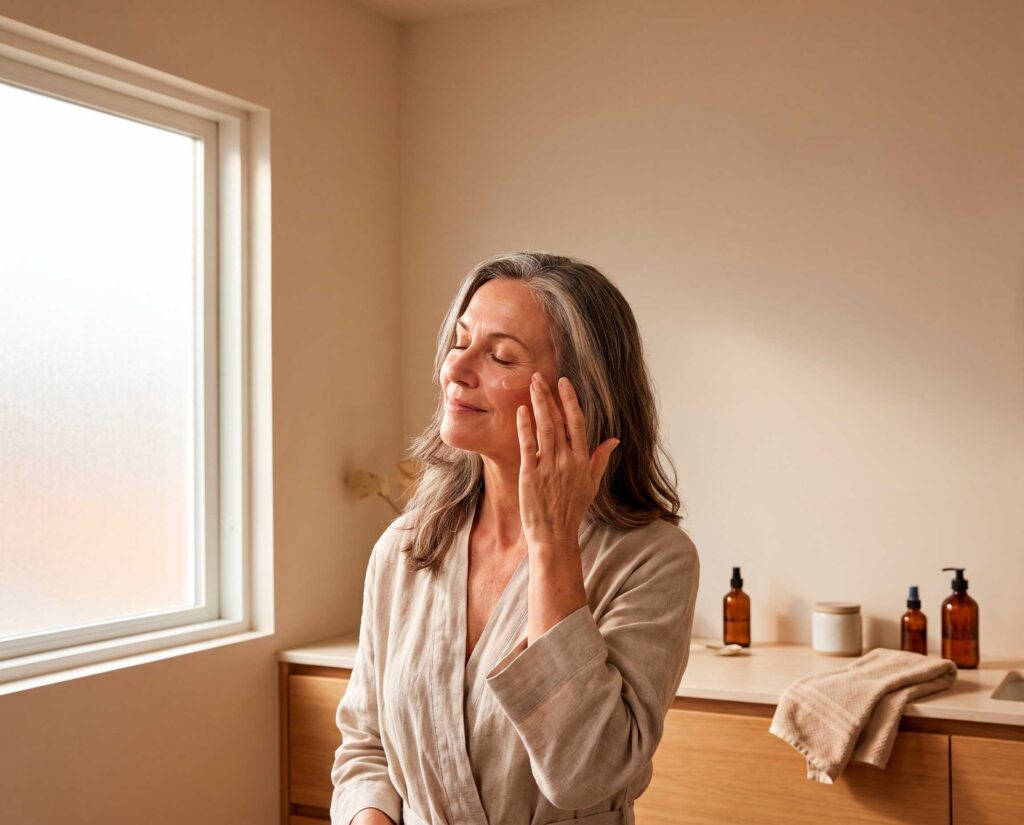
Reviva Labs Collagen Night Creme contains hydrolyzed collagen alongside sunflower seed oil, avocado oil, sweet almond oil, Vitamin E, jojoba esters, plant-derived lipids, Vitamin A palmitate, and Vitamin D3. Its primary cosmetic role is not to somehow replace your skin’s own dermal collagen by rubbing collagen directly into the skin. Topical collagen works primarily as a skin-conditioning and moisturizing ingredient because collagen molecules do not simply travel intact through the skin and rebuild its structural collagen network.
That distinction matters because the moisturizing benefits are still valuable. Dry skin exaggerates the appearance of fine lines, rough texture, crepiness, and dullness. Improving surface hydration and reducing moisture loss can make mature skin look smoother, softer, and more supple. A rich cream can also support the overall feel of the skin barrier, especially when natural oil production declines with age.
Collagen Night Creme works best as one of the last steps in the evening routine. Apply lighter water-based treatments first, then finish with the richer cream. This order lets your targeted products sit closer to clean skin while the cream provides the final moisturizing layer.
For a routine using all three featured products, the evening sequence can stay simple. Cleanse first. Apply Dark Spot Brightening Serum on evenings when it fits your schedule and tolerance. Apply Multi-Peptide Complex to targeted areas. Finish with Collagen Night Creme across the face and neck where appropriate.
Do You Need All Three Every Night
Not necessarily. One of the biggest mistakes people make with skincare is assuming consistency means using every active product every single night. Consistency means following a sustainable pattern. Those are two different things.
Dark Spot Brightening Serum contains several active brightening ingredients plus glycolic acid. Depending on your skin, other products in your routine, and your sensitivity level, you might use it once daily, alternate evenings, or follow another schedule that keeps your skin comfortable. Someone already using retinol or strong exfoliation has more reason to separate active treatments than someone using a simple cleanser and moisturizer.
Multi-Peptide Complex is easier to place flexibly because peptide-focused formulas generally do not carry the same exfoliation concerns as glycolic acid. It can serve as your consistent firmness-focused treatment while other stronger actives rotate around it. Collagen Night Creme then gives the evening routine a stable moisturizing finish.
Think in terms of jobs. Multi-Peptide Complex focuses heavily on the appearance of deeper lines and firmness. Dark Spot Brightening Serum focuses on uneven tone and visible discoloration. Collagen Night Creme focuses heavily on moisture, conditioning, softness, and the smoother appearance that well-moisturized skin creates. Using them together gives you a broader strategy without pretending one ingredient solves every visible sign of aging.
Morning Protection Makes Evening Brightening Smarter
You cannot talk seriously about dark spots without talking about sunscreen. Treating visible discoloration while repeatedly exposing unprotected skin to ultraviolet radiation works against your own goal. The American Academy of Dermatology recommends broad-spectrum, water-resistant SPF 30 or higher as part of care for age spots and hyperpigmentation.
This makes sunscreen the non-negotiable final step of a morning routine focused on brightening. Apply it after your treatment products and moisturizer. Use enough to achieve meaningful coverage, and reapply according to your exposure, activity, and sunscreen directions.
Visible light also deserves attention for people prone to certain pigmentation concerns. The American Academy of Dermatology specifically recommends tinted sunscreens containing iron oxide for people dealing with dark spots because iron oxides help protect against visible light. This is especially relevant for persistent hyperpigmentation and darker skin tones.
A brightening serum works on the appearance of uneven tone. Sunscreen helps limit a major external factor that contributes to new or worsening discoloration. Those two actions belong in the same strategy even though they happen at different steps.
A Routine You Can Actually Follow
The best routine is not the one with the most products. It is the one you can repeat without irritation, confusion, or constant switching.
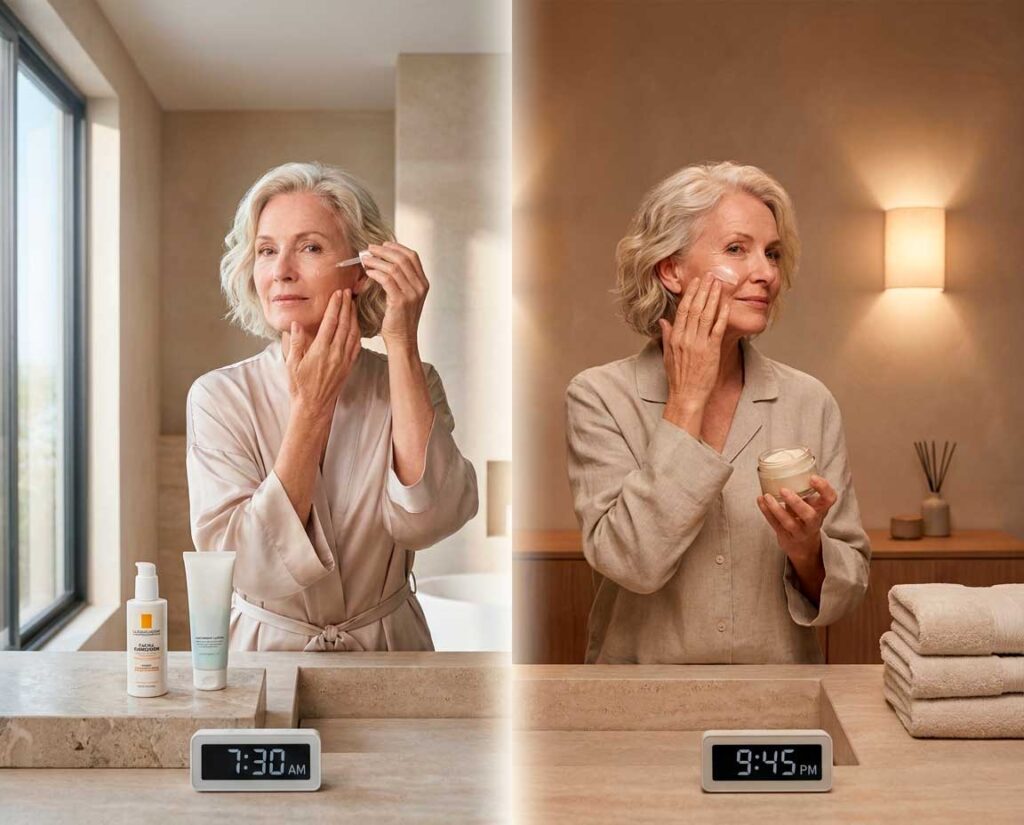
In the morning, cleanse according to your skin’s needs. Apply Dark Spot Brightening Serum if morning use fits your tolerance and routine. Apply Multi-Peptide Complex to targeted areas where firmness and deeper lines concern you most. Add moisturizer as needed, then finish with broad-spectrum sunscreen.
At night, cleanse thoroughly to remove sunscreen, makeup, oil, and the day’s buildup. Apply Dark Spot Brightening Serum if evening is your preferred brightening window. Follow with Multi-Peptide Complex on targeted areas. Finish with Collagen Night Creme to provide richer overnight moisturization.
You do not need to wait an arbitrary thirty minutes between every layer. Give each product enough time to spread and settle comfortably before applying the next. The routine should feel deliberate, not like a chemistry experiment conducted in your bathroom.
Why Consistency Beats Perfect Timing
People often search for the exact best time to apply skincare because precision feels productive. Is 7 p.m. better than 10 p.m.? Should peptides go on before sunset? Does moisturizer work better after midnight?
Those questions give the clock more importance than it deserves.
The strongest timing strategy is behavioral. Morning products should fit naturally into what you already do before leaving home. Evening products should fit naturally into what you do before bed. When your routine attaches itself to habits you already repeat every day, you are far more likely to stay consistent.
Missing one application does not erase your progress. Constantly changing routines creates a bigger problem. Skin needs time to respond, and you need enough consistency to judge what is actually helping.
A useful approach is to keep the core routine stable for several weeks while watching for changes in comfort, hydration, tone, texture, and the appearance of lines. Introduce new active treatments gradually. When several products change at once, it becomes difficult to identify what improved your skin or what caused irritation.

Dryness Can Make Other Aging Signs Look Worse
Dryness deserves more attention in an anti-aging routine because it influences how several other concerns appear. Fine lines often look deeper when the surface is dehydrated. Rough texture reflects light unevenly, which can make the complexion look duller. Dry, tight skin can also make an otherwise effective routine unpleasant enough that you stop following it.
This is why Collagen Night Creme does more than occupy the final spot in a routine. It gives the regimen balance. Brightening and firming get much of the attention in mature skincare, but moisture supports how the skin looks and feels every day.
The formula’s hydrolyzed collagen contributes conditioning and moisture-supporting benefits at the surface, while avocado, almond, sunflower, and jojoba-derived ingredients help soften dry skin. These ingredients complement rather than duplicate the job of Multi-Peptide Complex or Dark Spot Brightening Serum.
You are addressing different visible problems with different tools. That is smarter than expecting one overloaded formula to do everything equally well.
Adjust Your Timing When Your Skin Tells You To
Skincare routines should adapt to your skin, climate, lifestyle, and other products. Someone living through a humid summer might need less moisturizer in the morning and still enjoy a richer cream at night. Someone dealing with dry winter air might need more moisture during both routines.
Sensitivity also matters. If Dark Spot Brightening Serum produces persistent stinging, redness, or excessive dryness, using it more often is not the answer. Reduce frequency, separate it from other potentially irritating actives, or reassess the rest of the routine.
This becomes especially important when retinoids, exfoliating acids, scrubs, or other intensive treatments are involved. Each product does not exist in isolation. Your skin experiences the entire routine.
Peptide treatments often fit easily around this scheduling because they occupy a different role from exfoliating acids. A peptide formula can stay consistent while you adjust stronger treatments around your skin’s tolerance. Your moisturizer can provide another stable anchor.
Your Skin Does Not Need a Complicated Clock
There is real science behind skin’s circadian rhythms, but good skincare timing is simpler than many routines make it sound.
Morning is your opportunity to treat specific concerns while preparing your skin for daytime exposure. Dark Spot Brightening Serum can fit here for people who tolerate daytime use, followed by moisturizer and diligent sun protection. Multi-Peptide Complex can target areas where deeper lines and loss of firmness are most visible.
Evening gives you more freedom to focus on treatment and richer moisturization. Dark Spot Brightening Serum can move to this routine instead if it fits your skin better. Multi-Peptide Complex can continue targeting firmness and deeper lines. Collagen Night Creme finishes the routine with the richer moisture dry or mature skin often appreciates overnight.
You are not trying to beat the clock. You are giving each concern a logical place in a routine you can repeat.
Firmness needs patience. Dark spots need treatment plus protection. Dryness needs regular moisture support. And all three respond better to steady care than to occasional bursts of aggressive skincare.
The smartest schedule is the one that makes consistency almost automatic.
Frequently Asked Questions
Should I use Multi-Peptide Complex in the morning or at night?
Multi-Peptide Complex can fit into either routine, and twice-daily use can make sense when your skin tolerates it, and firmness is a major concern. Apply it after cleansing and lighter serums but before heavier creams. Morning use should always be followed by the rest of your routine and sunscreen. At night, it layers naturally beneath Collagen Night Creme. Consistent application matters more than choosing a specific hour.
Is Dark Spot Brightening Serum better in the morning or evening?
Either routine can work, but the formula contains glycolic acid alongside several other brightening ingredients, so skin tolerance should guide timing. Some people prefer evening use because it separates the serum from daytime exposure and simplifies layering. Others comfortably use it in the morning beneath sunscreen. Regardless of timing, daily sun protection is essential when your goal is improving visible dark spots and uneven tone.
Can I use Dark Spot Brightening Serum and Multi-Peptide Complex together?
Yes, they address different primary concerns and can fit within the same routine. Apply lighter serum textures first, followed by richer treatments. Your exact layering will depend on how the products feel on your skin. If irritation develops, simplify the routine rather than adding more steps. Introduce active products gradually when starting a new regimen so you can monitor your skin’s response.
When should I apply Collagen Night Creme?
Use Collagen Night Creme toward the end of your evening skincare routine. Cleanse first, apply treatment serums and targeted products, then finish with the night cream. Its richer moisturizing and conditioning ingredients help soften dry skin and support a smoother, more supple appearance overnight. People with especially dry skin can adjust the amount based on season, climate, and how their skin feels.
How long does it take to see results from a skincare routine?
Different changes appear on different timelines. Moisturization can make skin look softer and plumper relatively quickly, while visible improvements in established dark spots, firmness, texture, and deeper lines generally require sustained use over weeks or longer. Evaluate progress under consistent lighting and avoid changing several products at once. A stable routine gives you a much clearer picture of what is working.
Do I still need sunscreen when using a dark spot serum?
Yes. Sun protection is one of the most important parts of a routine targeting visible discoloration. The American Academy of Dermatology recommends broad-spectrum, water-resistant SPF 30 or higher for people addressing dark spots and age spots. Tinted sunscreen containing iron oxides can provide added protection against visible light, which can worsen certain pigmentation concerns.
References and Sources
- American Academy of Dermatology Association. “How to Fade Dark Spots in Darker Skin Tones.” The AAD explains that effective care for dark spots begins with sun protection and recommends broad-spectrum SPF 30 or higher, with tinted iron-oxide sunscreen offering additional protection from visible light for pigmentation concerns. https://www.aad.org/public/everyday-care/skin-care-secrets/routine/fade-dark-spots
- American Academy of Dermatology Association. “What Can Get Rid of Age Spots?” Guidance includes broad-spectrum, water-resistant SPF 30 or higher as part of preventing and managing visible age spots. https://www.aad.org/public/cosmetic/age-spots-marks/get-rid-spots
- Yosipovitch G, et al. “Time-Dependent Variations of the Skin Barrier Function in Humans.” Journal of Investigative Dermatology. 1998. The study measured skin variables every two hours and documented circadian variation in transepidermal water loss, hydration, pH, and temperature. https://pubmed.ncbi.nlm.nih.gov/9424081/
- Oyetakin-White P, et al. “Does Poor Sleep Quality Affect Skin Ageing?” Clinical and Experimental Dermatology. 2015. Good sleepers showed 30% greater barrier recovery 72 hours after experimental barrier disruption compared with poor sleepers. https://pubmed.ncbi.nlm.nih.gov/25266053/
- Nukaly HY, et al. “Oral and Topical Peptides for Skin Aging: A Systematic Review and Meta-Analysis.” Frontiers in Medicine. 2026. The review evaluated peptide-based approaches across outcomes including wrinkles, elasticity, hydration, and skin brightness. https://pubmed.ncbi.nlm.nih.gov/41924746/
- Kimball AB, et al. Research on topical niacinamide-containing formulations and irregular facial pigmentation. British Journal of Dermatology. https://pubmed.ncbi.nlm.nih.gov/19845667/