


Clean Beauty, Ingredients, Natural, Reviva Labs, Skin Care
The Everyday War Between Free Radicals and Your Skin

Aug
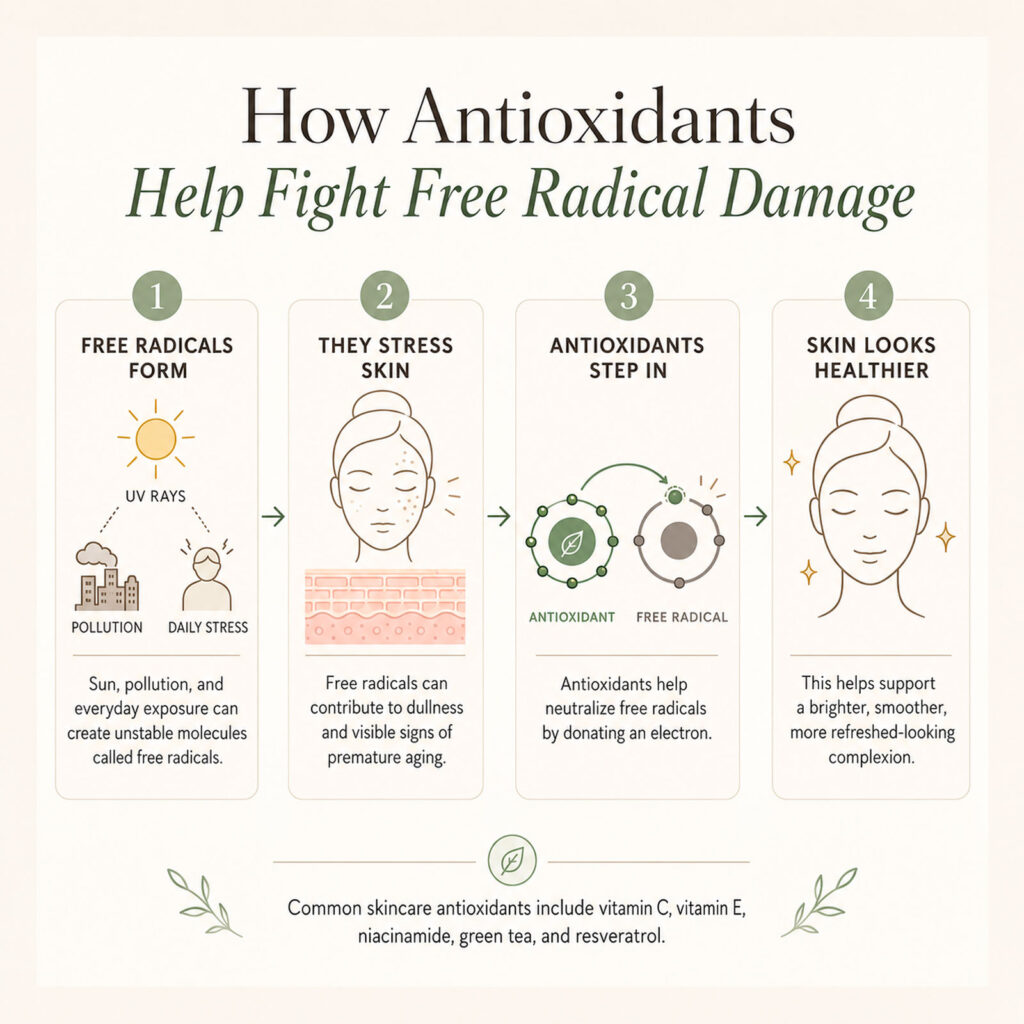
Every hour spent outside, every plate of fried food, every breath of city air sets off a chain reaction inside the body that most people never notice. That reaction is oxidation, and it happens whether skin sits in direct sun or stays indoors under fluorescent light all day. Cells constantly produce unstable molecules called free radicals as a normal byproduct of turning food and oxygen into energy, and the environment adds even more of them through pollution, ultraviolet light, and cigarette smoke. Left unchecked, these molecules chip away at the structures that keep skin firm, even, and resilient. Antioxidants are the body’s answer to that constant low-grade assault and learning how they work explains a lot about why some skin ages gracefully while other skin shows wear far earlier than expected.
I find this topic genuinely fascinating because it sits at the intersection of basic chemistry and something everyone can see in the mirror! The science is not new, but the way it gets applied in skincare and nutrition keeps evolving as researchers learn more about which antioxidants matter most and how they behave once they reach living tissue. This piece walks through what free radicals actually are, how antioxidants neutralize them, which sources tend to work best, and what that means for anyone trying to keep skin looking and feeling healthy over time.

What Free Radicals Actually Do to Cells
A free radical is simply a molecule missing an electron in its outer shell. Electrons prefer to exist in pairs, so a molecule missing one behaves like a magnet, grabbing an electron from whatever neighboring molecule happens to be nearby. That theft steadies the free radical but destabilizes the molecule it stole from, turning that molecule into a new free radical in the process. The result is a chain reaction that can move through cell membranes, proteins, and even DNA before the body manages to stop it. This process, known as oxidative stress, is a normal part of metabolism, but it accelerates sharply under stressors such as ultraviolet radiation, air pollution, and inflammation.
Skin is particularly exposed to this kind of damage because it sits at the boundary between the body and the outside world. Ultraviolet light striking the skin generates reactive oxygen species directly in skin cells, and those reactive molecules go on to damage collagen, elastin, and the lipids that hold the skin barrier together. Pollution particles do something similar, triggering oxidative reactions on contact with skin and depleting the natural antioxidants that live in the outer layers. Cigarette smoke, whether inhaled directly or absorbed secondhand, adds another significant source of free radical exposure. Over years, this cumulative damage shows up as fine lines, uneven tone, and a loss of the bounce that younger skin tends to have.
Researchers have spent decades trying to map exactly how much of visible aging comes from this kind of environmental damage versus the aging that happens purely through genetics and time. A widely cited review in the journal Biomolecules estimated that only about three percent of aging factors trace back to genetic background, meaning the vast majority of visible skin aging results from external and lifestyle exposures rather than inherited traits. That figure reframes how people think about aging skin. Genetics still matter, but daily choices around sun exposure, diet, and pollution avoidance appear to carry far more weight than most people assume.
How Antioxidants Interrupt the Chain Reaction
Antioxidants work by donating an electron to a free radical without becoming unstable themselves. Vitamin C, for example, has a molecular structure that can give up an electron and settle into a stable form afterward, which stops the chain reaction before it spreads further into surrounding tissue. Vitamin E works in a related but slightly different way, embedding itself into cell membranes where it intercepts free radicals before they can damage the fatty layers that protect the cell. Enzymes such as superoxide dismutase and catalase take a different approach entirely, converting free radicals into less reactive byproducts like water and oxygen through a series of internal chemical reactions.
The body produces some of its own antioxidant enzymes, but that internal supply is not unlimited and tends to decline gradually with age. Diet and topical skincare exist to top off that natural defense system. Foods rich in vitamin C, vitamin E, polyphenols, and carotenoids give the body raw material to keep its antioxidant pathways running, while topical formulas deliver concentrated antioxidants directly to the outer layers of skin where sun and pollution exposure hit hardest. Neither approach replaces the other, and most dermatology research suggests the two work best together rather than as substitutes.
Glutathione deserves particular mention because it functions almost like a recycling system for other antioxidants. Once vitamin C or vitamin E donates an electron and becomes temporarily unstable, glutathione can donate an electron back to it, effectively restoring the original antioxidant so it can go to work again. This recycling effect is one reason researchers describe antioxidants as working in a network rather than acting alone. A shortage of any single piece, including glutathione itself, can weaken the whole system even if other antioxidants remain plentiful.

Which Antioxidants Show Up Most in Skincare
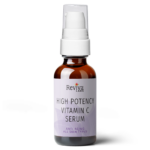
Vitamin C tends to get the most attention in skincare formulations, and for good reason. Beyond its role neutralizing free radicals, it also supports the enzymes involved in collagen production, which gives it a dual function that few other ingredients match. Formulas built around a high concentration of vitamin C, such as the High Potency Vitamin C Serum in the Reviva Labs line, are designed to deliver that ingredient in a stable form since vitamin C degrades quickly once exposed to air and light. That instability is part of why proper packaging and storage matter as much as the ingredient list itself.
Vitamin E often appears alongside vitamin C because the two work together, with vitamin E supporting the regeneration of vitamin C after it neutralizes a free radical. Green tea extract, resveratrol, niacinamide, and ferulic acid round out the list of ingredients commonly found in antioxidant focused skincare, each bringing a slightly different mechanism or target within the skin. Ferulic acid in particular has drawn interest for its ability to stabilize other antioxidants and extend their effectiveness once applied to skin. None of these ingredients work as a standalone fix, and the research consistently points toward combinations performing better than any single compound used in isolation.
Diet plays an equally important role, even though it gets less attention in skincare marketing. Berries, leafy greens, nuts, and colorful vegetables supply a wide range of antioxidant compounds that circulate through the bloodstream and eventually reach skin tissue. Green tea and coffee, consumed in moderation, contribute polyphenols with measurable antioxidant activity as well. A diet consistently low in produce and high in processed food tends to correlate with lower overall antioxidant status, which can leave skin more vulnerable to the cumulative effects of sun and pollution exposure over time.
Why Timing and Consistency Matter More Than People Expect
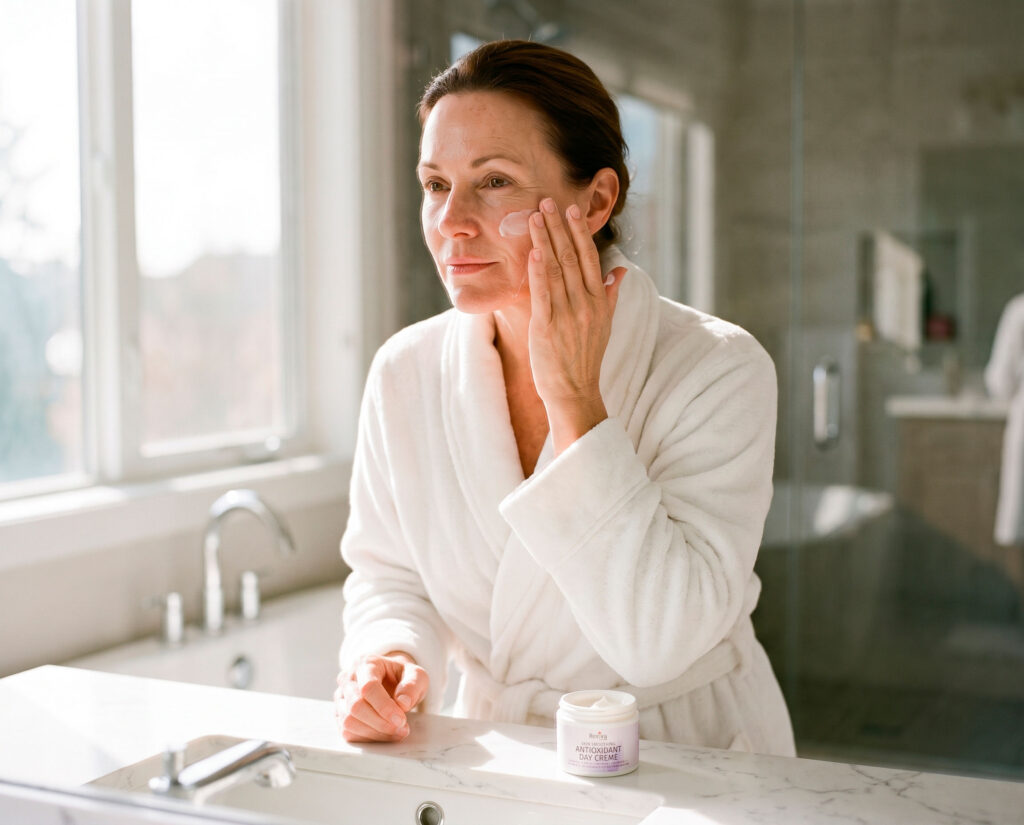
Free radical exposure happens continuously throughout the day, which means antioxidant protection works best when it is consistent rather than occasional. A topical antioxidant applied in the morning, ahead of sunscreen, can help neutralize free radicals generated by UV exposure throughout the day, acting almost like an extra layer of defense underneath sun protection rather than a replacement for it. Skipping days or using antioxidant products inconsistently reduces their cumulative benefit, since the goal is to keep the skin’s antioxidant reserves topped off rather than to deliver one large dose occasionally.
Sleep and stress also factor into how well the body manages oxidative stress, which surprises people who think of antioxidants purely as a skincare or dietary topic. Poor sleep has been linked to elevated markers of oxidative stress, and chronic psychological stress triggers hormonal changes that can increase free radical production throughout the body. This means a well-rounded approach to reducing free radical damage extends beyond serums and supplements into basic lifestyle habits that many people overlook. Hydration, moderate exercise, and adequate sleep all support the body’s natural antioxidant systems in ways that are easy to underestimate.
Sun protection remains the single most effective step anyone can take to limit free radical damage to skin, since ultraviolet exposure is the dominant driver of oxidative stress in most people’s daily lives. Daily sunscreen use, reapplied as needed, blocks a significant share of the reactive oxygen species that would otherwise form in skin cells. Antioxidants and sunscreen are not competing strategies, and the research increasingly supports using them together, with antioxidants mopping up whatever reactive molecules manage to form despite sun protection. This layered approach reflects how oxidative stress actually behaves in real life, arriving from multiple sources at once rather than a single predictable trigger.

Practical Takeaways for Everyday Skin Health
None of this requires an elaborate routine to see meaningful benefit. A diet built around colorful produce, a daily antioxidant serum applied before sunscreen, and consistent sun protection cover most of the bases that matter for reducing free radical damage over time. People often overcomplicate this by chasing every new ingredient that gets attention online, when the underlying principle stays fairly simple across all of them, neutralize free radicals before they damage collagen, elastin, and DNA, and give the body’s own antioxidant systems the raw material they need to keep functioning.
Patience matters here as much as consistency. Free radical damage accumulates slowly, so the benefits of a solid antioxidant routine tend to show up gradually rather than overnight. Skin that receives steady antioxidant support, whether through diet, topical products, or both, tends to hold its tone, texture, and firmness better over years compared to skin that goes without that support. That long view is worth keeping in mind, especially for anyone tempted to abandon a routine after a few weeks because visible results have not yet appeared.
It also helps to think about layering rather than swapping products in and out constantly. A morning routine that pairs an antioxidant serum with sunscreen addresses two different stages of free radical exposure, one that neutralizes reactive molecules as they form and one that blocks a large share of them from forming in the first place. Evening routines can lean on ingredients that support repair overnight, since skin does much of its regeneration while a person sleeps. Rotating through unrelated products every few weeks tends to work against this layered approach, since the skin barrier benefits from a stable, predictable routine rather than constant change.
Age is not a reason to start or stop caring about antioxidant support. Younger skin still accumulates free radical damage from daily sun exposure even when it looks resilient, which means early habits pay off later in ways that are hard to see in the moment. Mature skin benefits just as much, if not more, since the body’s own antioxidant enzyme production tends to decline with age, making external support increasingly valuable. Anyone wondering where to start can look at the basics first, since sunscreen, a nutrient dense diet, and one well formulated antioxidant product often deliver more benefit than a shelf full of trendy ingredients used inconsistently.
Frequently Asked Questions
What exactly is a free radical?
A free radical is a molecule or atom missing an electron in its outer shell, which makes it chemically unstable. To regain stability, it pulls an electron from a nearby molecule, which can trigger a chain reaction that damages cell structures if left unchecked.
Do free radicals only come from sun exposure?
No. Sun exposure is a major source, but free radicals also form through normal metabolism, air pollution, cigarette smoke, and even certain cooking methods that involve high heat. The body produces some free radicals simply by converting food into energy.
Can diet alone provide enough antioxidant protection for skin?
Diet contributes meaningfully to overall antioxidant status, but topical antioxidants deliver concentrated protection directly to the outer layers of skin where sun and pollution exposure are most intense. Most research points toward diet and topical care working best as complementary strategies rather than one replacing the other.
Is vitamin C or vitamin E more effective for skin?
Neither one is more effective in isolation, since they work through different mechanisms and actually support each other. Vitamin E helps regenerate vitamin C after it neutralizes a free radical, which is part of why the two are frequently paired in skincare formulas.
How long does it take to see results from an antioxidant skincare routine?
Because free radical damage builds up gradually, the protective effects of antioxidants also tend to show up over weeks and months rather than days. Consistency matters far more than intensity when it comes to seeing a visible difference in skin tone and texture.
Does antioxidant skincare replace the need for sunscreen?
No. Antioxidants and sunscreen serve different roles, with sunscreen blocking a large share of ultraviolet radiation before it reaches skin cells and antioxidants neutralizing whatever reactive molecules still form. The two work best when used together rather than as substitutes for one another.
References
- Rinnerthaler, M., Bischof, J., Streubel, M. K., Trost, A., and Richter, K. Oxidative Stress in Aging Human Skin. Biomolecules, 2015, 5(2), 545 to 589. DOI 10.3390/biom5020545. Available via PubMed Central, PMC4496685.




Really useful explanation of how antioxidants fit into a skincare routine, especially alongside everyday sun protection. I liked the focus on understanding ingredients and how they work rather than simply following skincare trends.