
Clean Beauty, Ingredients, Natural, Reviva Labs, Skin Care
The Summer Ingredient That Does Multiple Things at Once

Jul
We love a routine that keeps things simple, especially once summer hits and nobody wants ten steps standing between them and getting out the door. That is probably the biggest reason niacinamide has held its place as a warm weather essential for so long. In a twelve month randomized trial, nicotinamide reduced transepidermal water loss on the forehead by 6 percent compared to placebo, a modest but statistically significant number that reflects something bigger. This is an ingredient that works on barrier function, oil regulation, tone, and texture all at once, which means it earns its spot in a routine without requiring five other products to back it up.
Board certified dermatologist Dendy Engelman has described niacinamide as “the quiet overachiever in your routine,” and that phrase captures exactly why it has become such a staple for people trying to simplify their skincare without giving up results. Understanding what makes niacinamide capable of doing so much at once helps explain why it deserves a permanent place in a summer routine rather than being treated as just another trendy ingredient of the moment.

Why One Ingredient Can Do So Much
Most skincare ingredients are built around a single mechanism. An exfoliating acid dissolves the bonds between dead skin cells. A humectant draws water into the skin. A pigment inhibitor interrupts melanin production. Niacinamide is unusual because it does not rely on one narrow mechanism. As a precursor to NAD, a coenzyme involved in nearly every cell’s energy production and repair processes, niacinamide supports several different biological functions simultaneously rather than targeting one specific pathway.
This broader mechanism is why niacinamide shows up in conversations about oil regulation, barrier repair, tone, and texture all at the same time, rather than being filed under just one category the way most active ingredients are. A recent peer reviewed review on niacinamide’s mechanisms noted that the ingredient influences oxidative stress, inflammation, and pigmentation through multiple biochemical pathways working together rather than in isolation. That multi pathway involvement is the real explanation behind niacinamide’s reputation as a multitasker, and it is also why so few other single ingredients get mentioned in the same breath across such a wide range of skin concerns.
Board certified dermatologist Dendy Engelman has described niacinamide as “the quiet overachiever in your routine…”
For a summer routine specifically, this matters because summer skin rarely has just one problem. Heat brings oil. Sun exposure brings pigment changes. Air conditioning and outdoor humidity swings bring barrier stress. Asking one product to address only one of these issues means needing several more products to cover the rest, while an ingredient built to influence multiple pathways at once can meaningfully reduce how complicated a routine needs to become during the months skin is working hardest.

Oil Regulation Without Overcorrection
One of niacinamide’s most studied summer benefits is its effect on sebum production. Rather than stripping oil from the skin’s surface, which tends to trigger a rebound effect where skin overproduces oil to compensate, niacinamide works further upstream to help regulate how much oil the sebaceous glands produce in the first place. This distinction matters enormously in summer, when heat and humidity are already pushing oil glands into overdrive and the last thing irritated, overheated skin needs is an aggressive stripping agent making things worse.
Clinical research on niacinamide’s effect on sebum has shown measurable reductions in sebum excretion rates within about four weeks of consistent use at low concentrations. This kind of gradual, mechanism-based regulation tends to hold up better over the course of a hot, humid summer than a harsher approach would, since it does not create the dryness-to-oiliness cycle that stripping ingredients can trigger. Skin that is regulated rather than stripped tends to stay more balanced through the exact conditions summer throws at it.
This oil regulating property also happens to support another summer concern almost as a side effect. Less excess oil sitting on the surface of the skin means pores appear less stretched and less visible, since oil buildup is one of the primary reasons pores look larger than they structurally are. A single mechanism, oil regulation, ends up delivering two visible benefits, smoother-looking skin and refined-looking pores, without requiring a separate product for each.

Barrier Support That Holds Up in Heat
Summer is genuinely hard on the skin barrier, even for people who do not think of themselves as having sensitive or reactive skin. Air conditioning dries out indoor air, outdoor humidity swings between extremes, sun exposure generates oxidative stress, and increased sweating changes the skin’s surface chemistry throughout the day. All of this adds up to a barrier working overtime, and a compromised barrier tends to make every other summer skin concern look and feel worse.
Niacinamide supports barrier function by encouraging the production of ceramides and other lipids that make up the skin’s protective outer layer. Research measuring transepidermal water loss, the clinical marker used to assess how well a barrier is holding onto moisture, has found reductions of up to 30 percent in some studies using topical niacinamide over a four week period, alongside the smaller but statistically meaningful reduction found in the year-long trial mentioned earlier. Together, this research points to a consistent pattern, niacinamide measurably helps the skin hold onto moisture more effectively rather than losing it through a stressed, compromised barrier.
A stronger barrier has ripple effects across nearly every other summer skin concern. Skin that retains moisture well tends to look calmer, feel less reactive to heat and sun exposure, and show less visible irritation from sweat or sunscreen reapplication throughout the day. This is part of why niacinamide’s barrier benefits and its oil-regulating benefits are not really separate stories, they are two expressions of the same underlying support system working to keep skin resilient through a demanding season.
Tone and Texture Working in Tandem
Beyond oil and barrier support, niacinamide plays a well documented role in supporting a more even skin tone, which becomes especially relevant once summer sun exposure starts contributing to new spots or deepening old ones. Niacinamide works by interfering with how pigment transfers from deeper skin cells to the surface, which is a gentler mechanism than aggressive exfoliation or bleaching agents, and one that tends to be far better tolerated during a season when skin is already under more stress than usual.
This same tone-supporting mechanism tends to overlap with texture improvements as well. Skin that looks more even in tone often reads as smoother in texture too, since discoloration and surface irregularity tend to draw attention to each other. Long term studies on niacinamide have shown improvements not just in the appearance of dark spots but in overall fine lines, texture, and what dermatologists sometimes refer to as sallowness, a dull or uneven quality to the complexion that becomes more noticeable when skin is stressed by heat and sun.
None of these benefits require a separate step for tone and a separate step for texture. A single well formulated niacinamide product, whether serum or moisturizer, tends to move the needle on both simultaneously, which circles back to the core reason this ingredient earns its multitasking reputation. It is not that niacinamide does five unrelated things. It is that oil regulation, barrier support, and tone correction are more connected than most routines treat them, and niacinamide happens to work at the intersection of all three.

Building a Streamlined Summer Routine
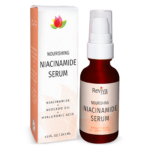
Given everything niacinamide covers, building a summer routine around it does not require much complexity. A lightweight niacinamide serum applied to slightly damp skin each morning, followed by a moisturizer, ideally one that also contains niacinamide for compounded benefit, and finished with sunscreen, covers oil regulation, barrier support, and tone maintenance in three simple steps. This is a meaningfully shorter routine than trying to address oil with one ingredient, barrier support with another, and tone with a third, each requiring its own product and its own layering consideration.
Consistency matters more than intensity here. Since niacinamide’s benefits are documented over timelines ranging from four weeks to twelve months depending on the specific outcome being measured, a routine used every day at a moderate concentration will generally outperform one used sporadically at a higher concentration. This is especially relevant in summer, when the temptation to skip steps on hot, humid days is real, but when skin arguably needs that consistent support the most.
For anyone building a routine from scratch this season, starting with a single niacinamide serum and adding a niacinamide-containing moisturizer once the skin has adjusted is a reasonable, low-risk approach. There is no meaningful concern about layering niacinamide with more niacinamide, since the ingredient is well tolerated even at combined exposure across multiple products, which is part of what makes it such a practical anchor ingredient for a season that rewards simplicity.

What Makes This Ingredient Worth Trusting Long Term
Part of what separates niacinamide from ingredients that cycle in and out of trend cycles is the sheer volume and consistency of research behind it. Decades of clinical study, spanning barrier function, oil regulation, pigmentation, and general skin resilience, have produced a remarkably consistent picture. This is not an ingredient riding on marketing claims or anecdotal enthusiasm. It has been studied across multiple skin types, multiple concentrations, and multiple outcome measures, and the results tend to point in the same direction across all of them.
That consistency is exactly why niacinamide continues to earn its place in routines built around doing more with less, especially during a season when patience for complicated skincare tends to run thin. It does not promise dramatic overnight transformation, and it should not be expected to replace things like sunscreen or gentle cleansing. What it offers instead is steady, well documented support across several fronts at once, which is precisely the kind of ingredient a genuinely busy summer routine needs.
Frequently Asked Questions
Can niacinamide really address oil, tone, and barrier concerns all at once?
Yes. Niacinamide’s role as a precursor to NAD means it supports multiple biological pathways simultaneously, which is why research shows benefits across oil regulation, barrier function, and pigmentation rather than just one narrow effect.
How long does it take to see results from niacinamide?
Timelines vary by benefit. Oil regulation improvements have been documented within about four weeks, while barrier and tone improvements are often measured over eight to twelve weeks, with some studies tracking benefits over a full year.
Is niacinamide strong enough to replace multiple separate products?
For many people, a niacinamide serum and moisturizer combination can meaningfully reduce the need for separate oil-control, barrier-repair, and brightening products, though sunscreen should never be skipped regardless of what else is in the routine.
Does niacinamide work well for oily skin specifically in summer?
Yes. Niacinamide regulates oil production at the source rather than stripping the skin, which tends to hold up better through summer heat and humidity than harsher oil-control ingredients.
Can niacinamide be used alongside other active ingredients?
Generally yes. Niacinamide is well known for being compatible with most other actives, including vitamin C, retinol, and exfoliating acids, when introduced thoughtfully and given time to absorb between layers.
Is a higher percentage of niacinamide always better?
Not necessarily. Research on oil regulation and barrier support shows meaningful results at concentrations as low as 2 percent, with no strong evidence that significantly higher concentrations produce proportionally greater benefits for most concerns.
Summer does not have to mean adding more steps to your routine just to keep up with what the season demands from your skin. Niacinamide’s ability to work across oil regulation, barrier support, and tone all at once is exactly why it has held its place as a warm weather staple, offering broad, well researched support without asking your routine to get more complicated along the way.
References:
- Oral nicotinamide reduces transepidermal water loss: a randomised controlled trial, British Journal of Dermatology, https://academic.oup.com/bjd/article-abstract/175/6/1363/6698450
- Dr. Dendy Engelman, quoted via Marie Claire, “The Benefits of Niacinamide for Skin, According to Derms,” https://www.marieclaire.com/beauty/a37673230/niacinamide-benefits/
- Marques C, et al., “Mechanistic Insights into the Multiple Functions of Niacinamide,” Antioxidants, 2024, https://pmc.ncbi.nlm.nih.gov/articles/PMC11047333