
Clean Beauty, Ingredients, Natural, Reviva Labs, Skin Care
What are the Skin Benefits of Buriti Fruit Oil?
Apr
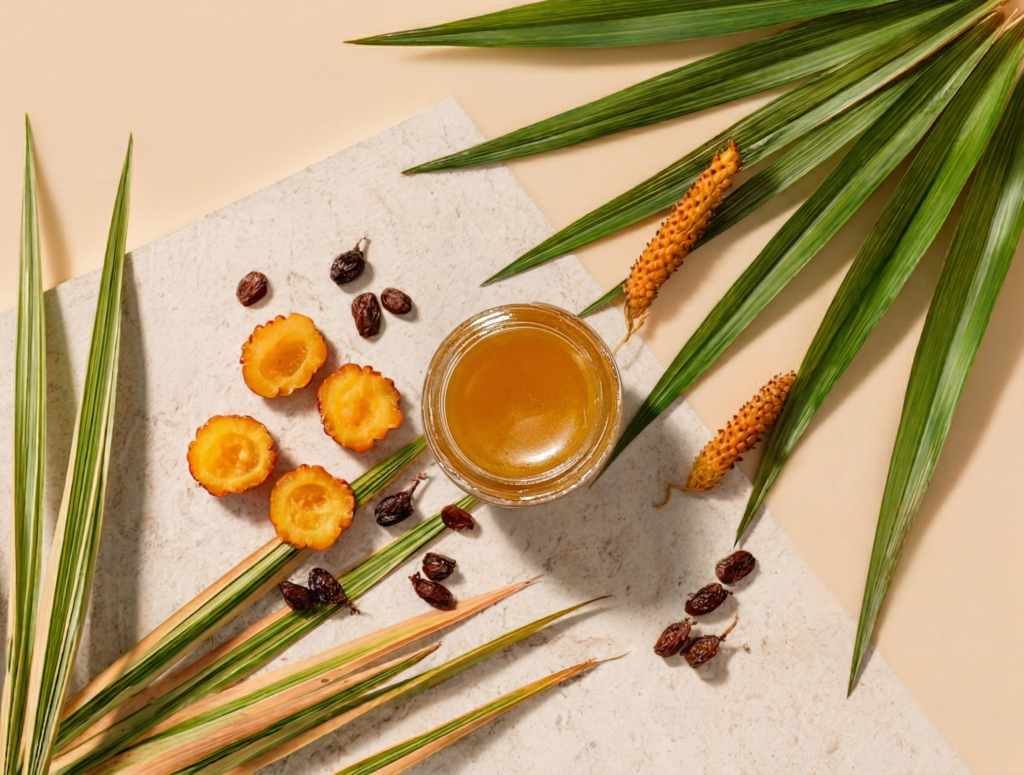
Few ingredients arrive with the kind of botanical pedigree that Buriti Fruit Oil carries. Pressed from the fruit of the Mauritia flexuosa palm, a tree so central to the ecosystems of South America’s Cerrado and Amazon regions that indigenous communities have called it the Tree of Life, Buriti oil delivers a concentration of skin-active nutrients that is genuinely difficult to match. Research published in the Journal of Cosmetic Dermatology found that Buriti oil contains one of the highest known concentrations of beta-carotene of any plant-derived oil, with levels reaching between 2,000 and 3,000 micrograms per gram. That single fact reframes how you think about what this oil actually does once it touches skin.
Buriti oil is not a trendy discovery. Traditional communities in Brazil and Peru have applied it to skin and hair for generations, relying on it for protection against harsh sun exposure, dry air, and environmental stress. The fact that modern cosmetic science has now validated what those communities knew empirically makes Buriti one of the more compelling examples of traditional botanical knowledge intersecting with contemporary formulation. Its growing presence in premium natural skincare is not a marketing moment. It is a well-earned reputation.
What makes this oil particularly interesting from a formulation standpoint is its profile of fatty acids. Buriti oil is predominantly composed of oleic acid, a monounsaturated omega-9 fatty acid that penetrates the skin’s outer layers with ease and supports the lipid matrix that holds moisture in. Alongside oleic acid, the oil also contains palmitic and linoleic acids, each contributing to barrier function and overall skin resilience. This combination makes Buriti oil effective across multiple skin types, which is part of why formulators reach for it when building products that need to hydrate without sitting heavily on the surface.
Why Beta-Carotene in an Oil Actually Matters
Most conversations about beta-carotene focus on diet. When you eat beta-carotene-rich foods, the body converts it to Vitamin A, which supports cell turnover, tissue repair, and immune function. Topically applied beta-carotene functions somewhat differently. It acts as a potent antioxidant directly on the skin surface, neutralizing free radicals generated by UV exposure, pollution, and metabolic processes before they can cause oxidative damage to skin cells. This is not a passive benefit. Oxidative stress is one of the primary drivers of visible skin aging and intercepting that process at the surface is a meaningful defense strategy.
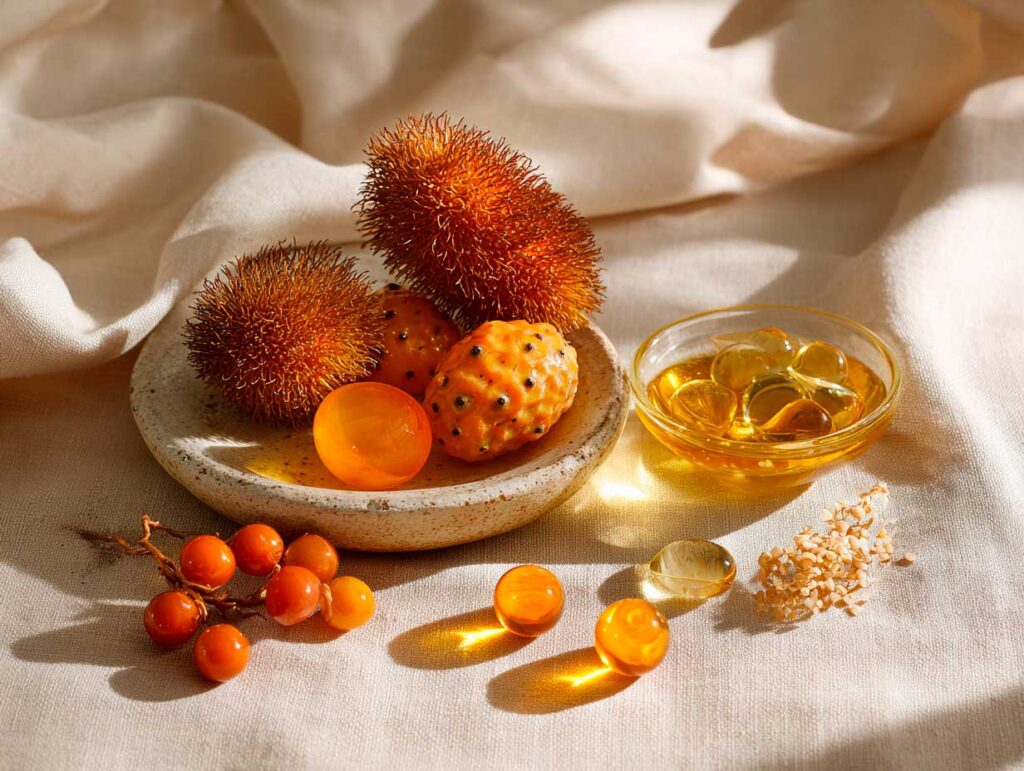
The orange-amber color of Buriti oil is a direct visual indicator of its beta-carotene density. Pure Buriti oil, unrefined, carries that distinctive warm tone precisely because beta-carotene and other carotenoids are present in high concentration. Products formulated with meaningful amounts of Buriti will often carry a subtle warmth in color because of it. That visual cue is actually a quality signal. When you see a golden or slightly amber tone in a natural oil-based formulation, there is a reasonable chance that carotenoid content is part of the story.
Beyond beta-carotene, Buriti oil also contains Vitamin E in the form of tocopherols. Vitamin E is one of the most well-researched antioxidants in skincare, with decades of evidence supporting its role in protecting cell membranes from oxidative damage, reducing the appearance of UV-related discoloration, and supporting barrier recovery after exposure to environmental stressors. The pairing of beta-carotene and Vitamin E in a single natural oil creates a synergistic antioxidant effect, since these two nutrients have been shown to reinforce each other’s protective activity. A 2020 review in Antioxidants noted that carotenoids and tocopherols work together more effectively against lipid peroxidation than either does alone. That synergy is built into Buriti by nature.
Moisture Retention and the Barrier Conversation
One of the more important ongoing conversations in skincare science is about the skin barrier, specifically the stratum corneum and its ability to hold water and resist environmental assault. A healthy barrier is the difference between skin that stays comfortable, plump, and resilient and skin that feels tight, reacts easily, and shows premature aging. Fatty acids are the structural currency of that barrier, and Buriti oil supplies them in a form that skin can recognize and use. The oleic acid content in Buriti is particularly relevant here. Oleic acid integrates readily into the skin’s lipid bilayers, helping to reinforce the waterproofing function that keeps transepidermal water loss in check.
For people dealing with dry or dehydrated skin, especially in low-humidity environments or during cold months when indoor heating strips moisture from the air, Buriti oil offers a layer of occlusive support without the heavy, greasy feel that some protective oils carry. The fatty acid balance strikes a middle ground: emollient enough to provide meaningful comfort, light enough to absorb without leaving a thick residue. This makes it practical for daily use and compatible with layering over or under other treatment ingredients. It is not a standalone moisturizer in the clinical sense, but it is an effective complement to any hydration-focused routine.
The barrier-supportive properties of Buriti also make it valuable for skin that has been compromised by over-exfoliation, harsh weather, or irritant exposure. When the stratum corneum is damaged, water loss accelerates and skin becomes more reactive. Oils rich in oleic acid and antioxidant compounds can help create conditions that support repair. They do not accelerate cellular repair the way prescription actives might, but they reduce the environmental load on skin that is already working to recover. That supportive role is often undervalued in conversations that focus exclusively on actives and treatments.

Sun-Stressed Skin and the Case for Carotenoids
Sun damage is cumulative. Every unprotected exposure adds to a total that manifests over years as hyperpigmentation, loss of elasticity, uneven texture, and visible aging. Sunscreen is the primary defense, and no topical ingredient replaces it. But photoprotective antioxidants play a meaningful secondary role by addressing the oxidative cascade that follows UV exposure, even in skin that has been treated with SPF. This is where Buriti oil’s carotenoid content becomes relevant as a post-sun support ingredient rather than a replacement for sun protection.
Research into carotenoid-rich oils has shown promising results in reducing the appearance of UV-related damage when applied consistently over time. The antioxidant activity helps neutralize residual reactive oxygen species that SPF alone does not block. For skin already showing signs of sun-related discoloration or uneven tone, incorporating a carotenoid-rich ingredient into an evening routine creates a regular opportunity for antioxidant support during the hours when skin is in repair mode. The beta-carotene in Buriti also has a mild warming effect on skin tone that many users find visually appealing, giving skin a subtle vibrancy that dry or sun-stressed skin often lacks.
It is worth noting that Buriti oil is not a sunscreen. It offers no measured SPF value in its raw form and should never be relied upon for UV protection. Its value in the context of sun-stressed skin is specifically as an antioxidant and barrier-support ingredient. That distinction matters because it determines when and how you use it. Applied in the evening as part of a nourishing treatment, or layered in the morning under SPF, Buriti contributes a carotenoid-rich antioxidant buffer that complements the protective work your sunscreen is doing.
Sensitive and Reactive Skin Considerations
Not all skin-loving oils are well-tolerated by reactive skin, but Buriti oil has a profile that tends to sit well with many sensitive skin types. Its lack of common sensitizing aromatic compounds and its predominantly oleic and palmitic fatty acid makeup means it does not carry the same risk of irritation that some more fragrant or highly linoleic oils can pose for easily aggravated skin. That said, individual responses to any botanical ingredient can vary, and patch testing on a small area before full application is always the sensible first step, particularly for skin prone to reactivity.
What Buriti offers sensitive skin specifically is nourishment without provocation. The antioxidant components address oxidative stress quietly, without the potential for the purging or initial reactivity that some active ingredients can trigger. For people who have struggled to find oils or treatments that support skin without aggravating it, Buriti can be a genuinely useful addition. Its traditional use in communities where skin care is necessarily gentle and based on plant-derived materials speaks to a long history of compatibility with human skin.
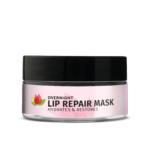
Formulations combining Buriti with other calming, barrier-supportive ingredients amplify this gentle effectiveness. When paired with ceramides, which reinforce the skin’s structural lipid layers, or with plant waxes that create an occlusive seal, Buriti’s fatty acids and antioxidants work within a broader protective framework. Reviva Labs incorporates Buriti Fruit Oil into its Overnight Lip Repair Mask alongside ceramide NP, jojoba oil, shea butter, and plant waxes, precisely because this kind of synergistic formulation approach creates more meaningful results than any single ingredient could achieve alone. The lip skin, which lacks oil glands and loses moisture rapidly, benefits especially from this combination.
Hair and Beyond
While the focus of this article is skin benefits, it would be incomplete to ignore that Buriti oil’s utility extends to hair and scalp as well. The oleic acid content provides conditioning properties that smooth the hair cuticle, reduce frizz, and improve shine. Indigenous communities in Brazil have long used Buriti oil as a hair treatment, applying it to add luster and protect against environmental dryness. For the scalp, the antioxidant compounds offer similar benefits to those described for skin: protection against oxidative stress and support for a healthy surface environment. These applications are not new, but they are being formalized as cosmetic science catches up with traditional practice.
The broader lesson of Buriti oil is one about the reliability of plant-derived ingredients that have earned their reputation through actual use rather than marketing cycles. Buriti has been applied to human skin for hundreds of years by communities that had no reason to continue using it if it did not deliver results. What contemporary formulation has added is the ability to incorporate it into precisely calibrated products, pair it with complementary ingredients, and deliver it in textures and formats that fit modern skincare routines. That marriage of traditional botanical knowledge and modern formulation science is one of the more compelling directions in natural skincare today.
When you look at the ingredient list of a thoughtfully formulated natural product and see Mauritia Flexuosa Fruit Oil, you are looking at an ingredient with a legitimate history of use and a well-supported mechanism of action. It hydrates through fatty acid supply, protects through antioxidant activity, and supports barrier function through a lipid-compatible molecular structure. Those three functions address the core needs of nearly every skin type in some way. That is what makes Buriti oil worth knowing about.
Frequently Asked Questions
What exactly is Buriti Fruit Oil and where does it come from?
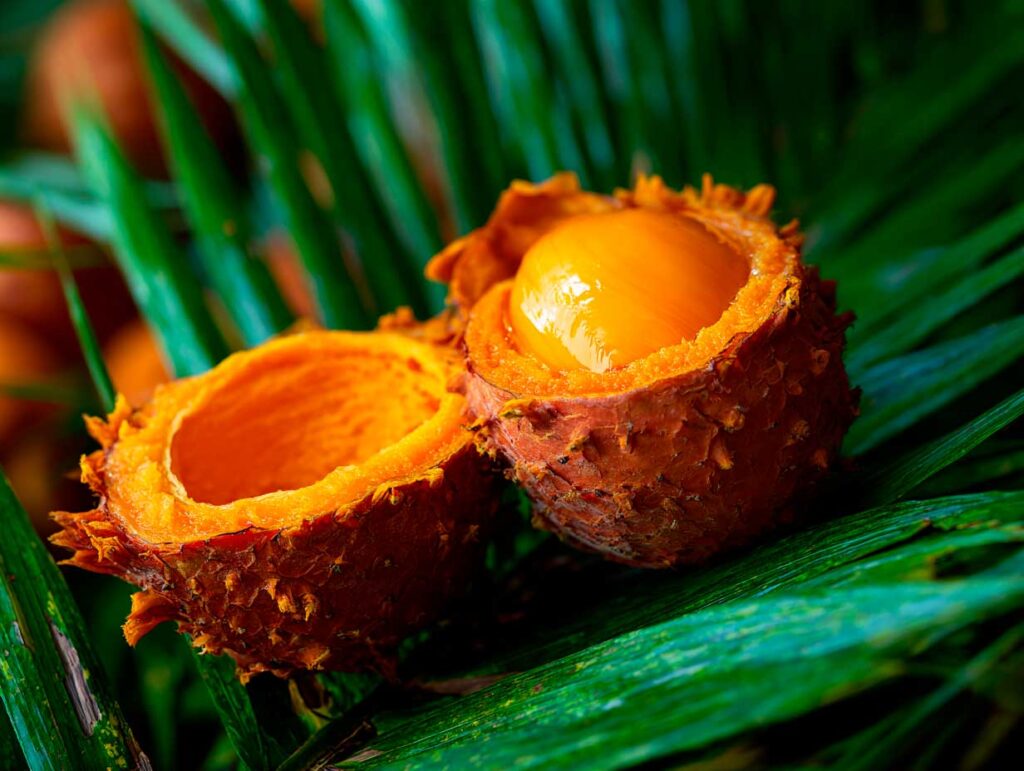
Buriti Fruit Oil is pressed from the fruit of the Mauritia flexuosa palm, a tree native to the tropical regions of South America, particularly the Amazon basin and Brazilian Cerrado. The tree is sometimes called the Tree of Life because it provides food, fiber, oil, and shelter for both wildlife and human communities. The oil is extracted from the fruit’s pulp, which is rich in carotenoids, fatty acids, and Vitamin E. It has been used for centuries in traditional skin and hair care practices by indigenous peoples in Brazil and Peru.
Is Buriti Fruit Oil suitable for oily or acne-prone skin?
Buriti Fruit Oil is predominantly composed of oleic acid, which means it is more occlusive than oils higher in linoleic acid. For skin that is very oily or prone to clogged pores, heavier oleic-acid-rich oils can occasionally be problematic. That said, Buriti is generally well-tolerated and is not considered a highly comedogenic oil. People with oily skin who want to incorporate Buriti should start with a small amount and observe how their skin responds. Using it as an evening treatment rather than a daytime moisturizer can reduce the likelihood of any congestion concerns.
What is the difference between Buriti Fruit Oil and other plant-based oils like rosehip or argan?
Each plant oil has a unique fatty acid and antioxidant profile that determines how it behaves on skin. Rosehip oil is notably high in linoleic acid and also contains retinoic acid precursors, making it particularly supportive for mature or discolored skin. Argan oil is rich in Vitamin E and oleic acid, with a lightweight feel that suits many skin types. Buriti oil is distinguished primarily by its exceptionally high beta-carotene content, which is substantially greater than what you find in most other plant oils. That specific carotenoid concentration is what sets Buriti apart as an antioxidant ingredient, making it especially relevant for sun-stressed or environmentally fatigued skin.
Can Buriti Fruit Oil be used as a sunscreen or sun protection ingredient?
No. Buriti Fruit Oil is not a sunscreen and should not be relied upon for UV protection. While its carotenoid content provides meaningful antioxidant support that can complement sun protection strategies, it has no clinically established SPF value and does not block UVA or UVB radiation in the way that certified sunscreen actives do. Its role in a sun care routine is supportive rather than protective, helping to address oxidative stress that follows UV exposure. A dedicated, broad-spectrum SPF product applied to skin before sun exposure remains the non-negotiable foundation of any sun protection approach.
How should I look for Buriti Fruit Oil on a product ingredient list?
On cosmetic ingredient labels, Buriti Fruit Oil appears under its INCI (International Nomenclature of Cosmetic Ingredients) name, which is Mauritia Flexuosa Fruit Oil. You may see this listed in full or occasionally abbreviated depending on label space. Organic versions may carry an asterisk or a certified organic designation next to the name. When Buriti appears higher on an ingredient list, it is present at a greater concentration. Because it is a premium oil with a distinctive color and aroma, it tends to be used in formulations where it contributes meaningfully to the product rather than as a trace amount added purely for label appeal.
Does Buriti Fruit Oil have an expiration or shelf-life concern?
Like most plant-based oils, Buriti Fruit Oil is subject to oxidation over time, particularly when exposed to heat, light, or air. Unrefined versions with higher carotenoid content tend to have natural antioxidant protection that can extend shelf stability, but products containing Buriti should still be stored in a cool, dark location and used within the timeframe indicated on packaging. In well-formulated products, the presence of additional antioxidant ingredients like Vitamin E or rosemary extract can further extend stability. A product that smells rancid or shows unusual color changes should be discarded, as oxidized oils can become irritating to skin.
References and Sources
- Silva, S. M., et al. ‘Photoprotective potential of emulsions formulated with Buriti oil (Mauritia flexuosa) against UV irradiation on keratinocytes and fibroblasts cell lines.’ Food and Chemical Toxicology, 2009. DOI: 10.1016/j.fct.2009.08.027. Available at: https://www.sciencedirect.com/science/article/abs/pii/S0278691509004256
- Aquino, J. S., et al. ‘Antioxidant and Lipid-Lowering Effects of Buriti Oil (Mauritia flexuosa L.) Administered to Iron-Overloaded Rats.’ Antioxidants, 2023. PMID: 36985557. Available at: https://pmc.ncbi.nlm.nih.gov/articles/PMC10056315/
- Ferreira, B. S., et al. ‘Characterization of Buriti (Mauritia flexuosa) Pulp Oil and the Effect of Its Supplementation in an In Vivo Experimental Model.’ PMC/NCBI, 2022. PMC9229003. Available at: https://pmc.ncbi.nlm.nih.gov/articles/PMC9229003/
- Schagen, S. K., Zampeli, V. A., Makrantonaki, E., and Zouboulis, C. C. ‘Discovering the link between nutrition and skin aging.’ Dermato-Endocrinology, 4(3): 298-307, 2012. DOI: 10.4161/derm.22876. Available at: https://www.ncbi.nlm.nih.gov/pmc/articles/PMC3583891/
- Stahl, W., and Sies, H. ‘Antioxidant activity of carotenoids.’ Molecular Aspects of Medicine, 24(6): 345-351, 2003. DOI: 10.1016/s0098-2997(03)00030-x. PMID: 14585305. Available at: https://pubmed.ncbi.nlm.nih.gov/14585305/
- Leite-Silva, V. R., et al. ‘Biocompatible Gels of Chitosan-Buriti Oil for Potential Wound Healing Applications.’ PMC/NCBI, 2020. PMC7215912. Available at: https://pmc.ncbi.nlm.nih.gov/articles/PMC7215912/