
Reviva Labs, Skin Care
How to Build a Skincare Routine That Actually Delivers Radiant Skin

Apr
A peer-reviewed study published in the Journal of Cosmetic Dermatology found that structured topical skincare routines combining consistent exfoliation and hydration significantly improved skin texture and radiance in adults over a 12-week period. That finding mirrors what most people experience when they finally commit to a real routine. The results do not arrive overnight, but they do arrive, reliably and visibly, when the right steps are applied in the right order.
Radiant skin is not reserved for people with good genetics or expensive products. It is the earned result of actions you repeat every day, actions that work with your skin’s natural biology rather than fighting it. When you stop reaching for quick fixes and start supporting how your skin actually functions, something clicks. Texture smooths. Tone evens out. And your complexion begins to reflect light in that clean, healthy way people describe as a natural glow.
Getting there requires knowing what your skin actually needs and in what sequence. We’ll walk through the core principles of building a high-performance natural skincare routine, covering everything from cleansing to targeted treatments. Whether you are starting from scratch or refining what you already do, the framework here gives you a clear path forward.
What Radiant Skin Is and Why It Matters
Most people can recognize radiant skin immediately but struggle to describe exactly what creates it. The truth is that radiance comes down to three measurable qualities: smooth texture, even tone, and adequate hydration. When these three elements align, skin reflects light cleanly and evenly, and that uniform light reflection is what the eye reads as a healthy glow. It is not a cosmetic illusion or a filter effect. It is the natural result of skin that is functioning well.
Texture disrupts radiance faster than almost anything else. Dead skin cells accumulate on the surface continuously, and when they build up, they create a rough, uneven layer that scatters light rather than reflecting it smoothly. Tone plays an equally important role. Patches of discoloration, post-inflammatory marks, and uneven pigmentation break up the visual continuity of the skin, making it appear dull even when it is otherwise healthy. Hydration fills in the spaces between surface cells, creating a plumper, more refined appearance that light moves across more cleanly.
These three elements are not independent concerns you can address in isolation. They are deeply connected. When you improve texture, the skin’s ability to retain moisture often improves as well. When tone becomes more even, the benefits of hydration become more visible. A well-designed skincare routine addresses all three simultaneously rather than cycling through single-focus products that never quite solve the problem. That is the real advantage of a structured, layered approach.
Reviva Labs has operated from this philosophy since 1973, choosing functional ingredients and combining them in ways that support how skin actually works. The brand’s approach is not about maximum ingredient counts or dramatic formulas. It is about selecting proven actives, pairing them intelligently, and delivering them in formulas that work consistently over time.

Why Cleansing Is the Most Underestimated Step
Ask most people to identify the most important step in their skincare routine and they will name their serum or their moisturizer. Cleansing rarely makes the list, yet everything that follows depends entirely on how well this step is executed. Skin that is not properly cleansed carries a film of oil, environmental particles, and product residue that blocks absorption and interferes with how active ingredients perform. No matter how good your serum is, it cannot work effectively when it is sitting on top of a contaminated surface layer.
The goal of a well-formulated cleanser is not simply to remove everything from the skin. It is to remove the right things while preserving the skin’s natural moisture barrier. Cleansers that are too aggressive strip away the lipids and proteins that keep the skin balanced, leaving it tight, reactive, and more prone to dehydration. Cleansers that are too mild may not fully clear the surface, allowing buildup to accumulate. The best formulas land precisely in the middle, using gentle surfactants and supportive ingredients like aloe and plant oils to clean thoroughly without disruption.
For people dealing with persistent dullness or occasional congestion, a cleanser that incorporates gentle exfoliating acids adds a meaningful second function to the step. Glycolic acid, even in the brief contact time of a cleansing product, begins to loosen the bonds that hold dead cells to the surface. Over regular use, this creates a noticeable improvement in how smooth and clear the skin feels immediately after washing. It is a small shift in product selection that pays off consistently.
One cleansing mistake many people make is rushing the step or treating it as purely mechanical. Spending a full sixty seconds massaging the cleanser into skin, especially in the areas around the nose and jaw where buildup tends to concentrate, makes a real difference in how clean the skin actually becomes. That extra time allows the formula to emulsify oils and lift debris more completely. When cleansing is done this way, every product that follows performs noticeably better.

Exfoliation Is Where Visible Change Begins
If you want to see a meaningful improvement in your skin quickly, exfoliation is the place to start. The effect is almost immediate. When the surface layer of accumulated dead cells is cleared away, the skin underneath reflects light differently, appearing smoother, brighter, and more even within days. It is one of the few skincare steps where the before-and-after is visible to the naked eye, which is why exfoliation is so often the first thing people notice when they finally add it consistently to their routine.
Glycolic acid is the gold standard for chemical exfoliation, and it has been studied extensively for both safety and efficacy. It works by interrupting the bonds between dead skin cells at the surface, allowing them to shed more readily without the friction and microtearing that can come with physical scrubs. Because glycolic acid molecules are small, they penetrate the surface layer efficiently, which is what makes even low concentrations effective when used regularly. A 4.2% glycolic acid toner applied after cleansing, for example, can produce genuine improvements in texture and tone with consistent use over several weeks.
The most common exfoliation mistake is inconsistency. People often over-exfoliate during the first week because results are exciting, then pull back when their skin reacts, then abandon the step entirely. The skin responds much better to moderate, regular exfoliation than to aggressive, sporadic sessions. Using a well-formulated product at a controlled concentration several times per week builds a steady rhythm that the skin adapts to, allowing you to maintain smooth texture without the irritation that comes from overdoing it.
Exfoliation also functions as a delivery enhancer for every product that follows it. When the surface is clear, serums penetrate more evenly and completely. Moisturizers sit more smoothly. The active ingredients in targeted treatments reach the layers of skin where they can actually do their work. This is why many dermatologists describe exfoliation as the multiplier step. It does not just improve how the skin looks on its own. It makes every other step in your routine more effective.
Hydration Creates the Foundation for Lasting Radiance
There is a reason hydration keeps appearing at the center of every serious skincare conversation. Water content in the skin is directly tied to how it looks, feels, and functions. Well-hydrated skin is plumper, smoother, and more elastic. It reflects light evenly. The surface cells sit closer together, which creates a refined, uniform appearance. When hydration drops, even temporarily, the skin looks flat, feels tight, and fine lines become more visible. Restoring hydration often produces an improvement in skin appearance that people describe as near-instant.
Hyaluronic acid is the most widely used and extensively researched hydrating ingredient in modern skincare for a reason. It is a humectant, which means it draws water from the environment and from deeper skin layers toward the surface, where it is needed most. A single molecule of hyaluronic acid can hold up to 1,000 times its weight in water, which explains the ingredient’s outsized effect relative to the small concentrations typically used in formulas. High molecular weight forms of hyaluronic acid work primarily at the surface, where they create a smooth, hydrated film that improves how the skin looks and feels immediately.
Applying a hyaluronic acid serum to slightly damp skin maximizes the ingredient’s effect. When there is surface moisture present, the hyaluronic acid has more water available to bind, which increases the hydrating payoff of the product. Following with a moisturizer that contains occlusive ingredients like plant oils or shea butter seals that moisture in place, preventing it from evaporating throughout the day. This two-step approach, a humectant layer followed by a sealing layer, is the most effective way to maintain hydration in skin that tends to lose moisture quickly.
Hydration also directly supports the skin’s barrier function, which is the thin protective film that sits on the skin’s surface and regulates moisture loss. When the barrier is strong and well-maintained, the skin retains hydration more efficiently, reacts less to environmental stressors, and stays more stable across changes in weather or season. A skin barrier that is well-supported makes every other part of your routine more effective, because the skin itself becomes more capable of absorbing and responding to what you apply.

Antioxidants Protect the Progress You Are Building
There is an invisible tax on skin every single day. Sunlight, air pollution, and internal metabolic processes all generate free radicals, which are unstable molecules that damage skin cells and accelerate the visible signs of aging. Antioxidants are the ingredient category specifically designed to neutralize this damage before it accumulates. They do not reverse years of sun exposure in a week, but used consistently, they help maintain the clarity, tone, and texture you build through the rest of your routine. Without them, the progress you make through exfoliation and hydration erodes more quickly than it should.
The most well-studied antioxidants for skin include Vitamin C, Vitamin E, niacinamide, and resveratrol, each with a distinct mechanism of action. Vitamin C helps brighten tone and supports collagen synthesis. Vitamin E works well with Vitamin C, enhancing its stability and protective effect. Niacinamide reduces the appearance of enlarged pores, helps even skin tone, and strengthens the barrier. Resveratrol, derived from plants, has strong free-radical-scavenging properties and is increasingly used in formulas designed for mature or environmentally stressed skin. When these ingredients appear together in a single formula, their combined effect is greater than any one of them could achieve alone.
Antioxidants are particularly effective when applied in the morning, before sun exposure and daily environmental contact. An antioxidant-rich day cream used consistently creates a layer of protection that helps the skin manage the oxidative stress it will encounter throughout the day. This is not a substitute for sunscreen, but it works alongside sun protection to reduce the cumulative impact of UV and pollution exposure on skin tone and texture over time.
One thing worth emphasizing is that antioxidants are a preservation strategy as much as a corrective one. They help maintain the improvements that exfoliation and hydration create, rather than generating dramatic results on their own. People who skip this step often find that their skin plateaus or regresses more quickly, especially during seasons of high sun exposure. Incorporating antioxidants into a daily routine is one of the highest-value long-term investments you can make in your skin’s appearance.
Targeted Treatments Address What the Foundation Cannot
Cleansing, exfoliation, hydration, and antioxidant protection create a solid foundation. But most people also have specific concerns that require more concentrated attention. Dark spots, persistent uneven tone, visible pore size, and early signs of texture change are all concerns that respond better to targeted treatment than to general skincare. These are the areas where choosing the right active ingredients makes the most measurable difference.
For uneven tone and dark spots, the most effective approach combines ingredients that work at different stages of the discoloration process. Glycolic acid exfoliates the surface layer where pigment accumulates. Kojic acid, derived from fungi, helps interrupt the enzymatic process that produces excess melanin. Niacinamide reduces the transfer of pigment within the skin and also helps calm inflammation, which is often what triggers discoloration in the first place. Botanical brightening extracts add additional support without the irritation risk of higher-concentration actives. When these ingredients work together in a well-formulated serum, the cumulative effect on tone and clarity becomes visible within four to six weeks of consistent use.
Firmness is another area where targeted ingredients make a noticeable difference. As skin changes over time, the structural proteins that give it density and elasticity become less abundant, and the visible result is a loss of definition and resilience. Ingredients like DMAE and peptides work at the surface to improve the visible appearance of firmness and tone. DMAE, dimethylaminoethanol, helps skin appear more toned, particularly in areas around the jaw and under the eyes. Peptides signal the skin to support its own structural proteins, producing gradual improvements in texture and elasticity that compound over months of use.
The key with targeted treatments is patience and consistency. These ingredients do not produce overnight transformation, but they do produce measurable, lasting improvement when used regularly. People often make the mistake of rotating too quickly between targeted products, never giving any single formula long enough to demonstrate its full effect. Committing to a targeted treatment for at least eight weeks before evaluating its performance gives you the data you actually need to decide whether it is working.
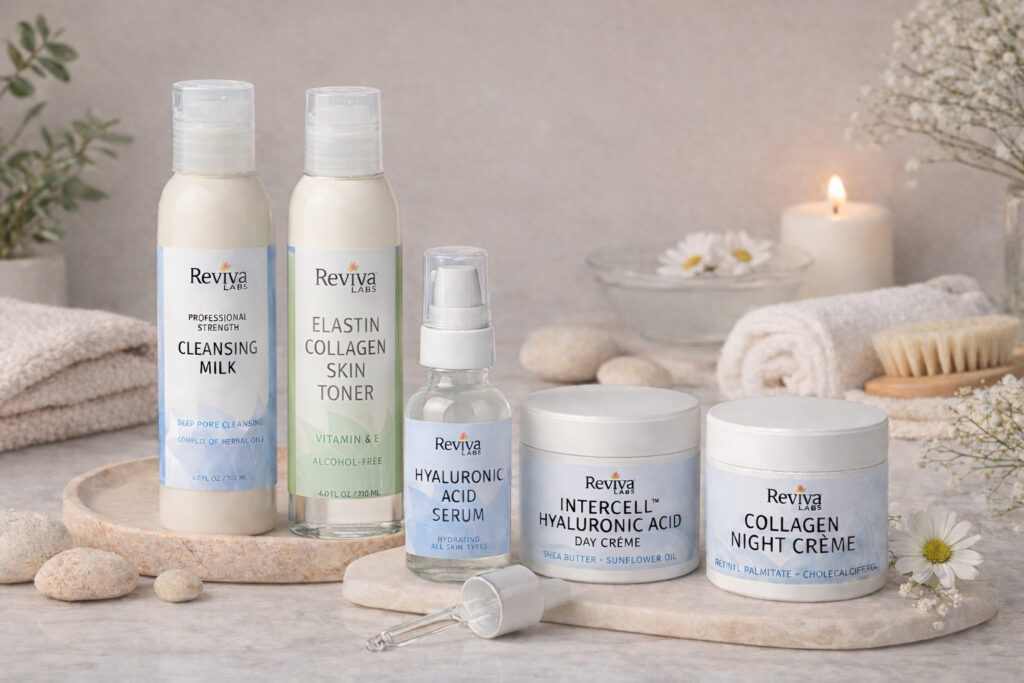
The Sequence of Your Routine Matters More Than the Products Alone
Many people have excellent skincare products sitting on their bathroom shelf that are not performing as well as they should, not because the formulas are wrong, but because the order of application is working against them. Layering products in the correct sequence allows each formula to do its job completely before the next one is applied. When the sequence is off, products compete rather than cooperate, and the results are less predictable and less noticeable.
The general principle is to move from lightest to heaviest consistency and from most active to most supportive. Cleansing comes first. A toner or exfoliating toner follows, helping to reset the skin’s pH and remove any remaining residue. Water-based serums come next, while the skin is still slightly damp and most receptive to absorption. Targeted treatment serums layer on top, followed by a lightweight eye product if used. Moisturizer is applied last in the daytime lineup, sealing in everything beneath it. In the morning, sunscreen goes on over the moisturizer as the absolute final step.
Allowing brief drying time between layers also makes a real difference. Applying a serum immediately over a still-wet toner can dilute the formula before it absorbs. Waiting thirty to sixty seconds between layers may feel unnecessarily slow during a busy morning, but it improves how completely each product penetrates the skin. This is an easy habit to build by simply using that time to do something else, brush teeth, check a message, and then coming back to the next step.
A good way to think about your routine is through the lens of prepare, support, correct, and enhance. Cleansing and exfoliation prepare the skin. Hydration and antioxidants support it daily. Targeted serums correct specific concerns. Firming and brightening products enhance the final appearance over time. When each step connects logically to the next, the routine stops feeling like a collection of products and starts functioning like a coherent system.
Natural Ingredients Work When They Are Chosen for Performance
Natural skincare is sometimes dismissed as insufficiently potent and sometimes oversold as automatically better than synthetic alternatives. Neither position is accurate. What matters is whether an ingredient has demonstrated efficacy at the concentrations used, whether it is stable in its formula, and whether it is well-tolerated by the skin. Natural ingredients that meet these criteria perform excellently. Natural ingredients that are included for marketing appeal but are too diluted or unstable to function contribute nothing.
The most effective naturally derived skincare actives have substantial research behind them. Aloe vera has been studied for its soothing and hydrating properties across multiple clinical contexts. Glycerin, derived from plant oils, is one of the most efficient humectants available and has an extensive safety and efficacy record. Plant-based oils like jojoba, rosehip, and squalane provide the skin with essential fatty acids that support barrier function and elasticity. Botanical extracts like licorice root, bearberry, and green tea contain compounds with measurable effects on pigmentation and oxidative stress.
The key is that these ingredients are selected and formulated based on their actual function, not their story. A formula that includes aloe vera because aloe vera soothes and hydrates the skin is different from a formula that includes aloe vera to make the packaging appeal more broadly. Reviva Labs has always approached ingredient selection from the first perspective, prioritizing what an ingredient does over what it communicates. That functional orientation is what separates skincare that works from skincare that merely sounds good.
People sometimes ask whether natural skincare is safe for sensitive skin, and the honest answer is that sensitivity is more about specific ingredients and concentrations than about whether a product is natural or synthetic. Fragrance, whether natural or synthetic, is the most common sensitizing ingredient in skincare. Essential oils, which are natural, are among the more common triggers for contact dermatitis. Selecting products that are fragrance-free and formulated with calm, well-researched actives reduces sensitivity risk regardless of where those actives originate.
Consistency Builds the Results That Impress People
The single most reliable predictor of whether someone achieves radiant skin is not the number of products they use or the price of their routine. It is how consistently they follow through. Skin responds to patterns. It adapts to repeated inputs over time, building on small improvements week after week until the cumulative result becomes visible and self-sustaining. Sporadic routines, no matter how sophisticated the products, cannot create this kind of progress because the skin never has time to respond and adapt before the pattern changes again.
The biology supports this reality. Skin cell turnover takes approximately 28 days in younger adults and can slow to 45 or more days with age. Hydration changes happen at the surface within days, but structural improvements to the barrier take longer to consolidate. Pigmentation changes, whether addressing existing discoloration or preventing new formation, require consistent ingredient exposure over multiple cell cycles to produce visible results. Expecting dramatic change within a week is a setup for disappointment. Expecting steady improvement over two to three months is a reasonable and achievable goal.
Consistency is also what allows you to accurately evaluate what is working. If a product is applied sporadically or changed frequently, it becomes impossible to know whether any improvement or lack of improvement is due to the product itself or the pattern of use. Committing to a stable routine for at least six to eight weeks before making changes gives each product a real opportunity to demonstrate its effect. At that point, you have genuine data. You can make informed decisions about what to keep, adjust, or replace.
Building consistency often comes down to making the routine as simple and accessible as possible. A four-step morning routine that takes three minutes will produce better results than an eight-step routine that gets skipped half the time because it feels like too much effort. Start with the steps that produce the most impact, cleanser, exfoliant, hydrating serum, and moisturizer, and build from there only when the core routine is established. The goal is a routine that you actually do, every day, without overthinking it.

Frequently Asked Questions
What is the most important step in a skincare routine for radiant skin?
Consistent hydration and regular exfoliation are typically the two highest-impact steps for most people. Exfoliation clears the dead surface layer that causes dullness, while hydration plumps and smooths the skin so it reflects light more evenly. If you can only commit to two steps, these two deliver the most visible improvement. Everything else builds on the foundation they create, and adding steps like antioxidant protection and targeted serums compounds the results over time.
How long does it take to see results from a natural skincare routine?
Hydration improvements are often visible within a few days of consistent use. Texture changes from regular exfoliation typically become noticeable within two to three weeks. Tone improvements, including reduced discoloration and greater clarity, generally require four to eight weeks of consistent use before they become clearly visible. Structural improvements from firming ingredients can take three months or longer to fully develop. Patience and consistency are the real active ingredients when it comes to lasting results.
Can natural skincare ingredients really compete with synthetic actives?
Yes, when they are selected and formulated correctly. Ingredients like glycolic acid, hyaluronic acid, niacinamide, and kojic acid are either naturally derived or nature-identical, and they have extensive clinical research supporting their effectiveness. The most important factors are concentration, formulation stability, and how the ingredients are combined, not whether the source is natural or synthetic. A well-formulated natural skincare product that uses proven actives at effective concentrations will outperform a poorly formulated synthetic product every time.
Is it possible to over-exfoliate, and how do I know if I am doing it?
Over-exfoliation is common and often self-reinforcing. Signs include persistent redness, a tight or stinging feeling after applying products that previously felt neutral, increased sensitivity to ingredients that never caused irritation before, and paradoxically, more visible flakiness or roughness. The skin’s barrier becomes compromised when exfoliation is too frequent or too aggressive, and a compromised barrier actually makes exfoliation-related irritation worse. If you notice these signs, reduce exfoliation frequency, focus on hydration and barrier repair for one to two weeks, and reintroduce exfoliation more gradually.
Does the order I apply my skincare products really make a difference?
The order of application has a direct impact on how well each product performs. Products applied first have access to a clean, receptive skin surface and can penetrate more fully. Products applied later are partially blocked by what came before, which is why heavier creams and oils go on last rather than first. Applying a thick moisturizer before a water-based serum, for example, can significantly reduce how much of the serum actually reaches the skin. Following the lightest-to-heaviest principle and allowing brief drying time between layers ensures that each product can do its job effectively.
What skin types benefit most from glycolic acid?
Glycolic acid benefits most skin types when used at appropriate concentrations and frequencies. Normal, oily, and combination skin types generally tolerate glycolic acid well and see clear improvements in texture and tone with regular use. Dry skin also benefits but may need a lower concentration or less frequent application to avoid disrupting the moisture barrier. Sensitive skin types should introduce glycolic acid very gradually, starting with a low concentration product used once or twice per week and increasing from there only if the skin tolerates it well. People with active rosacea or very reactive skin should consult a dermatologist before adding glycolic acid to their routine.
References and Sources
- Bhatt, D.L., et al. Effects of structured topical routines on skin texture and radiance. Journal of Cosmetic Dermatology. Available at: https://www.ncbi.nlm.nih.gov/pmc/articles/PMC3583886/
- Rawlings, A.V., et al. Moisturization and skin barrier function. Available at: https://www.ncbi.nlm.nih.gov/pmc/articles/PMC2921764/