
Natural, Reviva Labs, Skin Care
When Allergies Attack Your Skin
Apr
Every spring, millions of people reach for antihistamines and nasal sprays without ever suspecting that the same immune system misfires driving their sneezing are also quietly waging war on their skin. Skin allergy reactions send more than 7 million people to dermatologists each year in the United States alone, according to the American Academy of Dermatology Association, yet most sufferers treat the surface symptoms without addressing the underlying triggers. The result is a frustrating loop of flare-ups, over-the-counter guesswork, and products that sometimes make things worse. If your skin has been angry, reactive, or just plain unpredictable, allergies may be the culprit you have not yet considered.
Allergic skin reactions are not a single condition. They are a category of immune responses that show up in a surprising variety of ways, from the classic itchy red welt to chronic dry patches that never quite heal. What unites them is a shared mechanism: the immune system mistakes a harmless substance for a threat, launches an inflammatory response, and the skin pays the price. That price can range from mildly irritating to genuinely disruptive to daily life. Knowing the difference between the types of allergic skin reactions, and what actually triggers them, is the first step toward getting real relief.

The Difference Between Irritant and Allergic Reactions
One of the most common misconceptions about reactive skin is that every rash or flare-up is an allergy. In reality, there are two distinct categories, and they behave very differently. Contact dermatitis, the most frequently diagnosed allergic skin condition, comes in two forms: allergic contact dermatitis and irritant contact dermatitis. Irritant contact dermatitis is not a true allergy at all. It happens when a substance directly damages the skin’s outer barrier, causing inflammation without immune system involvement. Repeated exposure to harsh soaps, excessive hand washing, or chemical cleaners most often drives this type of reaction.
Allergic contact dermatitis, by contrast, requires prior sensitization. The first time your skin encounters a trigger, nothing visible may happen. The immune system quietly catalogs that substance as a threat. On subsequent exposures, the immune response activates, releasing histamines and inflammatory chemicals that produce redness, swelling, itching, and sometimes blistering. This delayed reaction, which can take 24 to 72 hours to appear after contact, is one reason people so often struggle to identify the cause. You applied something new three days ago, but the reaction appears today, and you blame whatever you touched this morning.
The Most Common Skin Allergy Triggers
Nickel is the single most common contact allergen identified in patch testing, affecting up to 17 percent of women and 3 percent of men in the United States, according to research published in Dermatitis, the official journal of the American Contact Dermatitis Society. It shows up not just in inexpensive jewelry but in watch clasps, belt buckles, eyeglass frames, and even some electronic devices. The reaction typically appears where the metal touches skin: a ring of redness around the wrist, a rectangular patch on the abdomen, or irritation along the jawline from earbuds.
Fragrance is another major offender that catches people off guard. The word “fragrance” on a product label can represent a cocktail of dozens, even hundreds, of individual chemical compounds, and any one of them may trigger a reaction in sensitized individuals. According to the American Contact Dermatitis Society, fragrance is among the most prevalent allergens identified by patch test clinics across North America. What makes fragrance allergies particularly tricky is that products marketed as “natural” or “botanical” can be just as problematic as synthetic ones. Essential oils like lavender, bergamot, and tea tree, all of which appear regularly in personal care products and skincare, are documented contact allergens for certain individuals.
Preservatives represent a third category worth knowing. Formaldehyde-releasing preservatives, found in some shampoos, body washes, and nail care products, are well-documented sensitizers. Methylisothiazolinone, a preservative used heavily in rinse-off and leave-on products throughout the 2000s and 2010s, became so widely problematic that regulatory agencies in the European Union moved to restrict its use in leave-on cosmetics. If you have experienced unexplained facial redness or eyelid dermatitis, a preservative sensitivity is worth discussing with a dermatologist.
What Happens Inside Your Skin During an Allergic Reaction
The visible symptoms of an allergic skin reaction are actually the end product of a complex biological chain of events. When the immune system recognizes a previously sensitized allergen, it activates T-lymphocytes, a type of white blood cell that coordinates the inflammatory response. These cells release signaling molecules called cytokines, which trigger the release of histamine from mast cells in the skin tissue. Histamine is the compound most directly responsible for the itching, redness, and swelling that make allergic skin reactions so uncomfortable. Blood vessels in the affected area dilate, fluid leaks into surrounding tissue, and the familiar rash appears.
This process also compromises the skin’s barrier function. The outermost layer of skin, the stratum corneum, acts as the body’s first line of defense against pathogens, moisture loss, and environmental irritants. Inflammatory responses degrade the lipid matrix holding those skin cells together, which makes the barrier more permeable. A more permeable barrier means allergens penetrate more easily, which can worsen the reaction and invite secondary irritants in at the same time. This is why allergic skin flares tend to come with heightened sensitivity to things that would not normally cause a problem, like temperature changes, water, or even lightweight moisturizers.
Atopic Dermatitis and Its Relationship to Allergies
Atopic dermatitis, the chronic form of eczema, has deep connections to the allergic cascade. Approximately 31.6 million Americans live with some form of eczema, according to the National Eczema Association, and for many, the condition is closely intertwined with other allergic diseases including hay fever and asthma. This clustering of allergic conditions, sometimes called the atopic march, reflects an underlying immune system that is broadly primed toward allergic responses. People with atopic dermatitis often have mutations in the filaggrin gene, which normally helps maintain the skin barrier. When that barrier is compromised from birth, the immune system encounters environmental substances it should never have access to, and sensitization begins earlier and more aggressively.
Managing atopic dermatitis is not simply about avoiding known triggers, although that matters enormously. It also means actively supporting and repairing the skin barrier on a consistent basis. Emollient-rich moisturizers applied immediately after bathing, when the skin is still slightly damp, help trap moisture and reinforce barrier function. The choice of moisturizer matters as much as the habit of using it. Products free from fragrance, dyes, and preservatives with known sensitization potential are far less likely to aggravate inflamed skin. Ceramides, fatty acids, and glycerin are among the ingredients with the strongest evidence for supporting barrier repair without introducing new irritants.
Seasonal Allergies and Your Skin
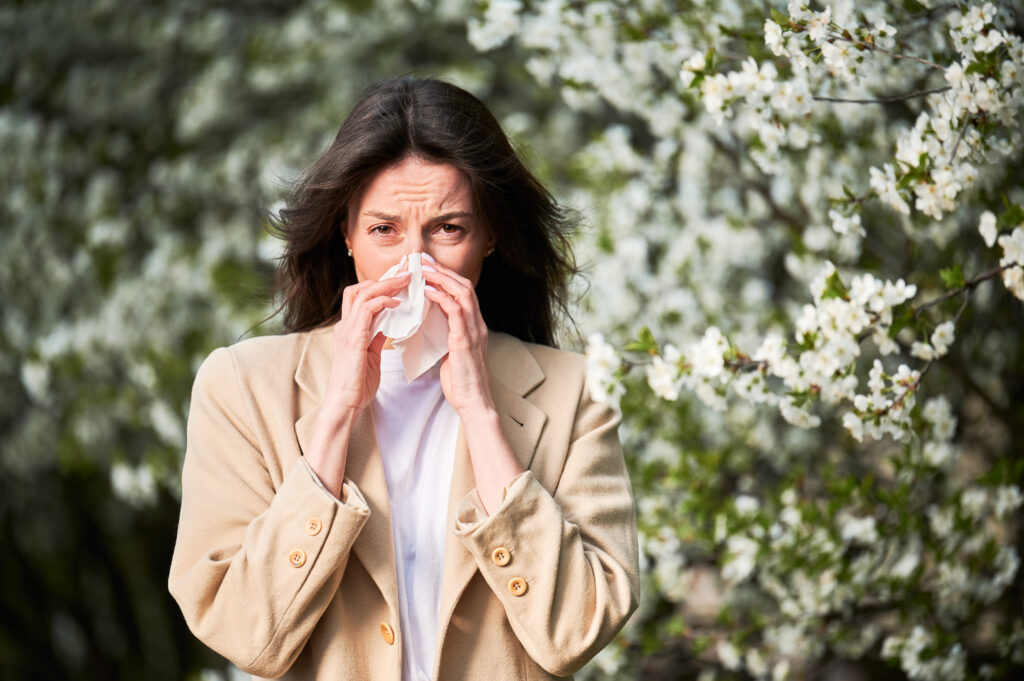
Most people associate seasonal allergies with respiratory symptoms, but pollen, mold spores, and other airborne allergens can also affect the skin directly. Pollen that lands on the face and neck can trigger localized contact reactions in sensitized individuals, particularly during high-pollen count days in spring and fall. This phenomenon, sometimes called seasonal allergic contact dermatitis, is still being studied but appears to be more common than previously recognized. One study published in the Journal of Investigative Dermatology found that children with grass pollen sensitization showed significantly higher rates of atopic dermatitis flares during pollen season, even when their nasal allergy symptoms were well controlled.
Beyond direct contact, seasonal allergies may worsen skin conditions through systemic inflammation. When the immune system is on high alert in response to airborne allergens, elevated levels of inflammatory cytokines circulate throughout the body. For people with pre-existing conditions like eczema, rosacea, or psoriasis, this systemic inflammatory load can push skin into a flare even without any new topical trigger. Think of it as your skin’s background inflammation level rising, making it far less tolerant of ordinary stressors like heat, sweat, or a new skincare product you have been using without incident for months.
Reading Labels and Making Smarter Product Choices
One of the most empowering things you can do for allergy-prone skin is become a more deliberate label reader. The ingredient list on a skincare product is legally required to be comprehensive, and it is one of the few places where you have real information to work with. Products with shorter ingredient lists are not inherently safer or better, but they do give you fewer potential triggers to investigate when a reaction occurs. When you are trying to isolate an allergen, simplicity is your friend.
Fragrance-free is meaningfully different from unscented. An unscented product may still contain masking fragrances that neutralize odor without adding a perceptible scent, and those masking agents are just as capable of triggering reactions as any other fragrance compound. Fragrance-free, on the other hand, means no fragrance ingredients were added at all. Similarly, “hypoallergenic” is a marketing term with no regulatory definition in the United States. It means different things from brand to brand, and it offers no guarantee that the product will not trigger a reaction in a sensitized individual. What actually matters is the specific ingredient list, not the claims printed on the front of the packaging.
How Patch Testing Changes Everything
If you have been dealing with recurring skin reactions and cannot pinpoint the cause, patch testing is the diagnostic tool that most people never think to ask for. Performed by a dermatologist or allergist, patch testing involves applying small amounts of common allergens to the back under occlusive patches, leaving them in place for 48 hours, and reading the results at 48 and 96 hours. The North American Standard Series covers the most common contact allergens identified across the continent, including fragrance mixes, preservatives, metals, and rubber accelerators.
Patch testing results can genuinely change how you shop and what you put on your skin. Rather than continuing to trial and error your way through products, you get a specific list of compounds to avoid. That list can then be cross-referenced against ingredient labels, giving you a rational framework for product selection instead of guesswork. The process does require multiple clinic visits over about a week, but for people who have struggled with chronic unexplained skin reactions, it is often one of the most useful things they ever do for their skin health.
Calming a Reactive Skin Barrier
When your skin is in the middle of an allergic flare, the instinct to do more is almost always wrong. Piling on multiple products, experimenting with new formulas, or using active ingredients like exfoliating acids during a flare can extend the reaction and deepen barrier damage. The right approach is strategic simplicity. Cleanse with the gentlest possible formula, apply a barrier-supportive moisturizer, and protect the skin from sun, temperature extremes, and physical friction while the inflammation resolves.
Anti-inflammatory botanical ingredients have a long history of use in calming reactive skin, and some have meaningful research support behind them. Colloidal oatmeal is an FDA-approved active ingredient for the temporary relief of minor skin irritation and itching caused by eczema and rashes. Centella asiatica, also known as gotu kola, has demonstrated anti-inflammatory and barrier-repair properties in multiple clinical studies. Chamomile extract contains bisabolol, a compound with well-documented anti-inflammatory activity, which is why chamomile has been used in skin soothing formulations for centuries. Aloe vera, one of the most widely used plant-derived skin ingredients in the world, contains acemannan and other polysaccharides that support wound healing and reduce inflammation.
Once the active flare resolves, rebuilding the barrier is the priority. This is where consistent, sustained use of a well-formulated moisturizer makes a measurable difference over time. Research published in the Journal of Allergy and Clinical Immunology found that regular emollient use from infancy significantly reduced the risk of atopic dermatitis development in high-risk infants, underscoring how central barrier integrity is to allergic skin health across the lifespan. Supporting your skin’s barrier is not a reactive measure. It is one of the most proactive things you can do to reduce the frequency and severity of future reactions.
Building a Routine That Works With Your Skin
Building a routine for allergy-prone skin is less about finding the perfect product and more about establishing principles that reduce cumulative exposure to potential triggers. Introduce one new product at a time, waiting at least two weeks before adding another. This gives you a clear timeline to connect a reaction to a specific product if one occurs. Store your skincare in a cool, dry location away from direct sunlight, as some preservatives and active ingredients degrade over time and can become irritating as they break down.
Patch testing new products at home, by applying a small amount to the inner forearm or behind the ear and waiting 48 to 72 hours before using the product on your face, is a practical screen for obvious reactors. It will not catch every possible allergen, but it catches many of the most dramatic ones. Pay attention to how your skin feels in different seasons, environments, and even in different rooms of your home. Allergic skin does not always flare for the same reason every time, and building awareness of your own patterns is one of the most valuable forms of data you have access to.
Frequently Asked Questions
What is the difference between a skin allergy and skin sensitivity?
Skin sensitivity describes skin that reacts easily to external stimuli, including temperature, pressure, and mildly irritating ingredients, often without a true immune system involvement. A skin allergy specifically involves the immune system recognizing a substance as foreign and mounting an inflammatory response. All people with skin allergies tend to have sensitive skin, but not all sensitive skin involves a true allergy. Patch testing is the most reliable way to determine whether a specific reaction has an allergic component.
Can you develop a skin allergy to a product you have used safely for years?
Yes, and this surprises many people. Allergic sensitization can occur at any point, even after years of using the same product without a reaction. The body builds sensitivity gradually through repeated low-level exposure, and once that threshold is crossed, every subsequent exposure triggers a reaction. This is why a skincare routine that worked perfectly for a decade can suddenly begin causing problems. It does not mean the product changed; it means your immune system reached its sensitization point.
How long does a contact dermatitis reaction last?
Most allergic contact dermatitis reactions resolve within two to four weeks once the triggering allergen is identified and removed. The itching and redness typically begin improving within a few days of eliminating contact, though skin may remain visibly irritated for longer. Continuing to expose the skin to the allergen, even in small amounts, can significantly extend the reaction. In severe cases, a dermatologist may recommend a short course of topical or oral corticosteroids to reduce inflammation more quickly.
Does eating certain foods affect skin allergies?
Food allergies can absolutely produce skin symptoms, most commonly hives (urticaria) and angioedema, which is swelling beneath the skin’s surface. Common food allergens including peanuts, tree nuts, shellfish, eggs, and milk can all trigger systemic allergic responses that manifest on the skin. Some individuals also experience oral allergy syndrome, in which raw fruits or vegetables cross-react with airborne pollen allergens. The connection between dietary choices and inflammatory skin conditions like eczema is an active area of research, with growing evidence that gut microbiome health plays a role in how the skin’s immune responses are regulated.
When should you see a doctor for a skin allergy reaction?
You should seek medical attention if a skin reaction involves significant swelling of the face, lips, or throat; if breathing becomes difficult; if the rash spreads rapidly over a large area of the body; or if there are signs of infection including warmth, increased pain, pus, or fever. These symptoms may indicate anaphylaxis or a secondary skin infection, both of which require prompt treatment. For chronic or recurrent reactions that are not improving despite home management, a referral to a dermatologist for patch testing is the most practical next step.
Can stress make skin allergy symptoms worse?
Yes, significantly. Psychological stress activates the hypothalamic-pituitary-adrenal axis and elevates cortisol levels, which can modulate immune function in ways that worsen inflammatory skin conditions. Research has consistently shown that people with eczema and other allergic skin conditions report more frequent and severe flares during periods of high stress. Stress also appears to impair skin barrier recovery, making the skin more susceptible to allergen penetration and prolonging reactions once they have started. Stress management strategies are therefore a legitimate and clinically supported component of managing chronic allergic skin conditions.
References and Sources
- American Academy of Dermatology Association. Contact Dermatitis. https://www.aad.org/public/diseases/eczema/types/contact-dermatitis (Confirm URL loads before publication)
- National Eczema Association. Eczema Facts and Statistics. https://nationaleczema.org/research/eczema-facts/ (Confirm URL loads before publication)
- American Contact Dermatitis Society. Allergen of the Year. https://www.contactderm.org (Navigate to allergen archive directly on site — deep link URLs on this domain change periodically)