
Clean Beauty, Natural, Reviva Labs, Skin Care
Why Your Skin Acts Up When You Travel And What To Do About It

Jul
Somewhere over the middle of a long flight, your face starts to feel like paper. Your cheeks tighten, your under eye area looks dull, and by the time you land your skin barely resembles the version you left home with. This is not your imagination, and it is not bad luck. It is a predictable, measurable response to an environment your skin was never built to handle. Understanding what is actually happening on a physiological level gives you the power to prevent most of it before it starts.
Travel skin trouble tends to show up in one of three ways. Some people get tight, flaky, and dehydrated. Others break out despite normally clear skin. And a smaller group notices redness, sensitivity, or patches that flare out of nowhere. All three reactions trace back to the same handful of environmental stressors, just expressed differently depending on your skin type and baseline barrier strength. Once you see the pattern, the fixes become much more obvious.
The Air You Are Breathing Is Working Against You
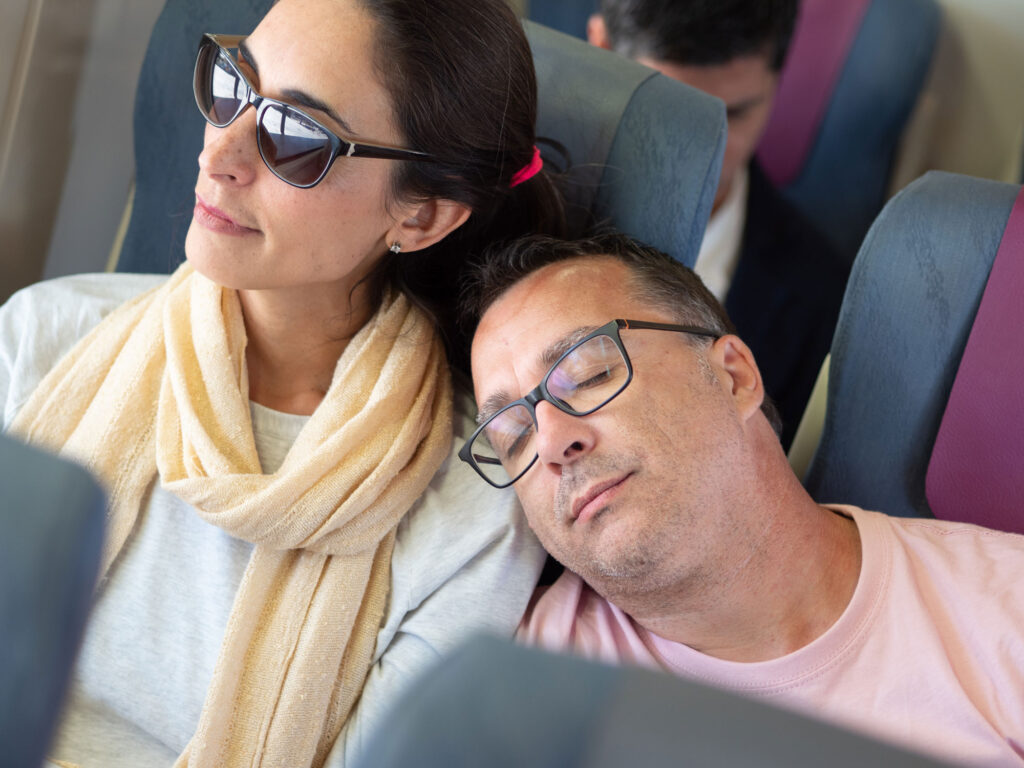
Airplane cabins are one of the driest environments a human body regularly encounters. According to a report from the National Academies Press examining the airliner cabin environment, relative humidity at cruise altitude typically runs between 10 and 20 percent, well below the comfort range recommended by industry ventilation standards. For context, most homes sit somewhere between 30 and 50 percent humidity depending on season and climate. That gap matters more than people realize, because skin loses water to its surroundings whenever the air around it is drier than the air trapped near its surface.
This process is called transepidermal water loss, and it accelerates dramatically in low humidity conditions. Your skin barrier, the outermost layer made of lipids and dead skin cells, normally holds moisture in the way a well-sealed container holds water. Dry cabin air pulls moisture out faster than your skin can replace it, and a few hours of that pull is enough to leave your face feeling tight and looking noticeably duller. Frequent flyers often notice this most around the eyes and mouth, where skin is thinner and has fewer oil glands to slow the moisture loss.
Hotel rooms create a milder version of the same problem. Air conditioning and heating systems strip humidity from indoor air, and hotel HVAC units are often set for guest comfort rather than skin comfort, running colder and drier than a typical home. If you are moving from a humid climate to a dry one, or spending several nights in heavily conditioned air, your skin is essentially living through a slow, cumulative drought even after the flight itself is over.

Routine Disruption Does More Damage Than People Expect
Skin is a creature of habit. It adjusts to a consistent temperature, a consistent water source, a consistent sleep schedule, and a consistent product routine. Travel breaks every one of those patterns at once. You wash your face with different water that may carry a different mineral content or chlorine level than what you use at home. You sleep on unfamiliar pillowcases, often synthetic ones that pull less moisture than cotton. You wake up at odd hours because of time zone shifts, and your skin, which repairs itself most actively during deep sleep, gets a shortened or fragmented repair window.
Diet changes compound the disruption. Airport food, hotel breakfasts, and vacation meals tend to run higher in sodium and lower in the water content of home cooked meals. Combined with the diuretic effect of inflight alcohol or extra coffee to fight jet lag, many travelers arrive at their destination quietly dehydrated well before they notice thirst. Dehydration shows up on skin as puffiness in some people and as sunken, tired looking skin in others, which is part of why travel skin complaints vary so widely from person to person.
Stress is the final piece most people overlook. Even enjoyable travel activates a mild stress response, tied to time pressure, unfamiliar surroundings, and disrupted routines. That stress response raises cortisol slightly, and elevated cortisol has a well-documented relationship with increased oil production and inflammation in skin prone to breakouts. This is why some people who never get travel dryness instead notice a cluster of new blemishes appearing two or three days into a trip.

Climate Shifts Add A Second Layer Of Stress
Beyond the cabin itself, the climate you land in often differs sharply from the one you left, and that jump can be just as disruptive as the flight. Moving from a humid coastal city to a dry mountain town or desert destination means your skin has to adjust to a new baseline moisture level on top of the dehydration it already experienced in transit. The reverse trip, from a dry climate into a humid one, brings its own issues, often triggering excess oil production and congestion as skin overcompensates for the sudden increase in ambient moisture. Neither direction is inherently worse, but both require a short adjustment period that most travelers do not plan for.
Altitude changes compound this further for anyone traveling to mountain destinations for skiing or hiking. Thinner air at higher elevations holds less moisture and also filters less ultraviolet radiation, which means skin is simultaneously drier and more exposed to sun damage than it would be at sea level. People who would never skip sunscreen at the beach often forget it entirely on a ski trip, not realizing that snow reflects a significant amount of additional UV back onto the face. This combination of dryness and unexpected sun exposure explains why so many travelers come home from winter mountain trips with skin that is both flaky and sunburned at the same time.
Even road trips carry a milder version of this same pattern. Hours in a car with air conditioning or heat running steadily creates a small, enclosed dry environment not unlike an airplane cabin, just less extreme. Rolling the windows down periodically, using a lower fan setting, and keeping a hydrating mist or balm within reach for long drives can meaningfully reduce the cumulative dryness that builds up over a full day behind the wheel. The underlying lesson across every mode of transportation is the same: any enclosed, climate-controlled space pulls moisture from your skin faster than open, humid air does, and awareness of that is most of the battle.
What Actually Helps On Travel Days
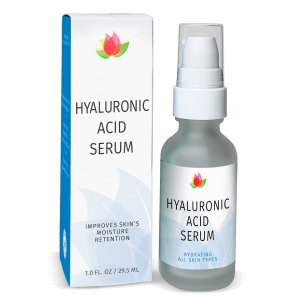
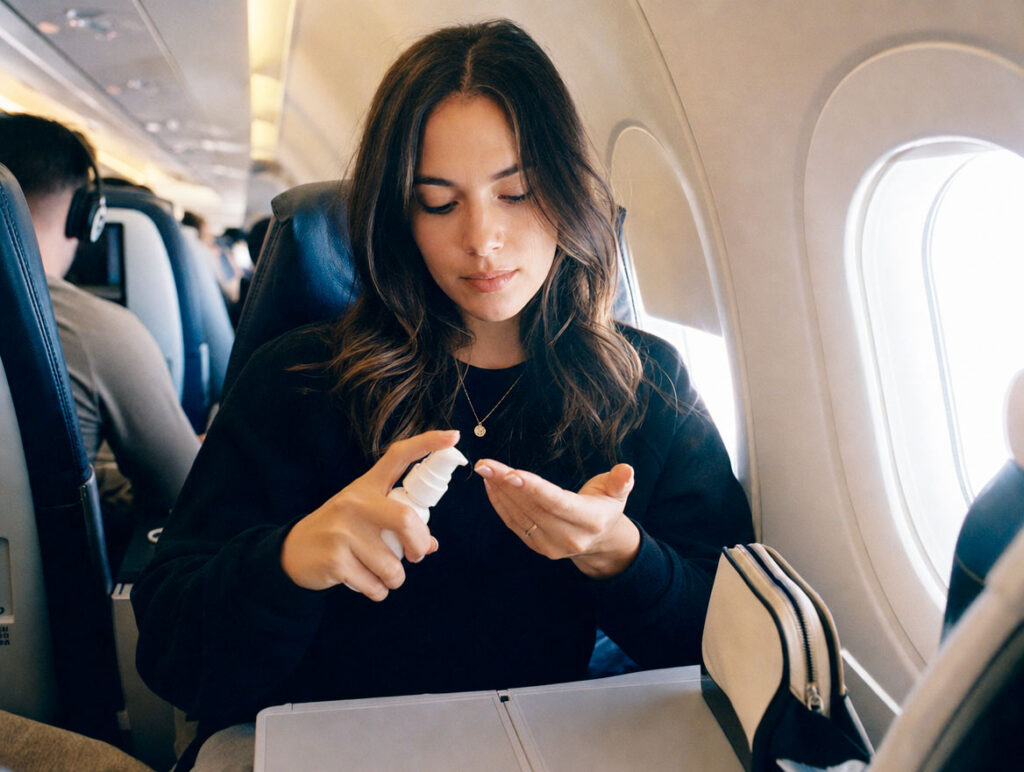
The single most effective habit is layering moisture before the environment has a chance to strip it. Applying a hydrating serum before boarding, rather than waiting until your face already feels dry, keeps the barrier better supplied going into a low humidity environment. A humectant-based option that draws in and holds water, such as a hyaluronic acid serum, tends to outperform heavier creams for this specific purpose because it works with the skin’s own water content rather than simply sealing the surface. Reviva Labs’ Hyaluronic Acid Serum is formulated around this principle, using a blend of molecular weights designed to hydrate at multiple depths of the skin rather than sitting only on top.
Reapplication matters more on a plane than almost anywhere else. Cabin air keeps pulling moisture out continuously, so a single application before takeoff will not carry you through a six-hour flight. A light mist of water followed by a small amount of serum or moisturizer, applied once or twice midflight, does more good than a heavier single application at the start. Skipping heavy makeup during travel also helps, since many long wear formulas contain ingredients that can further dehydrate skin that is already under stress.
Hydration from the inside works alongside topical care rather than replacing it. Drinking water consistently throughout a travel day, rather than in one large amount before or after, helps offset the fluid loss from dry air and disrupted eating patterns. Herbal tea or plain water is a better choice than extra caffeine or alcohol during the flight itself, even though the appeal of a cocktail to pass the time is understandable. Small, boring choices like this compound significantly over a full day of travel.

Rebuilding Your Skin Once You Arrive
The first night at your destination is your best opportunity to reset. A gentle cleanse followed by a slightly richer moisturizer than you might normally use helps rebuild the barrier that spent the day under siege. This is not the moment to introduce a new active ingredient or try a product you have never used, since travel stressed skin is more reactive and more likely to show irritation from something it would normally tolerate without issue. Stick with familiar, gentle products for at least the first day or two.
Sleep quality on the first night matters as much as any product. If time zone shifts have you wide awake at an unusual hour, resist the urge to compensate with a heavy skincare routine at 3am. A short, simple routine followed by an eye mask and an effort to fall back asleep will do more for your skin than an elaborate late-night regimen performed while exhausted. Skin repairs itself during consistent, quality sleep far more than during any topical treatment applied in a sleep deprived state.
If breakouts rather than dryness are your pattern, resist the instinct to over cleanse or strip your skin in response. Stripping oil production up as a defense mechanism, often making breakouts worse rather than better. A gentle cleanser, a lightweight non comedogenic moisturizer, and patience through the adjustment period tend to resolve travel related breakouts faster than an aggressive response does.
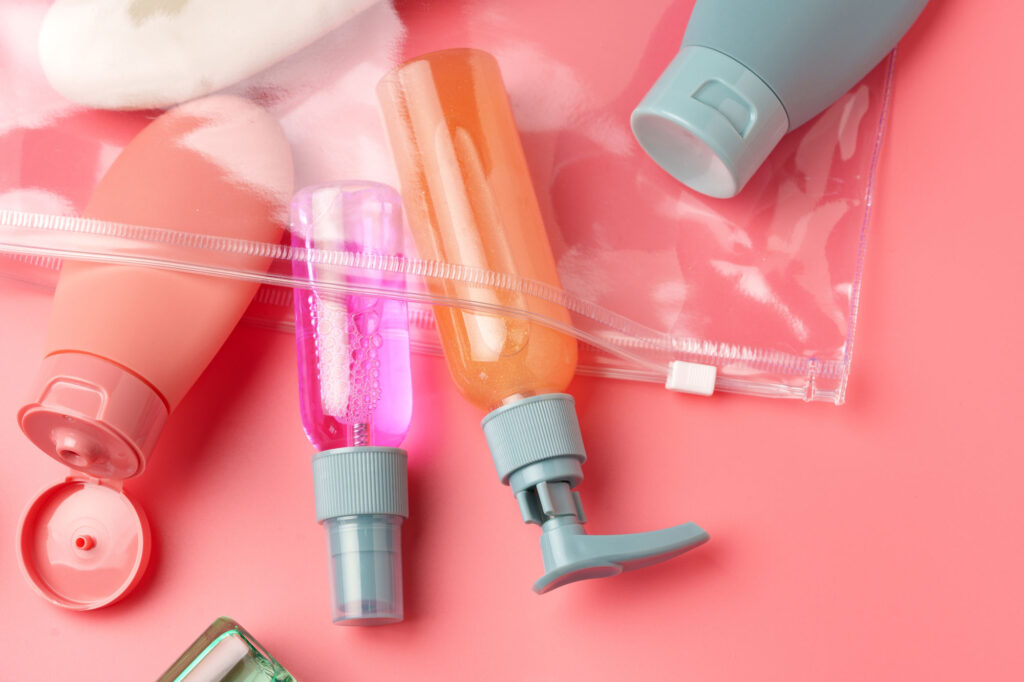
Building A Simple Travel Skin Kit
You do not need an elaborate routine to protect your skin while traveling. A small kit built around three items covers most situations. A gentle cleanser that will not strip natural oils handles the daily reset. A hydrating serum applied both before and during travel addresses the dehydration that causes most of the visible dullness and tightness people notice. A simple moisturizer suited to your skin type locks in that hydration once you land and through the rest of the trip.
Packing these in travel sizes or decanting them into small containers that meet carry on liquid limits, removes the excuse of leaving them behind. The travelers who maintain the best skin through frequent trips are rarely the ones with the most elaborate routines. They are the ones who consistently do a few simple things at the right moments, particularly before and during the flight itself when the environmental stress is highest.
Frequently Asked Questions
Why does my skin break out specifically when I travel even though it is normally clear?
Breakouts during travel are usually tied to a combination of disrupted sleep, dietary changes, and a mild stress response that raises oil production. Unfamiliar water, pillowcases, and skipped routine steps can also introduce new triggers your skin is not used to managing.
Is airplane air really that different from normal indoor air?
Yes. Cabin air at cruise altitude typically sits at 10 to 20 percent relative humidity, well below the 30 to 50 percent most people experience at home, which means skin loses water to the surrounding air far faster than usual.
Should I wear a heavier moisturizer or a serum before a long flight?
A hydrating serum applied before boarding, with reapplication midflight, tends to work better than a single heavy moisturizer application because it keeps replenishing the water the dry air continues to pull away.
How long does it usually take for skin to recover after a trip?
Most people see their skin return to its normal state within two to three days once they are back on a regular sleep schedule and hydration routine, though the timeline can be longer after very long-haul travel or several nights of disrupted sleep in a row.
Does drinking more water actually help travel skin or is that a myth?
It helps, though it works best alongside topical hydration rather than as a replacement for it. Water supports overall skin function, but the skin barrier still needs a topical humectant to hold onto that moisture once it reaches the surface.
Is it safe to try a new skincare product right before or during a trip?
It is generally better to avoid new products immediately before or during travel. Skin under environmental stress is more reactive, so introducing an unfamiliar ingredient increases the odds of irritation that can be harder to identify as travel related versus product related.
References And Sources
- National Academies Press, The Airliner Cabin Environment and the Health of Passengers and Crew, Environmental Control chapter, available at ncbi.nlm.nih.gov/books/NBK207472