
Clean Beauty, Ingredients, Natural, Reviva Labs, Skin Care
Bakuchiol Serum Benefits for Skin That Is Done Tolerating Retinol

Apr
Retinol works for a lot of people. It also drives a lot of people crazy.
The peeling. The tightness. The redness. The careful scheduling around sun exposure. The slow adjustment period that can make your skin look worse before it looks better. For some people, retinol becomes less of a skincare routine and more of a negotiation with their face.
That is why bakuchiol has earned so much attention. It gives people another path. Not a watered-down moisturizer dressed up as an active. Not a trendy plant extract with a good story and weak support. Bakuchiol has been studied for its ability to improve the look of fine lines, wrinkles, pigmentation, firmness, and elasticity, while causing fewer of the side effects commonly linked with retinol.
A 2019 randomized, double-blind clinical study published in the British Journal of Dermatology found that bakuchiol performed comparably to retinol in improving signs of photoaging, with less scaling and stinging. That matters because results only count when people can keep using the product. The best active in the world does not help much when it sits unused in a drawer.
Bakuchiol comes from the seeds and leaves of Psoralea corylifolia, often called babchi. The plant has a long history in Ayurvedic, Chinese, and Tamil practices, but its modern skincare value comes from current research, not folklore alone. Today, bakuchiol sits in a rare place. It has a botanical origin, a strong consumer story, and enough science behind it to deserve serious attention.

What Bakuchiol Actually Does to Your Skin
Bakuchiol targets visible skin aging by influencing some of the same cosmetic outcomes people associate with retinol, but it is not a retinoid and it does not work the same way. Retinol works primarily through retinoic acid receptors, a pathway that can trigger dryness, peeling, and visible irritation in sensitive users. Bakuchiol produces retinol-like cosmetic results through a different mechanism, which is the core reason people with retinol-sensitive skin are drawn to it.
Specifically, bakuchiol supports collagen synthesis and has been shown to inhibit matrix metalloproteinase activity — the enzymes responsible for breaking down collagen in aged or UV-damaged skin. That dual action, encouraging new collagen while protecting existing collagen from degradation, is what drives the visible improvement in firmness and texture over time. It is not surface hydration making skin look temporarily plumper. It is structural support that accumulates with consistent use.
Fine lines and wrinkles respond best when skincare supports the skin from the inside out, over time. Bakuchiol has also shown antioxidant properties, which matters because oxidative stress is one of the primary drivers of visible aging. No topical serum stops time, but a consistent routine that addresses collagen support and free radical damage can make a real difference in how skin looks and feels over months.
Uneven tone can also improve with steady use. Bakuchiol does not bleach skin or work like a harsh spot treatment. Instead, it supports a healthier-looking complexion while helping reduce the appearance of discoloration over time. The effect is gradual, which is how most effective skincare works. People who expect instant transformation from any active usually miss what daily use builds over weeks and months.
Why Sensitive Skin Finally Has Another Option
The old anti-aging trade-off felt unfair. Retinol delivered visible results for many people, but it often came with dryness, flaking, burning, or redness. Glycolic acid helped refine texture but could feel too aggressive for reactive or compromised skin. Sensitive skin users were often left with soothing creams and the quiet message that serious actives were not for them.
Bakuchiol changed that conversation. Because it does not work through the same retinoid receptor pathway as retinol, it does not produce the purging or peeling phase that makes traditional Vitamin A products so difficult to establish in a routine. Clinical studies have specifically reported less scaling and stinging with bakuchiol compared to retinol. That is not anecdotal. It is a meaningful tolerability advantage for a significant portion of the skincare population.
Formula type also matters. An oil-based bakuchiol serum can feel more supportive for dry, mature, or sensitive skin because the carrier helps cushion the active. Safflower seed oil is rich in linoleic acid, a fatty acid the skin barrier naturally contains and one associated with calming and barrier-strengthening properties. Caprylic/capric triglyceride gives a lightweight, silky feel without the heaviness many people associate with facial oils.
This is important because people rarely have one skin concern at a time. Many people want help with fine lines, firmness, dullness, dryness, and sensitivity all at once. A well-formulated bakuchiol serum can fit that reality. It can address visible aging concerns while still feeling comfortable enough for daily use.

Ingredients That Support Bakuchiol
Bakuchiol works well on its own, but it becomes more useful when paired with smart supporting ingredients. Alfalfa extract is one example. It contains vitamins, minerals, chlorophyll, and antioxidant compounds that help support the overall condition of the skin. In a serum, it adds a nourishing botanical layer rather than acting as filler.
Artichoke extract also fits well in a formula built around visible aging. It is often cited for its effects on elasticity, texture, and the appearance of pores, and it brings antioxidant support that helps round out the formula’s focus on smoother, fresher-looking skin. When paired with bakuchiol, it helps move the serum beyond single-note anti-aging.
Coenzyme Q10, listed as ubiquinone, adds another layer of antioxidant support. The body produces CoQ10 naturally, but levels decline with age. In topical skincare, it helps defend against the oxidative stress that contributes to visible aging. Tocopherol, a form of Vitamin E, supports the oil base while conditioning the skin.
The best bakuchiol formulas do not need a crowded ingredient list. They need ingredients that make sense together. Bakuchiol handles the retinol-like cosmetic benefits. Oils support comfort and absorption. Antioxidants help defend against visible environmental stress. Botanicals improve the overall feel and appearance of the skin. Each ingredient earns its place.
How to Use Bakuchiol Serum for Best Results
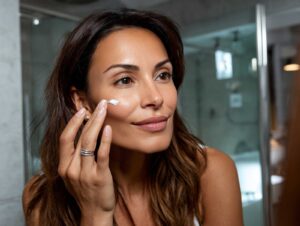
Apply bakuchiol serum to clean skin by patting it on gently rather than rubbing it in. This matters with oil serums because a light pressing motion helps the product settle into the skin without unnecessary friction. It also avoids pulling or disrupting skin that already feels dry or sensitive.
Bakuchiol can be used morning or evening. Unlike retinol, it is not associated with the same increase in sun sensitivity, which means morning application is appropriate. Daily sunscreen still belongs in your morning routine regardless. Sunscreen protects the visible results you are working toward, especially when your main concerns include fine lines, uneven tone, and dullness.
If you use a water-based serum, apply that first. Then apply your oil-based bakuchiol serum. Follow with moisturizer if your skin needs it, and SPF in the morning. Lighter textures before richer ones is the simple rule.
Consistency matters more than any single application. Bakuchiol is a cumulative ingredient. Most people notice texture and softness improvements within the first four to six weeks, with more visible changes in tone, firmness, and fine lines building toward the three-month mark. Patience and a regular routine are the two things no ingredient can substitute for.
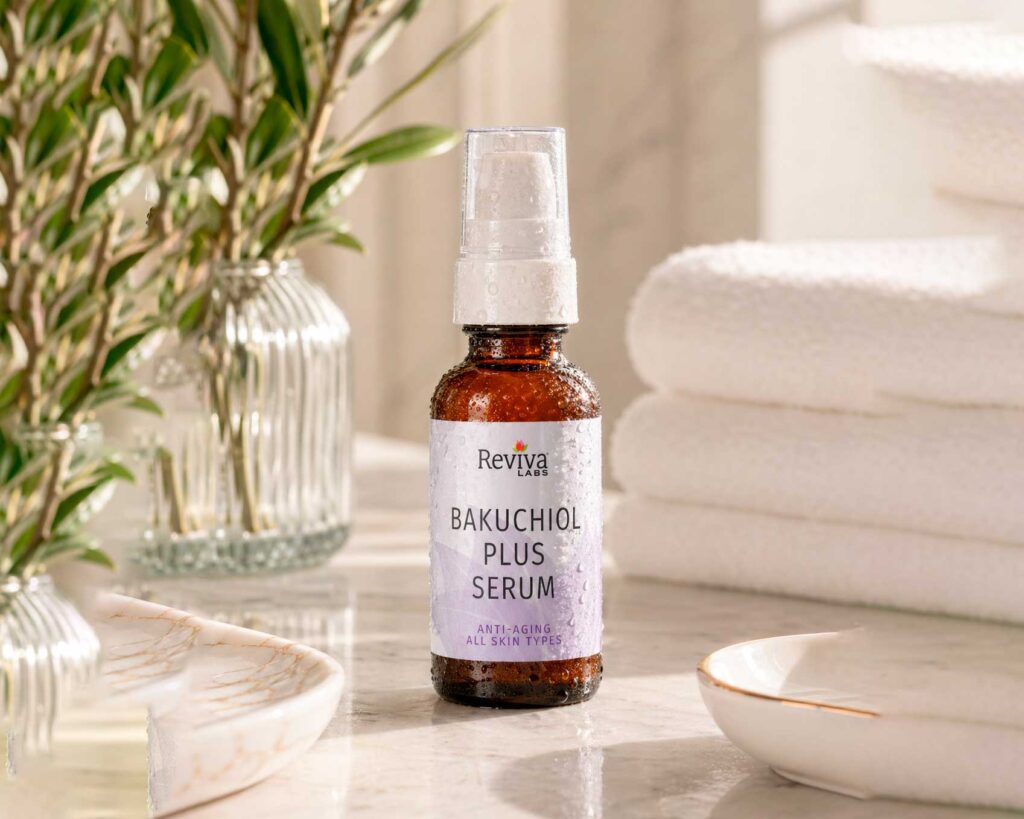
Where Reviva Labs Bakuchiol Plus Serum Fits
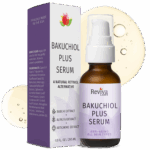
Reviva Labs Bakuchiol Plus Serum builds on bakuchiol with a simple oil-based formula designed for comfort, softness, and visible aging support. The formula pairs bakuchiol with safflower seed oil, caprylic/capric triglyceride, alfalfa, artichoke, CoQ10, Vitamin E, and other botanical extracts.
The base of a serum matters as much as the active ingredient. It affects how the formula feels, how often people reach for it, and how well it fits into dry or sensitive skin routines. Safflower seed oil brings a lightweight, skin-friendly feel. CoQ10 and Vitamin E add antioxidant support. Alfalfa and artichoke contribute botanical benefits that round out the formula’s focus on skin condition and visible aging.

The serum is vegan, phenoxyethanol-free, and made without parabens, phthalates, sulfates, mineral oil, or petroleum. It is appropriate for all skin types, including sensitive skin. It is not fragrance-free — it contains jasmine oil — so fragrance-sensitive users should patch test first.
Reviva Labs Bakuchiol Plus Serum gives people a practical way to incorporate a retinol alternative without overcomplicating their routine. It fits morning or evening use, layers easily, and supports the kind of steady, visible improvement most people actually want from skincare.

Bakuchiol in the Broader Context of Plant-Based Actives
Plant-based skincare has sometimes had a credibility problem. Too many products leaned on appealing ingredient stories without enough proof behind them. Bakuchiol is different. It has traditional use history, and it has modern clinical research supporting its role in improving visible signs of aging. The 2019 British Journal of Dermatology study did more to establish bakuchiol’s legitimacy than any marketing campaign could have, precisely because it compared results directly against retinol using rigorous methodology rather than simply claiming natural equivalence without evidence.
That matters for ingredient-conscious consumers who want formulas that feel better, perform better, and still make sense scientifically. Bakuchiol answers that demand better than most botanical ingredients because it has been tested head-to-head against the gold standard. It does not need to pretend to be retinol. It earns attention by giving retinol-sensitive users a credible, well-studied alternative.
The strongest formulas build around that logic. They do not add botanicals for label appeal. They use ingredients with a documented reason to be there. In Reviva Labs Bakuchiol Plus Serum, bakuchiol leads while safflower seed oil, alfalfa, artichoke, CoQ10, and Vitamin E support comfort, antioxidant care, and a smoother-looking complexion. That is ingredient-conscious skincare done right.
The Long View on Bakuchiol
Skincare ingredients come and go fast. Bakuchiol has lasted because it solves a real problem. People want the visible benefits associated with retinol, but many do not want the irritation, peeling, or slow adjustment period that often comes with it. Bakuchiol gives those people a better fit.
It is especially useful for people managing aging concerns alongside sensitive skin. That group is not small. It includes people who tried retinol and quit, people who never started because their skin reacts easily, and people who simply want a gentler daily active they can use without incident.
For those people, bakuchiol is not a compromise. It is the right tool. Used consistently over months, it can help skin look smoother, firmer, more even, and better supported — without the trade-off that kept so many people on the sidelines. That is not a consolation prize. That is the point.
FAQ
How often should I use bakuchiol serum?
Bakuchiol serum can be used once or twice daily. Unlike retinol, it does not increase skin’s sensitivity to sunlight in the same way, so morning use is generally appropriate. For Reviva Labs Bakuchiol Plus Serum, the directions allow AM and/or PM application. Twice-daily use can support more consistent results, but the best schedule is the one you will follow every day. If your skin is reactive or you prefer a slower start, begin once daily in the evening for the first week, then increase if your skin feels comfortable.
How do I apply bakuchiol serum?
Apply bakuchiol serum to clean, dry skin by patting it gently onto the face and neck. If you use a water-based serum, apply that first, then follow with the oil-based bakuchiol serum. Use a small amount and press it lightly across the skin. Allow 30 to 60 seconds for absorption before applying moisturizer or sunscreen. A little goes further than expected with oil serums, so use less than you think you need at first.
Is Reviva Labs Bakuchiol Plus Serum vegan?
Yes. Reviva Labs Bakuchiol Plus Serum is vegan. Bakuchiol is derived from the babchi plant, and the formula does not use animal-derived ingredients. The serum also carries the VEG designation in Reviva Labs product materials.
What makes Reviva Labs Bakuchiol Plus Serum good for sensitive skin?
Bakuchiol offers retinol-like cosmetic benefits without working through the same irritation-triggering pathway as traditional retinol, which means the peeling and adjustment phase most people associate with Vitamin A products simply does not apply here. The Reviva Labs formula also uses an oil base of caprylic/capric triglyceride and safflower seed oil, both of which help create a soft, comfortable feel and support the skin barrier rather than disrupting it. The serum is made without parabens, phthalates, sulfates, mineral oil, petroleum, or phenoxyethanol. Sensitive skin can still react to any formula, so patch testing is a smart step if your skin is highly reactive.
Is Reviva Labs Bakuchiol Plus Serum fragrance-free?
No. Reviva Labs Bakuchiol Plus Serum contains jasmine oil, which gives it a light natural scent. It does not contain synthetic fragrance. If you have a known fragrance allergy or react to botanical oils, patch test the serum on the inner forearm for 24 to 48 hours before applying it to your face.
Can I use bakuchiol with retinol?
Many people choose bakuchiol because they do not tolerate retinol well, so using both is not always necessary. If your skin already handles retinol comfortably, bakuchiol can fit into a routine, but introduce it slowly and avoid overloading your skin with too many actives at once. For sensitive skin, it often makes more sense to use bakuchiol as the gentler alternative rather than layering it with retinol.
Can I use bakuchiol every day?
Yes, most people can use bakuchiol every day. Daily use is also the best way to see visible results over time. If you are new to active skincare or have reactive skin, start once daily and increase as tolerated. Consistency matters more than heavy application.
References and Sources
- Dhaliwal S, Rybak I, Ellis SR, Notay M, Trivedi M, Burney W, Sivamani RK. “Prospective, randomized, double-blind assessment of topical bakuchiol and retinol for facial photoageing.” British Journal of Dermatology. 2019;180(2):289-296. https://doi.org/10.1111/bjd.16918
- Chaudhuri RK, Bojanowski K. “Bakuchiol: a retinol-like functional compound revealed by gene expression profiling and clinically proven to have anti-aging effects.” International Journal of Cosmetic Science. 2014;36(3):221-230. https://doi.org/10.1111/ics.12117