
Ingredients, Natural, Reviva Labs, Skin Care
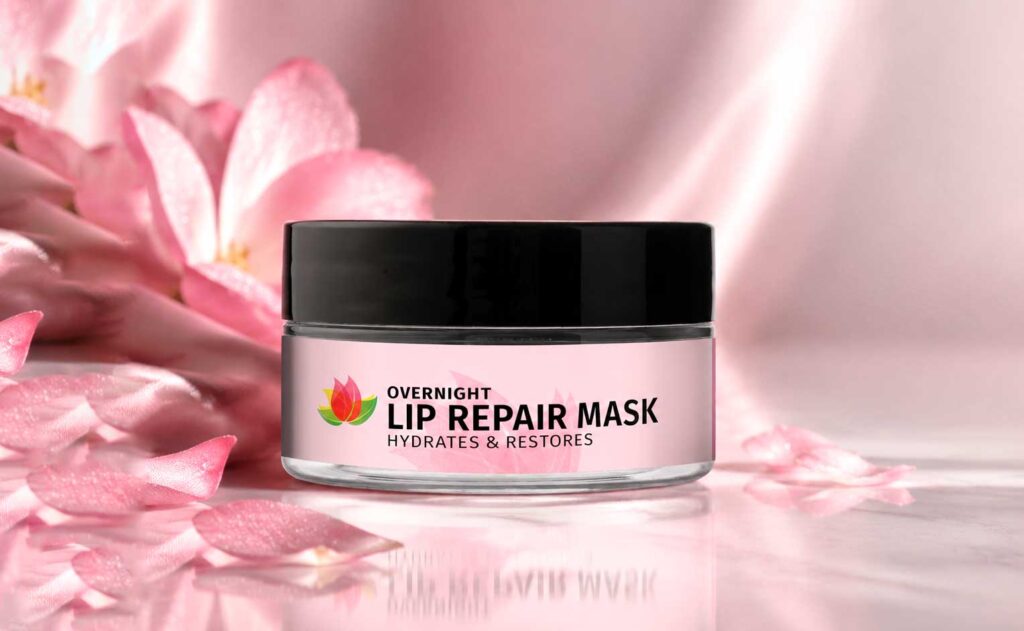
The Vegan Lanolin Science Powering Our Overnight Lip Repair Mask

Jun
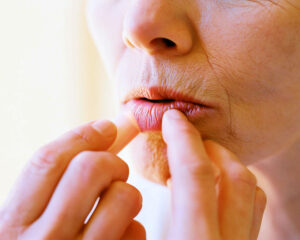
Your lips are working against a natural deficit every day. Unlike the rest of your skin, lips contain no sebaceous glands, which means they produce none of the natural oils that keep skin surfaces soft and defended. They have a thinner stratum corneum than facial skin, which means moisture escapes far more quickly. They are exposed to everything from wind and dry air to saliva and food acids, all of which disrupt whatever protective layer they manage to build. When we set out to formulate the Reviva Labs Overnight Lip Repair Mask, the question of which ingredient would anchor the formula carried real weight, because the answer had to address all of those challenges at once.
For decades, the gold standard answer to that formulation challenge in cosmetics was lanolin. Lanolin appears in countless lip care, skin care, and pharmaceutical preparations, and Reviva Labs uses it in several of our formulas for good reason. It earns its reputation because it genuinely works. It holds moisture, softens texture, and forms a flexible film that mimics the way the skin’s own lipid layer behaves. For this specific product, however, lanolin presented two complications particular to this use case that pointed us toward a better-fit ingredient. The solution we chose, Bis-Diglyceryl Polyacyladipate-2, is listed on our label with the parenthetical note Vegetable-Derived Lanolin. That note is not marketing language. It is a direct description of what this ingredient is and why it belongs here.
We believe every ingredient decision deserves a full explanation. This is ours.
What Lanolin Does and Why Formulators Have Relied on It
Lanolin has been used in skin and lip care formulations for well over a century, and it has stayed in wide use because its functional properties are genuinely difficult to replicate. It is a waxy substance secreted by the sebaceous glands of sheep, retrieved from raw wool during processing. Its chemical makeup is remarkably complex, comprising a mixture of wax esters, free fatty acids, sterols, and fatty alcohols in proportions that happen to interact extremely well with human skin. That structural complexity is part of what makes it so effective. Lanolin does not simply sit on top of the skin as a passive barrier. It integrates into the skin’s own lipid matrix and behaves like a native component.
In practical terms, lanolin functions as both an emollient and a humectant. As an emollient, it softens and smooths the surface by filling the tiny gaps between skin cells and reducing friction. As a humectant, it attracts moisture from the surrounding environment and holds it at the skin surface. It also forms a semi-occlusive film, meaning it allows some gas exchange while significantly slowing the rate at which water escapes through the skin. For lips, which lose moisture at a high rate due to their thin skin and lack of oil glands, that combination of properties is highly valuable. The result is a product that feels cushioning, stays effective over time, and delivers real softness rather than a temporary slippery sensation.
Those properties are exactly what we wanted for an overnight lip treatment. An overnight formula needs to form a lasting, flexible layer that works while the user sleeps, reducing overnight moisture loss and allowing conditioning ingredients to absorb and perform without competition from evaporation. Lanolin would technically accomplish that objective. The issue was not performance. It was two other factors that made lanolin the wrong choice for this specific formula: its animal origin and its federal regulatory classification under the FDA’s OTC drug framework.
The FDA Threshold That Changes the Formulation Decision
The Food and Drug Administration’s Code of Federal Regulations, Title 21, Part 347, governs over-the-counter skin protectant drug products. Within that regulation, Section 347.10 specifies the active ingredients and their permitted concentrations that define an OTC skin protectant drug. Lanolin appears in this section at subsection (k), designated as a skin protectant active ingredient at concentrations of 12.5 to 50 percent. That is a precise federal threshold, and it carries real practical consequences for cosmetic formulators who want to use lanolin in treatment-level concentrations.
When a lip product uses lanolin as an active ingredient at those concentrations and makes skin protectant claims, that product is not a cosmetic. It is an OTC drug product. Drug classification triggers a completely different regulatory compliance framework: active ingredient declarations on front labels, Drug Facts boxes, drug registration requirements, and restrictions on what can appear in the formulation and labeling. A cosmetic brand that wants to use lanolin at functionally significant concentrations while making the kinds of protective and restorative claims that consumers expect from an intensive overnight treatment is, under that framework, operating as a drug product manufacturer. That is a significant operational and regulatory burden that most cosmetic brands are not structured to carry.
Bis-Diglyceryl Polyacyladipate-2 carries no equivalent classification. The FDA does not list it as an OTC drug active ingredient. It functions as a cosmetic skin conditioning agent and emollient, and it can be used across a wide range of concentrations in cosmetic formulations without converting those products into OTC drug products. For a treatment-positioned overnight lip mask where we wanted to use a high-performing barrier ingredient as the primary emollient, that regulatory freedom was a real advantage. We could formulate for performance at the concentration level the formula required without the compliance architecture of a drug product. That is the regulatory side of the decision. The performance side follows directly from the ingredient itself.
What Bis-Diglyceryl Polyacyladipate-2 Actually Is
The name is long and scientific-sounding, and we want to be fully transparent about what it represents. Bis-Diglyceryl Polyacyladipate-2 is a synthetic ester produced from plant-derived fatty acids and organic acids. It is made by combining diglycerin with adipic acid (an organic acid found naturally in sugar beet juice, among other sources) and a group of vegetable fatty acids that include caprylic acid (8 carbons), capric acid (10 carbons), stearic acid (18 carbons), isostearic acid (a branched 18-carbon chain), and hydroxystearic acid. The resulting compound is a semi-solid, slightly amber-colored paste that is not water-soluble and does not penetrate deeply into the skin. The Cosmetic Ingredient Review Expert Panel, an independent scientific body that evaluates cosmetic ingredient safety in consultation with the U.S. Food and Drug Administration and the Consumer Federation of America, formally assessed Bis-Diglyceryl Polyacyladipate-2 and concluded it is safe as used in cosmetic formulations at current practices of use and concentration.
Its structural similarity to lanolin is not coincidental. The fatty acid profile of Bis-Diglyceryl Polyacyladipate-2 was designed to mimic the functional behavior of lanolin while sourcing entirely from plant-based inputs. Because it is oil-soluble and paste-like in consistency, it behaves in formulations the way lanolin behaves it forms a cohesive, adhesive film on the skin surface, it reduces transepidermal water loss, and it leaves a smooth, cushioning feel rather than a greasy or heavily occlusive sensation. Its water-binding capacity, a key measurement of how much moisture the ingredient can hold against the skin surface, is comparable to that of lanolin. A formulation using this ingredient at a 10 percent level can absorb and retain approximately 17 percent of its weight in water, making it genuinely effective as an overnight moisture treatment rather than simply a surface coating that wears off by morning.
Unlike traditional lanolin, which can carry a characteristic animal odor and a yellowish tint that formulators often need to mask or minimize, Bis-Diglyceryl Polyacyladipate-2 has minimal impact on the scent or color profile of a finished formula. That matters in a formula that also contains organic Grapefruit Peel Oil and organic Mandarin Peel Oil, two ingredients chosen specifically for the pleasant, light sensory character they bring to a product applied before sleep. When the base ingredient does not compete with those sensory elements, the finished formula can deliver both genuine performance and an experience the user looks forward to using.
How This Ingredient Works Within the Overnight Lip Repair Mask
In our Overnight Lip Repair Mask, Bis-Diglyceryl Polyacyladipate-2 appears first on the ingredient list, which means it is present at the highest concentration of any ingredient in the formula. It is not a supporting player in the formula. It is the structural foundation from which everything else operates. Its semi-occlusive film creates the environment within which every other ingredient can do its job effectively. Without that barrier layer, the oils, extracts, and ceramides in the formula would deliver a brief burst of conditioning and then gradually dissipate through evaporation and wear over the course of a night.
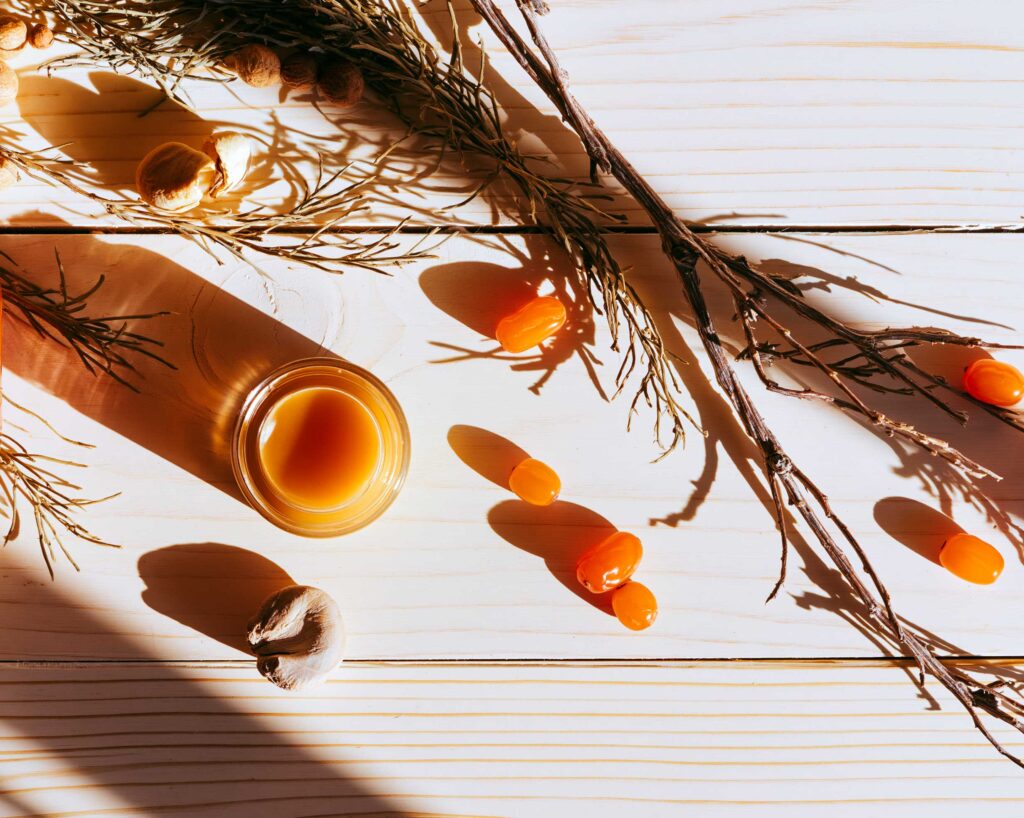
The ingredients that follow it in the list each contribute a specific function to the complete system. Organic Jojoba Oil, Organic Sweet Almond Oil, and Organic Shea Butter supply fatty acids and lipids that closely resemble the skin’s natural composition, softening rough texture and improving the feel of the lip surface itself. Organic Buriti Fruit Oil contributes a rich carotenoid antioxidant profile. Ceramide NP works at a structural level, supporting the lip’s natural barrier by replenishing ceramides that are commonly depleted by chronic exposure to drying conditions. Organic Candelilla Wax and Organic Carnauba Wax give the product its structure and stability, ensuring it holds its texture consistency across temperature changes. Sea Buckthorn Fruit Extract and Tocopherol round out the antioxidant layer. The formula is genuinely layered in its approach to lip repair, and Bis-Diglyceryl Polyacyladipate-2 is what allows that layering to function as a coherent overnight system.
The texture of the finished product reflects the physical character of this primary ingredient. It melts softly onto the lips without requiring significant pressure or manipulation. It does not form a rigid coating or a sticky film that would create discomfort during sleep. It stays where it is applied, which matters for an overnight product that needs to remain active through several hours of use without transferring away. That combination of ease of application, comfortable overnight wear, and genuine sustained hydration is what an overnight lip treatment should deliver, and the choice of primary ingredient is what makes it achievable.
Why Plant-Derived Sourcing Was Not a Compromise
We want to be clear about something before going further. Reviva Labs is not opposed to lanolin. Our Vitamin E-Stick is one of our top-selling products, it uses lanolin, and we actively promote it as an ingredient because it performs exceptionally well in that formula and at that concentration. Lanolin has a legitimate, well-earned place in clean beauty formulations. The decision to use Bis-Diglyceryl Polyacyladipate-2 in the Overnight Lip Repair Mask was not a rejection of lanolin as an ingredient category. It was a formulation decision specific to this product; driven by the regulatory threshold we described earlier and by the availability of a plant-derived option that performs comparably in this particular context.
The practical reality is straightforward. An intensive overnight treatment formula needs its primary emollient at a meaningful concentration to deliver real results. At the treatment levels this formula required, lanolin would push us toward OTC drug territory under 21 CFR 347.10(k). Bis-Diglyceryl Polyacyladipate-2 gave us the same barrier-forming, moisture-retaining performance without that regulatory constraint. When a plant-derived ingredient performs at the same level as its animal-derived counterpart for a specific application, removes a regulatory complication, and fits the formula better for those reasons, it becomes the right choice for that product. That is precisely the decision we made here, and it was driven by formulation logic, not a blanket policy.
There is a genuine benefit worth acknowledging alongside that. Some of our customers actively seek out vegan formulations, and having a plant-derived primary emollient in the Overnight Lip Repair Mask means those customers can use it with full confidence. That was not the driving reason we selected this ingredient, but it is a real and welcome plus. The label note Vegetable-Derived Lanolin communicates both function and source in a single phrase, so every customer, regardless of their preferences, knows exactly what they are applying. That kind of direct ingredient transparency is consistent with how Reviva Labs has approached labeling and formulation for more than 50 years.

Frequently Asked Questions
What is Bis-Diglyceryl Polyacyladipate-2 and is it safe?
Bis-Diglyceryl Polyacyladipate-2 is a plant-derived ester emollient used in cosmetics as a vegan substitute for lanolin. It is produced by combining diglycerin with adipic acid and vegetable fatty acids including caprylic, capric, stearic, isostearic, and hydroxystearic acids. The Cosmetic Ingredient Review Expert Panel formally assessed its safety and concluded it is safe for use in cosmetic formulations at current practices of use and concentration. Because of its size and oil-soluble nature, it forms a protective film on the skin surface rather than penetrating deeply into tissue. It is widely used in lip care products, barrier creams, and color cosmetics by formulators seeking a high-performing vegan alternative to traditional lanolin.
Why does the FDA treat lanolin differently from other lip care ingredients?
Lanolin is classified as an OTC drug active ingredient under 21 CFR 347.10(k) of the Code of Federal Regulations when used in skin protectant products. Specifically, the FDA’s skin protectant monograph lists lanolin as a drug active ingredient at concentrations of 12.5 to 50 percent. A cosmetic lip product that uses lanolin in that concentration range while making skin protectant claims becomes an OTC drug product, which requires Drug Facts labeling, active ingredient declarations, and additional regulatory compliance. This threshold creates a real constraint for cosmetic formulators who want to use lanolin at functionally significant levels in treatment-positioned products. Bis-Diglyceryl Polyacyladipate-2 does not carry this classification and can be used freely as a cosmetic emollient across a wide range of concentrations.
Is the Bis-Diglyceryl Polyacyladipate-2 in the Overnight Lip Repair Mask truly vegan?
Yes. The Bis-Diglyceryl Polyacyladipate-2 used in our Overnight Lip Repair Mask is vegetable-derived, as indicated on the product label. This ingredient can technically be produced from either plant or animal sources depending on the fatty acid origin used in manufacture, which is why verifying the source with suppliers is important for any brand making a vegan claim. Reviva Labs confirms sourcing with our ingredient suppliers and uses only the plant-derived form in our formulas, consistent with our commitment to vegan and cruelty-free skincare. Every ingredient in the Overnight Lip Repair Mask was selected with that standard applied.
How does Bis-Diglyceryl Polyacyladipate-2 hydrate lips overnight?
It works through two primary mechanisms operating at the same time. First, it forms a semi-occlusive film over the lip surface that slows the rate at which moisture escapes through the skin, a process known as transepidermal water loss. Second, it has a significant water-binding capacity, meaning it holds moisture at the skin surface rather than allowing it to evaporate. Together these properties create a sustained hydration environment over the course of the night. The film layer also keeps the other conditioning ingredients in the formula, including organic oils, Shea Butter, and Ceramide NP, in active contact with the lip surface rather than allowing them to dissipate. The result is lips that feel noticeably softer and more comfortable by morning.
Can someone with a lanolin sensitivity use products with Bis-Diglyceryl Polyacyladipate-2?
Lanolin sensitivity is typically associated with lanolin alcohols, a component of traditional lanolin that has historically been linked to sensitization in some individuals. Bis-Diglyceryl Polyacyladipate-2 is structurally different from lanolin and does not contain lanolin alcohols. However, individual skin responses vary, and anyone with known sensitivities should review the full ingredient list carefully and consider a patch test before use on a larger area. If you have a documented sensitivity to lanolin or to any of the fatty acid components listed in the formula, consulting a dermatologist before use is a reasonable precaution. We always recommend that approach for customers with reactive or sensitive skin regardless of the specific ingredient involved.
References and Sources
- U.S. Food and Drug Administration. Code of Federal Regulations Title 21, Part 347, Section 347.10: Skin Protectant Drug Products for Over-the-Counter Human Use, Active Ingredients. Electronic Code of Federal Regulations. https://www.ecfr.gov/current/title-21/part-347/section-347.10
- Cosmetic Ingredient Review Expert Panel. “Safety Assessment of Bis-Diglyceryl Polyacyladipate-2 and Bis-Diglyceryl Polyacyladipate-1 as Used in Cosmetics.” International Journal of Toxicology, 2013. PubMed PMID: 24174474. https://pubmed.ncbi.nlm.nih.gov/24174474/
- CosmeticsInfo.org. Bis-Diglyceryl Polyacyladipate-2 Ingredient Profile. Cosmetic Ingredient Review. https://www.cosmeticsinfo.org/ingredient/bis-diglyceryl-polyacyladipate-2/