
Ingredients, Natural, Reviva Labs, Skin Care
Why Your Toner Should Exfoliate?

Mar
Healthy skin renews itself constantly. Dermatology research estimates the human body sheds roughly 30,000 to 40,000 skin cells every minute as part of the natural renewal cycle. Those cells rise from the deeper layers of the epidermis and eventually reach the outer surface of the skin. When this process works efficiently, the complexion appears smooth, even, and bright. When it slows down, the skin begins to look dull and rough because older cells remain on the surface longer than they should.
Most people believe cleansing solves this problem. Cleansers remove oil, dirt, sunscreen, and makeup from the surface of the skin. They perform an important job in any routine. Yet cleanser rarely removes the layer of dead skin cells that accumulate across the face over time. Washing the skin can leave that buildup untouched, which is one reason many routines fail to deliver visible improvement.
Glycolic Acid Recommended Products

This is where toner becomes far more important than many people realize. Toner should not exist simply as a refreshing splash of liquid between cleansing and moisturizing. When formulated correctly, toner becomes a functional treatment step that improves the entire skincare routine. The most effective toners include ingredients that gently exfoliate the surface of the skin.
Exfoliating toners help loosen the bonds that hold dead skin cells in place. Those cells then release naturally rather than requiring aggressive scrubbing. Over time the skin begins to look brighter, smoother, and clearer. The toner step evolves from an optional extra into one of the most productive parts of the routine.
Many consumers still think of toner as an outdated step left over from older skincare traditions. That perception comes from decades ago when toners relied heavily on alcohol and fragrance. Those products refreshed the skin but rarely contributed to long term improvement. Modern formulations have changed that expectation completely. Today a well-designed exfoliating toner can improve texture, tone, clarity, and product absorption with consistent daily use.

The Original Purpose of Toner
Historically, toner served a narrow purpose within a skincare routine. Early facial cleansers often left residue behind after washing. They also disrupted the skin’s natural acidity, leaving the surface feeling tight or uncomfortable. Toner helped remove leftover cleanser while restoring a balanced environment on the skin.
That original function still exists, though modern cleansers have improved significantly. Today most cleansers rinse away cleanly and maintain the skin’s natural balance. Because of these improvements, toner evolved into a more meaningful treatment step within skincare routines.
A liquid formula spreads easily across freshly cleansed skin. The thin consistency allows ingredients to absorb quickly and evenly across the face. This makes toner an ideal delivery system for active ingredients that need direct contact with the skin.
Exfoliating ingredients perform especially well in this format. When applied immediately after cleansing, they interact directly with the outer layer of skin without interference from oils or sunscreen. This timing allows the toner to begin loosening surface buildup right away.
The goal is not aggressive peeling or irritation. Instead, the toner gently encourages the skin’s natural renewal process. With consistent use, the surface becomes smoother and clearer while maintaining comfort and balance.
Why Dead Skin Cells Build Up on the Surface
Skin renewal follows a steady cycle that repeats throughout life. New cells form in the deeper layers of the epidermis and slowly migrate toward the surface. During this journey the cells flatten, lose moisture, and eventually become part of the outermost protective layer known as the stratum corneum.
In younger skin, this cycle usually takes around twenty-eight days. Once those cells reach the surface they should detach and fall away naturally. When this process happens efficiently, the skin maintains a smooth texture and even tone.
Several factors slow this cycle as people age. Sun exposure damages the proteins that regulate cell turnover. Environmental stress can interfere with healthy skin renewal. Dehydration and barrier disruption also cause dead cells to remain on the surface longer than intended.
When shedding slows down, the surface layer thickens with accumulated cells. This buildup creates a dull appearance because the uneven surface scatters light instead of reflecting it. Rough patches may appear across the cheeks, forehead, and chin.
Dead cells also block the absorption of treatment products. Serums and moisturizers struggle to penetrate through the outer layer when buildup remains in place. This reduces the effectiveness of otherwise well-designed formulas.
Exfoliation restores the natural rhythm of the skin. Removing excess surface cells reveals fresher skin underneath. A toner that gently exfoliates can accomplish this gradually without damaging the barrier.

Chemical Exfoliation Works Without Scrubbing
Exfoliation usually falls into two broad categories. Physical exfoliation relies on friction to remove dead skin cells from the surface. Scrubs, textured cloths, and brushes all work through mechanical action against the skin.
This approach can produce immediate results, though it carries risks when overused. Aggressive scrubbing can create microtears in the skin barrier. Sensitive skin often reacts with redness or irritation after frequent physical exfoliation.
Chemical exfoliation uses a different strategy. Instead of friction, it relies on ingredients that dissolve the bonds connecting dead skin cells. These bonds act like microscopic glue holding older cells together on the surface of the skin.
When those bonds weaken, dead cells release naturally. The process happens evenly across the face instead of concentrating in areas where scrubbing pressure is strongest. This leads to a smoother and more consistent result.
Exfoliating acids often appear in toners because the liquid texture distributes them evenly across the skin. The formula spreads quickly and absorbs within seconds. This allows the ingredients to begin working immediately after application.
A properly balanced exfoliating toner encourages gradual renewal. Skin becomes brighter and smoother with regular use while remaining comfortable and hydrated.
Glycolic Acid Demonstrates the Power of Exfoliating Toners
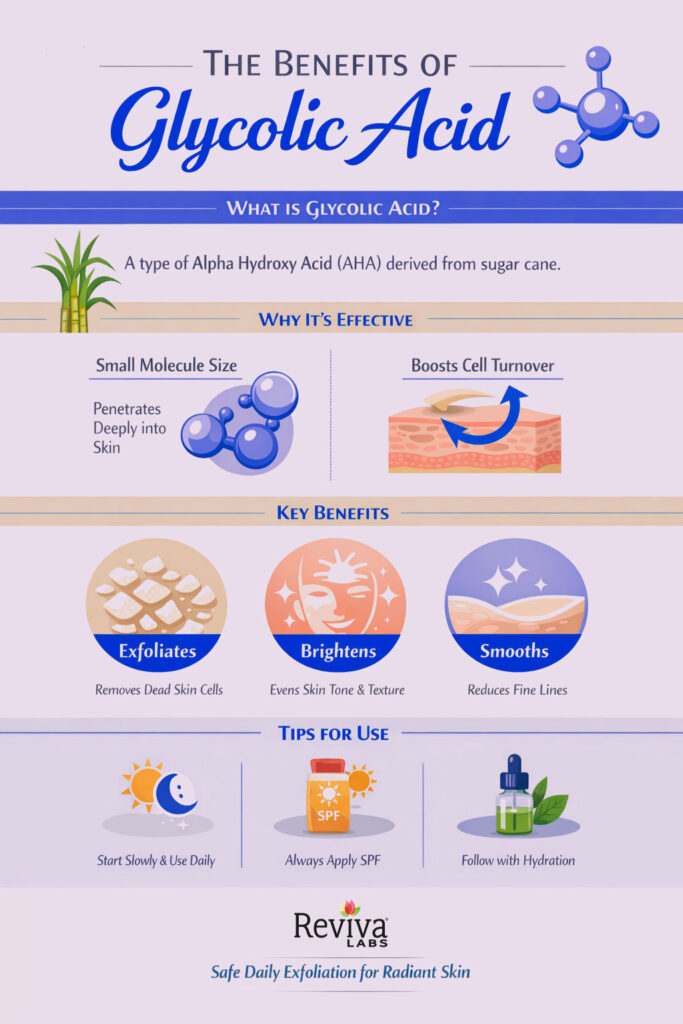
Among exfoliating ingredients, glycolic acid holds a special place in skincare science. Derived from sugar cane, glycolic acid belongs to the family of alpha hydroxy acids. It has a small molecular structure that allows it to penetrate the skin efficiently.
Once applied, glycolic acid loosens the bonds between dead skin cells on the surface. As those bonds break apart, the older cells detach and shed more easily. The skin beneath appears fresher and more radiant.
This ingredient also encourages faster cell turnover over time. Newer skin cells rise to the surface more efficiently, helping maintain a smoother complexion. Fine lines may appear softer because the surface texture becomes more even.
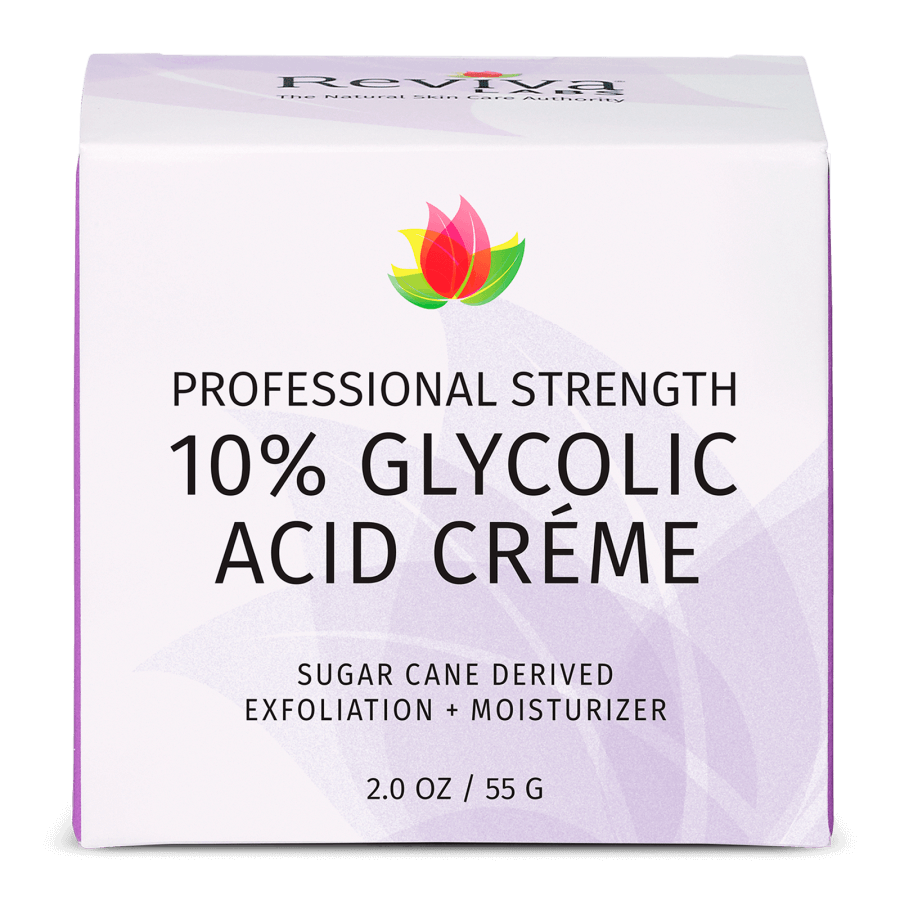
Moderate concentrations often work best for daily use. A gentle formula provides consistent improvement without overwhelming the skin. Reviva Labs helped introduce the concept of safe daily exfoliation decades ago and continues to support this approach through exfoliating products that combine mild glycolic acid with soothing ingredients for comfortable use.
Consistency plays a larger role than intensity when using glycolic acid. Small amounts applied regularly encourage the skin to renew itself gradually. Over time this steady process creates noticeable improvements in brightness and texture.
Exfoliating Toners Improve the Entire Routine
Many people evaluate skincare products individually. They expect each serum or cream to produce dramatic results on its own. Skin routines rarely function in isolation like this. Each step prepares the skin for the next.
Toner sits at a strategic point in the routine immediately after cleansing. At this stage the skin is free from oils, sunscreen, and makeup residue. Active ingredients applied at this moment interact directly with the surface.
When the toner gently exfoliates, it clears away dead cells that block absorption. This prepares the skin to receive serums and moisturizers more effectively. Treatment products spread evenly and penetrate more easily.
The improvement often becomes noticeable in subtle ways at first. Serums seem to absorb faster than before. Moisturizers feel smoother as they glide across the skin. Makeup begins to sit more evenly across the face.
Over time these small changes accumulate. Skin tone looks more even because light reflects evenly from the smoother surface. Texture improves as clogged pores and rough patches gradually diminish.
The toner becomes a quiet but essential contributor to the entire routine. By improving the condition of the surface, it allows every other product to perform at its best.
Gentle Exfoliation Protects the Skin Barrier
Exfoliation sometimes receives criticism because people associate it with irritation. Those concerns usually arise from aggressive peels or excessive scrubbing. The skin barrier becomes compromised when exfoliation removes too much of the protective outer layer.
A balanced exfoliating toner works differently. Instead of stripping away large amounts of skin at once, it supports the natural shedding process. The goal is to remove excess buildup while leaving healthy cells intact.
Hydrating ingredients often appear alongside exfoliating acids in well-designed formulas. Humectants attract water to the surface of the skin, helping maintain softness during the renewal process. Soothing botanicals may calm the skin and reduce the likelihood of irritation.
This balance allows exfoliation to occur without damaging the barrier. Skin gradually becomes smoother while maintaining resilience against environmental stress.
Consistent use strengthens the appearance of healthy skin over time. The complexion begins to look clearer and brighter without the redness or dryness associated with aggressive treatments.

Signs Your Toner Should Be Doing More
Many skincare routines still rely on toners that offer little functional benefit. These products refresh the skin temporarily but fail to improve its long-term condition. When a toner lacks active ingredients, it contributes very little to the routine.
Several common signs suggest a toner is not doing enough. Skin may still feel rough even after cleansing and moisturizing. Dullness may return quickly despite the use of brightening serums or treatments.
Clogged pores and uneven texture also indicate the presence of excess surface cells. Without exfoliation, those cells accumulate day after day. The rest of the routine struggles to deliver noticeable improvement.
An exfoliating toner addresses these issues directly by encouraging steady renewal. Dead cells release gradually, allowing fresh skin to appear. The change happens slowly but consistently as the skin’s natural cycle improves.
Many people notice the difference within several weeks of switching to an exfoliating toner. The complexion begins to look smoother and brighter even before additional treatments are introduced.
Choosing the Right Exfoliating Toner
Selecting an exfoliating toner requires attention to balance rather than strength. The goal is steady improvement without overwhelming the skin. Moderate concentrations often perform better over time than aggressive formulas.
Alpha hydroxy acids work well for individuals seeking smoother texture and improved brightness. These ingredients focus primarily on the surface of the skin. Beta hydroxy acids penetrate deeper into pores and help dissolve oil buildup.
Sensitive skin often responds best to gentle concentrations combined with soothing ingredients. Hydrating components help maintain comfort during the exfoliation process. This combination allows the skin to renew itself without excessive dryness.
Frequency also matters when introducing exfoliating toners. Some individuals use them daily while others apply them several times per week. Observing how the skin responds helps determine the ideal schedule.
Healthy exfoliation should leave the skin feeling smoother without persistent redness or irritation. When the balance is correct, the toner becomes a reliable part of the routine.
Why the Toner Step Deserves More Attention
Serums and creams often dominate conversations about skincare routines. Toner receives less attention even though it sits at a crucial point in the sequence of products. This step prepares the skin for everything that follows.
A well-designed exfoliating toner clears away lingering debris and loosens dead cells on the surface. By doing this consistently, it maintains a smoother and brighter complexion. The skin begins to respond more effectively to every treatment applied afterward.
Improvement usually appears gradually rather than dramatically. Over several weeks the skin reflects light more evenly and feels softer to the touch. Pores may appear smaller as surface buildup decreases.
Healthy skin rarely depends on occasional dramatic treatments alone. The most reliable improvements come from steady daily care that supports the natural renewal cycle.
An exfoliating toner plays a central role in that process. When this step encourages gentle exfoliation, the entire skincare routine becomes more effective. The skin looks clearer, smoother, and more radiant with each passing week.
Frequently Asked Questions
What does an exfoliating toner actually do for your skin?
An exfoliating toner removes the thin layer of dead skin cells that builds up on the surface of your skin every day. Ingredients such as glycolic acid loosen the bonds between old cells so they shed more easily. When those dull cells are removed, skin often looks brighter and smoother. Exfoliating toners also help other products absorb better because creams and serums reach fresher skin instead of sitting on buildup.
How often should you use an exfoliating toner?
Most people begin with two or three applications per week and increase use as skin adapts. Low-strength formulas can often fit into a daily routine when skin tolerates them well. The key is consistency rather than aggressive use. Gentle daily exfoliation often produces better long-term results than strong treatments used occasionally. If skin becomes red or sensitive, spacing applications farther apart usually solves the problem.
Is glycolic acid a good ingredient for a toner?
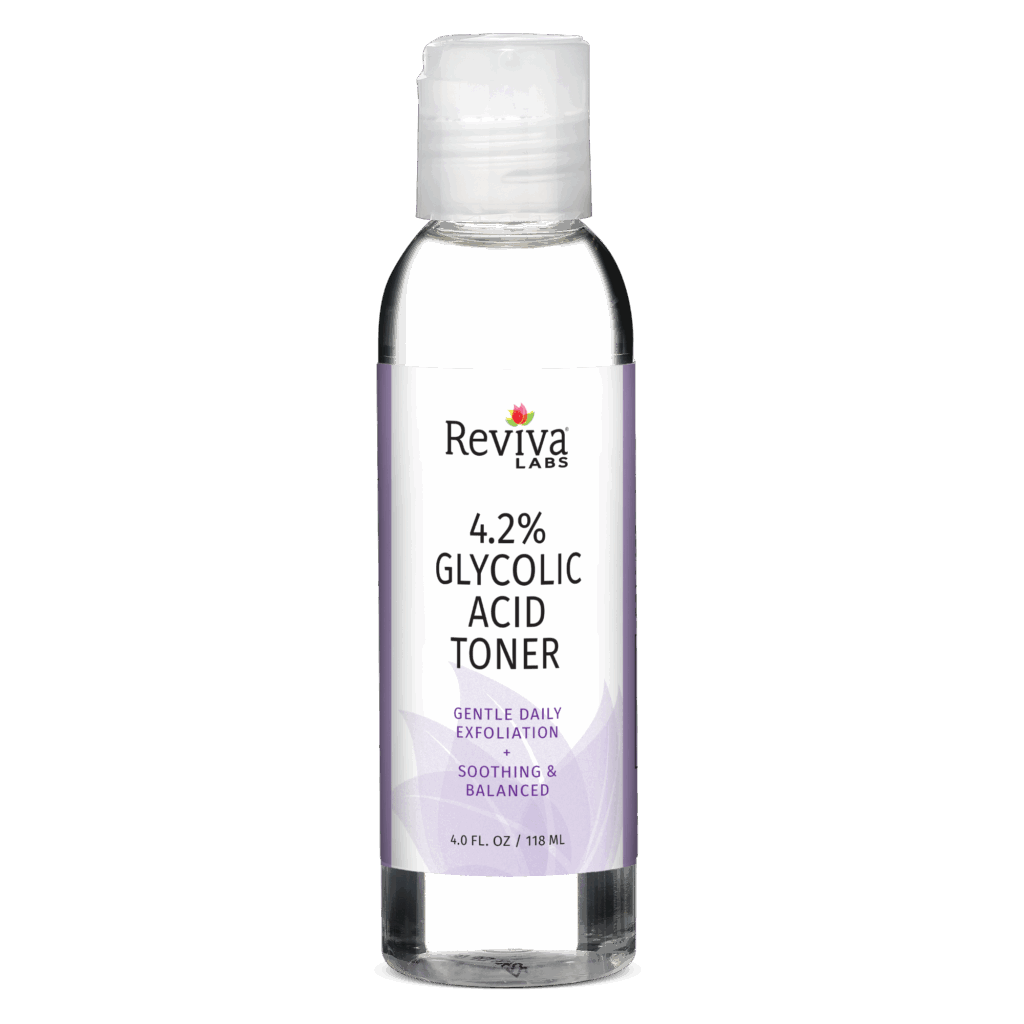
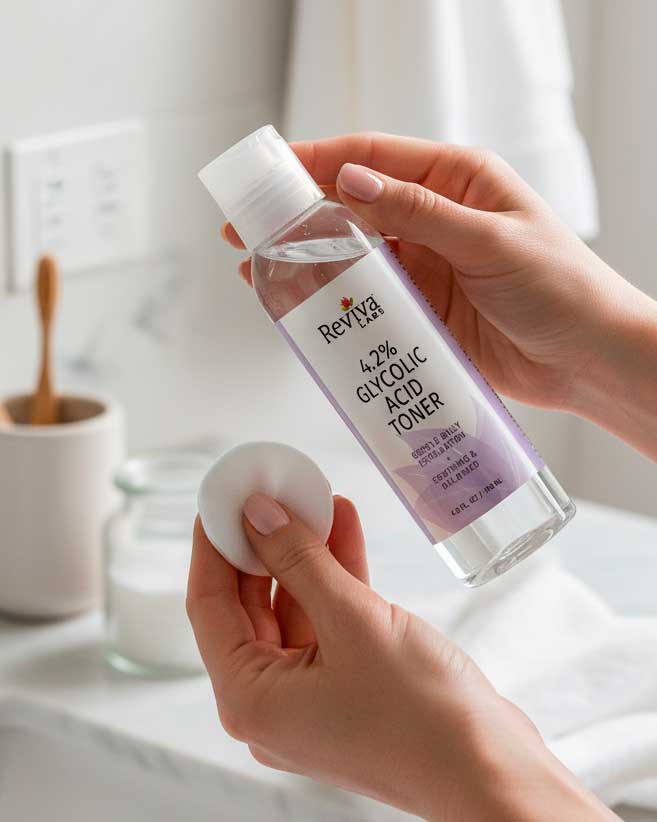
Glycolic acid works well in toners because it dissolves surface buildup while also helping refine texture and tone. Its small molecular size allows it to move easily across the skin’s surface. Many exfoliating toners use modest concentrations so they smooth and refresh skin without harsh scrubbing. Products like the Reviva 4.2% Glycolic Acid Toner combine glycolic acid with soothing ingredients to balance exfoliation with comfort.
Can exfoliating toners help with dull or uneven skin tone?
Yes, dullness often comes from accumulated dead skin cells. When those cells remain on the surface, light reflects unevenly and skin looks flat or tired. Regular exfoliation removes that buildup and encourages fresher cells to appear at the surface. Over time this process helps improve brightness and smoothness, which can make tone appear more even.
Do exfoliating toners replace other exfoliating products?
Not completely, but they often reduce the need for harsher scrubs or strong peels. A toner with gentle acids can deliver small amounts of exfoliation each day. This steady approach maintains smoother skin without aggressive treatments. Some people still use masks or exfoliating treatments occasionally, yet a well-formulated toner often becomes the foundation of a consistent exfoliation routine.