
Clean Beauty, Ingredients, Natural, Reviva Labs, Skin Care
Can You Use Glycolic Acid in Summer? A Clear Answer

Jul
Every June, dermatology forums and skincare group chats fill up with some version of the same question. Should glycolic acid go into a drawer until fall arrives? The instinct behind that question isn’t paranoia, it’s based on something real. Alpha hydroxy acids do interact with how skin responds to the sun, and the U.S. Food and Drug Administration has spent decades studying exactly how much. But interacting with sun sensitivity and requiring total avoidance are two very different things, and the gap between them is where most of the confusion lives. Here’s what the research, the labeling requirements, and decades of formulating with this ingredient actually tell us about wearing glycolic acid through the hottest months of the year.

What Glycolic Acid Does And Why Summer Changes The Picture
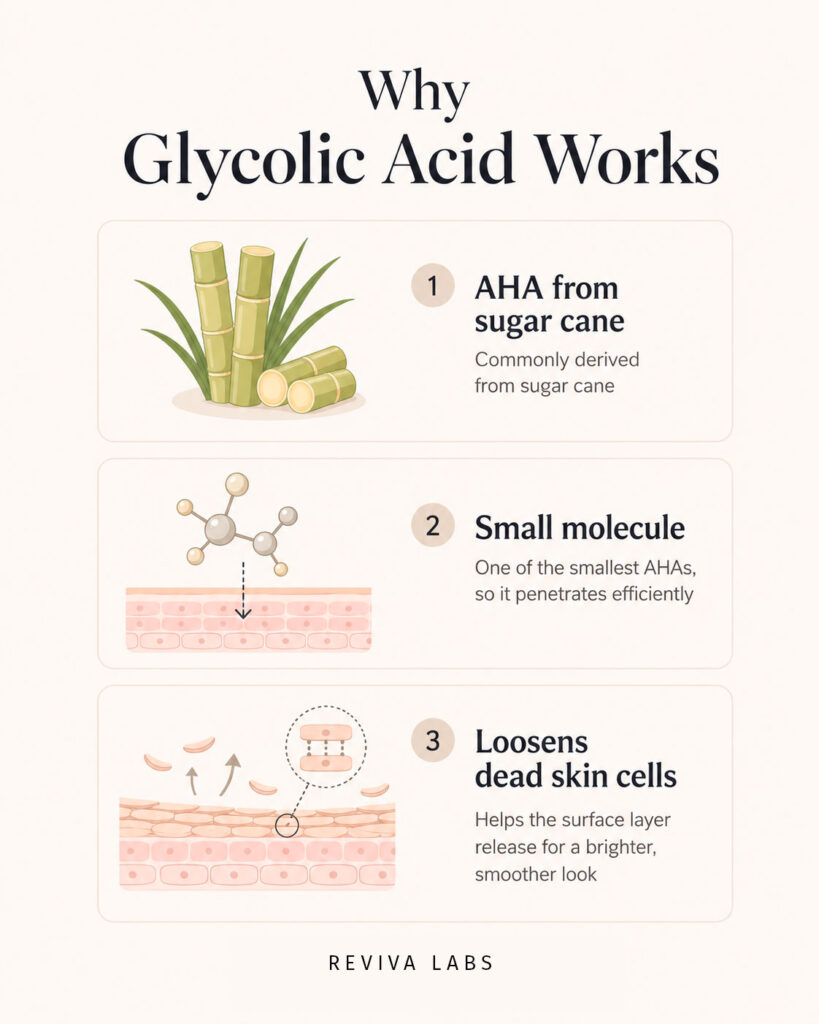
Glycolic acid is an alpha hydroxy acid most commonly derived from sugar cane, and it happens to be one of the smallest AHA molecules available, which is part of why it penetrates skin so efficiently compared to larger acids. Once applied, it works on the bonds that hold dead skin cells together at the surface, encouraging that outer layer to release rather than sit and dull the complexion over time. That process is why glycolic acid shows up so often in products aimed at texture, tone, and the visible effects of sun exposure or years of accumulated dullness. It’s also a big part of why the ingredient has remained a skincare staple for so long, it produces a change you can actually see and feel rather than a promise you have to take on faith. None of that mechanism changes with the seasons. What changes is how your skin behaves once that outer layer has been refreshed and is, by nature, a little more exposed underneath.
It helps to remember that glycolic acid isn’t a single fixed formula either. Concentration, pH, and the base it’s suspended in all effects how strongly a given product performs and how your skin is likely to respond. A rinse-off cleanser containing glycolic acid behaves very differently than a leave-on cream at a higher percentage, even though both are technically the same active ingredient. That distinction matters more in summer than any other season, simply because the margin for error shrinks when UV exposure is already higher across the board.
Longer days, more time outdoors, and a general looseness around sunscreen habits all combine to make summer the season where cumulative sun exposure adds up fastest, often without anyone noticing in the moment. Skin that’s already a little more reactive from consistent acid use is going to notice inconsistent sun protection more than it would during a gray week in January. That’s not a flaw in the ingredient itself; it’s simply how exposure and sensitivity interact. More UV meeting more reactive skin equals more risk, and that equation holds true whether or not glycolic acid happens to be part of the picture. The mistake a lot of people make is assuming the fix is removing the acid entirely, instead of tightening up the other half of the equation that was probably already a little loose to begin with.
There’s also a practical piece that gets overlooked. Sweat, humidity, and more frequent face touching during summer activities can all affect how long a product actually stays where you applied it, and how much friction your skin deals with over the course of a day. None of that is a reason to abandon an active ingredient you’ve had success with, but it is a reason to be a bit more intentional about application and about the layers you build around it.

What The Research Shows And The Rule That Follows
This is the part most articles gloss over, so it’s worth looking at directly instead of repeating a vague warning. According to the U.S. Food and Drug Administration, clinical studies reviewed by the agency found that skin’s sensitivity to UV-induced reddening increased by 18 percent after four weeks of consistent AHA application, and sensitivity to UV-related cellular changes roughly doubled on average across study participants. That number sounds alarming until you read the next finding from the same body of research. The increased sensitivity was reversible, and skin returned to its baseline UV response within about a week of stopping the product entirely. In other words, this isn’t a cumulative or permanent shift in how your skin handles sun, it’s a temporary state that exists specifically while you’re using an AHA and briefly afterward. That distinction is exactly why the FDA’s recommendation is a sunburn alert on product labeling rather than a call to avoid AHAs during summer months altogether.
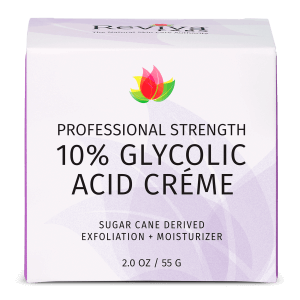
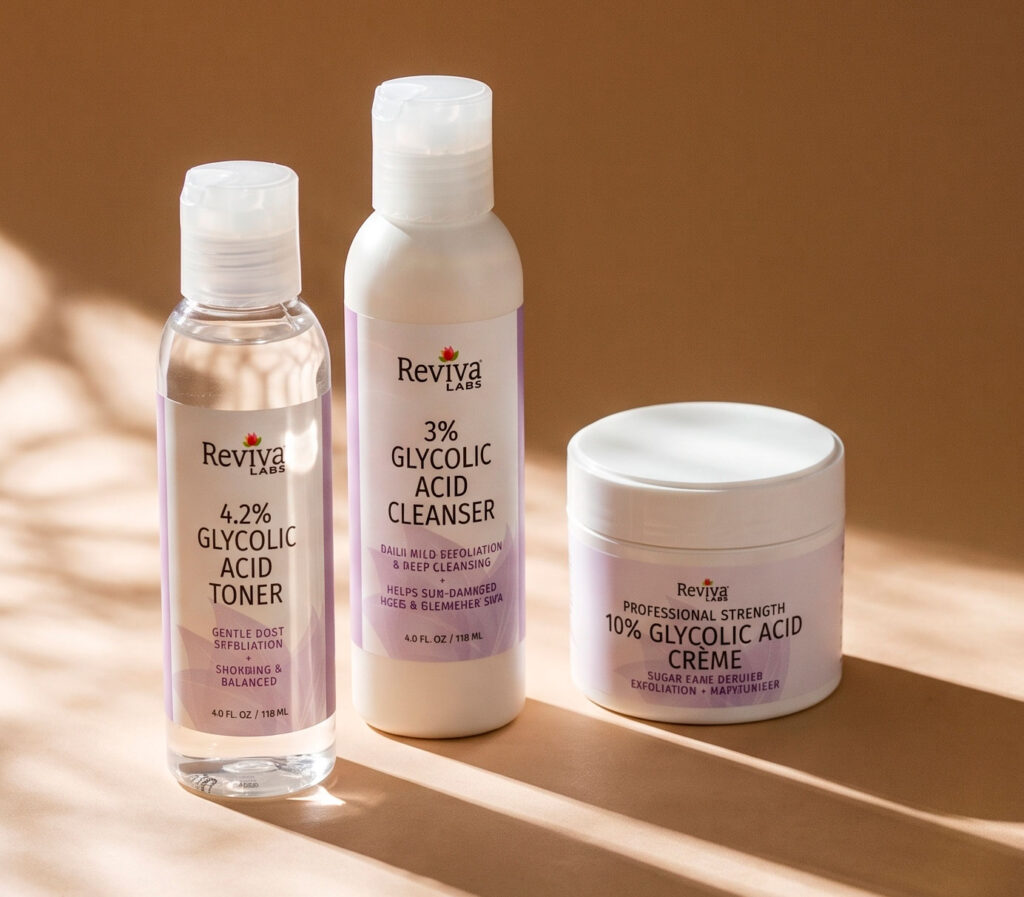
Reading your own product’s directions matters here more than any general internet rule ever will. Reviva Labs’ 10% Glycolic Acid Creme, for example, carries specific direction to apply in the morning and or evening and to layer a broad-spectrum SPF moisturizer over top during the day, along with a recommendation to patch test on the inner forearm before first use. Directions like that exist because they reflect the same kind of data the FDA reviewed, not because a brand is hedging its bets. When a product tells you plainly to pair it with sun protection, that instruction is the actual answer to the summer question, spelled out in two sentences right on the label.
If there’s a single rule worth holding onto through all of this, it’s that glycolic acid and daily broad-spectrum sunscreen aren’t two separate decisions, they’re one decision made in two parts. If you’re using an AHA with any regularity, the sunscreen step stops being optional or occasional and becomes the piece that makes the rest of your routine safe to continue. That’s true in January and it’s equally true in July, summer just makes the consequences of skipping sunscreen show up faster and more visibly. Once that pairing is locked into your daily habits, there’s no research suggesting you need to interrupt an established glycolic acid routine for three months out of the year simply because the calendar changed.
It’s worth being honest that this rule only works if the sunscreen habit is real, not aspirational. A bottle sitting unused in a bathroom cabinet doesn’t protect anyone. If your current sunscreen routine is inconsistent, summer is a reasonable moment to fix that first and let your glycolic acid habits stay exactly as they are while you do it.

Building A Realistic Summer Routine
For most people, the simplest adjustment isn’t stopping the acid, it’s shifting when and how often it’s used. Evening application means the strongest window of acid exposure happens while you’re not layering it directly underneath hours of midday sun, and it gives skin the overnight hours to settle before you step back outside the next morning. If you’re newer to glycolic acid, or your skin tends to run sensitive or reactive, starting with a lower frequency, such as every other night, gives your skin room to adjust before you decide whether to increase use through the season. Reviva Labs’ 3% Glycolic Acid Facial Cleanser and 4.2% lycolic Acid Facial Toner are both designed as rinse-off or wipe-off formats, which means less product remains sitting on the skin compared to a leave-on cream, a useful distinction if you’re looking for a gentler entry point during the hottest stretch of the year.
Whatever specific routine you land on, consistency with sunscreen is the variable that actually determines whether summer glycolic acid use goes smoothly or causes problems. It’s also worth building in a little flexibility. A week of unusually intense outdoor activity, like a beach trip or several days of yard work, is a reasonable time to temporarily dial back frequency, then return to your normal routine once things settle back to baseline.
There are situations where easing off glycolic acid temporarily makes real sense, and they have more to do with your skin’s current state than with the calendar on the wall. Visible sunburn, a compromised or irritated barrier, or unusually reactive skin are all reasonable reasons to pause actives until things calm down, regardless of what season it happens to be. If a trip to somewhere significantly sunnier than home is coming up and your skin isn’t used to that intensity of UV exposure yet, dialing back frequency a few days beforehand is sensible caution rather than an overcorrection born out of fear. None of this adds up to avoiding glycolic acid throughout summer as a blanket policy. It means paying attention to what your skin is actually telling you in the moment, rather than following a seasonal rule that doesn’t account for your specific skin, your specific product, or your specific sun exposure.
That distinction, between situational caution and blanket seasonal avoidance, is really the whole answer to the question in the headline. Glycolic acid was never designed to be a three-season ingredient, and the research doesn’t support treating it that way. What it does require, in every season, is the sunscreen habit to match it.
A Quick Word On Concentration
Not every glycolic acid product asks the same thing of your skin, and summer is a good time to actually notice the difference. A lower percentage toner used as a quick prep step behaves nothing like a higher percentage leave-on cream applied nightly across the whole face. If your current routine already includes multiple exfoliating steps, whether that’s a glycolic cleanser followed by a glycolic toner followed by a separate treatment cream, summer is a reasonable moment to look at total exposure rather than judging each product in isolation. That doesn’t mean stripping the routine down to nothing, it means being honest about how much acid your skin is actually seeing across an entire day, not just in any single step considered on its own.
This is also where patch testing earns its reputation as more than a throwaway suggestion on a label. A small test area on the inner forearm, checked over a day or two, tells you far more about how your specific skin will respond during a hot, humid month than any general guideline possibly could. It costs almost nothing in time, and it removes a lot of the guesswork that otherwise turns into low grade anxiety every time summer rolls around and the same question resurfaces.
Frequently Asked Questions
Is it true that glycolic acid makes summer sunburn worse?
Research reviewed by the FDA found that consistent AHA use increases skin’s sensitivity to UV-induced reddening, which does mean a higher chance of sunburn if sun protection isn’t part of the routine. Paired with daily broad-spectrum sunscreen, that added sensitivity is manageable rather than dangerous. The effect is also reversible, returning to baseline within about a week of stopping the product.
Do I need to stop using glycolic acid completely during summer?
No, and there’s no research suggesting a seasonal pause is necessary for most people. The more useful adjustment is pairing consistent AHA use with consistent daily sunscreen, rather than removing the ingredient from your routine entirely. Situational pauses, like after a sunburn or before an unusually intense sun exposure, are reasonable, but a blanket summer-long break isn’t required.
Should I switch from morning to evening application in summer?
Many people find evening application more comfortable during summer, since it avoids layering acid directly under hours of midday sun and gives skin the overnight hours to settle. That said, glycolic acid can be used in the morning as well, as long as a broad-spectrum SPF moisturizer is applied over top before sun exposure. The right timing often comes down to personal routine and comfort.
What is the difference between a glycolic acid cleanser, toner, and cream?
A cleanser is rinsed off after a short contact time, a toner is wiped on and left to absorb without rinsing, and a cream is a leave-on formula that stays on the skin for hours. Generally speaking, leave-on formats deliver more sustained acid exposure than rinse-off ones, which is worth considering if you’re building or adjusting a summer routine. Many routines use a rinse-off or wipe-off product as a gentler entry point before introducing a leave-on cream.
How often should I use glycolic acid in summer?
Frequency depends on your skin type, your product’s concentration, and how your skin has responded in the past, so there’s no single number that fits everyone. Starting with every other day and watching how skin responds over one to two weeks is a reasonable approach for anyone unsure where to begin. From there, frequency can be adjusted up or down based on comfort and results.
Can I use glycolic acid and vitamin C on the same day?
Many people do combine the two, though it’s worth introducing them gradually rather than starting both at once, especially in summer when skin may already be a bit more reactive. If irritation shows up, spacing the two to different times of day, such as vitamin C in the morning and glycolic acid in the evening, is a common and effective adjustment.
References
- U.S. Food and Drug Administration, “Alpha Hydroxy Acids,” FDA.gov, https://www.fda.gov/cosmetics/cosmetic-ingredients/alpha-hydroxy-acids
- U.S. Food and Drug Administration, “Guidance for Industry: Labeling for Cosmetics Containing Alpha Hydroxy Acids,” FDA.gov, https://www.fda.gov/regulatory-information/search-fda-guidance-documents/guidance-industry-labeling-cosmetics-containing-alpha-hydroxy-acids