Lips give away more moisture than almost any other part of the face, and they do it quietly. Cosmetic researchers measuring water movement through the skin have found that transepidermal water loss across the lips runs at roughly three times the rate recorded on the cheeks. That single difference explains a lot about why lips chap when the rest of your face feels fine. It also explains why a swipe of lip balm in the morning rarely holds up through a full day of talking, eating, weather, and dry indoor air. The good news is that lips respond well to a little structure, and a simple routine built around three steps can change how they look and feel within a couple of weeks.
Most people treat lip care as a single move. They reach for one product, apply it when lips feel tight, and hope it lasts. That approach addresses a symptom without touching the reason lips stay rough in the first place. Lips have no oil glands of their own, which means they cannot self-lubricate the way the surrounding skin does. They also carry a thinner outer layer and fewer of the lipids that hold water in place, so they need help arriving from the outside, applied consistently and in the right order.
Why Lips Need More Than a Quick Swipe
The outer surface of the lip is only a few cell layers deep, while the same protective layer across the rest of your face can be several times thicker. That thinness is part of what gives lips their color and softness, and it is also what leaves them exposed. Wind pulls moisture away. Sun adds stress. Cold air, heated rooms, salty food, and the simple habit of licking dry lips all chip away at the fragile barrier that keeps water where it belongs. When that barrier weakens, lips flake, crack at the corners, and lose the smooth surface that lets color sit evenly.
Ceramides play a quiet but central role here. These lipids act like mortar between the cells of the skin, sealing gaps and slowing water loss. Lips naturally hold fewer ceramides than cheeks or foreheads, which is one reason they dry out faster and stay dry longer. A routine that both reduces buildup and adds back conditioning lipids gives lips a real chance to recover. The aim is not a quick fix but a steady habit that keeps the surface comfortable day after day.
There is also a timing element that many people miss. Lips lose a noticeable amount of moisture overnight, when you are not drinking water and the air around you may be especially dry. Daytime care and nighttime care are not the same job, and a smart routine treats them differently. Morning steps protect against the day ahead. Evening steps restore what the day took and prepare lips to recover while you sleep.
Step One Starts with Gentle Exfoliation
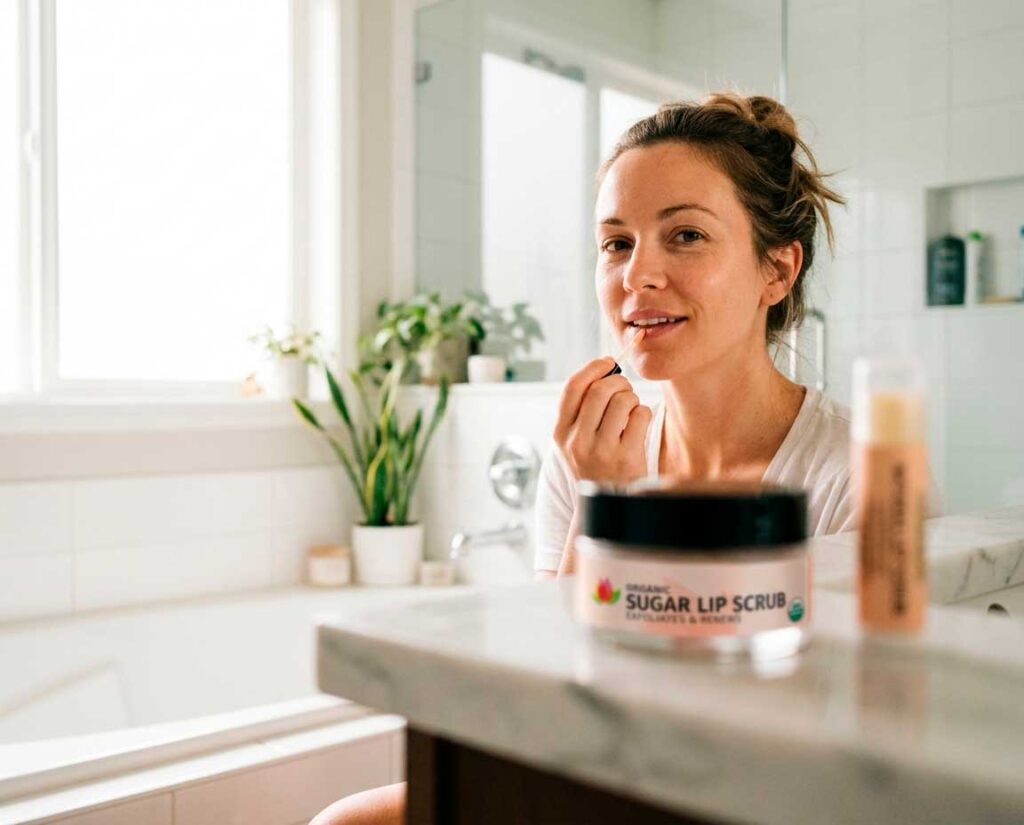
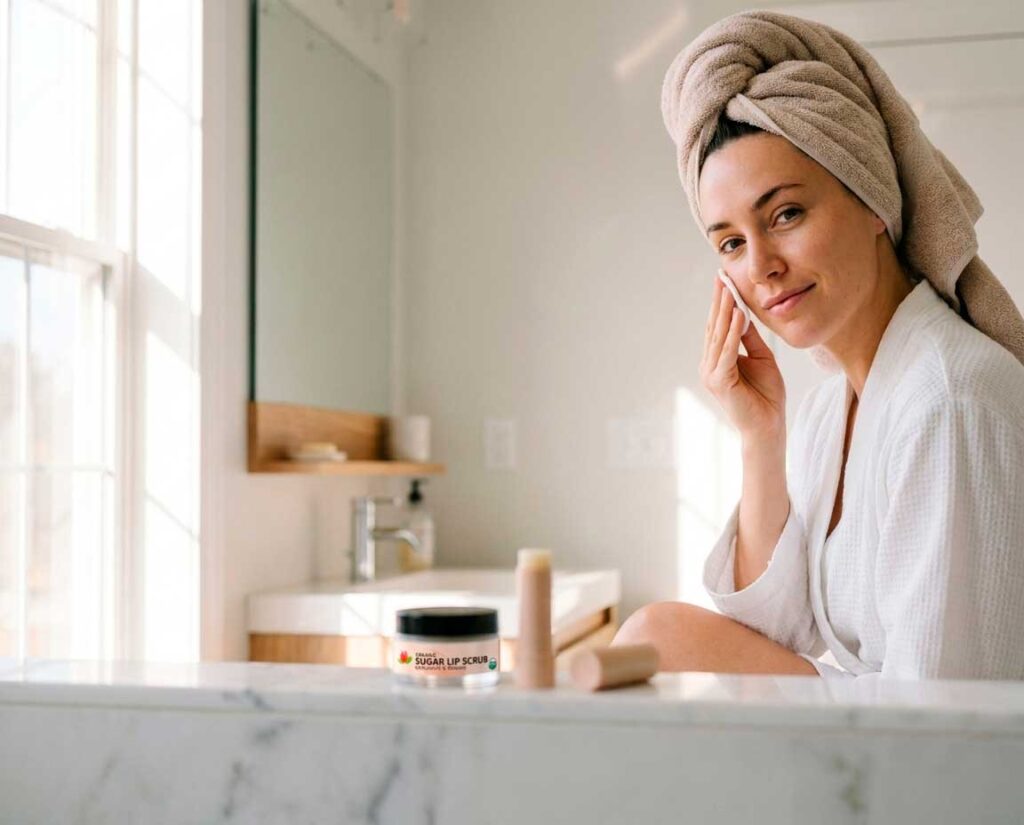
Smooth lips begin with a clean surface, and that is where a lip scrub earns its place. Dry, flaking skin sits on top of the lip and blocks everything you apply afterward, so balms and treatments end up working on dead surface cells rather than the lips underneath. A gentle scrub clears that layer away and resets the surface. The Reviva Labs Organic Sugar Lip Scrub uses fine organic sugar crystals and apricot seed powder to buff away dryness without the harsh scratch of coarse exfoliants. Organic plant oils and beeswax cushion the process, so lips feel conditioned rather than stripped when you finish.
You do not need to scrub every day for this step to work. One or two gentle passes a week is enough to keep the surface even and ready. To use it, apply a small amount, massage it over the lips with light circular motions for a few seconds, then wipe away or rinse clean. The texture dissolves gradually as you work, which keeps the action soft and controlled. What you are left with is a smoother canvas that lets the next two steps absorb and hold the way they should.
Exfoliation is the step most lip routines skip, and skipping it is exactly why so many balms seem to stop working. When dead skin keeps rebuilding, lips feel rough no matter how much balm you layer on top. Clearing that buildup first changes the result you get from everything after. It is a small weekly habit with an outsized payoff. Think of it as setting the foundation before you build.
Step Two Protects Lips Through the Day
Once the surface is smooth, the goal shifts to holding moisture in and shielding lips from whatever the day brings. This is the role of a daily balm, and consistency matters more than quantity. The Reviva Labs Vitamin E-Stick has been a customer favorite since the 1980s for reasons that have nothing to do with trends. Its beeswax base creates a soft, breathable layer over the lips, while Vitamin E, shea butter, mango seed butter, and allantoin condition and soothe. Applied in the morning and reapplied through the day, it keeps lips comfortable against wind, sun, and dry indoor air.
The trick with daytime protection is reapplication. A single morning application rarely survives coffee, meals, and hours of talking, so the most effective approach is to keep the balm within reach and use it whenever lips start to feel tight. Because the Vitamin E-Stick is compact and translucent, it slips into a pocket or bag and works just as well under lipstick as it does on its own. Men and women both reach for it, which speaks to how universal the need for daytime lip protection really is. You can also use it beyond the lips, on dry cheeks or any spot exposed to drying air. That versatility makes it an easy habit to keep.
Protection is preventive by nature, and prevention is always easier than recovery. Lips that stay conditioned through the day arrive at bedtime in far better shape than lips left exposed. That head start makes your evening step more effective, because you are maintaining comfort rather than scrambling to rescue badly chapped skin. The two daytime habits, a smooth surface and steady protection, set up the third step to do its best work. Each part of the routine hands off to the next.
Step Three Restores Moisture Overnight
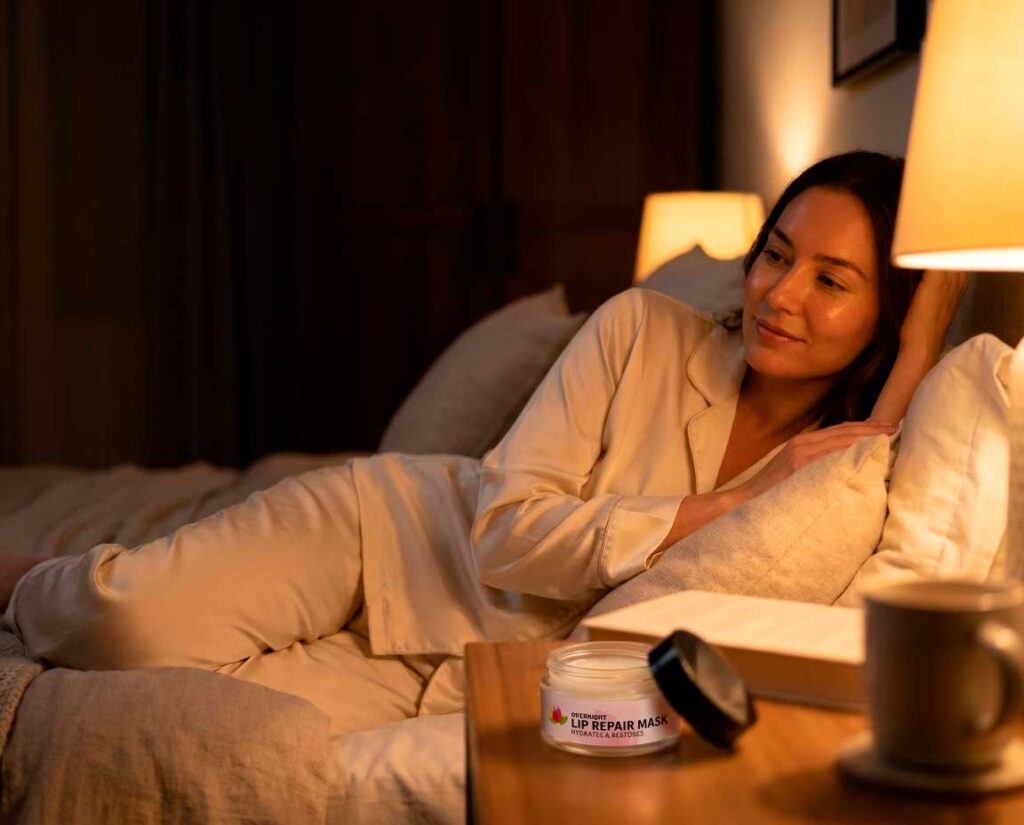
Night is when lips have the best chance to recover, and it is also when they are most vulnerable to drying out. With no food, drink, or talking to interrupt, an overnight treatment can sit undisturbed and work for hours. The Reviva Labs Overnight Lip Repair Mask is built for exactly this window. Plant waxes and cushiony emollients form a flexible, moisture rich layer over the lips, while sweet almond oil, jojoba oil, shea butter, and buriti fruit oil supply the fatty acids that soften rough texture. Ceramide NP is included to support the lip barrier, helping lips hold onto hydration more effectively over time.
What sets a mask apart from a daytime balm is depth and duration. A balm protects, while a mask conditions intensively as you sleep. The texture melts onto the lips rather than forming a stiff coating, so it stays comfortable as the final step before bed. Sea buckthorn extract and mixed tocopherols add antioxidant support, which helps lips look healthier and more resilient with continued use. By morning, lips feel cushioned and smooth, and the look of fine lines across the surface is softened.
Consistency is what turns an overnight mask from a treat into a result. Used once, it feels nice. Used nightly for two or three weeks, it changes the baseline condition of your lips, so they start each day in better shape. This is the same principle that makes any skincare habit work, and lips are no exception. The mask closes the loop that the scrub and the balm began.
How the Three Steps Work Together
The strength of this routine is not any single product but the way the steps build on one another. Exfoliation clears the surface so moisture can reach the lips. Daytime protection holds that moisture in and shields against the elements. Overnight care restores what the day depleted and rebuilds comfort while you sleep. Each step covers a gap the others leave open, and together they address the full cycle of how lips lose and regain moisture across a day and night.
You can think of the rhythm simply. Scrub once or twice a week, protect every day, and treat every night. None of these steps is demanding on its own, and the whole routine takes less than a minute of active effort across the day. The payoff is lips that stay smooth and comfortable rather than swinging between chapped and patched. Small, repeatable habits almost always beat occasional intensive effort when it comes to skin, and lips reward consistency quickly because their surface turns over fast. Give it two weeks and the difference is usually easy to feel.
Fitting the Routine into a Busy Day
One worry people raise about any new skincare habit is time, and lip care happens to be one of the easiest routines to keep because it asks for so little. The weekly scrub takes under a minute and fits naturally into a shower or an evening wind down. The daytime balm goes on the moment you finish brushing your teeth in the morning, then rides along in a pocket or bag for quick touch ups. The overnight mask is the last thing you do before turning off the light, applied in seconds without rinsing. None of these steps competes with the rest of your day, which is exactly why they tend to stick.
It also helps to attach each step to something you already do. Pairing the scrub with a weekend routine, the balm with your morning coffee, and the mask with brushing your teeth at night gives every step a built-in trigger so you do not have to remember it on its own. This kind of habit stacking is what carries a routine past the first enthusiastic week and into the territory where it actually changes how your lips feel. Lips improve from steadiness, not intensity, so a modest routine you keep beats an ambitious one you abandon. Set the rhythm once and let it run on its own. The smoother your lips get, the easier the habit is to keep.
Common Habits That Keep Lips Dry
A few everyday habits work against even the best routine and noticing them helps the products do their job. Licking dry lips is the most common one, and it backfires every time, because saliva evaporates fast and pulls more moisture away with it. Breathing through your mouth in dry air, picking at flakes, and skipping water all add to the problem. Heated rooms in winter and air-conditioned spaces in summer both strip humidity from the air, which means lips dry out year-round, not only in cold months. Matching your routine to your environment, with a little extra night care during dry stretches, keeps lips from slipping backward.
Diet and hydration matter more than people expect. Lips reflect overall hydration quickly, so drinking enough water through the day supports everything you apply on the surface. Spicy, salty, and acidic foods can leave lips feeling raw, and wiping them gently afterward rather than licking them helps. None of this requires a major change, just a little awareness paired with steady topical care. The routine handles the surface while these habits support it from within, and together they make the smooth result easier to keep.
That covers the full picture, from why lips behave the way they do to a routine that meets each need at the right time. The three steps are easy to remember and easier to keep, and they work because they respect how lip skin actually functions. Soft, smooth lips are far less about luck than about rhythm. Build the habit, give it a couple of weeks, and let consistency do the quiet work in the background. Your lips will tell you it is working before anyone else notices.
Frequently Asked Questions
How often should I exfoliate my lips?
Once or twice a week is plenty for most people. Lip skin is thin and delicate, so daily scrubbing can do more harm than good. A gentle pass with a sugar-based scrub clears flaking without irritation, and the rest of the week your daytime balm and overnight mask keep the surface conditioned. If your lips feel especially smooth, you can stretch to once a week and still see the benefit.
Can I use a lip scrub and an overnight mask in the same routine?
Yes, and they actually complement each other well. The scrub is a weekly step that smooths the surface, while the mask is a nightly step that restores moisture. On a night when you exfoliate, scrub first, wipe clean, then apply the mask so it works on a fresh, even surface. Using them together is one of the easiest ways to get noticeably softer lips.
Is it okay to use the Vitamin E-Stick under lipstick?
It is. The Vitamin E-Stick has a translucent, breathable finish that works as a base under color or on its own. Applying a thin layer before lipstick helps the lips feel comfortable and can keep color from settling into dry patches. Let it absorb for a moment before adding color, so the lipstick still grips evenly.
How long before I see smoother lips?
Many people notice a difference in surface feel within a few days, especially after the first exfoliation. The bigger change, where lips stay soft and stop swinging between chapped and patched, usually takes about two weeks of consistent use. Lip skin renews quickly, so steady habits show results faster here than on many other areas of the face.
Why do my lips get chapped even when I use balm every day?
Often it comes down to two things, surface buildup and reapplication. If dry, flaking skin is sitting on top of the lip, balm cannot reach the lips underneath, which is why exfoliation matters. And a single morning application rarely lasts through a full day, so reapplying when lips feel tight makes a real difference. Adding a nightly mask gives lips time to recover the moisture the day takes away.
Can I use these products year-round?
Absolutely. Lips dry out in summer heat and air conditioning just as they do in winter wind and indoor heating, so the routine is useful in every season. You may simply lean on the overnight mask a little more during especially dry stretches. The core rhythm of scrub weekly, protect daily, and treat nightly stays the same all year.
Kim H., et al. (2021). “Relationship between lip skin biophysical and biochemical characteristics with corneocyte unevenness ratio as a new parameter to assess the severity of lip scaling.” International Journal of Cosmetic Science. DOI: 10.1111/ics.12692. https://onlinelibrary.wiley.com/doi/full/10.1111/ics.12692
Endrizzi B., et al. (2020). “In Vivo Assessment of Water Content, Trans-Epidermal Water Loss and Thickness in Human Facial Skin.” Applied Sciences, 10(17), 6139. https://www.mdpi.com/2076-3417/10/17/6139
Elaine Levins is a vital leader at Reviva Labs, shaping the brand’s 51-year legacy of quality skincare. With a passion for innovation and natural solutions, she ensures the company remains at the forefront of the beauty industry. Elaine collaborates with her team to create science-backed products that address diverse skin concerns while maintaining Reviva Labs' commitment to quality and integrity. Her dedication drives the brand’s mission to deliver effective, natural skincare for healthier, radiant skin.



 INTERCELL™ Hyaluronic Acid Night Gel
1 × $18.00
INTERCELL™ Hyaluronic Acid Night Gel
1 × $18.00 INTERCELL™ Hyaluronic Acid Day Créme
$18.00
INTERCELL™ Hyaluronic Acid Day Créme
$18.00 Collagen Night Créme
$20.00
Collagen Night Créme
$20.00 Hyaluronic Acid Serum
$24.20
Hyaluronic Acid Serum
$24.20 High Potency Collagen Serum
$28.00
High Potency Collagen Serum
$28.00