
Clean Beauty, Ingredients, Natural, Reviva Labs, Skin Care
How to Make the Pores on Your Nose Look Smaller and Cleaner

Jun
The nose holds some of the largest and most densely packed pores on the entire face, which is exactly why it draws so much attention in the mirror. Those openings are not flaws or mistakes in your skin. Each one sits at the top of a follicle and a small oil gland, and together they keep the surface flexible, lubricated, and protected. You cannot erase them, close them for good, or scrub them out of existence, no matter how aggressive a product promises to be. What you can change, and change noticeably, is how visible they look from day to day.
This matters because the goal people usually have in mind is not really removal at all. When someone says they want to get rid of the pores on their nose, what they almost always mean is that they want them to look smaller, smoother, and less shadowed. That is a realistic and reachable target. The appearance of a pore shifts with how much oil sits inside it, how much dead skin collects around its edge, and how firm the surrounding skin happens to be. Once you treat those three levers as the real work, the whole routine starts to make sense.

Why the Nose Draws So Much Attention
The central face takes the brunt of daily oil production, and the nose sits right in the middle of that zone. Oil glands are larger and more active here than on the cheeks or temples, so the openings that release that oil tend to be wider to begin with. When light hits the nose straight on, every shallow dip casts a tiny shadow, which makes the texture read as more pronounced than it is. Add a layer of surface shine and the contrast sharpens even further. The result is a part of the face that looks textured even when the skin is healthy and clean.
Age plays a quiet but steady role in this picture as well. A 2023 review in the Journal of Cosmetic Dermatology reported that facial pores expand in both total area and number over time, with the nose and the central cheeks showing the change most clearly. The skin around each opening gradually loses some of its firmness and spring, so the walls of the pore no longer hold their shape as tightly. Years of sun exposure speed this along by breaking down the collagen that keeps the surface taut. None of this means the pores are multiplying or opening up like valves, but the visible footprint does grow as the supporting structure softens.
Genetics and skin type set the starting line before any product enters the picture. Some people are simply born with more active oil glands and naturally larger openings, and that is not something a cleanser can override. Oilier skin tends to show more visible pores because oil pools at the surface and reflects light in a way that draws the eye. Drier skin can still show texture on the nose, though the cause leans more toward rough buildup than shine. Knowing which pattern fits your skin helps you pick the right tools instead of fighting the wrong battle.
What Actually Makes a Pore Look Larger
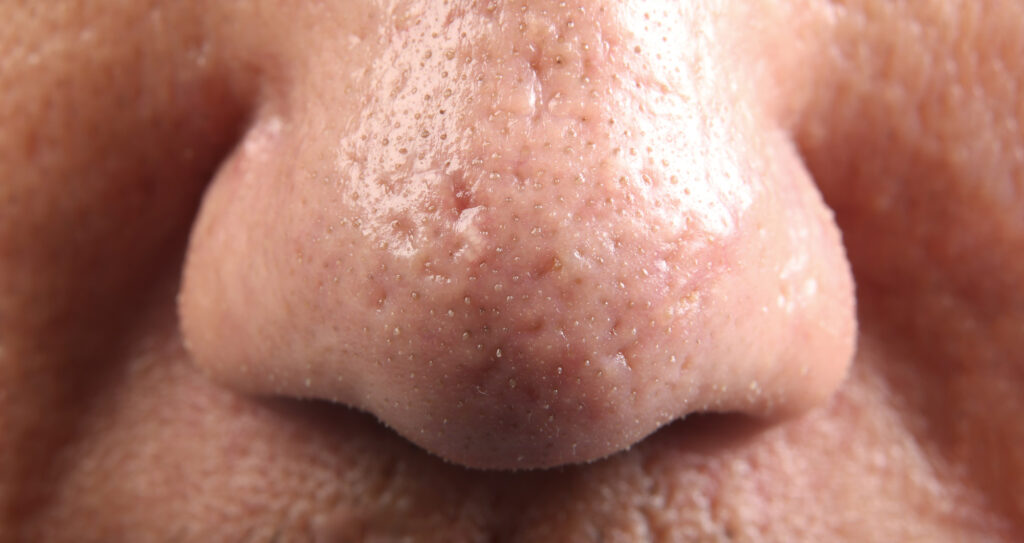
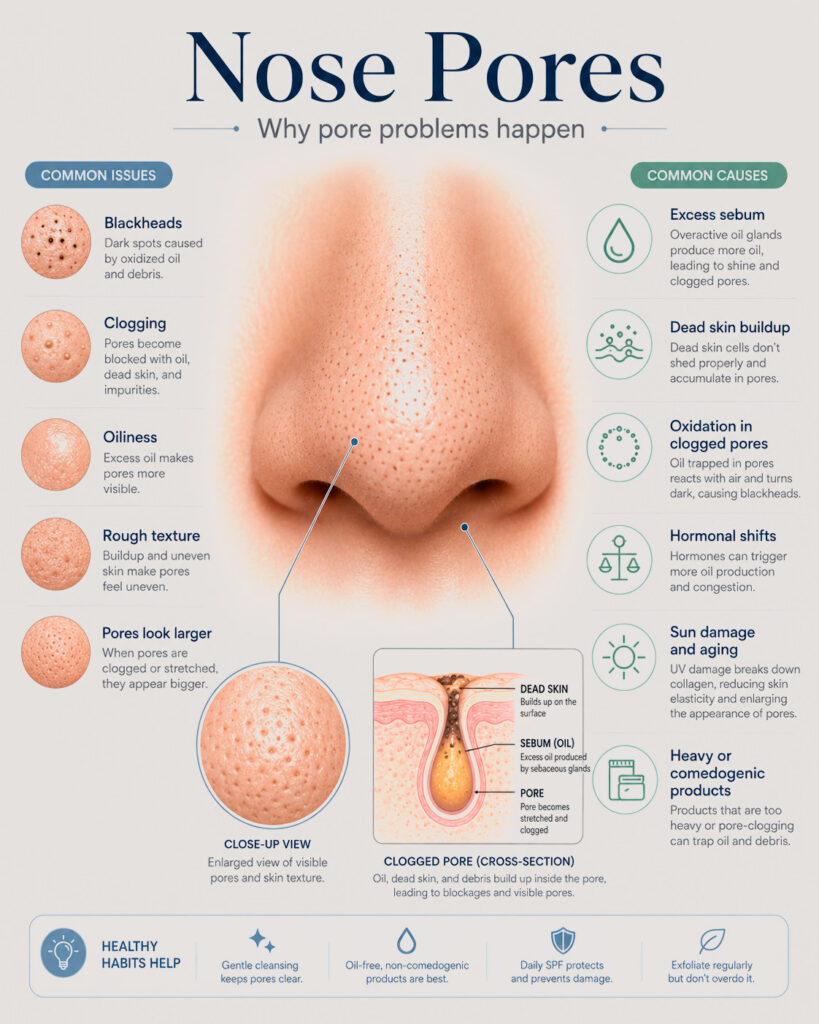
A pore looks biggest when it is full. Oil, dead skin cells, and traces of makeup or sunscreen can settle into the opening and stretch it outward, the same way a small bag bulges when you overfill it. That packed material also oxidizes when it meets air, turning dark at the surface and reading as a blackhead. The combination of a stretched opening and a dark center is what makes the nose look stippled and rough up close. Empty that material out gently and keep it from rebuilding, and the same pore settles back toward a smaller, quieter footprint.
Sebum output is the engine behind a lot of this, and the research backs that up. A controlled study published in the British Journal of Dermatology measured magnified pore images across sixty volunteers and found that larger pore size tracked closely with higher oil production, increasing age, and male sex. In other words, the more oil a given patch of skin pushes out, the more its pores tend to widen to accommodate the flow. This is why oil control sits at the center of any honest pore routine. It is not about stripping the skin bone dry, which backfires, but about keeping production steady and the openings clear.
Dead skin is the other half of the equation, and it is easy to overlook. The surface naturally sheds cells around the clock, and on an oily nose those flakes can mix with sebum and lodge inside the opening instead of falling away. That mixture forms a soft plug that holds the pore open and gives it a grayish cast. Without regular, gentle turnover, the plug simply rebuilds itself a few days after every cleanse. This is the reason a good face wash alone rarely solves nose texture, since washing lifts surface oil but does little for the compacted material sitting deeper in the channel.

Cleansing Without Stripping
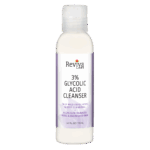
The first real lever is a cleanser that removes oil and debris without leaving the skin tight and squeaky. That tight feeling many people chase is actually a warning sign, not a badge of cleanliness. When a harsh wash strips away too much, the skin reads the dryness as a threat and ramps up oil production to compensate. More oil then means more material to fill the pores, which loops you right back to the problem you started with. A balanced cleanser used twice a day clears the surface while letting the skin hold onto enough of its own moisture to stay calm.
Technique counts as much as the product itself. Lukewarm water loosens oil far better than cold, while water that runs too hot can leave the skin pink and irritated. Working the cleanser in slow circles across the nose for a full thirty seconds gives it time to bind with the oil before you rinse. Many people rush this step and then wonder why their nose never looks any clearer. A short, patient massage at the sink does more for visible pores than most dramatic treatments ever promise to.
Doubling up at night can help anyone who wears sunscreen, makeup, or heavy moisturizer during the day. Starting with an oil based or balm cleanser dissolves the water resistant layers that a foaming wash struggles to cut through. Following with a gentle water based cleanser then lifts away the loosened residue along with the day’s sweat and grime. This two step approach leaves the nose genuinely clean rather than coated in a thin film that settles into every opening overnight. For skin that tends to clog, that nightly reset is often the single change that moves the needle most.

The Case for Regular Gentle Exfoliation
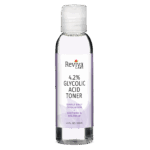
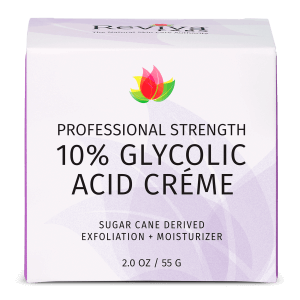
If cleansing manages the surface, exfoliation manages the buildup that cleansing cannot reach. Chemical exfoliants do this more reliably than physical scrubs because they dissolve the bonds holding dead cells together instead of grinding at the skin. Salicylic acid is especially suited to the nose because it is oil soluble, which lets it travel down into the pore and break up the plug from the inside. Used a few times a week, it keeps the channel clear so oil flows out instead of pooling and stretching the opening. Over several weeks of consistent use, that clearing effect is what makes the nose look visibly smoother.
Gentleness is the rule that most people break, usually out of frustration. Scrubbing the nose hard with a grainy product or a stiff brush feels productive, yet it inflames the skin and can make pores look worse as the area swells. The same goes for stacking too many strong actives at once in the hope of faster results. Irritated skin is puffy skin, and puffy skin makes every pore look more pronounced, not less. A measured routine that the skin tolerates easily will always beat an aggressive one that leaves the nose red and reactive.
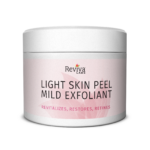
Reviva Labs has long leaned on gentle, plant derived acids and clays rather than harsh abrasives, which fits this part of the routine well. A light clay treatment once or twice a week can draw out excess oil and loosen surface debris without the scraping that physical scrubs rely on. The point is not to attack the nose but to keep the openings clear on a steady schedule. Consistency matters far more than intensity here, since the buildup returns on a predictable cycle no matter what you do. A calm, repeatable rhythm is what holds the appearance of those pores in check month after month.

Why Hydration and Sun Protection Belong in a Pore Routine
It feels backward, but moisturizing is one of the most useful things you can do for visible nose pores. When skin runs dry, it compensates with extra oil, and that surplus is exactly what fills and stretches the openings. A light, non greasy moisturizer keeps the skin balanced so it does not swing into overproduction. Well hydrated skin also plumps slightly around each pore, which softens the rim and makes the opening read as smaller. Skipping moisturizer to fight oil is one of the most common mistakes, and it usually makes the nose shinier rather than clearer.
Sun protection earns its place for a longer term reason that is easy to ignore in the moment. Ultraviolet exposure steadily breaks down collagen and elastin, the proteins that keep the skin around each pore firm and springy. As that support weakens, pore walls slacken and the openings spread wider, which is a large part of why sun exposed skin shows more texture over the years. A daily broad spectrum sunscreen slows that breakdown and helps the nose hold its smoother appearance for longer. Think of it less as a same day fix and more as protecting the work the rest of your routine is doing.
These two steps also guard against the irritation trap that derails so many pore routines. Hydrated, shielded skin tolerates active ingredients far better than skin that is dry and sun damaged. That tolerance lets you keep using your exfoliant consistently, which is the part that actually delivers results. Without it, people tend to overcorrect, react, retreat, and start the cycle over with nothing to show for it. A barrier that stays intact is quietly doing more for your pores than any single hero product on the shelf.
Habits That Quietly Work Against You
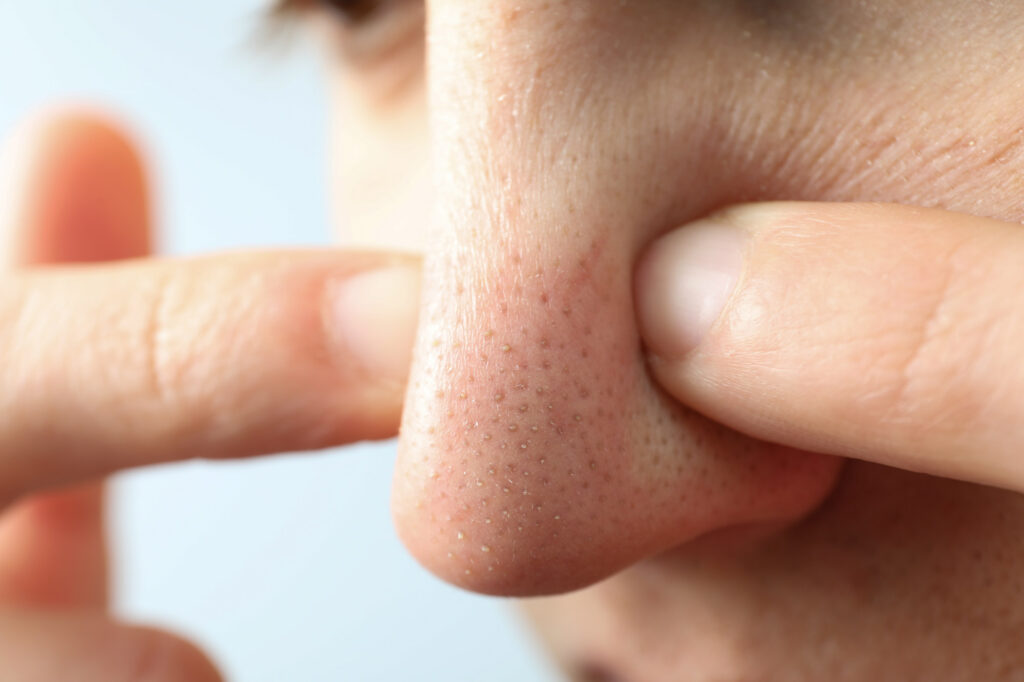
Squeezing and picking at the nose is the habit most likely to undo everything else. Pressing material out by force tears at the delicate edge of the opening and can stretch it permanently if you do it often enough. The pressure also pushes some of the contents deeper and invites the kind of inflammation that makes the whole area swell. A nose that gets picked regularly tends to look more textured over time, not less, even though each session feels like progress. Leaving the skin alone and letting your routine do the clearing is far kinder to the long term appearance.
Pore strips deserve a fair but honest look, since so many people rely on them. They can pull a visible plug of material out of the opening, which gives a satisfying short term result you can literally see on the strip. The catch is that they do nothing to slow the rebuild, so the pore fills again within days and the cycle simply repeats. Used too often or pulled off too roughly, they can also irritate the thin skin on the nose. They are a temporary tidy up at best, not a reason to skip the steady work that actually keeps pores clear.
Heavy, occlusive products and infrequent cleansing round out the list of quiet saboteurs. Thick creams and pore clogging ingredients can sit in the openings and add to the very buildup you are trying to clear. Going to bed without washing off a day of sunscreen and sweat gives that material all night to settle in. Touching the nose constantly transfers oil and grime from the hands straight onto the area that needs it least. Small daily choices like these add up, and cleaning them up often matters more than adding another product to the lineup.
Setting Honest Expectations
The most useful mindset shift is to stop chasing removal and start managing appearance. Pores are permanent fixtures of healthy skin, and any product or device that claims to eliminate them is selling a result that biology will not allow. What a consistent routine genuinely offers is a nose that looks smoother, cleaner, and less shadowed, with openings that read as smaller because they are clear and the skin around them is firm. That is a meaningful, visible improvement, and it holds as long as you keep the routine going. Frame the goal that way and you will judge your progress by what actually changes rather than by an impossible standard.
Patience is the other half of realistic expectations. Skin renews itself on a cycle that runs several weeks, so a new routine needs at least a month of steady use before you can fairly judge it. Jumping between products every few days never gives any of them the runway to work. The people who see the best results are usually the ones doing simple things consistently rather than complicated things sporadically. Pick a calm routine you can actually keep up, give it real time, and the nose will reward the steadiness.
If your skin stays stubbornly congested despite a solid routine, a board certified dermatologist can offer in office options that go further than home care. Professional treatments exist for texture that does not respond to consistent topical work, and a clinician can match them to your skin safely. There is no failure in asking for that help, and it often shortens a long road of trial and error. For most people, though, the everyday levers of clean skin, gentle turnover, steady hydration, and daily sun protection carry the appearance of nose pores a long way. Those basics, kept up without drama, are what quietly do the heavy lifting.
Frequently Asked Questions
Can you permanently remove or close the pores on your nose?
No. Pores are a fixed part of skin structure that house follicles and oil glands, so they cannot be erased or sealed shut. What you can do is keep them clear and reduce excess oil so they look noticeably smaller. The appearance improves, even though the pore itself stays put.
Why does my nose always look more textured than the rest of my face?
The nose sits in the oiliest part of the face and has larger, more active oil glands than the cheeks or forehead. That extra oil, combined with how light hits the center of the face, makes the openings more visible. It is a normal pattern rather than a sign that something is wrong.
How often should I exfoliate the nose?
For most skin, a gentle chemical exfoliant a few times a week is enough to keep the openings clear without irritation. Daily scrubbing or harsh physical exfoliation tends to inflame the area and make pores look worse. Watch how your skin responds and scale back if it turns red or tight.
Do pore strips actually help?
They can pull a visible plug out of the opening for a short term result, but they do nothing to slow how quickly it refills. Within days the pore looks the same again, and rough use can irritate the thin skin on the nose. They work as an occasional tidy up, not a real solution.
Will moisturizer make my oily nose worse?
Usually the opposite is true. When skin gets too dry it produces more oil to compensate, and that surplus is what fills and stretches the pores. A light, non greasy moisturizer keeps oil balanced and softens the look of each opening.
How long before I see a difference?
Skin renews on a cycle of several weeks, so give a new routine at least a month of steady use before judging it. Consistency matters far more than intensity, and switching products every few days resets the clock each time.
References
- Roh M, Han M, Kim D, Chung K. Sebum output as a factor contributing to the size of facial pores. British Journal of Dermatology. 2006;155(5):890-894. https://doi.org/10.1111/j.1365-2133.2006.07465.x
- Parvar SY, et al. The efficacy and adverse effects of treatment options for facial pores: A review article. Journal of Cosmetic Dermatology. 2023. https://onlinelibrary.wiley.com/doi/10.1111/jocd.15502
- Flament F, et al. Facial skin pores: a multiethnic study. Clinical, Cosmetic and Investigational Dermatology. 2015;8:85-93. https://pmc.ncbi.nlm.nih.gov/articles/PMC4337418/