

Clean Beauty, Ingredients, Natural, Reviva Labs, Skin Care
Why Your Pores Look Bigger in Summer (And What Actually Helps)

Jun
Around 80% of people report noticeably oilier skin during the warmer months, according to research published in the Journal of Investigative Dermatology. That statistic alone tells you something important: what happens to your skin in summer is not in your head. It is biology, and it is worth taking seriously. Your skin responds to heat, humidity, and sunlight in ways that can make your pores appear larger, your complexion shinier, and your makeup shorter-lived. Understanding exactly why this happens, and what you can actually do about it, is far more useful than chasing quick fixes that rarely work.
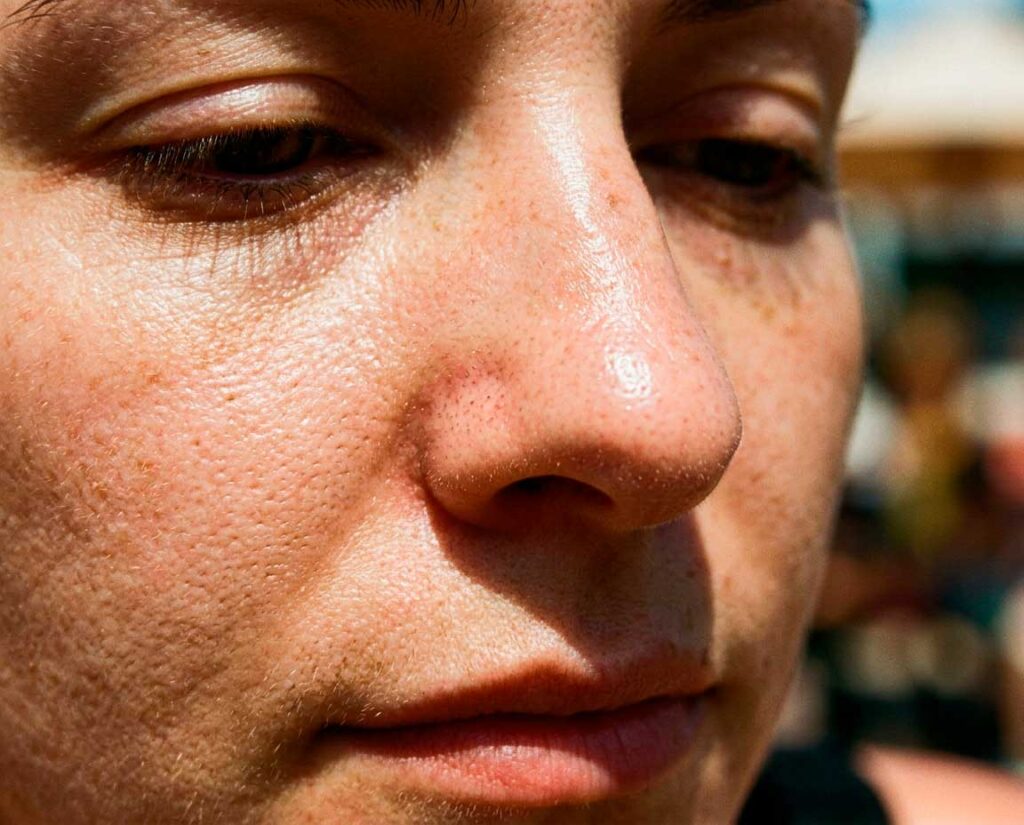
Pore size itself does not technically change. That is the first thing to get straight. Pores do not open and close like tiny doors, despite how often you hear that language. What actually changes is the appearance of your pores, driven by shifts in sebum production, swelling in the surrounding skin tissue, and the accumulation of debris inside the pore opening. In summer, all three of those factors tend to work against you simultaneously, which is why your skin can look so different between January and July even if your routine has not changed at all.
The warm weather months create a perfect storm for pore visibility. Heat triggers your sebaceous glands to produce more oil. Sweat and humidity soften the keratin that lines the walls of each pore. UV exposure breaks down collagen over time, reducing the structural support that keeps pore walls tight. And if you are applying heavier SPF formulas or not cleansing as thoroughly as the season demands, all of that extra activity shows up on your face by mid-morning. The good news is that each of these factors responds to targeted skincare choices, and you do not need an overwhelming number of products to make a real difference.

Why Heat and Humidity Do What They Do
Your skin is a thermoregulatory organ. When temperatures climb, your body wants to cool itself down, and the mechanisms it uses have direct consequences for your complexion. Sebaceous glands increase output as temperatures rise, producing more sebum to help protect and condition the skin surface. At the same time, your sweat glands become more active, and the combination of oil and sweat creates a film on the skin that mixes with dead skin cells, sunscreen residue, and environmental pollutants. All of that material wants to settle somewhere, and pores are the obvious destination. The result is congestion that physically stretches the pore opening and makes it look bigger than it would otherwise.
Humidity plays its own role that often gets overlooked. High moisture in the air causes the skin to swell slightly, including the tissue directly surrounding each pore. When that surrounding skin swells, it can push inward and actually make pores appear wider at the opening. This effect is temporary and distinct from the longer-term changes that come from collagen loss, but in the middle of a humid summer day, it contributes meaningfully to what you see in the mirror. People who live in consistently humid climates tend to notice this effect year-round, while those in drier regions feel the contrast most sharply when summer arrives.
Sweating also disrupts the pH of the skin surface, and that matters more than most people realize. Healthy skin maintains a slightly acidic pH of around 4.5 to 5.5, which supports the skin barrier and helps regulate how much oil the skin produces. Sweat is slightly alkaline, and when it mixes with sebum and sits on the skin for an extended period, it can push the skin’s pH upward. An elevated surface pH signals to the skin that it is under stress, which can paradoxically trigger even more oil production. This feedback loop is one reason why people who do not adjust their cleansing routine in summer often find that their skin feels increasingly out of control as the season progresses.

The Collagen Connection
There is a longer arc to the summer pore story, and it involves UV exposure. Collagen is the structural protein that gives skin its firmness and elasticity, and it also forms the scaffolding around each pore that keeps the walls held tight. When collagen is plentiful and intact, pores sit within a firm matrix and appear smaller. When UV damage accumulates over years and decades, that scaffolding weakens, the walls of each pore lose their structural support, and the opening tends to widen and become more visible. This is why people in their forties and fifties often notice their pores more than they did at twenty, particularly on the cheeks and nose where oil gland density is highest.
The connection between sun exposure and pore appearance is one of the most underappreciated pieces of summer skincare advice. Most conversations about sunscreen focus on skin cancer prevention and managing hyperpigmentation, both legitimate concerns. But daily broad-spectrum SPF is also one of the most effective long-term tools for maintaining the collagen matrix that keeps pores looking tight. Studies have shown that consistent daily SPF use over time can actually partially reverse signs of photoaging, including the increase in pore visibility that comes with collagen loss. Getting rigorous about sun protection in summer is not just about preventing a burn. It is an investment in how your skin looks years from now.
For people who already notice larger-looking pores, this background of collagen loss means that surface-only solutions will only go so far. Clay masks and toners will manage what is on the skin surface. But rebuilding the underlying support structure requires ingredients that work at a deeper level. Retinoids, vitamin C serums, and peptides all have evidence behind them for supporting collagen synthesis, and incorporating at least one of these categories into a consistent routine is worth serious consideration. The catch is that retinoids in particular require careful use during summer due to increased photosensitivity, which makes application timing and diligent SPF habits especially important during the warm months.

What Actually Helps on a Daily Basis
The most impactful daily change most people can make in summer is adjusting how they cleanse. A cleanser that worked perfectly in winter may not be removing enough oil and debris when your sebaceous glands are in overdrive. Switching to a gel or foam-based formula, or one that contains an alpha hydroxy acid like glycolic acid, can make a noticeable difference within a week or two. Glycolic acid is particularly effective because it functions as a chemical exfoliant, loosening the bonds between dead skin cells and helping clear the material that accumulates at the pore opening. It also has a secondary benefit of smoothing skin texture, which reduces the visual shadows that make pores appear larger under light. Reviva Labs’ Glycolic Acid Facial Cleanser contains 3% glycolic acid and is formulated to work for oily and blemished skin without over-stripping the skin barrier.
Exfoliation frequency is another variable worth revisiting in summer. Many people exfoliate once a week in cooler months and find that schedule sufficient. In summer, when oil and sweat are more active and skin cell turnover can become more irregular, moving to two or three times a week may produce better results. The key is watching how your skin responds. Over-exfoliation will compromise the barrier, paradoxically increasing oil production as the skin tries to compensate. Signs that you have crossed that line include increased redness, tight or sensitive skin, and a sudden onset of small breakouts. If you see those signals, pull back and give your barrier a chance to recover before resuming.
Clay masks deserve a specific mention because they address pore appearance through a mechanism that almost nothing else replicates as efficiently. Kaolin clay and bentonite clay both have the ability to physically draw sebum and impurities out of the pore opening through adsorption, pulling debris to the surface where it can be rinsed away. Using a clay mask one to two times per week in summer keeps pores cleaner between your regular cleansing sessions and visibly reduces the congestion that makes pores appear stretched. For people with particularly oily or blemished skin, this is not a luxury step but a practical maintenance tool.
Toners, Serums, and What the Evidence Says
Toners have had a complicated reputation in skincare. For a long time, they were alcohol-heavy products designed to strip oil, and that approach caused more problems than it solved by damaging the skin barrier and triggering rebound oiliness. The current generation of toners is considerably more sophisticated, and those formulated with glycolic acid, niacinamide, or witch hazel can provide genuine benefit for pore appearance without the destructive side effects of their predecessors. A glycolic acid toner applied after cleansing extends the exfoliating action of the cleanse and helps keep the pore opening clear on a daily basis. It is a simple addition to a routine that requires no extra time and produces visible results with consistent use.
Niacinamide, also known as vitamin B3, is an ingredient that has accumulated an impressive amount of clinical research supporting its effects on pore appearance. It works primarily by regulating sebum production, which reduces the pressure on pore walls and decreases the congestion that makes pores visible. Studies have shown that 2% to 5% niacinamide applied consistently over eight to twelve weeks produces measurable reductions in pore size appearance, facial sebum levels, and skin unevenness. It is also one of the most well-tolerated active ingredients available, with very low rates of irritation even for sensitive skin types, which makes it a practical choice for daily summer use.
Hydration is the counterintuitive piece that many people get wrong in summer. The assumption is that oily, humid summer skin does not need moisturizer. That reasoning leads people to skip this step, which can actually worsen oil production. The skin produces sebum partly as a response to dehydration, meaning that when the skin lacks adequate water content, it compensates by producing more oil. A lightweight, non-comedogenic moisturizer or a hyaluronic acid serum used after cleansing and toning provides the hydration your skin needs without adding occlusive weight that would clog pores. Hyaluronic acid in particular is ideal for summer because it is water-based, absorbs quickly, and does not leave a heavy residue on the skin surface.

Sunscreen Matters More Than People Think
Sunscreen formulation matters enormously in summer for anyone concerned about pore appearance. The wrong formula can contribute to exactly the congestion it is supposed to prevent. Traditional chemical and physical sunscreen formulas, particularly those with high concentrations of zinc oxide or titanium dioxide in a heavy emollient base, can sit on the skin surface and mix with sebum to create a film that blocks pores. This does not mean you should avoid SPF, which would be far worse for your skin long-term. It means choosing a formula specifically designed to be lightweight and non-comedogenic, looking for words like “dry touch,” “oil-free,” or “mattifying” on the label, and reapplying as directed rather than applying one heavy layer in the morning and hoping for the best.
Mineral sunscreens, particularly those using micronized zinc oxide in a fluid or gel base, have become considerably more wearable in recent years. Many people find them easier to tolerate on oily or breakout-prone skin compared to older physical formulas or certain chemical filters. The mode of action for mineral sunscreens, sitting on the skin surface and reflecting UV rather than being absorbed into the skin, also suits people who prefer to keep their ingredient exposure minimal. The tradeoff is that they can leave a slight white cast, though this has improved significantly in newer formulations, particularly for lighter skin tones. Finding the right SPF formula for summer is worth spending some time on rather than defaulting to whatever is most convenient.
Application technique also plays a role that rarely gets discussed. SPF should be the last skincare step and the first makeup step if you wear makeup, applied to completely dry skin and allowed to set for a few minutes before anything goes on top of it. Applying sunscreen immediately over a damp moisturizer or serum dilutes its efficacy and can create a mixed formula that sits heavily on the skin. Reapplication every two hours in direct sun exposure is the standard recommendation, and if you wear makeup, powder SPF or a setting spray with SPF can make midday reapplication practical without requiring you to redo your entire routine.
Lifestyle Factors That Show Up on Your Skin
What you eat in summer can influence how your skin behaves, and the relationship runs more directly than many people expect. A diet high in refined carbohydrates and sugar drives up insulin levels, which in turn stimulates androgen hormones that signal the sebaceous glands to increase oil production. This pathway, the insulin-androgen-sebum connection, is why dietary interventions are often discussed in the context of acne but are equally relevant for anyone managing oily skin and enlarged-looking pores. Reducing processed sugar, white bread, and high-glycemic snacks during the months when your skin is already producing more oil can help keep sebum levels more moderate.
Hydration from the inside affects the skin’s surface behavior in ways that topical products cannot fully compensate for. When the body is underhydrated, the skin loses moisture from within, which can increase surface oil production as a compensatory mechanism and make the texture of the skin appear uneven. Drinking adequate water throughout the day supports the skin’s natural moisture balance and can reduce the degree to which oil production escalates in heat. This is not a dramatic fix and it will not eliminate summer oiliness on its own, but it supports the effectiveness of the topical routine you are maintaining. Think of it as removing friction rather than creating a solution.
Sleep is another variable that rarely gets credited for its effects on pore appearance, but the connection is real. During sleep, the body repairs and regenerates skin cells, processes cortisol levels, and resets inflammatory signaling. When sleep is inadequate or poor in quality, cortisol remains elevated, which increases sebum production and can amplify inflammation in the skin. A night of poor sleep before a big event is often visible the next morning as increased oiliness, dullness, and more noticeable pores. Managing sleep quality in summer, when heat can make it harder to get adequate rest, is worth treating as a skincare concern rather than a separate lifestyle issue.
Building a Summer Routine That Actually Works
A summer skincare routine does not need to be radically different from your year-round approach, but it does need to be responsive to the specific conditions the season creates. At minimum, this means reassessing your cleanser, incorporating a targeted exfoliant or toner with an active ingredient like glycolic acid or niacinamide, using a lightweight non-comedogenic moisturizer, and applying a well-formulated broad-spectrum SPF daily. Adding a clay mask one to two times a week addresses the congestion that builds up despite daily cleansing. That five-step framework addresses the primary drivers of enlarged pore appearance in summer without requiring a complete product overhaul.
Ingredient layering order matters more in summer than in other seasons because the skin surface tends to be more active. Apply thinner, water-based products first and allow each layer to absorb before applying the next. In summer, a lightweight hyaluronic acid serum followed by a niacinamide formula followed by a dry-touch SPF is a logical sequence that provides hydration, sebum regulation, and UV protection without layering heavy textures that will mix with sweat and sebum as the day progresses. Evening routines can go deeper, with a glycolic acid toner and, if your skin tolerates it, a retinoid formula applied two to three nights a week to support cell turnover and collagen maintenance.
Consistency over the summer months is more important than the specific products you choose. The most sophisticated routine used sporadically will underperform a simpler one used every day. The changes that matter most in summer, cleaner pores, reduced oil production, maintained collagen structure, are all cumulative. They come from daily habits repeated across weeks and months, not from a single clay mask or a one-time use of an exfoliant. Treating your summer skin routine with the same regularity you apply to other health habits produces results that are visible by the end of the season rather than just temporarily after a single treatment.
Frequently Asked Questions
Can pores permanently shrink?
Pore size is largely determined by genetics and the diameter of the hair follicle each pore contains. While you cannot permanently reduce the physical size of a pore, consistent skincare habits can significantly reduce their visible appearance. Keeping pores clear of debris, maintaining the surrounding skin structure through collagen support, and reducing oil accumulation all make pores appear smaller without actually changing their anatomy. The appearance improvements from a consistent routine are real and meaningful, even if the structural size remains fixed.
Why do my pores look bigger after I apply sunscreen?
This is almost always a formulation issue. Heavy or occlusive sunscreens can mix with the natural oils on your skin and create a film that catches light in a way that highlights pore texture. Switching to a lightweight, mattifying, or dry-touch formula typically resolves this. Look specifically for formulas marketed for oily or combination skin, as these are engineered to minimize that effect. Applying sunscreen to skin that is completely dry and allowing it to set for a few minutes before adding anything else can also help.
Does sweating clog pores?
Sweat itself does not clog pores. Sweat is primarily water with small amounts of salt, urea, and other compounds, and it evaporates relatively quickly from the skin surface. The issue arises when sweat mixes with sebum, dead skin cells, sunscreen residue, and other debris that is already present on the skin. That mixture is what can settle into pores and cause congestion. Cleansing after heavy sweat sessions, rather than letting that mixture sit on the skin, is the practical response to this mechanism.
Are blackheads and enlarged pores the same thing?
They are related but not identical. A blackhead is a specific type of comedone, an oxidized plug of sebum and dead skin cells that has risen to the surface of a pore opening and darkened on exposure to air. An enlarged pore may or may not have a blackhead in it. Both are made more visible by excess oil, poor exfoliation habits, and weakened surrounding skin structure. Treating the underlying factors of congestion and collagen support addresses both concerns simultaneously, though blackheads may also benefit from targeted use of salicylic acid, which penetrates into the pore lining itself.
Is it bad to use a clay mask every day?
For most skin types, daily clay mask use is excessive and can strip the skin’s natural oils more than is beneficial. Clay’s mechanism of action, drawing oil and impurities out through adsorption, works on the good oils as well as the congesting ones. Using a clay mask daily will typically lead to a compromised skin barrier, increased sensitivity, and paradoxically more oil production as the skin compensates for the stripping. One to two times per week is the commonly recommended frequency, though people with very oily skin may find two to three times per week tolerable if their skin does not show signs of barrier disruption.
Do certain foods make pore appearance worse in summer?
Yes, and the mechanism is fairly direct. High-glycemic foods, those that spike blood sugar quickly, drive up insulin levels, which stimulate androgen hormones that in turn increase sebum production. More sebum means more material available to accumulate in pores, worsening both congestion and visible pore size. Dairy, particularly skim milk, has also been associated in several studies with increased sebum production and acne, though the relationship is not universal. Reducing processed sugar and refined carbohydrates during summer months, when sebum production is already elevated by heat, is a practical dietary adjustment with a plausible mechanism behind it.
References and Sources
- Youn SW, et al. “The relationship between the sebaceous gland activity and temperature.” Journal of Investigative Dermatology Symposium Proceedings. 2005;10(3):194-197. https://doi.org/10.1111/j.1087-0024.2005.10107.x
- Bissett DL, et al. “Niacinamide: A B vitamin that improves aging facial skin appearance.” Dermatologic Surgery. 2005;31(7 Pt 2):860-865. https://doi.org/10.1111/j.1524-4725.2005.31732
- Telang PS. “Vitamin C in dermatology.” Indian Dermatology Online Journal. 2013;4(2):143-146. https://doi.org/10.4103/2229-5178.110593