
Ingredients, Natural, Reviva Labs, Skin Care
What Plant Waxes and Ceramide NP Actually Do for Dry Lips
Jun
Lips do some of the hardest work on the human face with almost none of the built-in support that the rest of your skin enjoys. They carry no oil glands and no sweat glands, which means they cannot self-lubricate the way your cheeks or forehead can. Their outer layer is unusually thin, so moisture escapes quickly and the surface dries out long before you notice it happening. To make the situation more interesting, the lipids that normally hold water inside skin are present in smaller amounts here than almost anywhere else on the body. That single fact explains why a windy afternoon, or a dry heated room can leave your lips feeling tight while the skin around them feels perfectly fine.
Here is a number that puts the whole thing in perspective. Ceramides, the lipid molecules that behave like mortar between skin cells, make up roughly half of the stratum corneum’s intercellular lipid matrix by mass, according to research published in the International Journal of Cosmetic Science. When those lipids are plentiful and well organized, skin holds water beautifully and feels supple. When they run low, water slips out and the surface starts to feel rough and look flaky. Lips sit at a natural disadvantage because they carry fewer of these lipids to begin with, so they lean heavily on whatever you choose to put on top of them. This is exactly where a smart pairing of plant waxes and a skin identical ceramide earns its place.

Why Lips Run Out of Moisture Faster Than the Rest of Your Face
The technical name for moisture leaving skin is transepidermal water loss, and lips post some of the highest readings anywhere on the face. Studies comparing different facial zones consistently find that the lip surface loses water faster and holds less of it than the cheeks, even in people with healthy skin. Part of the reason is anatomical, since the lip sits right at the border between the inside of the mouth and the outside world and never developed the thicker protective hardware that surrounds it. Another part is simply behavioral, because we lick, press, eat, talk, and expose our lips to sun and wind throughout the day. Add a cold season with heated indoor air, and the surface can feel dry within minutes of wiping a balm away.
None of this means your lips are fragile in a worrying sense. It simply means they respond best to products that handle two jobs at once, refilling the surface with comforting oils and then sealing that comfort in so it lasts. A thin watery gloss might feel pleasant for a moment, yet it tends to evaporate and leave lips no better off than before. A heavier, well-built formula behaves very differently, because it stays put and keeps working while you go about your day. The trick is choosing ingredients that create that staying power without feeling greasy, heavy, or sticky, and this is precisely where plant waxes shine.
Think about how often your lips reset themselves compared with the rest of your face. A single meal can wipe away whatever you applied an hour earlier, and a single gust of cold wind can undo a morning routine. That constant turnover is why lip care rewards consistency far more than it rewards any one heroic treatment. The goal is not to drown your lips in product but to give them a reliable layer that holds up against everyday wear. A formula that pairs surface protection with genuine softening ingredients tends to outperform anything that does only one of those things.

What Plant Waxes Bring to a Lip Formula
Waxes are the quiet workhorses of nearly every lip product you have ever loved. Their main job is occlusion, which is a tidy way of saying they form a breathable film on the surface that slows how quickly water evaporates. That film is what gives a balm its protective, cushioned feel and what keeps lips comfortable for hours rather than minutes. Plant derived waxes accomplish this without any animal input, which matters to a lot of people who read their labels carefully. They also lend structure and a smooth glide, so a stick or a mask holds its shape in the package and then melts gently against the warmth of your skin.
The best plant waxes are not merely passive barriers either. Candelilla wax, harvested from a small desert shrub, doubles as an emollient that softens and smooths the surface while it protects. Because it begins to soften near skin temperature, it releases the oils blended around it gradually rather than locking everything in place all at once. That gentle release is a big reason a good candelilla based formula feels comforting rather than waxy or stiff. Carnauba wax, drawn from the leaves of a Brazilian palm, brings a higher melting point and a more durable film, which is useful when you want a product to hold up through talking, sipping, and a long afternoon outdoors.
Formulators love having both kinds of wax in the toolbox because they balance each other so neatly. Carnauba supplies backbone and longevity, while candelilla softens the texture and improves how evenly the product spreads. Used together in the right ratio, they create a film that feels substantial yet never heavy, protective yet still flexible enough to move with your lips. This is why you will find one or both of them in so many lip products that aim for an honest, clean ingredient list. They prove that you do not need anything harsh or aggressively synthetic to build a balm that genuinely performs.
Candelilla and Carnauba Side by Side
It helps to picture these two waxes as teammates with different strengths rather than rivals competing for the same spot. Candelilla is the softer, more giving of the pair, with a lower melting point that makes it pleasant to apply and quick to feel comfortable. Carnauba is the firmer, more resilient partner, prized for the way it holds a film together even when conditions turn warm or breezy. On its own, each wax has a small drawback, since too much carnauba can feel a touch firm and too much candelilla can feel a little soft. Blended thoughtfully, those drawbacks cancel out and you are left with a product that applies smoothly and then stays exactly where you put it.
Both waxes carry another quiet advantage worth mentioning, which is that they come from plants rather than animals. For shoppers who prefer ingredients sourced from plants, candelilla and carnauba make it easy to enjoy a rich, protective texture without compromise. They also tend to play very well with the oils and butters that round out a lip formula, from jojoba and sweet almond to shea and buriti fruit oil. That compatibility lets a chemist build layers of comfort, where the lighter oils settle into the surface first and the waxes lock the whole arrangement in place. The result feels less like a coat of paint and more like a soft, flexible cushion that moves naturally with your mouth.
There is also a practical beauty to how predictable these waxes are. A formulator knows roughly how candelilla will soften at body heat and how carnauba will hold firm, so the two can be dialed in for a specific feel. That control is what separates a balm that drags and tugs from one that glides on in a single easy pass. It is the reason a well-made wax-based product can feel luxurious even though the ingredient list stays refreshingly short. Quality here is less about exotic additives and more about choosing simple ingredients and pairing them with real skill.

Where Ceramide NP Fits Into the Picture
Waxes handle the outside of the equation, and Ceramide NP handles the part that feels almost invisible. Ceramide NP, once known as Ceramide 3, is a skin identical lipid built from a phytosphingosine base joined to a fatty acid. It happens to be the most abundant ceramide your skin naturally produces, and it plays a leading role in keeping the lipid layers between cells neatly organized. Researchers studying the lipid matrix have repeatedly associated this particular ceramide with a smooth, well-ordered, healthy-looking surface rather than a disrupted one. When a lip product includes Ceramide NP, it is essentially offering your lips a familiar building block they already recognize.
The reason this matters comes down to architecture. Skin lipids do not just sit there in a puddle; they stack into orderly sheets called lamellae that alternate between water loving and water repelling layers. That layered arrangement is what allows healthy skin to behave like a well-sealed wall, keeping water in and irritants out. Ceramide NP slots into those sheets and helps them line up the way nature intended, which supports the smooth, comfortable feel we associate with well moisturized skin. On lips, where the natural ceramide supply is already on the low side, offering a recognizable ceramide at the surface can make a real difference in how soft and resilient they feel.
A ceramide on its own, though, is a bit like delivering bricks without any mortar to hold them in place. It needs the right surrounding ingredients to stay where it is useful and to keep the surface from drying out before it can settle in. That is precisely why the smartest lip formulas surround a ceramide with supportive lipids, gentle oils, and a protective wax film. The ceramide contributes order and familiarity, the oils contribute softness, and the waxes contribute staying power. Take any one of those elements away and the whole effect weakens, which brings us to the most useful point of all.
Why Waxes and Ceramide NP Are Better Together
The real magic is not in any single ingredient but in how they cooperate. Picture the plant waxes as a soft, breathable roof over your lips and the ceramide as part of the structure resting underneath that roof. The waxes slow water from escaping the surface, buying valuable time, while the ceramide and its companion lipids help the surface feel supple and well organized during that window. Without the waxes, the lighter ingredients would evaporate or wear off far too quickly to matter. Without the ceramide and oils, the wax film would simply protect a surface that still feels rough and tight underneath.
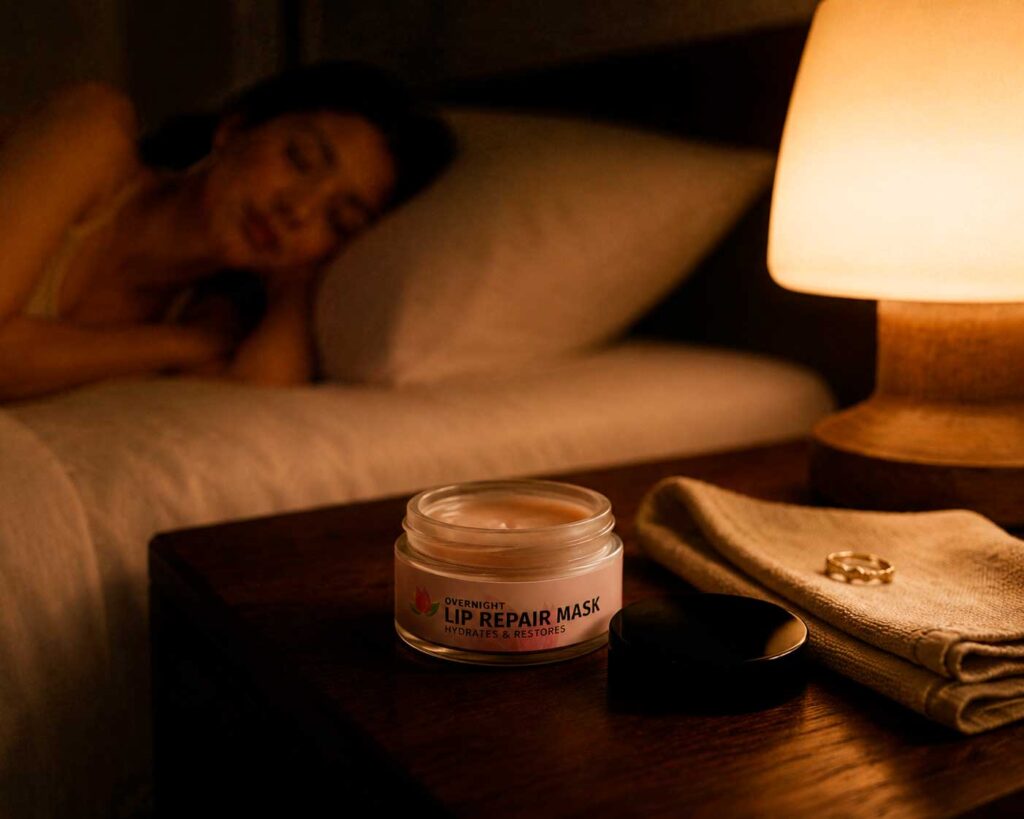
This teamwork becomes especially obvious overnight, when your lips have hours of uninterrupted quiet to soak up what you have applied. You are not eating, talking, or wiping your mouth, so a richer formula gets a long, undisturbed stretch to do its best work. A wax based film holds everything in place through the night, and the lipids underneath have time to settle into the surface. Many people wake up to lips that simply feel softer, smoother, and more comfortable than they did the evening before. That overnight window is one of the easiest and most pleasant ways to give thirsty lips a genuine advantage.
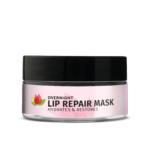
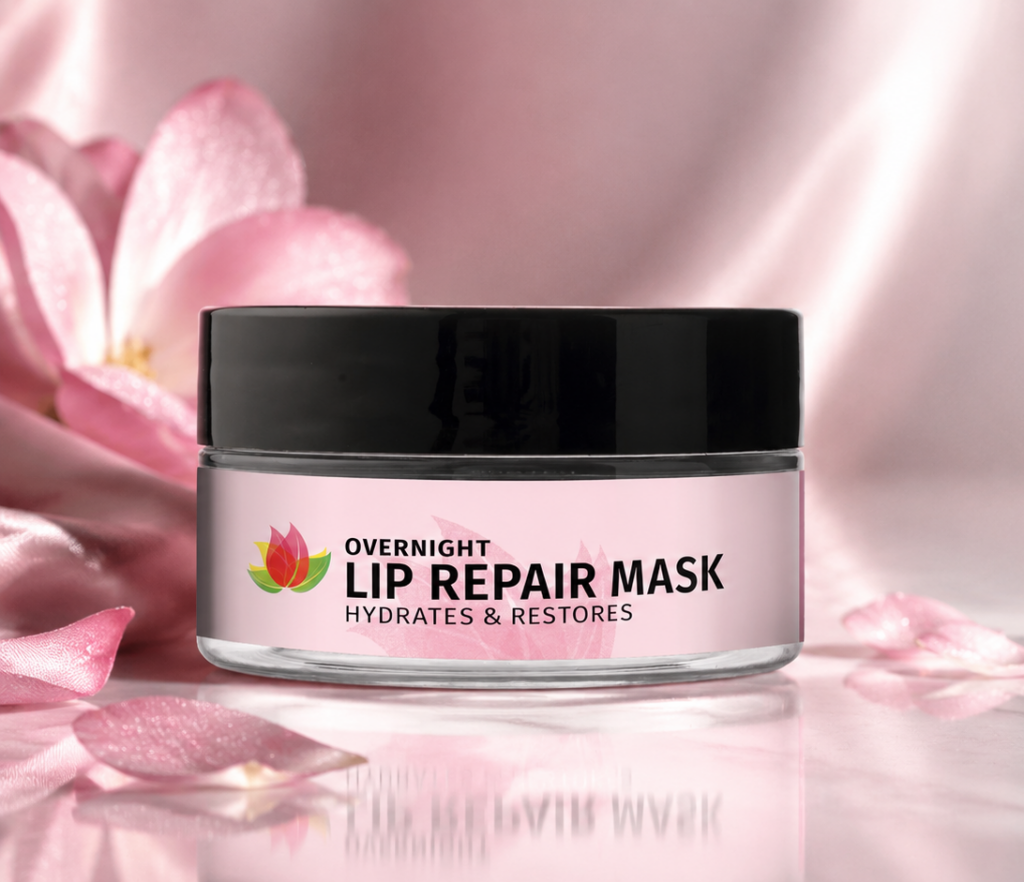
We built our own Overnight Lip Repair Mask around exactly this logic, pairing candelilla and carnauba plant waxes with Ceramide NP and a blend of nourishing oils and butters that includes jojoba, sweet almond, shea, and buriti fruit oil. The waxes create a comforting overnight layer, the oils add softness and slip, and the Ceramide NP brings that familiar, skin loving lipid into the mix. There are no droppers and nothing harsh involved, just a thoughtful arrangement of ingredients chosen to help lips look and feel their best by morning. It is the kind of formula that shows what a clean ingredient list can accomplish when every single component has a clear purpose. We think your lips will notice the difference, and we love that the science behind it is so refreshingly straightforward!

How to Get the Most From Your Lip Care Routine
A great formula still benefits from a few simple habits. Applying a richer lip product at night gives it the longest possible window to work without interruption, so it makes sense as the very last step before bed. During the day, reapplying after meals or after time in wind, sun, or dry indoor air keeps the protective film fresh exactly when your lips need it most. Gentle exfoliation once or twice a week can smooth away flaky surface skin so your balm or mask glides on evenly and feels even better. Try to resist the urge to lick your lips when they feel dry, because saliva evaporates fast and tends to leave the surface drier than it was before.
Pay attention to your environment as well, since the same set of lips can feel completely different from one season to the next. Cold, windy weather and heated indoor air both pull moisture from the surface, so winter usually calls for a richer, more protective approach. Summer sun and constant air conditioning can be just as drying in their own quiet way, which means a comforting layer is worth keeping nearby all year. Drinking enough water supports how your whole body feels, and your lips are no exception to that rule. Small, consistent habits almost always beat occasional dramatic efforts when the goal is keeping lips soft and comfortable.
The takeaway is wonderfully simple once you see how the pieces fit together. Lips lose moisture quickly because they are thin, exposed, and naturally low on the very lipids that hold water in place. Plant waxes like candelilla and carnauba build a breathable, protective film that slows that loss and keeps comfort sealed in. Ceramide NP adds back a skin identical lipid that helps the surface feel smooth, supple, and well ordered. Put them together in one thoughtful formula and you give your lips a real, lasting head start, which is about as satisfying as ingredient science gets.
Frequently Asked Questions
What exactly are plant waxes in lip products?
Plant waxes are firm, protective ingredients pressed or refined from plants rather than animals. Candelilla wax comes from a small desert shrub, while carnauba wax comes from the leaves of a Brazilian palm. In a lip product they form a breathable film on the surface that slows moisture loss, and they give the formula structure, so it holds its shape and applies smoothly. Many people choose them as plant sourced alternatives to animal-based waxes, and they pair easily with oils and butters for a comfortable feel.
Is Ceramide NP the same as the ceramides my skin already makes?
Ceramide NP is described as skin identical because it matches a ceramide your body naturally produces, and it happens to be the most abundant one in healthy skin. It was previously called Ceramide 3, and it helps the lipid layers between skin cells stay neatly organized. Lips naturally carry fewer ceramides than most other areas, so adding a familiar ceramide at the surface can help them feel smoother and more comfortable. Pairing it with oils and waxes keeps it in place long enough to be useful.
Why do my lips dry out faster than the skin on my cheeks?
Lips have a much thinner outer layer than the rest of your face and they lack the oil and sweat glands that help other skin stay moisturized on its own. They also sit right at the edge of the mouth and stay exposed to sun, wind, food, and constant movement. On top of that, lips naturally hold fewer of the lipids that lock water into the surface. All of those factors together let moisture escape quickly, which is why lips often feel tight or dry while nearby skin feels fine.
Can I use a wax and ceramide lip product every day?
Yes, a well-made leave on lip product is designed for daily use and tends to perform best with regular application. Many people like to apply a richer formula at night, so it has uninterrupted hours to work, then reapply a lighter touch during the day as needed. Adding gentle exfoliation once or twice a week helps the product glide on more evenly. Consistency matters more than quantity, so a little applied regularly usually beats a lot applied once in a while.
Do plant waxes feel heavy or greasy on the lips?
They do not have to, and the secret is balance. Candelilla brings softness and an easy glide, while carnauba brings structure and staying power, so a thoughtful blend feels cushioned rather than thick or sticky. The surrounding oils and butters also influence the final texture, smoothing everything into a flexible layer. A formula that gets the ratio right feels comfortable and protective without any greasy slide.
Are candelilla and carnauba waxes plant based?
Both are genuinely plant sourced. Candelilla is gathered from the candelilla shrub, and carnauba is harvested from the leaves of the carnauba palm. Because neither relies on animal input, they are popular choices for products built around a clean, plant forward ingredient list. They also blend well with other plant oils and butters, which makes them easy to formulate with.
References and Sources
- Schild, J., and colleagues. The role of ceramides in skin barrier function and the importance of their correct formulation for skincare applications. International Journal of Cosmetic Science, 2024. https://onlinelibrary.wiley.com/doi/10.1111/ics.12972
- Kim, and colleagues. Relationship between lip skin biophysical and biochemical characteristics with corneocyte unevenness ratio as a new parameter to assess the severity of lip scaling. International Journal of Cosmetic Science, 2021. https://www.ncbi.nlm.nih.gov/pmc/articles/PMC8251770/
- The ceramide [NP]/[NS] ratio in the stratum corneum is a potential marker for skin properties and epidermal differentiation. PubMed Central. https://www.ncbi.nlm.nih.gov/pmc/articles/PMC7461267/
- In Vivo Assessment of Water Content, Trans-Epidermal Water Loss and Thickness in Human Facial Skin. Applied Sciences, MDPI, 2020. https://www.mdpi.com/2076-3417/10/17/6139
- Candelilla Cera, cosmetic ingredient profile (INCI). SpecialChem. https://www.specialchem.com/cosmetics/inci-ingredients/candelilla-cera