
Ingredients, Reviva Labs, Skin Care
What Peptides Actually Do in Topical Skincare

Aug
Peptides sound far more mysterious than they are. At their simplest, peptides are short chains of amino acids, the same basic building blocks your body uses to form larger proteins such as collagen and elastin. Their value in skincare comes from something more specific than their size or scientific-sounding names. Different peptide sequences have different properties, and cosmetic chemists select them for specific roles in a formula. Once you recognize this distinction, the word “peptide” stops functioning as a marketing shortcut and starts becoming useful information.
Interest in peptides has grown quickly, but research on topical cosmetic peptides goes back decades. A 2026 systematic review examined 19 randomized controlled trials involving 1,341 participants across oral and topical peptide interventions for skin aging. Researchers reported improvements across some measures, including hydration and brightness, while wrinkle results were more modest and results for elasticity and density were inconsistent. The research reinforces an important point for anyone shopping for skincare: peptides represent a legitimate area of cosmetic science, but the evidence does not support treating every peptide product as interchangeable or expecting dramatic changes from the category as a whole.
The more useful question, then, is not whether peptides “work.” You want to know which peptide appears in a formula, why the formulator selected it, whether the finished product protects and delivers it effectively, and whether its intended cosmetic benefit matches what you want to improve. Those questions become especially important for mature skin, where several visible concerns often appear together. Fine lines, rough texture, reduced firmness, dryness, and changes in facial contours rarely operate as isolated issues. A thoughtful peptide formula often addresses one part of a larger skincare routine rather than trying to do everything at once.
Peptides Start With Amino Acids
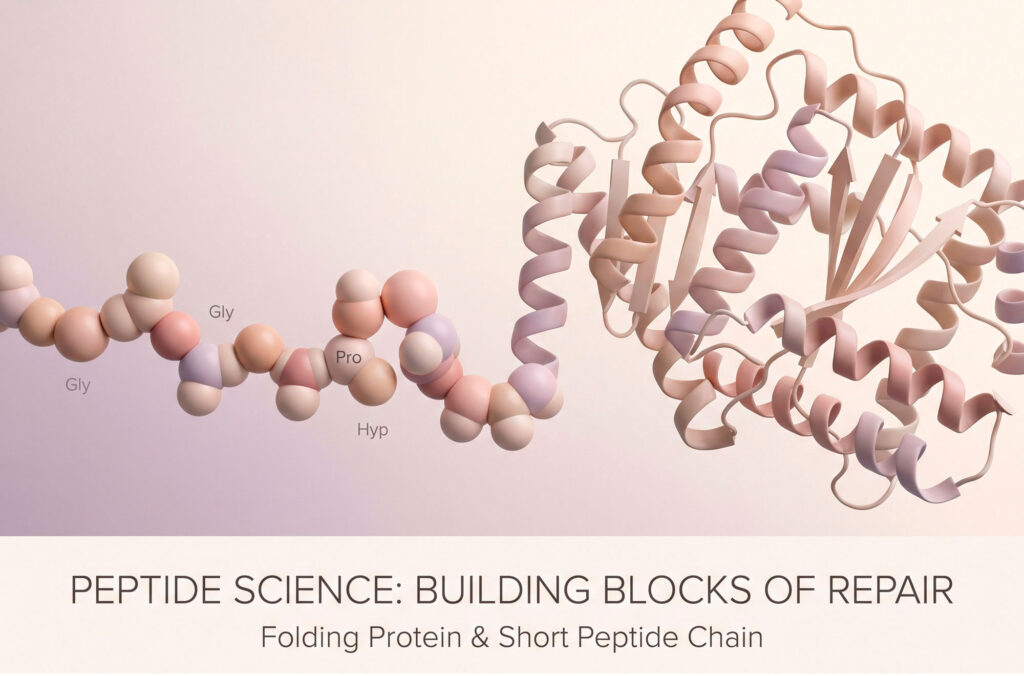
Amino acids join together through chemical bonds known as peptide bonds. A short chain forms a peptide, while longer and more complex chains eventually form proteins. Collagen, for example, is a large structural protein found throughout the skin and connective tissues. Elastin is another important protein associated with skin’s ability to stretch and return toward its original shape. Peptides operate at a much smaller scale, but smaller size alone doesn’t explain how a topical peptide behaves.
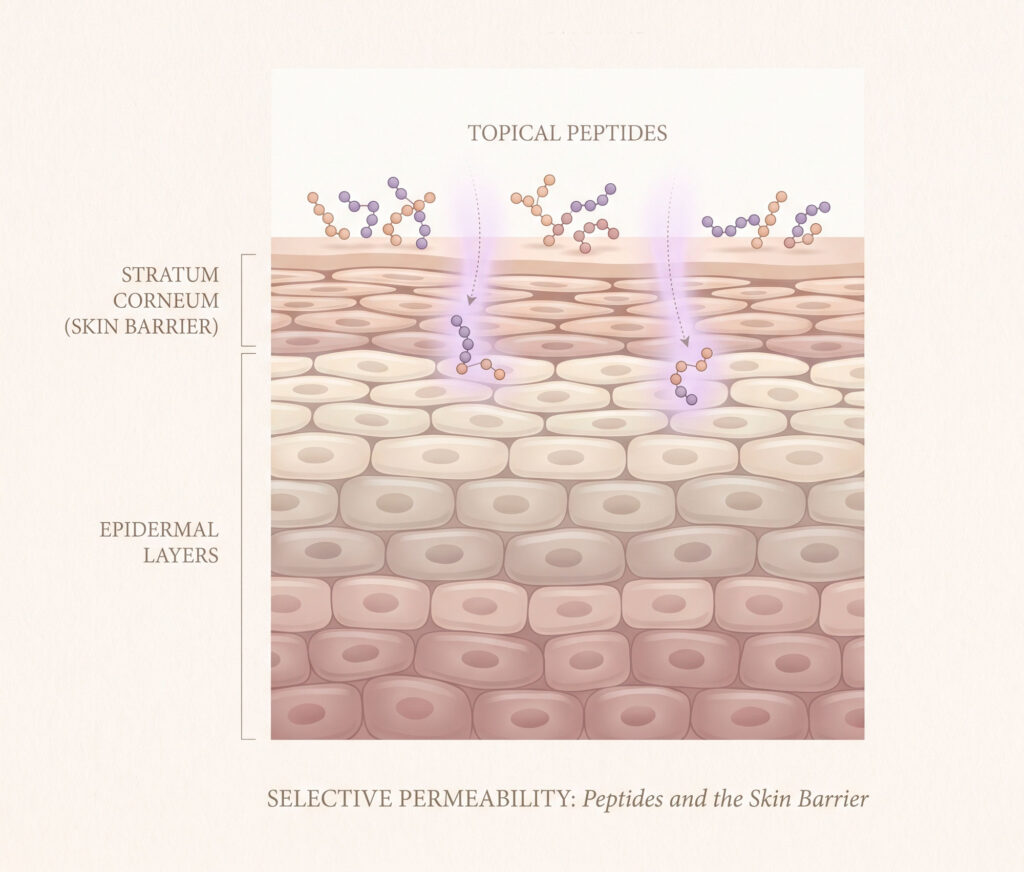
This distinction matters because skincare discussions often reduce peptide science to a misleading claim: peptides are small; therefore, they penetrate skin easily. Human skin exists partly to prevent outside substances from entering freely, and many peptides have properties poorly suited for passive movement through the stratum corneum. Molecular size matters, but so do electrical charge, water solubility, lipid solubility, amino acid sequence, chemical modification, concentration, and the delivery system surrounding the peptide. Researchers continue to study ways of improving peptide stability and skin delivery for precisely this reason.
Cosmetic chemists often modify peptides to improve their usefulness in topical formulas. One common approach attaches a fatty acid chain, such as palmitic acid, to a peptide. You can spot this pattern in names such as palmitoyl pentapeptide-4 or palmitoyl tripeptide-5. The lipid portion can improve compatibility with the skin’s lipid-rich outer barrier and can influence formulation behavior. This is one reason the full ingredient name tells you more than the word “peptide” printed across the front of a package.
Large proteins and short peptides also serve different cosmetic roles. Topically applied collagen, for example, primarily offers surface-conditioning and moisture-supporting benefits rather than replacing collagen deep within the skin. Certain cosmetic peptides, by contrast, have been developed around biological signaling mechanisms associated with extracellular matrix proteins, hydration, barrier support, or the visible effects of repetitive facial movement. Researchers often group cosmetic peptides according to these proposed mechanisms. Common categories include signal peptides, carrier peptides, neurotransmitter-inhibiting peptides, and enzyme-inhibiting peptides.

The Word Peptide Covers Many Different Ingredients
Calling a product a “peptide serum” tells you surprisingly little about what is inside. Peptide is a category rather than a single active ingredient. The difference between individual peptides comes from their amino acid sequence, chemical structure, modifications, concentration, and intended role. Two products can both feature peptides while targeting different visible skin concerns. This makes the actual INCI ingredient list much more useful than a front-label peptide claim.
Signal peptides receive considerable attention in skincare research. Some were developed to resemble fragments associated with extracellular matrix proteins, which can participate in cellular signaling pathways connected with collagen, elastin, fibronectin, glycosaminoglycans, and related components. Research on cosmetic signal peptides includes laboratory studies, ex vivo studies, and clinical work, although the strength of evidence varies significantly from one peptide to another. This variation deserves attention because a category-level claim cannot substitute for evidence supporting a specific ingredient and finished formula.
Palmitoyl pentapeptide-4, widely associated with the Matrixyl name, is one example consumers often encounter. It belongs to the signal-peptide side of cosmetic formulation and has a long history of use in products designed for the visible appearance of wrinkles and skin texture. Its presence makes more sense in a product focused on age-related visible changes than in a cleanser rinsed away seconds after application. Contact time, concentration, formulation, packaging, and the other ingredients surrounding it all influence how useful its inclusion becomes. This is why reading farther than the headline ingredient pays off.
Another category includes peptides designed around neurotransmitter-related mechanisms. Acetyl hexapeptide-8 is probably the best-known example, although other ingredients use different structures and approaches. These peptides often appear in marketing aimed at expression lines because laboratory models suggest effects involving pathways associated with repetitive muscle contraction. The leap from this mechanism to comparisons with injectable neuromodulators goes too far. Recent scientific reviews still identify delivery to relevant neuromuscular targets as an unresolved limitation for topical acetyl hexapeptide-8, despite evidence for improvements in wrinkle appearance in some studies.
Why Injection Comparisons Create the Wrong Expectation
Cosmetic marketing loves a dramatic comparison. An ingredient designed around neurotransmitter signaling can quickly become labeled “Botox-like,” even though the route of delivery, dose, target tissue, biological action, and expected result differ greatly from an injected drug. A topical cosmetic sits on the outside of the body and first faces the formidable barrier of the stratum corneum. An injection bypasses this barrier entirely and places an active substance into targeted tissue. Treating these approaches as equivalent creates expectations no topical cosmetic should carry.
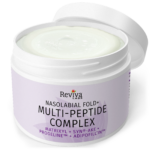
Syn-Ake provides a useful example. Its INCI name is Dipeptide Diaminobutyroyl Benzylamide Diacetate, and it appears in Reviva Labs’ Nasolabial Fold+ Multi-Peptide Complex alongside other targeted ingredients. Reviva’s current catalog also lists Palmitoyl Pentapeptide-4, Trifluoroacetyl Tripeptide-2, and the Adipofill’in complex in the formula. These ingredients do not all perform the same role, which is precisely why a multi-ingredient formula can make sense when several visible aspects of aging appear together.
The smartest way to discuss a neurotransmitter-oriented cosmetic peptide is through visible appearance rather than medical equivalence. A topical formula can be designed to soften the appearance of expression-related lines without claiming to immobilize muscles or reproduce an injectable procedure. This language creates a more realistic framework for judging results. It also respects the limits of cosmetic claims while still explaining why a formulator selected the ingredient. For experienced skincare users, accuracy builds more confidence than exaggerated comparisons.
This distinction also helps explain why results from peptide skincare often look subtle rather than dramatic. Cosmetic improvements usually show up through changes in perceived smoothness, hydration, texture, line visibility, or firmness. Those changes can matter, especially when viewed across several months of consistent use. They still belong in a different category from structural changes produced by medical procedures. Good skincare does not need to pretend otherwise.

Formulation Matters as Much as the Peptide Name
Finding a recognizable peptide on an ingredient list does not automatically tell you how well a product will perform. Peptides can present formulation challenges involving stability, solubility, oxidation, enzymatic degradation, pH, and movement across the skin barrier. Cosmetic scientists work around these limitations through chemical modifications, encapsulation systems, emulsions, penetration-enhancing strategies, and careful selection of the surrounding formula. Reviews of topical peptide research repeatedly identify delivery as one of the central issues governing practical performance.
This also explains why comparing products by peptide count makes little sense. A formula listing eight peptides is not automatically better than one listing two. Ingredient concentration matters, but ingredient interactions matter too. So do stability, delivery, compatibility, and whether each peptide belongs in the formula for a coherent reason. Loading a label with tiny quantities of fashionable ingredients can create an impressive ingredient story without creating an impressive, finished product.
Individual skin also changes the experience. Age, baseline dryness, sun exposure, smoking history, genetics, climate, hormones, cleansing habits, other skincare products, and sunscreen use can all influence visible skin quality. An ingredient never operates in isolation from the person using it.
Supporting ingredients deserve attention for the same reason. Glycerin, hyaluronic acid, emollient oils, soothing agents, antioxidants, and barrier-supportive ingredients can improve how skin looks and feels independently of the peptide component. Better hydration alone can temporarily soften the appearance of fine surface lines and improve skin smoothness. A well-designed peptide product often combines several cosmetic pathways rather than expecting one peptide to carry the entire formula. This approach fits especially well with mature skin, where dehydration, texture changes, and reduced firmness frequently overlap.
Packaging enters the equation too. A formula sensitive to repeated exposure to light, oxygen, heat, or contamination benefits from packaging selected with stability in mind. Airless pumps and opaque containers can offer advantages for certain formulas, but package style alone cannot prove quality. The entire formulation needs proper stability testing in its final container. Consumers cannot evaluate laboratory stability data by looking at a bottle, but thoughtful packaging still offers one clue about how seriously a manufacturer treats formulation.

Peptides and Mature Skin
Collagen levels and organization change as skin ages, while cumulative ultraviolet exposure adds another major influence on visible aging. Skin often becomes thinner, drier, less resilient, and slower to recover from environmental stress. Fine lines can deepen, texture can become rougher, and facial contours can look less defined. No single topical ingredient addresses every part of this process. Peptides earn their place because different members of the category can complement moisturizers, antioxidants, retinoids, brightening ingredients, and daily sun protection.
The distinction between intrinsic aging and photoaging matters here. Chronological aging continues regardless of skincare, while ultraviolet exposure contributes substantially to visible changes associated with premature skin aging. A peptide serum cannot compensate for repeated unprotected UV exposure. Daily broad-spectrum sunscreen therefore carries more importance than adding another treatment serum to an already crowded routine. Peptides work best as part of a sensible system rather than as permission to ignore basic skin protection.
This also gives peptide products an advantage for consumers who want a routine with several complementary mechanisms. Retinoids have extensive evidence behind their role in improving visible photoaging, but some people find them difficult to use frequently because of dryness or irritation. Peptides operate through different proposed mechanisms and often appear in hydrating, cosmetically elegant formulas. They can sit comfortably within routines where a user already relies on vitamin C, retinoids, niacinamide, exfoliating acids, or antioxidants. A good routine balances results with tolerability because an ingredient you stop using cannot deliver much benefit.
A 2023 clinical review of skin aging and topical rejuvenation strategies still identifies prescription tretinoin as the clinical standard among topical rejuvenation therapies, while also discussing peptides, antioxidants, and other cosmeceuticals as part of the broader topical toolkit. This context helps put peptide marketing in perspective. Peptides deserve attention, but they do not erase the evidence behind established categories. Smart skincare rarely asks one ingredient to replace every other useful ingredient. Which is a strong argument for why Reviva Labs has consistently advocated layering as purposefully addressing multiple signs of aging.

How to Layer Peptides Into Your Routine
For most peptide serums, the simplest placement comes after cleansing and toning and before a heavier moisturizer. Apply treatment products according to texture, formulation instructions, and the needs of your skin rather than following rigid internet rules. A lightweight water-based peptide serum generally fits before creams and oils. A peptide already incorporated into a moisturizer needs no separate peptide layer unless your routine has another reason for one. More products do not guarantee better results.
Morning use can pair peptides with hydrating ingredients and antioxidants, followed by sunscreen. Evening use can pair them with moisturizers or other treatments, depending on your tolerance and the directions for each formula. Older advice sometimes warned against combining peptides with acids or vitamin C across the board. Modern formulation science makes such blanket rules hard to defend because compatibility depends on the specific peptide, formula, pH, stability profile, and product design. Follow manufacturer instructions when a formula carries specific restrictions.
Introducing several new products at once makes evaluation harder. If your skin becomes irritated, you will have trouble identifying the cause, and if your complexion improves, you will not know which change helped. Add one meaningful treatment at a time and keep the rest of your routine relatively steady. Give your skin enough time to show a pattern rather than judging from one unusually good or bad morning. Consistency produces better information.
Photography can help if you want a more objective comparison. Use the same room, lighting direction, camera distance, facial expression, and approximate time of day. Take baseline photos before starting, then repeat them periodically rather than studying your face every morning for microscopic changes. Small cosmetic improvements are easier to identify when several weeks separate the images. Your memory is a poor measuring device for gradual visual change.
How Long Do Peptides Take to Show Results
There is no scientifically responsible universal countdown for all peptide products. Studies use different peptides, concentrations, formulas, endpoints, populations, and testing methods. Some clinical work measures change after several weeks, while other studies continue for months. A peptide designed for one cosmetic pathway should not inherit the study timeline of an unrelated peptide simply because both belong to the same broad category. This is another reason broad claims such as “peptides work in four weeks” deserve skepticism.
Six to twelve weeks provides a practical consumer evaluation period for many leave-on skincare treatments, provided the product directions support daily or twice-daily use. This timeframe does not guarantee a visible response. It simply allows enough consistent use to judge gradual changes more fairly than a seven-day trial. If your skin feels better hydrated quickly, remember hydration itself can produce an immediate visual smoothing effect separate from longer-term peptide-related benefits. Distinguishing those effects helps you evaluate a formula more intelligently.
Research overall supports cautious optimism rather than spectacular promises. The 2026 systematic review covering 1,341 participants found statistically significant improvement in wrinkle outcomes across pooled peptide interventions, but the effect was modest and driven largely by oral polypeptide studies rather than topical products alone. Hydration and brightness showed stronger pooled improvements, while elasticity and density produced inconsistent findings. Such results do not weaken the peptide category. They make a stronger case for evaluating specific ingredients and formulas instead of treating “peptides” as one proven treatment.
Individual skin also changes the experience. Age, baseline dryness, sun exposure, smoking history, genetics, climate, hormones, cleansing habits, other skincare products, and sunscreen use can all influence visible skin quality. An ingredient never operates in isolation from the person using it. Controlled trials help separate some variables, but your bathroom routine is not a controlled laboratory. Keeping expectations proportionate makes it easier to recognize worthwhile improvement without demanding an unrealistic transformation.
More Peptides Does Not Automatically Mean Better Skincare
Ingredient-count marketing appeals to shoppers because numbers feel concrete. Five peptides sounds more impressive than two, and twelve sounds more advanced than five. Yet cosmetic formulation does not work like collecting points. One well-studied ingredient at an appropriate use level in a stable formula can make more sense than a long collection of trendy ingredients used primarily to support front-label copy. The formula needs a reason for every meaningful component.
The same rule applies to trademarked complexes. A memorable trade name can help identify a specific ingredient technology, but the name itself does not prove clinical performance in every finished product containing it. Supplier studies often evaluate an ingredient at a recommended concentration within a particular test formula. A commercial skincare product can use the same ingredient in a different base or at another concentration. Evidence for the raw material therefore provides useful context but finished-product testing carries greater relevance when available.
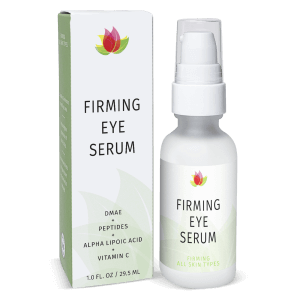
You also need to distinguish peptides from ingredients grouped beside them in multi-active formulas. Reviva Labs’ Nasolabial Fold+ Multi-Peptide Complex offers a useful example because its formula contains several peptide ingredients alongside Adipofill’in, hyaluronic acid, aloe, glycerin, panthenol, vitamin C derivative, oils, and other supporting components. Adipofill’in itself should not be casually described as another peptide simply because it appears inside a multi-peptide product. Reading the ingredient list carefully prevents this kind of category creep.
For experienced skincare shoppers, this distinction becomes one of the best defenses against ingredient-name marketing. Ask what each highlighted ingredient actually is. Ask whether the formula supports hydration, barrier comfort, antioxidant protection, or other complementary cosmetic goals. Ask whether the highlighted peptides match the concern you want to address. A shorter ingredient story with a clear purpose often tells you more than a wall of fashionable names.

What a Good Peptide Product Should Tell You
A useful product description should identify important peptide ingredients instead of hiding behind “peptide technology.” It should connect those ingredients with cosmetic concerns using measured language. Look for terms such as “helps smooth the appearance of fine lines,” “supports firmer-looking skin,” or “improves the look of skin texture.” These statements describe observable cosmetic outcomes without pretending a topical serum reconstructs facial anatomy. Clear language usually signals a clearer product strategy.
The ingredient list should also support the story. If a product markets itself primarily around peptides but the formula focuses heavily on humectants, oils, and silicones with a peptide appearing near the bottom, you still have a moisturizer with a peptide component. Such a product can be excellent, but it deserves evaluation for what it actually is. Conversely, a concentrated serum with several well-selected peptides can fill a more targeted treatment role. Neither format automatically wins.
Price also tells you less than many shoppers assume. Peptide raw materials can increase formulation costs, especially with specialized delivery technologies or proprietary complexes, but luxury pricing does not guarantee superior formulation. Affordable skincare can incorporate established peptide technologies effectively. The better purchase comes from matching a coherent formula to your priorities and using it consistently. Your skin cannot read the price tag.
This perspective aligns well with functional skincare. Start with the visible concern, then choose ingredients and formats suited to it. If fine lines and reduced firmness bother you, a peptide treatment can make sense alongside hydration and sun protection. If discoloration drives your concern, brightening ingredients deserve more attention than chasing another peptide. If dryness dominates, barrier support and moisturization come first.
Peptides Are Useful When You Stop Treating Them Like Magic
Peptides deserve their reputation as one of the more interesting areas of modern cosmetic formulation, but they become more useful once the hype disappears. They are short amino-acid chains with diverse structures and proposed mechanisms, not miniature collagen molecules automatically slipping deep into your skin. Some have stronger research histories than others. Some need chemical modification or sophisticated formulation strategies to improve topical delivery. And every finished product still lives or dies by the quality of the formula surrounding its headline ingredient.
For mature skin, their biggest strength lies in flexibility. Peptides can complement hydration, antioxidants, brightening treatments, exfoliants, retinoids, moisturizers, and sunscreen without forcing your routine to revolve around a single active. This makes them appealing for people who prefer gradual, consistent skincare rather than aggressive treatment cycles. A thoughtfully formulated peptide product can support smoother, firmer, better-conditioned looking skin while fitting comfortably into a broader routine. Research supports interest in the category, while also supporting realistic expectations.
The next time you see “peptide” printed across a skincare package, keep reading. Find the ingredient name. Look at the rest of the formula. Decide whether its intended cosmetic role lines up with the visible concern you want to improve. Peptides become far more interesting once you know exactly what you are looking at.
Frequently Asked Questions
Are peptides the same as collagen?
No. Peptides are short chains of amino acids, while collagen is a much larger structural protein built from long amino-acid chains arranged into a highly organized structure. Topical collagen commonly functions as a conditioning and moisture-supporting ingredient. Certain cosmetic peptides have been developed around signaling pathways associated with components of the skin’s extracellular matrix. Putting collagen on your skin does not replace lost dermal collagen, and applying a peptide does not mean your skin automatically converts the ingredient into collagen.
Can peptides penetrate the skin?
Some topical peptide technologies have been designed to improve skin delivery, but penetration cannot be predicted from the word peptide alone. The skin barrier restricts movement of many water-soluble and charged molecules, and peptides often face stability and permeability challenges. Molecular size, amino-acid sequence, electrical charge, lipid modification, formulation vehicle, concentration, and delivery technology all matter. Researchers continue to study improved peptide-delivery systems because penetration represents a major issue for topical use.
Can I use peptides every day?
Many cosmetic peptide products are designed for daily use, and some support morning and evening application. Follow the directions supplied with the specific formula since products differ in concentration, supporting ingredients, pH, and intended use. Start gradually if your skin reacts easily or if you already use several active treatments. Peptides themselves often appear in gentle formulas, but irritation can come from fragrances, preservatives, acids, botanical extracts, or other components surrounding them.
Can I use peptides with retinol?
Peptides and retinoids can occupy the same skincare routine. They work through different pathways and do not need to compete for the same role. If your skin tolerates both, you can use them at different points in the same routine or separate them between morning and evening. Product directions and your own tolerance should guide the decision. Retinoids often create more irritation potential, so introduce new products gradually instead of changing several steps at once.
Can I use peptides with vitamin C?
Yes, many modern skincare routines combine peptides and vitamin C. Older blanket advice about never pairing the two oversimplifies formulation chemistry. Compatibility depends on the specific peptide, vitamin C form, finished formula, pH, and product design. Some formulas even combine peptide ingredients and vitamin C derivatives within one product. Follow manufacturer directions when a product includes specific restrictions rather than assuming every peptide reacts identically.
Are peptide creams better than peptide serums?
Neither format automatically performs better. Serums often provide a lighter vehicle suited to layering, while creams combine treatment ingredients with stronger emollient and moisturizing support. Dry or mature skin can benefit from either depending on the rest of the routine. Focus on the specific peptide ingredients, supporting formula, packaging, tolerability, and intended cosmetic benefit. Texture should help you use the product consistently rather than determine your opinion of its effectiveness before you try it.
How long should I use a peptide product before judging it?
Give a leave-on peptide treatment several weeks of consistent use before making a fair comparison. Six to twelve weeks offers a practical evaluation window for many skincare routines, although research timelines differ among individual peptides and finished formulas. Photograph your skin under consistent lighting before starting and repeat the image periodically. Look for gradual changes in texture, line visibility, hydration, and firmness rather than expecting an overnight shift.
Do more peptides mean better results?
No. Peptide count tells you little about concentration, stability, delivery, or finished-product performance. A formula containing two thoughtfully selected peptides at appropriate levels can make more sense than one containing ten ingredients primarily included for label appeal. Look at the purpose of each peptide and the rest of the formula. Finished-product testing, when available, provides more useful information than ingredient count alone.
References and Sources
- Schagen SK. Topical Peptide Treatments with Effective Anti-Aging Results. Cosmetics. 2017;4(2):16. https://www.mdpi.com/2079-9284/4/2/16
- Gorouhi F, Maibach HI. Role of topical peptides in preventing or treating aged skin. International Journal of Cosmetic Science. 2009. https://pubmed.ncbi.nlm.nih.gov/19570099/
- Waszkielewicz AM, et al. Peptides and Their Mechanisms of Action in the Skin. Applied Sciences. 2024;14(24):11495. https://www.mdpi.com/2076-3417/14/24/11495
- Pintea A, et al. Peptides Emerging Candidates for the Prevention and Treatment of Skin Aging. Biomolecules. 2025;15(1):88. https://pmc.ncbi.nlm.nih.gov/articles/PMC11762834/
- Zdrada-Nowak J, et al. Acetyl Hexapeptide-8 in Cosmeceuticals A Review of Skin Permeation and Anti-Wrinkle Activity. 2025. https://pubmed.ncbi.nlm.nih.gov/40565185/
- Griffiths TW, et al. Skin ageing and topical rejuvenation strategies. British Journal of Dermatology. 2023. https://pubmed.ncbi.nlm.nih.gov/37903073/
- Oral and topical peptides for skin aging systematic review and meta-analysis of randomized controlled trials. 2026. https://pubmed.ncbi.nlm.nih.gov/41924746/